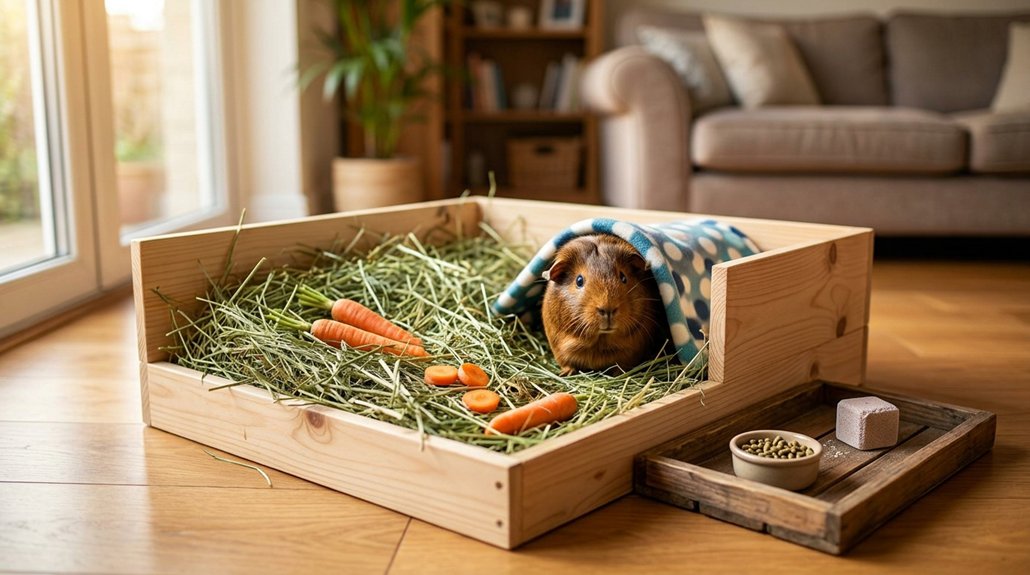
Before getting a guinea pig, understand their social nature—these creatures thrive with companions. Provide a spacious cage with solid flooring and meet dietary needs with timothy hay, fresh vegetables, and vitamin C supplements to ward off scurvy. Anticipate initial and monthly costs, and guarantee regular cage cleaning and exercise. Watch for health issues like dental and skin diseases. Adopting from a shelter offers rewarding companionship. There’s much more to discover about responsible guinea pig care.
Key Takeaways
- Guinea pigs are highly social and need companionship to thrive, ideally living in pairs or small groups.
- They require spacious cages with specific dimensions and proper bedding to prevent health issues.
- A guinea pig’s diet must include unlimited timothy hay and a daily supplement of vitamin C.
- Owning a guinea pig involves both initial setup costs and ongoing monthly expenses for food and maintenance.
- Adopting a guinea pig from a shelter offers a home to animals in need and encourages responsible pet ownership.
Understanding Guinea Pig Behavior and Social Needs
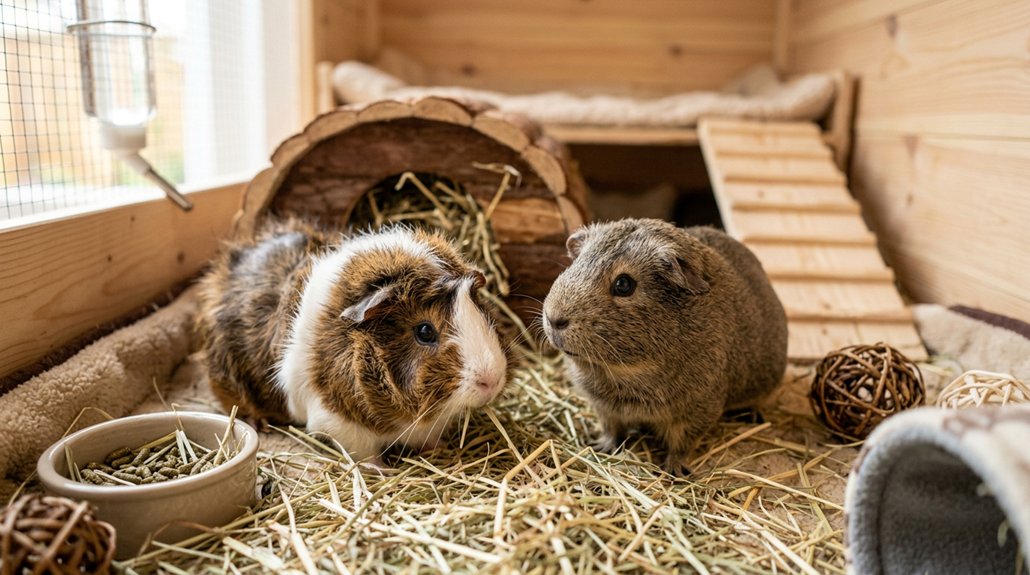
While they may appear simple at first glance, guinea pigs are complex creatures with specific social behaviors and needs vital for their well-being. It’s essential to understand their social interactions and behavioral cues to guarantee a healthy environment. Guinea pigs are inherently social, thriving in same-gender pairs or small groups, reflecting their natural disposition to live in family units in the wild. Their communication involves varied sounds—such as purring when content and wheeking for attention—signifying their intricate social dynamics. Loneliness can severely impact their health, underscoring the importance of companionship. Initially, guinea pigs may take time to adapt, and it’s necessary for you to employ patience, allowing trust to develop through consistent, gentle interactions that cater to their inherent social nature.
Caring for Your Guinea Pig: Essential Tips
Caring for guinea pigs requires attention to several essential aspects, guaranteeing their ideal well-being. To begin with, adhere to cage requirements by providing a spacious enclosure: at least 7.5 square feet for females and 10 square feet for males. Solid flooring and suitable bedding are critical to prevent pododermatitis. Address dietary needs by supplying unlimited timothy hay and supplementing with one cup of fresh vegetables daily. Additionally, introduce a vitamin C supplement to avert scurvy, a common deficiency. Confirm daily interaction and a minimum of 30 minutes of out-of-cage exercise to satisfy their social and cognitive demands. Regular grooming—weekly for short-haired and daily for long-haired breeds—prevents matting. Finally, perform daily spot cleaning and weekly deep cleaning to maintain hygiene.
Breakdown of Costs and Time for Guinea Pig Care
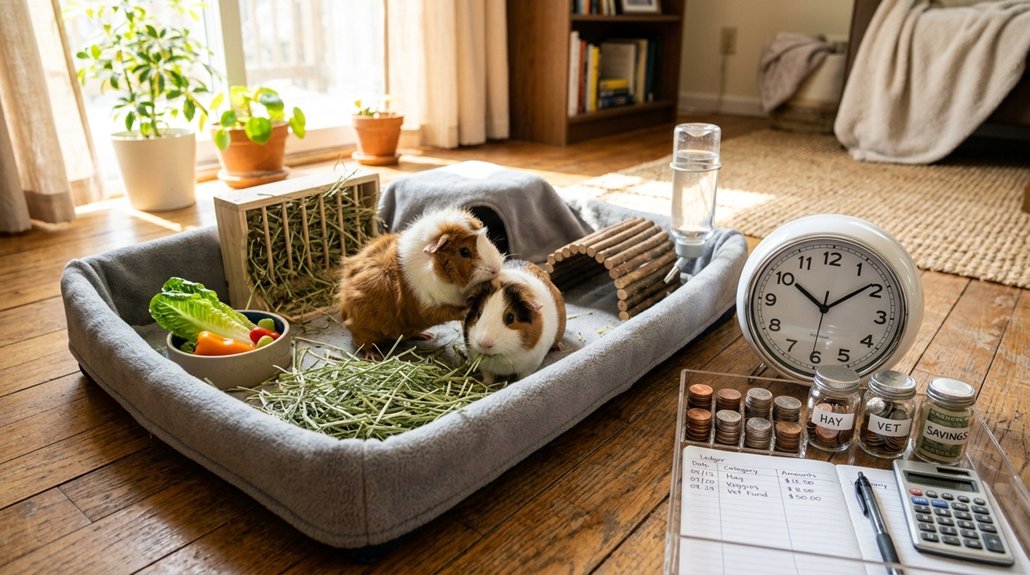
Understanding the costs and time required for guinea pig care is essential for prospective pet owners seeking to provide ideal conditions. A thorough cost analysis reveals initial expenditures of $200 to $300 for the necessary setup, encompassing the enclosure, bedding, and essential accessories. Monthly sustenance costs range from $30 to $50, supporting a nutritionally-adequate diet with hay, pellets, fresh vegetables, and vital vitamin C supplements. Your time commitment involves a minimum of 30 minutes daily for feeding, interaction, and basic sanitation, while deeper cleaning ensues weekly, necessitating an additional 15 to 30 minutes. Veterinary care, an unpredictable cost variable, could range from $80 for routine exams to potentially $5,000 for complex procedures. Approach with informed preparation and committed dedication.
Common Guinea Pig Health Issues
Guinea pigs are small creatures with unique health needs that require vigilant attention from their owners. As a responsible pet owner, you’ll need to watch for common health issues:
Guinea pigs require meticulous care to prevent common health issues, ensuring their well-being and happiness.
- Dental disease: Overgrown teeth can occur if their diet doesn’t encourage natural chewing.
- Vitamin C deficiency (Scurvy): Lack of vitamin C causes symptoms such as lethargy, poor coat, and swollen joints.
- Skin diseases: Mites and fungal infections thrive without regular grooming and health checks.
- Respiratory infections: Maintain clean living conditions to prevent irritation and infection.
- Behavioral changes: Notice weight loss or feces changes, as these can indicate illness.
Regular veterinary check-ups are vital, as they help in early detection and management of these conditions, promoting your guinea pig’s longevity and well-being.
Why Adopt a Shelter Guinea Pig?
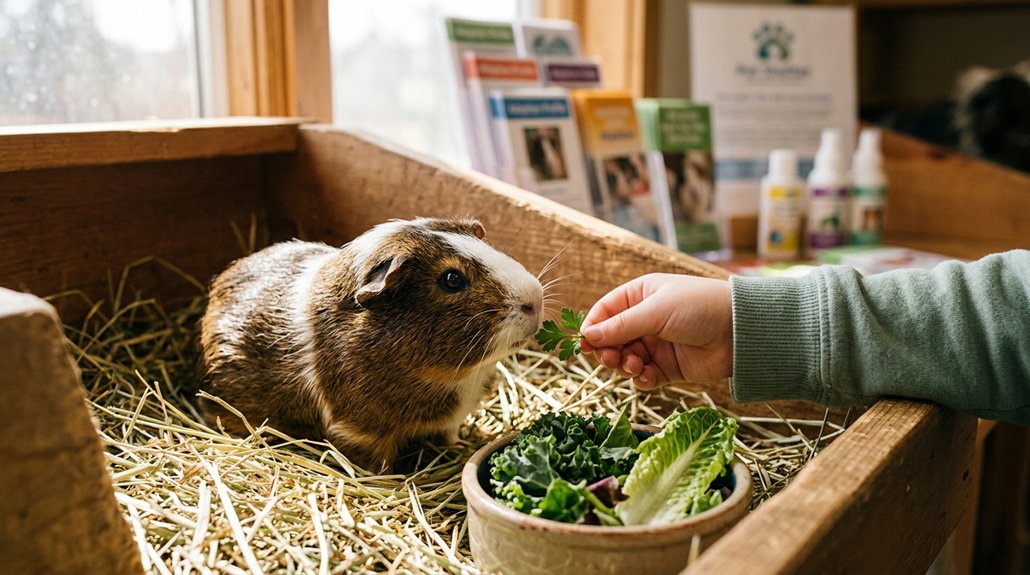
When considering the benefits of adopting a shelter guinea pig, one substantial advantage is the opportunity to provide a compassionate home for animals otherwise in need of care. Many shelter guinea pigs are already socialized, with adaptable guinea pig personalities, making them ideal companions. By choosing adoption, you help reduce the population of unwanted pets and support the efforts of local shelters. Older guinea pigs can form especially strong bonds, offering a profoundly rewarding experience. Adopting benefits both you and the community, as it supports responsible pet ownership while decreasing demand for commercially bred pets. These social creatures thrive in caring environments, and your decision to adopt fosters their well-being and can enhance your own mental and emotional health.
Frequently Asked Questions
What Do I Wish I Knew Before Getting a Guinea Pig?
You’ll wish you knew that guinea pigs’ social needs demand companionship and that daily care requires an expertise-driven regimen, focusing on specialized dietary requirements and consistent interaction, to guarantee their health and mental well-being are ideally maintained.
Can I Leave My Guinea Pig Alone for 7 Days?
No, you can’t leave your guinea pig alone for 7 days. Guinea pig care requires daily interaction to prevent health issues. Long-term separation causes stress and potential dehydration, necessitating a trusted friend or pet sitter for daily care.
Which Gender of Guinea Pig Is More Cuddly?
You might coincidentally find both male and female guinea pigs equally cuddly. Male guinea pigs exhibit engaging behavior, while females display a gentle temperament. Their socialization, personality, and care greatly dictate their affection, not solely their gender.
What Is the Downside of Owning a Guinea Pig?
You’ve got to be ready for health considerations and habitat requirements. Guinea pigs often face dental and respiratory issues, requiring costly vet visits. Their enclosures need regular maintenance and spacious setups to guarantee they thrive physically and socially.
Conclusion
While guinea pigs appear as low-maintenance, charming companions, their care demands both time and financial commitment. Juxtaposed against their adorable exterior is a world of complex social needs and specific health requirements. To guarantee a thriving pet, it’s essential to understand their behavior, provide a proper diet, and engage in regular health checks. By adopting from a shelter, you not only gain a delightful pet but also contribute to solving overpopulation. Embrace the responsibility; enrich their world and yours.