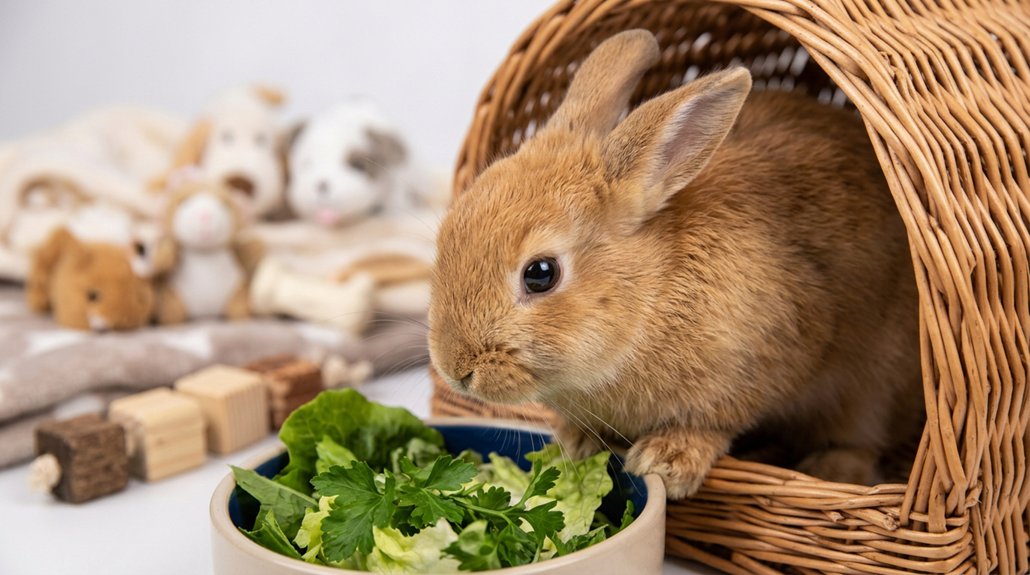
Your rabbit’s appetite loss could stem from dental pain, stress, or a serious health condition. Begin by checking food quality, offering a variety of fresh greens, and ensuring constant access to fresh water. Stress-free environments and observing dropping changes are essential. If your rabbit hasn’t eaten in 4-6 hours, or shows signs like lethargy or tooth grinding, seek veterinary help. Discover more about ensuring your rabbit’s health and well-being with further insights.
Key Takeaways
- Check for dental issues like overgrown teeth, which can cause pain and deter eating.
- Provide fresh greens and aromatic herbs to entice the rabbit’s appetite.
- Ensure access to fresh, clean water to prevent dehydration-related appetite loss.
- Monitor the environment for stress factors or recent changes affecting comfort.
- Seek veterinary care if the rabbit hasn’t eaten in over 4-6 hours or shows other alarming symptoms.
Immediate Actions for Appetite Loss
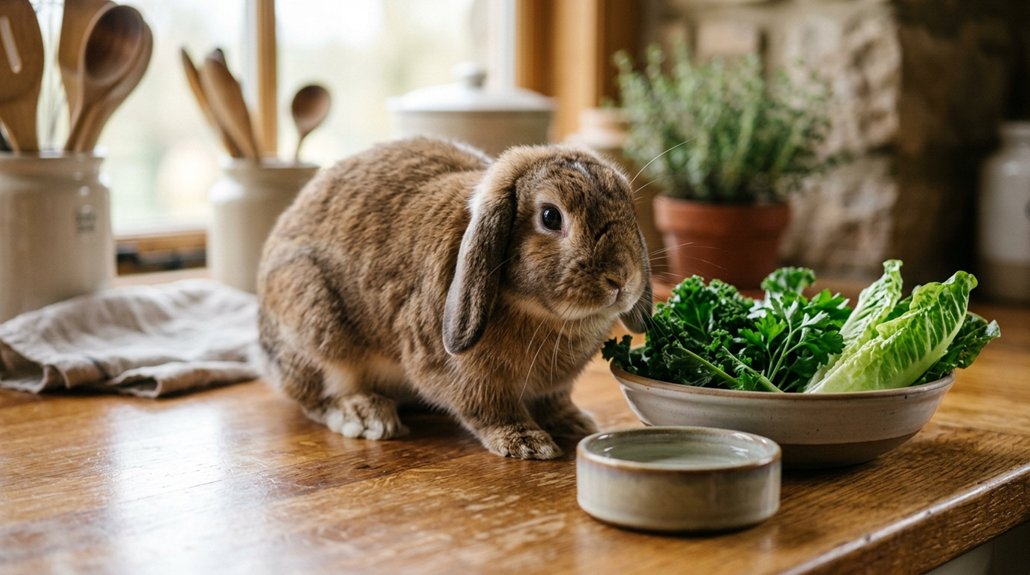
If your rabbit suddenly stops eating, it’s crucial to act promptly to address the issue. First, examine the food quality by checking that your rabbit’s food is fresh and free from spoilage. Sometimes, expired or spoiled food can deter their appetite. Offer a variety of fresh greens and aromatic herbs to pique their interest. Equally important is monitoring your rabbit’s hydration status. Verify fresh water is readily available, and you can provide wet greens to maintain hydration. In the absence of drinking, use a syringe to administer small amounts of water gently. Observe droppings closely; any absence or abnormality could indicate digestive issues. If you notice hard or bloated abdomen signs, seek immediate veterinary care.
Key Causes of Appetite Loss in Rabbits
When your rabbit begins to refuse food, it’s important to understand the underlying causes, as this behavior can indicate serious health concerns. One potential culprit is dental issues; malocclusion or overgrown teeth can cause significant pain, deterring your rabbit from eating. Stress factors, such as new pets or loud noises, can also make them uncomfortable enough to lose interest in their meals. Additionally, if your rabbit ingests foreign objects, like parts of toys or unsuitable plants, this can result in harmful intestinal blockages. Underlying illnesses, including pneumonia or liver disease, are also essential contributors to appetite loss, as they can cause enough pain and discomfort to make eating seem unappealing. Identifying the root cause is vital for restoring your rabbit’s health.
Practical Tips to Encourage Eating
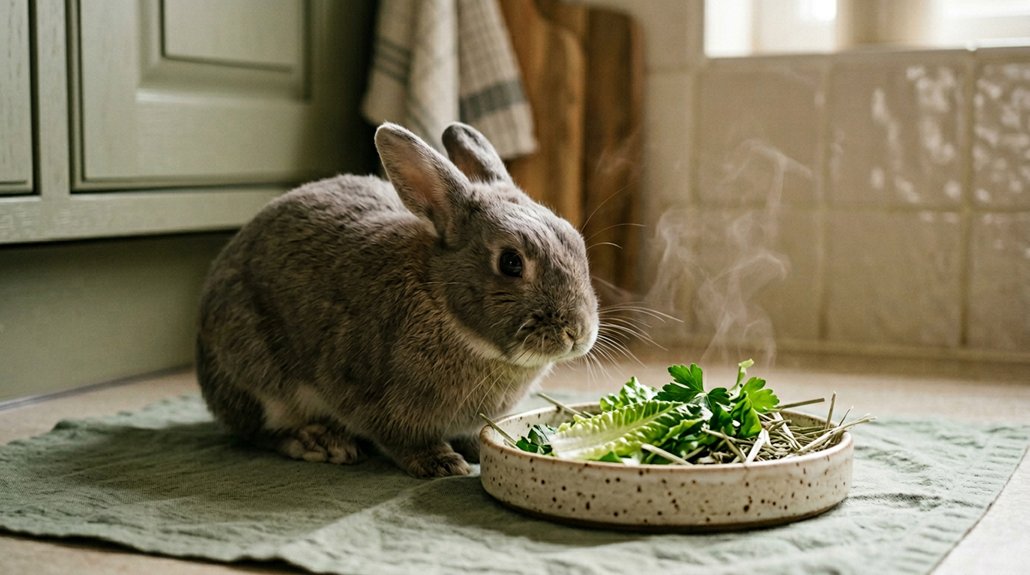
Recognizing the root causes behind your rabbit’s appetite loss is merely the first step in helping them regain their interest in food. Providing a variety of fresh, high-quality grass hays is essential—consider options like timothy, oat, or meadow hay. This variety can stimulate their palate and guarantee they’re getting the nutrition they need. In addition, keep an eye on hydration; fresh, clean water should always be available to combat dehydration, a frequent appetite suppressant. Moreover, enhancing their diet with aromatic leafy greens and small amounts of their favorite healthy treat options such as parsley or cilantro can encourage them to nibble. Finally, maintain a stress-free environment, and guarantee hay and food are fresh and clean to deter disinterest.
Non-Medical Reasons Your Rabbit Isn’t Eating
Why might your rabbit suddenly stop eating? One possibility is pregnancy behavior. Female rabbits may experience a decrease in appetite as part of their natural process, preparing for kindling with signs like full anorexia. Another consideration is stress factors that impact their eating habits. Changes in environment, new pets, or even minor stressors such as loud noises or routine shifts can unsettle your rabbit, leading to temporary appetite loss. Additionally, dehydration is a hidden culprit; ensuring constant access to fresh water can prevent appetite issues. It’s normal for some rabbits to adjust slowly to new surroundings, which might explain their disinterest in food. Luckily, with time and patience, these non-medical issues usually resolve on their own.
When to Seek Veterinary Help
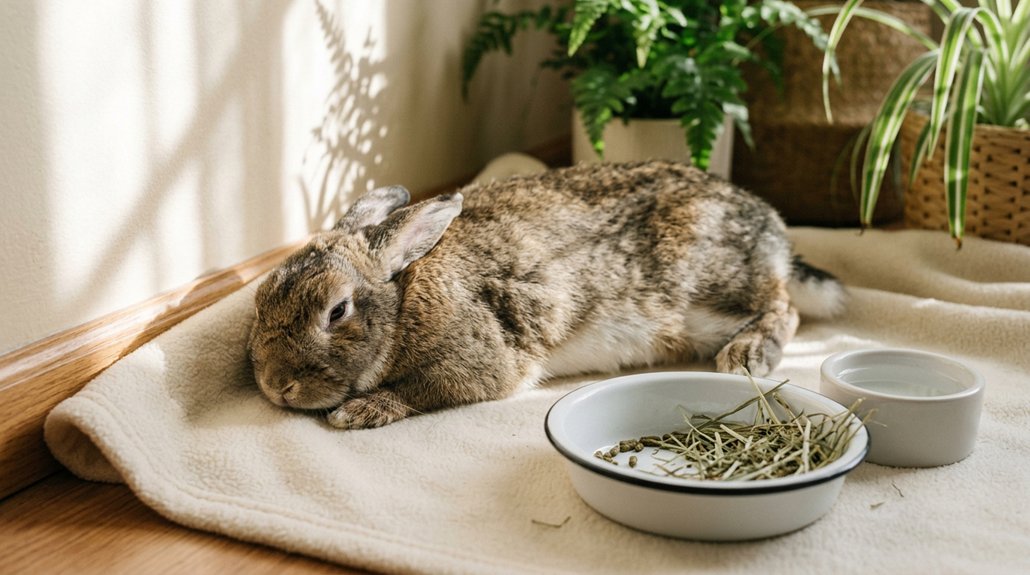
How can you know when it’s time to seek veterinary help for your rabbit’s eating problems? If your rabbit hasn’t eaten in over 4-6 hours, initiate an emergency response by contacting your vet immediately. Recognizing veterinary symptoms like hiding, tooth grinding, or lethargy is essential—they’re alarm signals demanding swift action. Abnormal droppings, especially small, dry fecal pellets, are vital indicators of significant eating issues. Additionally, look out for rapid breathing and temperature changes; if your rabbit feels cold to the touch, these are urgent signs of advanced health complications. Don’t wait for symptoms to worsen; proactive veterinary consultation can prevent these problems from turning life-threatening. Acting promptly shows the compassion and responsibility your rabbit deserves.
Frequently Asked Questions
What Is the 3 3 3 Rule for Rabbits?
The 3 3 3 rule for rabbits involves understanding rabbit behavior and feeding habits during adaptation: three days for adjustment, three weeks for settling in, and three months to fully integrate. It fosters patience, ensuring your rabbit’s comfort.
How Long Can a Bunny Go Without Eating?
Your bunny can go without eating for just 3-4 hours before risking severe bunny health issues. Digestive issues can develop rapidly, so it’s essential to act quickly if your rabbit refuses food, prioritizing veterinary care immediately.
How Do I Encourage My Rabbit to Eat?
Ironically, enticing your rabbit with healthy treats might seem trivial, yet it’s essential. Introduce new feeding habits gently. Offer aromatic herbs and fresh hays while ensuring unlimited fresh water. Create a stress-free environment to promote regular eating.
When to Worry About Rabbit Not Eating?
You should worry if your rabbit hasn’t eaten in over 4-6 hours, as stress factors or dental issues could be involved. Look for signs like lethargy, pain, or small fecal output and consult a vet immediately.
Conclusion
You might stumble upon your rabbit losing its appetite just when you’ve introduced a new toy, coincidentally masking a deeper issue. It’s crucial to act swiftly and calmly. Understand the potential causes, try practical steps like offering favorite greens or changing the environment, and always keep non-medical factors in mind. If their appetite doesn’t improve, it’s critical to consult a vet. Remember, your attentive care can make all the difference in your rabbit’s health and happiness.