A balanced rabbit diet primarily consists of fresh hay, which should make up 80-90% of their intake, vital for digestion and dental health. Complement it with about 10% fresh vegetables and no more than 5% high-quality pellets rich in fiber. Avoid overfeeding sugary treats, keeping them under strict limits. Always provide fresh water and monitor droppings for health indicators. To guarantee your rabbit’s best wellness, it’s essential to explore these dietary foundations further.
Key Takeaways
- Fresh hay should make up 80-90% of a rabbit’s diet for digestive health and dental care.
- Fresh vegetables should be 10% of the diet, introduced gradually for proper digestion.
- High-quality pellets should comprise only 5% of the diet to prevent obesity, providing essential vitamins and minerals.
- Limit sugary treats to 1-2 tablespoons per 6 pounds of body weight to avoid health issues.
- Monitor droppings regularly to promptly address potential dietary or health concerns.
Crafting a Balanced Rabbit Diet
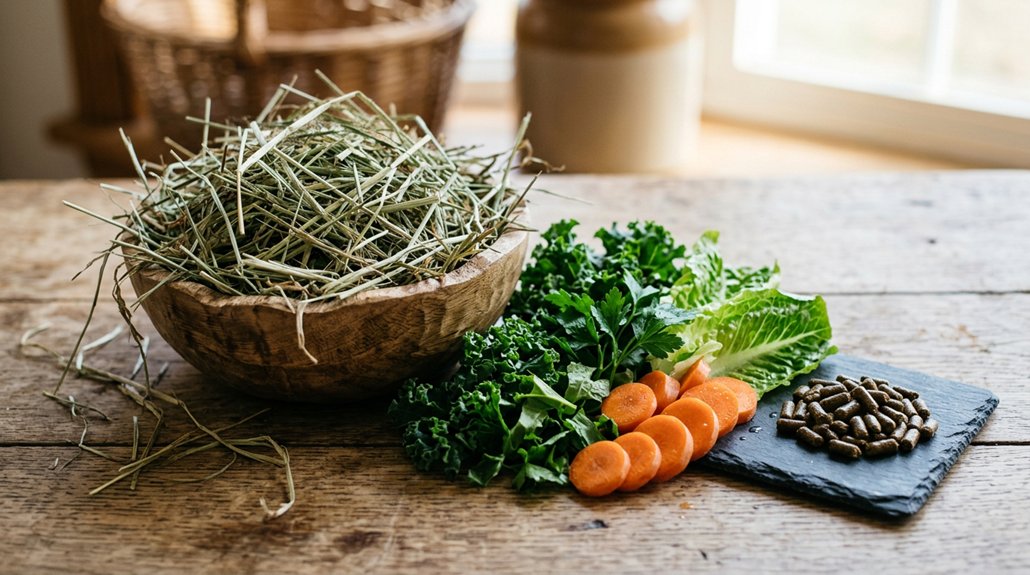
When it comes to crafting a balanced rabbit diet, it’s essential to prioritize the right components to guarantee your rabbit’s health. A proper nutritional balance involves several key elements. One common dietary misconception is that rabbits can thrive on pellets alone. In reality, fresh hay should form 80-90% of their diet. Types like timothy or orchard grass secure maximum fiber intake. Fresh vegetables should make up about 10% of the diet, with safe leafy greens introduced gradually. High-quality pellets should only comprise 5%, with a minimum 18% fiber content. Finally, treats, including fruits, must be given sparingly, no more than 1-2 tablespoons per 6 pounds of body weight. Always provide unlimited, fresh water for hydration.
Understanding the Importance of Hay for Digestion and Dental Health
Hay isn’t just a staple in a rabbit’s diet; it’s a critical component for maintaining both digestive and dental health. As the primary fiber source, hay benefits your rabbit by promoting digestive health and preventing gastrointestinal stasis. The long-stemmed fiber in hay supports dental care by naturally wearing down teeth that grow continuously, minimizing risks like malocclusion. It’s important to prioritize hay types such as timothy and orchard to provide the best nutrition. Feeding habits should include unlimited access to fresh, mold-free hay to guarantee a balanced diet. Neglecting sufficient hay consumption can alter rabbit behavior, leading to issues like obesity and dental disease. Consistently providing appropriate hay aligns with your rabbit’s nutritional balance and promotes overall well-being.
Choosing the Right Type of Hay: Timothy, Orchard, and Beyond
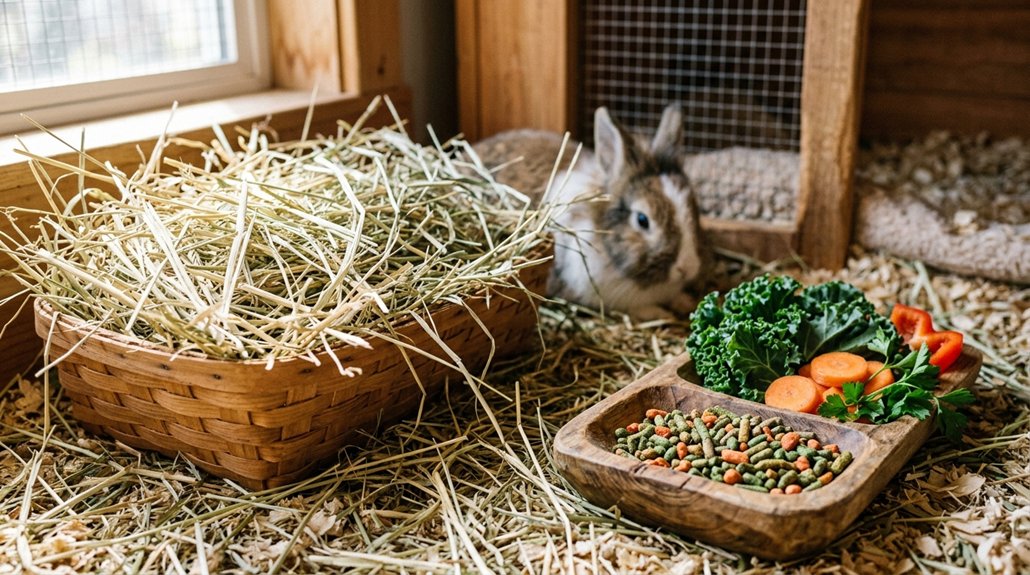
Although selecting the right type of hay may seem straightforward, understanding the nuances of each option guarantees your rabbit receives ideal nutrition. Timothy hay is a top choice for adult rabbits due to its high fiber content of 30-35%, essential for digestion and dental health. If your rabbit is a picky eater, orchard grass hay serves as an excellent alternative, offering a sweeter flavor while still delivering important fiber. For dietary variety, brome hay presents a nutrient-rich option. However, reserve oat hay as an occasional treat because it’s higher in calories and lower in fiber. Remember, hay storage tips are important: store hay in a cool, dry place away from direct sunlight to maintain its freshness and nutritional quality.
Safely Introducing Fresh Vegetables
While enhancing your rabbit’s diet with fresh vegetables is beneficial, it’s crucial to introduce them gradually to avoid digestive issues. This gradual introduction allows you to monitor for any adverse reactions and helps your rabbit’s digestive system adapt seamlessly. Prioritize vegetable safety by thoroughly washing all produce to eliminate harmful pesticides and contaminants. Aim to offer at least three types of vegetables daily for nutritional diversity but take a cautious approach with high-oxalate vegetables, like spinach or kale, limiting them to one or two meals weekly.
Introduce vegetables gradually to your rabbit’s diet for optimal digestive health, while ensuring all produce is thoroughly washed.
Guarantee effective vegetable safety by:
- Introducing new vegetables over several weeks.
- Monitoring your rabbit’s health for digestive changes.
- Washing all vegetables thoroughly before feeding.
- Following the guideline: 2 cups per 6 pounds of body weight.
Essential Vegetables to Boost Nutritional Variety
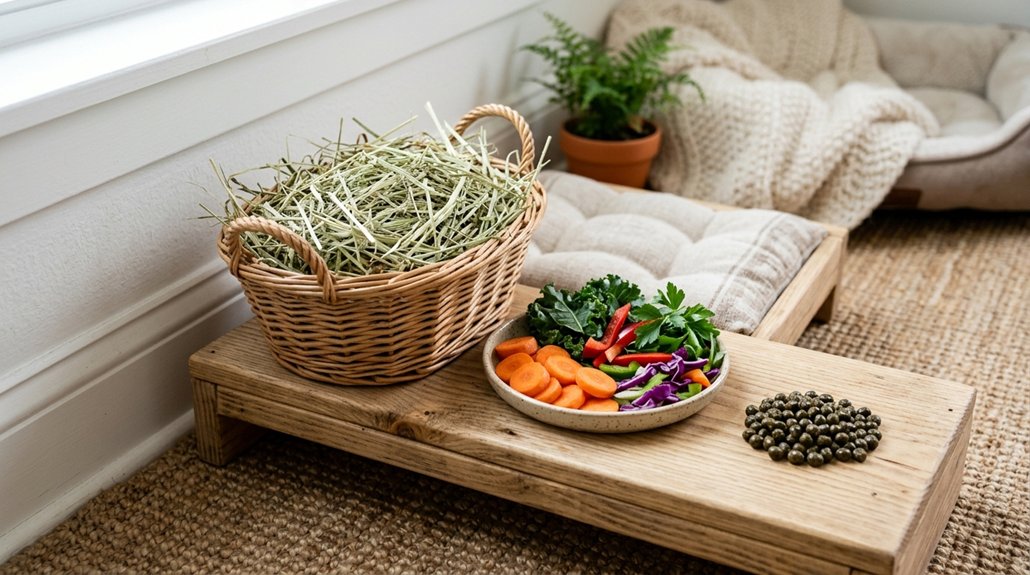
Are you curious about how to guarantee your rabbit thrives? Ensuring a diverse vegetable variety in their diet is essential. Leafy greens should make up about 10% of your rabbit’s intake, contributing to their vital nutrition. Safe options include romaine lettuce, parsley, and cilantro, but limit high-oxalate choices like kale and spinach to 1-2 meals weekly. A mix of five to six different leafy greens daily will enhance nutritional variety. For adult rabbits, offer approximately 2 cups of vegetables per 6 pounds of body weight; dwarf breeds require about 1 cup. Introduce new vegetables gradually to monitor for digestive issues. Always wash them thoroughly to eliminate harmful pesticides and bugs, safeguarding your rabbit’s health.
How Pellets Complement Hay and Vegetables
After providing your rabbit with a well-rounded selection of vegetables to enhance its nutrition, it’s important to understand the role of pellets in their diet. Pellets act as a concentrated source of pellet nutrition, providing essential vitamins and minerals absent in hay and vegetables. Ensuring high fiber content, minimum 18%, is vital for digestive health, promoting gastrointestinal motility and assisting in dental wear.
Pellets are key to providing essential nutrients and promoting digestive health with their high fiber content.
Consider these key points:
- Rabbits need pellets free from seeds, nuts, or dried fruits to prevent digestive issues.
- Limit pellet intake to no more than 5% of the total diet, adapting to your rabbit’s weight to avoid obesity.
- For adult rabbits, prioritize hay (80-90%) and vegetables (10-15%), reducing pellet proportion.
- Regular pellet access supports metabolic needs alongside unlimited hay.
Picking the Perfect Pellets for Your Rabbit
Selecting the right pellets for your rabbit’s diet is vital to guarantee they receive proper nutrition. Begin with a fiber content analysis, confirming pellets contain at least 18% crude fiber, supporting their digestive health and helping to prevent obesity. Verify the pellet ingredient quality by opting for those primarily made from grass hays, like timothy, and steering clear of formulations with seeds, nuts, or colorful additives. These extras may seem appealing but can harm your rabbit. For average-sized adults, administer about 1/4 cup daily. Smaller rabbits, under 5 pounds, should receive approximately 1/8 cup. Confirm pellets remain fresh, free from mold or dust, as deteriorated quality can lead to health issues. Shift gradually to prevent digestive upset. Monitoring is significant.
Age-Specific Feeding Guidelines
As rabbits grow, their dietary requirements change considerably, demanding adjustments to guarantee proper nutrition throughout various life stages. Key feeding stage milestones begin with newborns reliant on mother’s milk, moving to alfalfa hay by three weeks. Weaning at seven months introduces young rabbits to unlimited pellets and progressively fresh vegetables. Young adults from seven months to one year require reduced pellets and should shift to grass hays for fiber. Mature rabbits should have unrestricted hay access, controlled pellets, and varied vegetables. Senior rabbits may need increased pellets if underweight, counteracting nutrition misconceptions by providing necessary sustenance for health.
- Baby rabbits: Depend on mother’s milk; introduce alfalfa hay at 3 weeks
- Young rabbits: Unlimited pellets; gradual vegetable introduction post-weaning
- Young adults: Reduced pellets; shift to grass hays
- Mature and senior rabbits: Unlimited grass hay and controlled pellets
Treating Your Rabbit Right: How Much Is Too Much?
Ensuring your rabbit’s diet is balanced involves strict monitoring of treat intake, especially high-sugar fruits which should only be offered sparingly. Treat frequency should be limited to 1-2 times per week and portion sizes controlled to prevent obesity and digestive issues. By adhering to these guidelines, you can provide your rabbit with a healthy and nutritious diet without compromising their well-being.
Limiting Sugary Rabbit Treats
While it can be tempting to treat your rabbit to sweet delights, limiting sugary treats is essential for their health. Awareness of sugar content is key to preventing obesity and related issues. High-sugar fruit varieties like bananas and grapes should be given cautiously: 1-2 tablespoons per 6 pounds of body weight, at most 1-2 times a week. Proper moderation practices dictate that treats should not exceed 5% of your rabbit’s diet.
Consider these guidelines:
- Opt for treat alternatives with lower sugar content.
- Gradually introduce new fruits to monitor digestive health.
- Limit sugary fruits to 2-3 instances per month.
- Inspect ingredient labels, avoiding added sugars and artificial additives.
Monitoring Treat Frequency
Balancing sweet rewards and a rabbit’s health demands vigilance, so you’ve got to focus on monitoring treat frequency. Limit high-sugar fruit treats to 1-2 times a week, ensuring they’re no more than 1-2 tablespoons per 6 pounds of rabbit body weight. Overindulgence can lead to obesity and digestive woes. Monitor reactions to new treats; discontinue those causing diarrhea or upset. Stick to a maximum of 2-3 sugary treats monthly for diet balance. Evaluate commercial treats by reviewing ingredient lists and avoiding sugar, preservatives, or artificial colors. Study the table below for insights:
| Treat Type | Frequency |
|---|---|
| High-sugar fruits | 1-2 times/week |
| Commercial treats | Ingredient-dependent |
| Max sugary treats | 2-3/month |
| Approved fresh fruits | Limited to body weight |
| Monitor reactions | Observe for upset |
Troubleshooting Common Dietary Mistakes
When managing your rabbit’s diet, it’s essential to avoid common mistakes that can lead to significant health issues. Common dietary errors such as overfeeding pellets and poorly adapting to vegetables can cause digestion issues and obesity. Make sure to:
- Limit pellets to 1/4 cup per 6 pounds of body weight daily to prevent obesity.
- Introduce new vegetables gradually over several weeks to avoid digestive upset.
- Restrict high-oxalate vegetables like kale and spinach to 1-2 meals per week due to their impact on calcium absorption.
- Avoid muesli-style foods as they encourage selective eating, leading to obesity and dental disease; instead, focus on a hay-based diet.
Regularly monitor droppings for changes; sticky droppings can indicate digestive problems needing veterinary attention.
Frequently Asked Questions
What Is the 3-3-3 Rule for Bunnies?
The 3-3-3 rule highlights dietary needs by ensuring food variety: provide three types of hay, three fresh leafy greens, and three vegetables daily. This approach balances nutrition and promotes digestion, preventing deficiencies in a rabbit’s diet.
Can Rabbits Survive on Just Hay and Pellets?
Imagine Luna, a hypothetical rabbit, thriving on hay’s digestive benefits and nutrient-dense pellet types. However, while they support survival, incorporating vegetables adds essential nutrients, moisture, and variety, enhancing health. Balance remains key for an ideal diet.
How Do Rabbits Say “Sorry”?
Rabbits say “sorry” through their bunny communication, like using a soft rabbit body posture, leaning against you, or “binkying.” They may also nuzzle or groom you gently, signaling remorse and a desire for reconciliation.
Can Rabbits Hear You?
Yes, rabbits can hear you. Their advanced hearing abilities and sound sensitivity make them highly responsive to your voice. Speak softly to accommodate their acute sense, ensuring a calm environment to prevent stress or fear.
Conclusion
To keep your rabbit thriving, align its diet with nature’s design. Hay acts as the foundation, maintaining digestion and dental health. Vegetables add color and nutrients, diversifying the plate. Pellets supply concentrated nourishment tailored to age and size. Moderation is key—treat wisely and avoid excess. Guard against pitfalls by learning from common mistakes. In combining these elements, you create a harmonious, balanced diet, ensuring your rabbit’s health, happiness, and longevity.