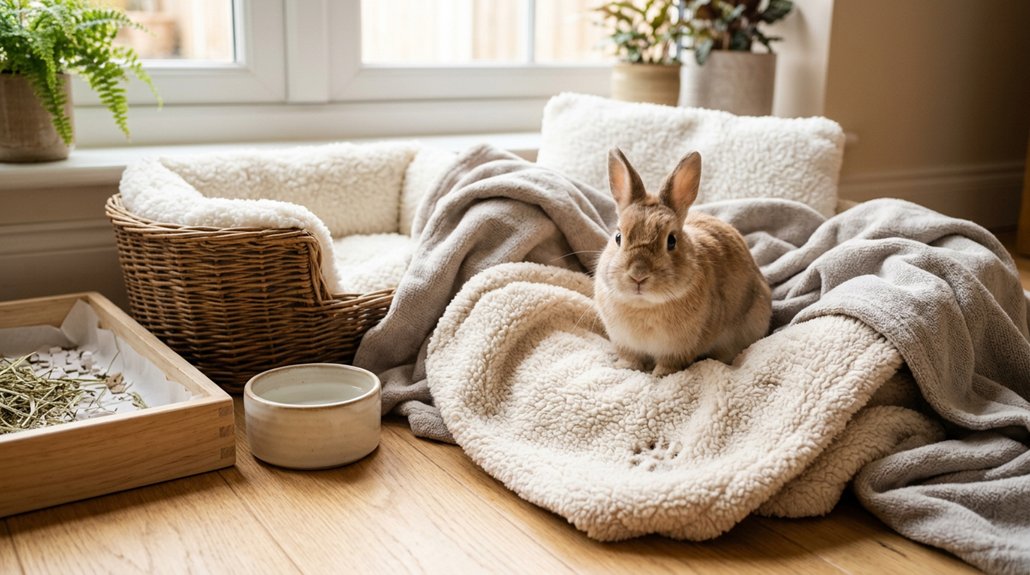
For ideal rabbit health, prioritize dust-free paper bedding for its absorbency and respiratory safety; recycled options align with eco-conscious practices. Indoors, select kiln-dried aspen shavings for reduced irritants and odor control. Outdoors, use dust-extracted straw layered with wood pellets for effective insulation and moisture management. Absolutely avoid sawdust, cedar, and clay-based litters due to health hazards. Master these choices for superior rabbit care and discover more strategies for maintaining a hygienic, nurturing home.
Key Takeaways
- Paper bedding offers excellent absorbency and odor control, minimizing respiratory risks with its 99% dust-free formulation.
- Kiln-dried pine and aspen shavings are safe, providing comfort and mitigating respiratory irritants for rabbits.
- Avoid cedar and untreated pine; their aromatic oils are harmful to rabbit respiratory health.
- Straw is suitable for outdoor warmth but should be dust-extracted to prevent ocular irritation.
- Regularly change bedding to prevent ammonia buildup and maintain a healthy rabbit environment.
Why Does Bedding Matter for Your Rabbit’s Health?
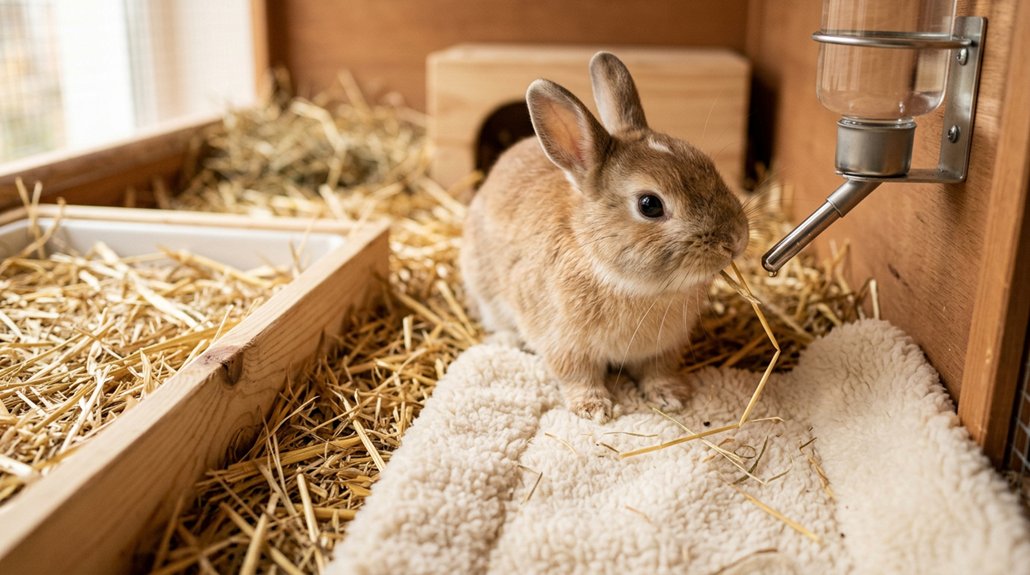
One fundamental aspect of rabbit care lies in choosing the correct bedding, which directly influences their respiratory health. With numerous bedding materials available, selecting a dust-free option is paramount to prevent respiratory issues. Ensuring high absorbency is critical; it helps manage ammonia levels from urine, thereby reducing potential lung irritation and improving the atmospheric quality.
Furthermore, opt for bedding that’s soft and comfortable to bolster natural nesting instincts and enhance psychological well-being. Suboptimal choices risk not only increased respiratory concerns but also conditions like pododermatitis, as inadequate cushioning leaves delicate feet exposed to abrasive surfaces. Hence, you’ve got to maintain diligent hygiene by regularly renewing the bedding to curtail bacterial proliferation, ensuring a sanctified habitat conducive to your rabbit’s health.
Indoor vs. Outdoor Rabbit Bedding: Which Is Right for You?
When considering the ideal bedding for your rabbit, how do you determine the right choice between indoor and outdoor solutions? Understanding your rabbit’s environment can enhance their bedding preferences for maximum rabbit comfort. Indoor bedding demands high absorbency and minimal dust to maintain respiratory health, with materials like paper or aspen shavings being ideal. Outdoor options, by contrast, lean towards insulation, using straw to trap warm air.
- Indoor Bedding: Prioritize soft, absorbent, dust-free materials.
- Outdoor Bedding: Straw provides insulation and environmental biodegradability.
- Maintenance: Indoor requires frequent spot cleaning; outdoor needs checks for moisture.
- Safety: Verify outdoor bedding is dust-extracted, devoid of sharp edges.
- Environmental Impact: Consider compostability to mitigate ecological footprint.
Regular assessment is imperative, confirming conditions align with your rabbit’s utmost comfort.
How Do Paper Bedding Options Benefit Your Rabbit?
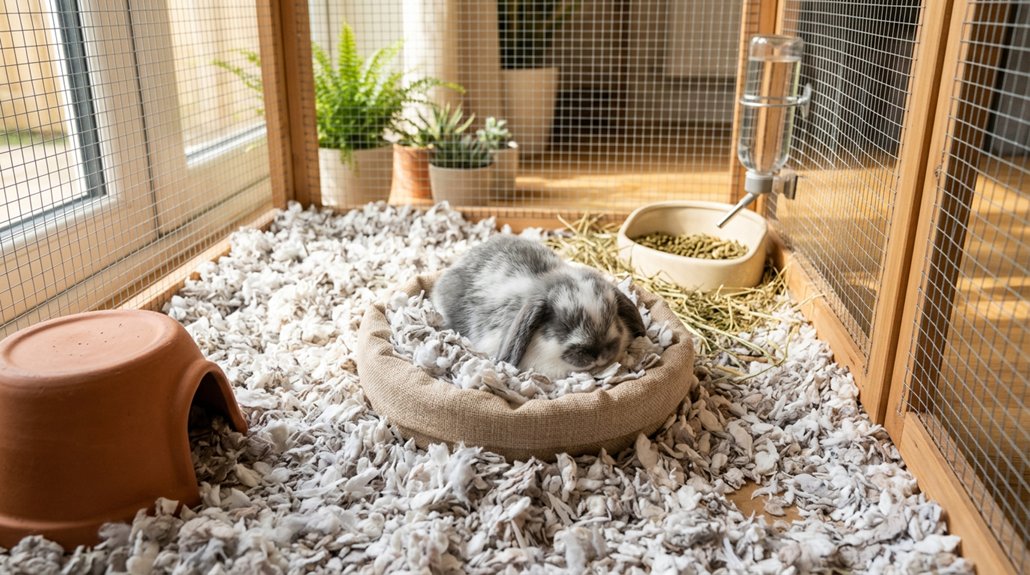
Evaluating your rabbit’s bedding needs involves considering both environmental conditions and material features, particularly the nuances of indoor and outdoor habitats. Paper bedding options, such as Megazorb and shredded paper, offer superior absorbency and olfactory containment critical to maintaining an odor-neutralized habitat. Their 99% dust-free formulation mitigates respiratory vulnerabilities, safeguarding your lagomorph from particulate-induced ailments. The bedding texture provides a plush, soft surface, catalyzing nesting behavior that enhances psychological well-being and maximizes comfort.
This sludge-free, ink-safe bedding guarantees a non-toxic environment, minimizing chemical exposure risks inherent in some traditional substrates. Environmental stewardship is realized through the use of recycled materials, aligning with eco-conscious paradigms. Prioritize these features to fortify a thriving, cozy domicile for your companion, leveraging functional and sustainable choices for peak health outcomes.
Are Straw and Hay Ideal for Outdoor Rabbit Habitats?
As an outdoor rabbit caretaker, it’s essential to differentiate between straw and hay to optimize environmental conditions for your furry companions. Straw benefits include its superior warmth retention and absorbency, vital for colder climates. Conversely, hay differences emerge as it’s primarily dietary, failing to retain moisture and risking mold proliferation.
When selecting straw, prioritize dust-extracted and soft varieties to mitigate ocular irritation. Enhancing habitats through strategic layering—straw atop wood-based pellets—creates an optimized microclimate by combining effective moisture control with thermal efficiency.
Regular inspections are important to avoid dampness and potential mold. Here’s what to guarantee for your rabbit’s well-being:
- Employ dust-extracted straw.
- Check for mold routinely.
- Layer with wood pellets for enhanced insulation.
- Prioritize moisture-resistant bedding.
- Differential application based on weather conditions.
What Are the Pros and Cons of Wood Bedding?
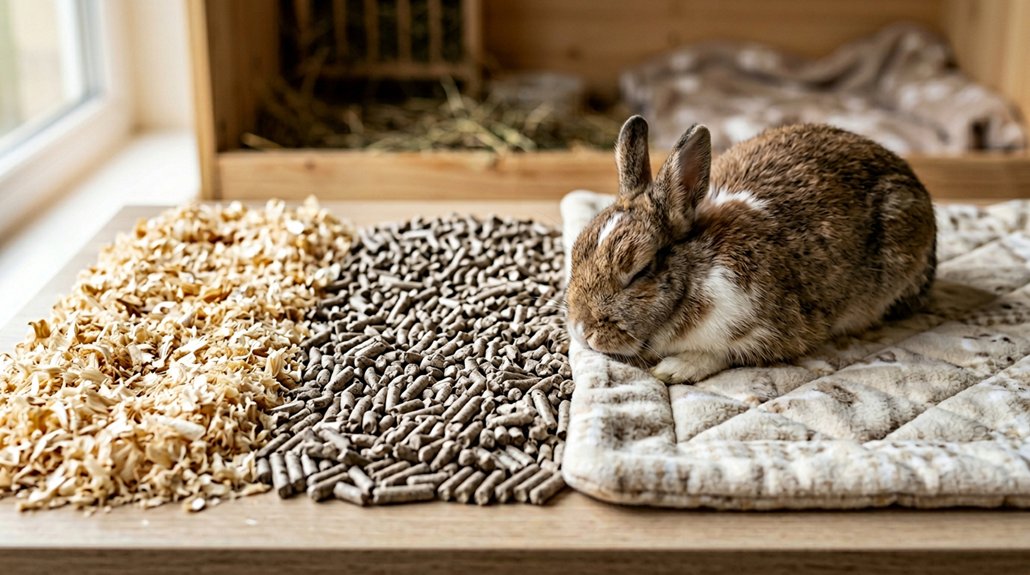
When selecting wood bedding, it’s essential to prioritize types like kiln-dried pine or aspen shavings to mitigate respiratory irritants while ensuring the habitat is in a well-ventilated area. You’ll find that wood-based pelleted bedding excels in absorbency and odor control, but it should be paired with softer substrates for optimal comfort. Remember, routine assessment for dust and moisture is imperative to maintain an eco-friendly and rabbit-safe living environment.
Safety and Irritation Concerns
Selecting the appropriate wood bedding for your pet rabbit isn’t merely about comfort—it’s about safeguarding their health. Explore the nuances, and you’ll find that wood shavings, especially when kiln-dried, considerably limit bedding irritants and respiratory issues. Avoid cedar or non-kiln-dried pine as their aromatic oils spell danger for your furry companion’s respiratory wellness. Wood pellets, though safe and non-toxic when heat-processed, often need softer underpayments to enhance sleeping ease.
Monitoring for mite presence and guaranteeing product cleanliness is non-negotiable. Consider these key aspects:
- Opt for kiln-dried wood shavings to mitigate irritating phenols.
- Ensure adequate ventilation to lessen respiratory aggravation.
- Pair wood pellets with softer materials.
- Regularly inspect for mites in the bedding.
- Choose biodegradable options like aspen for reduced skin irritation.
Absorbency and Odor Control
Guiding through the domain of wood bedding for pet rabbits involves understanding its dual roles in absorbency and odor control. Kiln-dried pine and aspen shavings are key bedding materials, praised for their smell absorption efficacy and moisture-wicking capabilities. However, effective implementation requires knowledge—be aware that despite their olfactory benefits, these shavings must be housed in a well-ventilated environment to eschew inhalation risks. Their potential biocompatibility hinges on the absence of pernicious oils and phenols. Wood-based cat litter pellets proffer enhanced absorbency, albeit necessitating complementary layers of soft, non-irritating substrates like straw. Avoid cedar shavings deliberately; their volatile aromatic compounds present latent respiratory and dermal hazards. Prioritize mitigating these risks to optimize environmental parameters for your rabbit.
Environmental Impact
As you turn your attention to the intricacies of choosing suitable bedding for your rabbit, it’s important to weigh the environmental ramifications of wood-based materials. Leveraging biodegradable materials like aspen or kiln-dried pine offers environmentally harmonious options through their compostable nature. Their inherent absorbency minimizes habitat waste, enhancing sustainability. However, sustainable sourcing is pivotal; only responsibly processed woods guarantee toxic oils don’t jeopardize respiratory health. Explore these multifaceted considerations:
- Biodegradability: Wood bedding can naturally decompose, reducing landfill impact.
- Absorbency: Effective at moisture control, fostering a sanitary habitat.
- Odor Control: Quality wood bedding curtails malodorous emissions efficiently.
- Pine/Cedar Risks: Harmful oils require kiln processing for safety.
- Responsible Sourcing: Guarantees environmental viability and rabbit well-being.
What Bedding Should You Avoid to Keep Your Rabbit Safe?
When it comes to keeping your rabbit safe, understanding the nuances of bedding materials is essential. It’s important to steer clear of sawdust, as its dust-heavy composition can lead to severe skin and lung irritation—key sawdust dangers that can compromise your rabbit’s health. Likewise, clay-based clumping litters are infamous for the clay litter risks they present; ingestion of these can result in gastrointestinal blockages, posing a grave threat to your rabbit. Furthermore, cedar and non-kiln dried pine shavings harbor detrimental aromatic oils, significantly jeopardizing respiratory efficacy. Avoid bedding such as straw and hay due to insufficient absorbency and the peril of mold proliferation. Finally, newspaper’s deficient liquid retention and ink toxicity render it wholly unsuitable for sensitive lagomorph environments.
How to Keep Your Rabbit’s Space Clean and Fresh?
Maintaining your rabbit’s habitat impeccably is essential for its health and comfort. Implementing a stringent bedding maintenance regimen will thwart ammonia accumulation and uphold a fresh, hygienic ambience. Adhere to a cleaning schedule of replacing bedding bi-weekly, and employ a 50/50 vinegar-water solution for rigorous sanitation of bedding and litter facilities, which also neutralizes malodorous emanations. Constant vigilance over bedding’s absorbency levels safeguards against moisture-related ailments.
- Dust-Free Precision: Opt for bedding that is 99% dust-free to mitigate respiratory complications.
- Specific Zoning: Designate distinct sleep and potty zones for streamlined cleaning.
- Efficacious Solution: Vinegar-water blend is paramount for odor neutralization.
- Prompt Changeover: Replace sullied bedding immediately to avert health risks.
- Consistent Spot Cleaning: Deter ammonia buildup with regular spot checks.
Frequently Asked Questions
What Type of Bedding Do Rabbits Prefer?
Rabbits prefer bedding materials that align with their nesting preferences—opt for high-absorbency, low-dust substrates like paper-based or hemp bedding. Always avoid sharp particles, ensuring comfort and breathability while considering environmental enrichment and thermoregulation needs.
What Is the 3-3-3 Rule for Bunnies?
The 3-3-3 rule dictates bunny behavior and rabbit comfort. First, anticipate initial shock; then, nurture bonding phases; finally, solidify routines. Prioritize consistent handling and environmental stability to guarantee your rabbit’s ideal adjustment and mitigate stress indicators.
How Do You Say “I Love You” in Rabbit Language?
You’d say “I love you” in rabbit language through understanding their nuanced communication. Observe bunny emotions like nudging, grooming, binkies, teeth grinding, or flopping, signaling trust and affection. Mind rabbit signals to avoid misinterpreting their complex behaviors.
How Do Rabbits Say Goodbye?
Rabbits say goodbye through nuanced social behavior and subtle changes in rabbit body language. You’ll notice increased withdrawal or affectionate grooming. These behaviors are ethological indicators of their instinctual response to perceived terminal changes, so handle them cautiously.
Conclusion
When selecting the right bedding, it’s vital to prioritize your rabbit’s health; did you know that rabbits spend about 80% of their time on or in direct contact with their bedding? Ensuring you’re using safe materials like paper prevents respiratory issues. Although wood shavings might seem cost-effective, they can emit phenols that risk hepatotoxicity. Always opt for high-absorbency, dust-free options and stay vigilant—frequent bedding changes are essential to maintain ideal sanitation and avoid the proliferation of harmful bacteria.