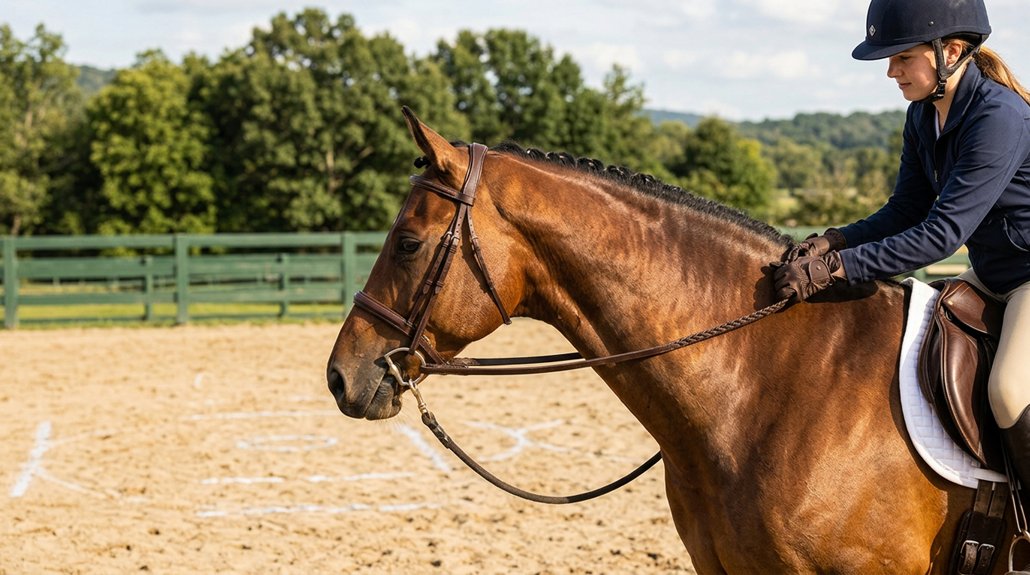
To train a horse as a beginner, start by building trust through groundwork and gentle exercises like grooming and hand feeding. Understand horse behavior by recognizing body language and maintaining a calm atmosphere. Introduce core techniques such as desensitization and lunging for basic commands. Gradually develop riding skills using clear cues and consistent practice. Keep training positive with reinforcement and patience. Achieving small victories will build the foundation for further learning and success. More awaits to enhance this journey.
Key Takeaways
- Begin with trust-building exercises, such as grooming and hand feeding, to establish a foundation of trust with your horse.
- Learn to recognize and respond to horse body language to ensure effective communication and safety during training.
- Use consistent groundwork routines to teach yielding to pressure, building respect and responsiveness.
- Gradually introduce tack and employ desensitization techniques to reduce the horse’s fear of new situations.
- Implement positive reinforcement and maintain a calm atmosphere to encourage cooperation and boost the horse’s confidence.
Build Trust Through Foundational Groundwork
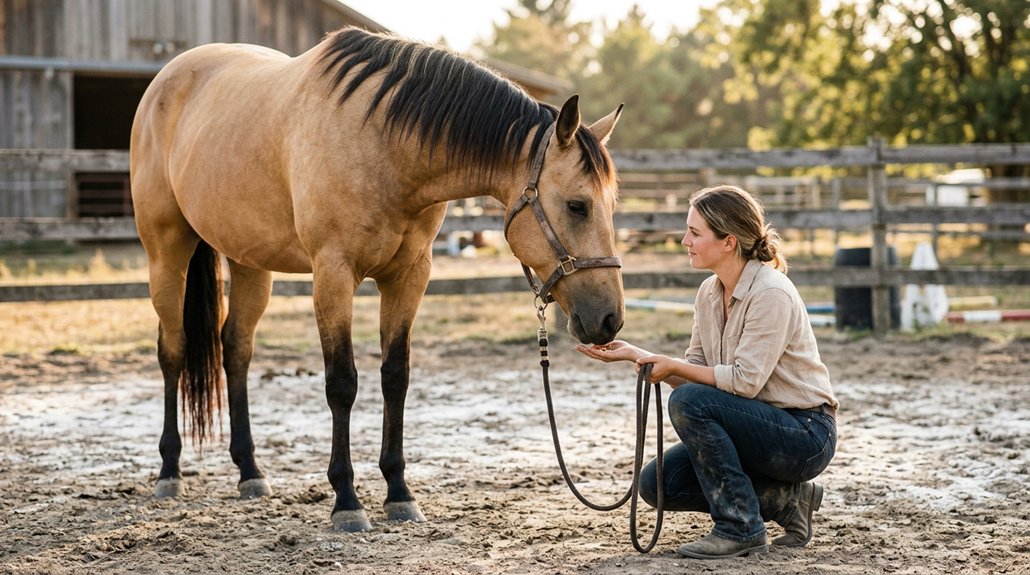
When beginning the journey of training a horse, building trust through foundational groundwork is vital. To establish a strong bond, start with trust-building exercises like gentle grooming and hand feeding. These calm interactions foster positive connections between you and the horse. Groundwork routines involve teaching basic movements: yielding to pressure during leading, stopping, and turning. This helps instill respect and responsiveness, essential for effective communication. Consistent cues make your groundwork more reliable, reinforcing calm behavior as a precursor to successful riding. Always use a halter and lead rope confidently to guarantee safety for both parties. Watch for horse body language to identify stress or comfort. Through these insights, you’ll strengthen your relationship, promoting secure and confident training progression.
Learn Horse Behavior for Effective Training
Understanding horse behavior is essential for effective training, especially given that horses are prey animals with survival instincts that shape their reactions. Grasping horse psychology involves recognizing the subtle cues in your horse’s body language. Look for signs of discomfort, like pinned ears or flinching; these indicate stress and guide your response. As beings sensitive to emotions, horses mirror the handler’s mood. Maintaining calmness fosters a positive learning atmosphere, while negativity breeds insecurity. Creating trust with consistent handling and positive reinforcement encourages cooperation. Furthermore, respect herd behavior principles—leadership should never equate to dominance. Instead, gently assert your position to enhance training effectiveness. This understanding fundamentally supports your horse’s responsiveness to cues and commands while ensuring a safer interaction.
Introduce Core Training Techniques for Beginners
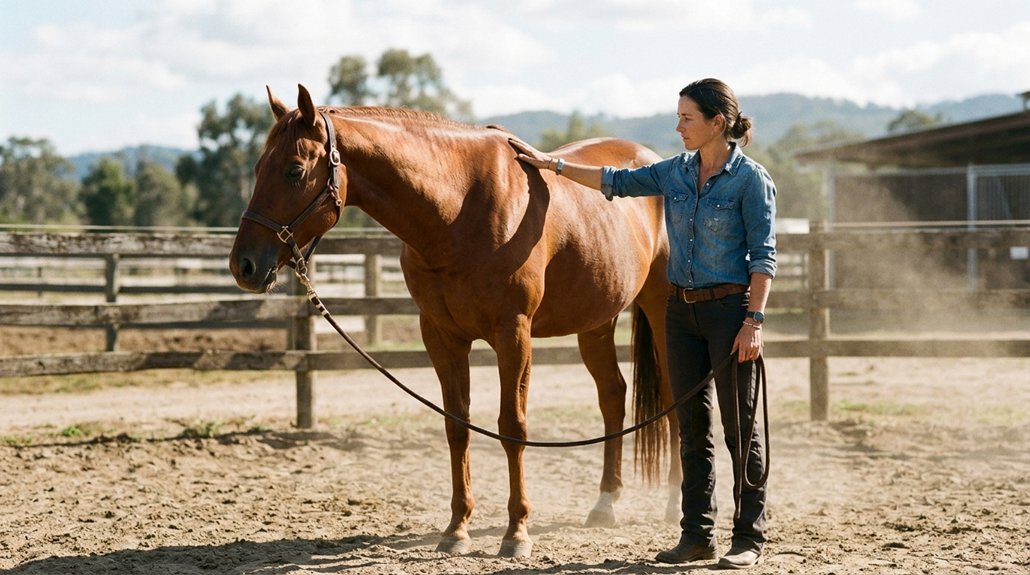
Grasping horse psychology equips you to adopt effective training techniques that are the cornerstone of a fruitful horse-human bond. Establishing solid groundwork is pivotal, nurturing trust and mutual respect between you and your horse. Begin with basic ground manners, such as using a halter and lead rope, fostering safety and comfort during handling. Desensitization techniques are essential; they gradually expose your horse to new objects and sounds, diminishing fear and anxiety. Incorporate lungeing exercises to instill voice command and body language cues, boosting your horse’s focus and attention. When it comes to tack introduction, proceed slowly, allowing your horse to acclimate to the equipment, easing any potential tension.
- Build unyielding trust and respect
- Foster an unbreakable bond
- Empower shared understanding and growth
- Elevate experiences together
Develop Riding Skills With Progressive Exercises
As you begin developing riding skills with your horse, the groundwork already established becomes invaluable, ensuring a seamless change to more advanced exercises. Start with lateral flexion exercises to develop cues, allowing the horse to bend and respond to rein pressure. Use lunging techniques to enhance responsiveness, grounding your horse’s understanding of voice and body language before you saddle up. Progress to riding maneuvers such as steering and stopping with clear cues and gentle pressure.
Regular, short practice sessions keep focus sharp and build skill retention. Here’s a quick overview:
| Exercise | Purpose |
|---|---|
| Groundwork | Build trust, communication |
| Lateral Flexion | Rein pressure response |
| Lunging | Voice command comprehension |
| Riding Maneuvers | Cues for steering and stopping |
| Short Sessions | Reinforce and retain learned skills |
Ensure Training Is Consistently Positive and Supportive
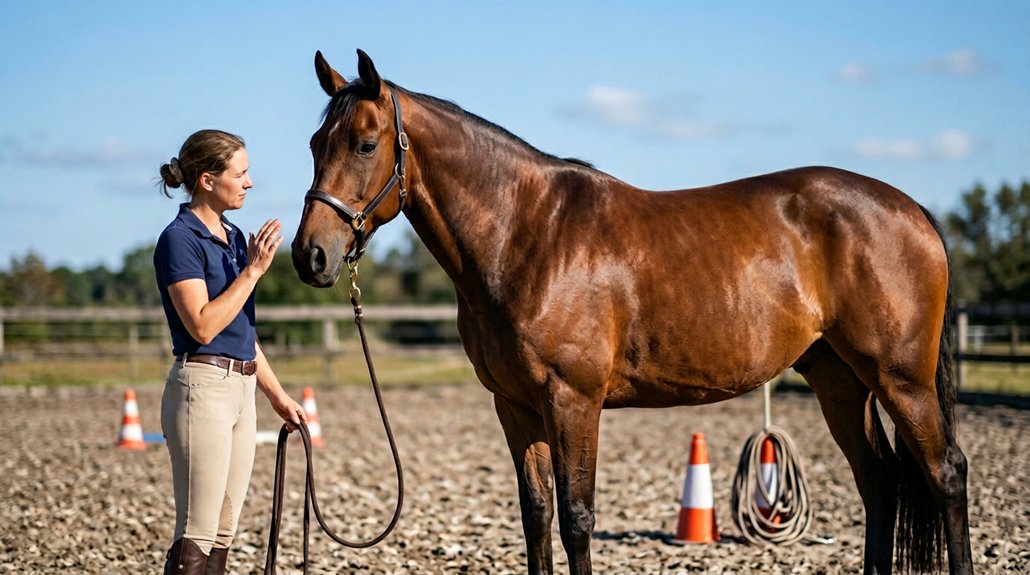
A positive and supportive training environment is essential for fostering a strong bond and effective learning with your horse. Consistent use of positive reinforcement, like treats or praise, can greatly boost their confidence and willingness to learn. Keep your interactions calm and clear, ensuring your horse feels safe and receptive. Patience is vital; rushing will only lead to frustration and setbacks.
- Brief yet regular sessions prevent overwhelming your horse, maintaining enthusiasm and retention.
- Your emotions influence your horse; they sense energy, so approach every session with a calm demeanor.
- Celebrate small victories, letting your horse know success is valued.
- Positive reinforcement creates a bond that’s based on mutual trust and respect, encouraging a harmonious learning experience.
Frequently Asked Questions
How Often Should I Train My Horse Each Week?
Train your horse 4-6 days a week for ideal results. A consistent training schedule is essential to progress, but always gauge their well-being and adjust as needed. Consistency builds trust, enhances skills, and fosters better communication.
What Type of Equipment Do I Need for Horse Training?
Think of a young rider conquering their first jump. You’ll need appropriate saddle types like a jumping or general-purpose saddle, and essential training tools such as lunge lines and halters to effectively guide your horse’s journey.
How Can I Tell if My Horse Is Stressed?
You’ll spot stress signals in your horse’s behavior through signs like frequent yawning, tail swishing, or teeth grinding. Look for changes in appetite or increased restlessness; these can indicate your horse is feeling stressed.
What Signs Indicate My Horse Is Ready for Advanced Training?
Your horse shows training readiness signals like consistent response to cues and calm behavior under pressure. Advanced training milestones include maintaining focus despite distractions and exhibiting enthusiasm to learn new tasks. You’ve noticed these, they’re ready.
How Do I Handle a Horse That Refuses to Follow Commands?
When your horse refuses commands, start by staying calm. Overcoming resistance involves patience and consistency. Build trust through positive reinforcement and reassurance, ensuring they understand you’re a reliable leader. Gradual progress fosters cooperation and eventual command acceptance.
Conclusion
As you commence on this journey of horse training, you’ll find that trust, knowledge, techniques, and skills naturally intertwine, like strands in a braid. Coincidentally, with every step forward, both you and your horse evolve together, forming a bond that’s more profound than mere training. Embrace each challenge as a chance to deepen this connection. Your insight and commitment will transform shared experiences into a mosaic of learning, where positive and supportive guidance is the true masterpiece.