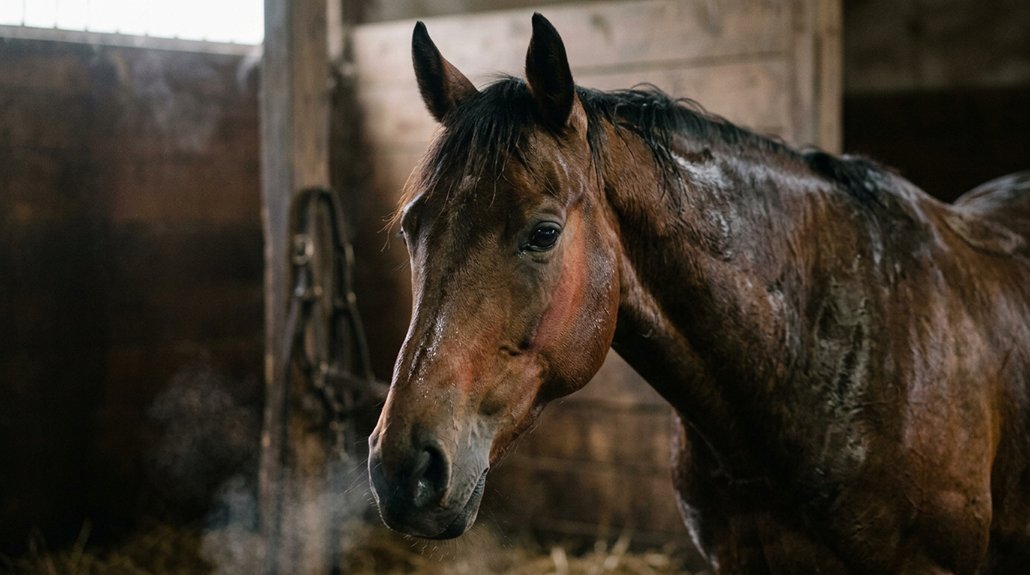
To determine if a horse has a fever, use a digital rectal thermometer to check if the temperature exceeds 101.5°F for adults or 102.0°F for foals. Typical signs of fever include lethargy, decreased appetite, and behavioral changes. Record all observations, including heart and respiratory rates. If the temperature continues to rise, consult a vet promptly. Familiarizing yourself with these signs can aid in recognizing fever conditions early and understanding what steps to take next.
Key Takeaways
- Measure the horse’s rectal temperature with a digital thermometer for an accurate fever diagnosis.
- Observe for behavioral signs like dullness, lethargy, and decreased appetite.
- Check for physical symptoms such as hanging head posture and reduced energy.
- Monitor respiratory rate and note any labored or irregular breathing patterns.
- Look for nasal discharge, especially green or yellow, indicating a possible infection.
Recognizing Normal vs. Elevated Temperatures in Horses
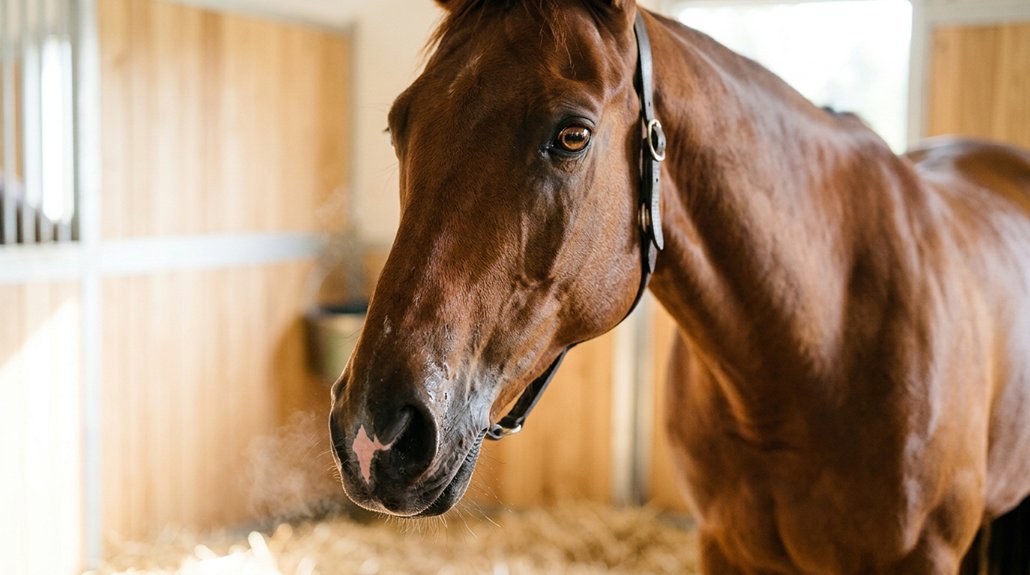
Understanding how to differentiate between normal and elevated temperatures in horses is crucial, especially considering their narrow thermal comfort range. An adult horse’s normal temperature spans from 99 to 101 °F, with 100 °F being average. When a horse’s body temperature surpasses 101.5 °F, it signals fever significance and demands attention. Mild fevers reside between 101.5 °F and 102.5 °F, while temperatures at or above 102.5 °F indicate a red-flag fever. For foals, normal temperature ranges from 99.5 to 102.0 °F. If a foal’s temperature reaches or exceeds 102.0 °F with behavioral changes, immediate veterinary consultation is essential. Remember, elevated temperatures from hyperthermia differ from fevers caused by an immune response to pathogens. These distinctions help prioritize appropriate care.
How to Accurately Measure Your Horse’s Temperature
Measuring a horse’s temperature accurately is a critical-care routine that assures the well-being of the animal. To achieve accurate readings, employ a digital rectal thermometer with a fresh battery. Apply a lubricant to the tip for smooth insertion, positioning yourself beside the horse’s hip and facing backward for safety. Insert the thermometer about 1 inch (2–3 cm) into the rectum and hold it in place until it beeps. Record the reading promptly. Should the initial reading be questionable, repeat the measurement after 15–30 minutes for confirmation. Utilize a tail-tie clip or loop on your thermometer to prevent accidental loss during the procedure.
Ensuring a horse’s well-being involves accurate temperature readings with a digital rectal thermometer and proper handling techniques.
- Use a digital thermometer
- Assure fresh batteries
- Position carefully for safety
- Confirm readings when necessary
First Steps When You Think It’s a Fever
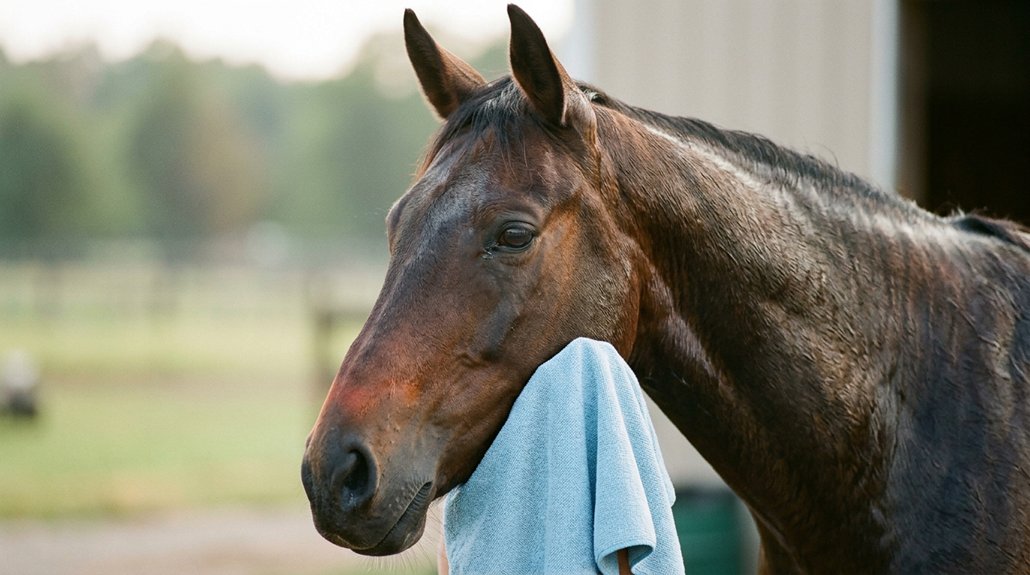
When you suspect a fever in your horse, immediately take its rectal temperature and assess essential signs, including heart rate and respiratory rate, to establish a thorough baseline. If the temperature exceeds 101.5°F (38.6°C), implement immediate cooling measures, such as gently hosing the horse with cool water, to prevent escalation. Consistently record and monitor these parameters to provide accurate information for your veterinarian, facilitating prompt and effective treatment planning.
Assess Horse’s Vital Signs
Before suspecting a fever in your horse, guarantee accurate assessment of its crucial signs, starting with its rectal temperature. Use a digital thermometer, as a reading above 101.5 °F (38.6 °C) suggests a fever. Also, monitor heart and respiratory rates; these often rise with elevated temperatures, potentially indicating distress. Don’t overlook behavioral changes like dullness or lethargy, as they may accompany fever and need vigilant observation. Keep a log of temperature changes alongside other critical signs for ongoing evaluation.
- Check for dehydration: Pinch the skin at the shoulder; slow return indicates dehydration.
- Evaluate breathing patterns: Rapid or labored breathing may suggest fever-induced stress.
- Observe demeanor: A lethargic or disinterested horse might be in pain.
- Record heart rate: Count beats per minute to detect anomalies.
Immediate Cooling Measures
Upon suspecting your horse may have a fever, it’s important to initiate immediate cooling measures to mitigate the risk of complications. Start by employing cooling techniques such as hosing or sponging with cool water—avoiding icy temperatures. This approach helps effectively lower the horse’s body temperature. Once water is applied, promptly scrape off the warmed water, reapplying as necessary. Your horse should be in a calm, draft-free environment; halting measures if shivering begins. Guarantee constant access to clean, fresh water to support hydration and recovery. Monitor crucial signs and behavior for at least 24 hours.
“`markdown
| Step | Action | Notes |
|---|---|---|
| 1 | Apply cool water | Avoid icy water temperature |
| 2 | Scrape off warm water | Repeat this process |
| 3 | Avoid drafts and stress | Stop if shivering occurs |
| 4 | Monitor and hydrate | Keep fresh water available |
“`
Behavioral and Physical Signs of Fever in Horses
When recognizing behavioral changes in a horse with a fever, you’re likely to notice symptoms such as dullness, lethargy, and a marked decrease in appetite. Physically, horses may exhibit a hanging head posture, coupled with a noticeable decline in energy levels and deviations from normal behavior or routine activities. It’s essential to monitor these signs closely, as elevated temperatures above 101.5 degrees Fahrenheit often necessitate veterinary evaluation, particularly when accompanied by additional symptoms like increased respiratory rate or any swelling around wounds.
Recognizing Behavioral Changes
Identifying behavioral changes in a horse can be crucial for determining if it has a fever, since these changes often precede or accompany physical symptoms. You’ll want to watch for emotional changes like a dull demeanor or listlessness, where the horse appears disengaged, often lowering its head. Movement reluctance is another key indicator, as feverish horses may avoid physical activity due to discomfort. Reduced appetite is common, manifesting through disinterest in food and possibly indicating systemic distress. Recognizing these behavioral cues is essential, as they could signal imminent physical symptoms.
- Emotional changes: Dull demeanor, listlessness
- Movement reluctance: Avoiding usual physical activities
- Appetite reduction: Showing disinterest in feeding
- Respiratory abnormalities: Labored breathing or irregular patterns
Keep monitoring for these signs to guarantee timely veterinary care.
Identifying Physical Indicators
Although behavioral changes are often the first indicators of a fever in horses, recognizing physical indicators is equally essential for accurate assessment. A thorough symptom evaluation includes checking for elevated rectal temperatures. Horses generally have normal body temperatures ranging from 99-101°F (37.2-38.3°C). Importantly, any temperature fluctuations exceeding 101.5°F (38.6°C) identify a fever. Alongside elevated temperatures, assess for a dull demeanor, a noticeable symptom where the horse’s head hangs low with diminished activity interest. Also, observe for decreased appetite, as this could indicate underlying illness. Look out for physical signs such as unusual sweating, nasal discharge, or signs of colic. Together, these assessments provide an all-encompassing understanding of the horse’s health status.
When to Call the Vet: Key Warning Signs
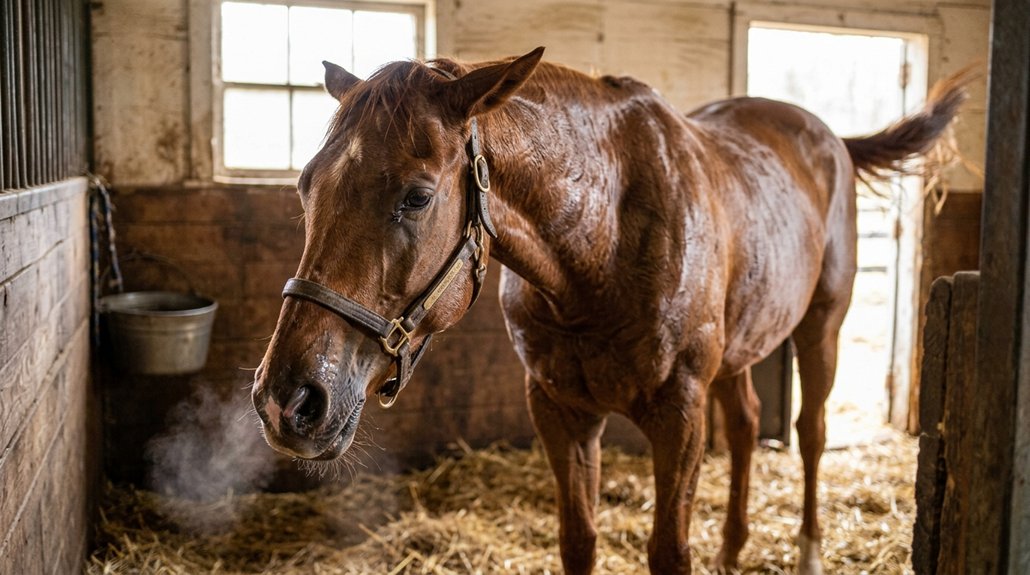
If a horse’s temperature reaches or exceeds 102.5°F (39.2°C) in adults or 102.0°F (38.9°C) in foals, coupled with behavioral changes, it’s crucial to contact a veterinarian immediately. Elevated temperatures that continue to rise within 15-30 minutes should prompt immediate action. Watch for urgent symptoms like severe depression or unusual behaviors such as multiple attempts to roll, indicating possible colic. Additionally, if you notice these critical signs, prioritize veterinary consultation:
- Diarrhea: Either watery or foul-smelling, warrants urgent attention.
- Labored Breathing: Any difficulty in breathing at rest is concerning.
- Nasal Discharge: Particularly if green or yellow, it signals infection.
- Lack of Appetite: Often combined with absence of manure, it’s a significant warning.
Don’t delay; proactive intervention safeguards your horse’s health.
Understand What Causes Fever in Horses
When your horse shows signs that require immediate veterinary attention, understanding the underlying causes of fever is essential. Fever often results from your horse’s immune response to infectious agents, like bacteria or viruses. These agents trigger the production of pyrogens, substances that elevate the horse’s body temperature as a defensive measure. While the normal rectal temperature range for adult horses is 99 to 101°F (37.2–38.3°C), a fever is identified at temperatures above 101.5°F (38.6°C). Conditions such as strangles, anaplasmosis, and Potomac horse fever are known for causing elevated temperatures in horses. It’s important to distinguish true fevers from overheating due to environmental factors, which mimic fever symptoms but aren’t immune-related. High fevers can lead to dehydration and compromised immune responses, necessitating veterinary intervention.
Use Vital Signs to Gauge Severity
Monitoring crucial signs is critical for evaluating the severity of a horse’s fever. Conducting a thorough essential sign analysis provides insight into fever symptoms and potential severity. Start by regularly checking the rectal temperature; a reading above 101.5°F (38.6°C) in adults or 102.0°F (38.9°C) in foals indicates a fever. Make sure you log the heart rate—values above 40 beats per minute can signal distress. Observe respiratory rates closely; surpassing the normal 8-16 breaths per minute suggests illness when fever is present. Additionally, examine your horse’s gums for color changes. Healthy gums are pink, while pale or bluish tones warn of serious issues.
Regularly monitor your horse’s vital signs to assess fever severity and detect serious health issues.
- Temperature above: 101.5°F in adults
- Heart rate: Above 40 BPM
- Breath rate: Over 16 breaths/minute
- Gum color: Pale or bluish signals danger
Track Fever Progress Effectively
Effectively tracking a horse’s fever progress requires meticulous attention to detail and structured monitoring. Begin by conducting fever monitoring with a digital rectal thermometer, measuring the horse’s temperature at least two to four times daily. Note that a temperature exceeding 101.5°F may signify a fever, while surpassing 102.5°F demands immediate veterinary evaluation. Record every temperature reading, the corresponding time, and any behavior or appetite changes, as well as critical signs like heart and respiratory rates, to assess health thoroughly.
Keep a detailed log of these aspects to identify temperature fluctuations and gauge the severity efficiently. Continuous monitoring is essential; pay close attention for symptoms such as lethargy or appetite loss, as these require quick re-evaluation and possibly contacting a veterinarian.
Frequently Asked Questions
What Is the 1/2/3 Rule in Horses?
You should know the 1/2/3 rule in horses involves symptom assessment through temperature monitoring. If a heart rate exceeds 60 bpm, respiratory rate over 20 bpm, and temperature above 102.5°F, seek veterinary help immediately.
How to Bring Fever Down in Horse?
To reduce a horse’s fever, utilize cooling techniques like hosing with cool water, and administer NSAIDs under veterinary guidance. Monitor temperature for fever symptoms every 15-30 minutes, ensuring hydration. Consult a vet if symptoms persist.
What Are the First Signs of Strangles in a Horse?
Picture a ticking time bomb; strangles begins with sudden fever, then mild depression, and reduced appetite. Initial symptoms soon include swollen lymph nodes. Contagious concerns skyrocket as nasal discharge appears, spreading the infection like wildfire in stables.
Is 99.4 a Fever in Horses?
99.4°F isn’t considered a fever in horses. The normal horse temperature range is 99-101°F. Fever indicators include a rectal temperature over 101.5°F. Consistently monitor temperature to identify any deviations or other concerning symptoms.
Conclusion
In summary, understanding your horse’s essential signs is critical for recognizing fevers. If your horse’s temperature exceeds the normal range, first reach for a thermometer rather than sounding the alarm. Watch for key indicators, like changes in behavior or physical signs. If you spot red flags, don’t hesitate to call the vet—time’s ticking like it’s 1999. Remember, effective monitoring and prompt action are your best tools in managing your horse’s health.