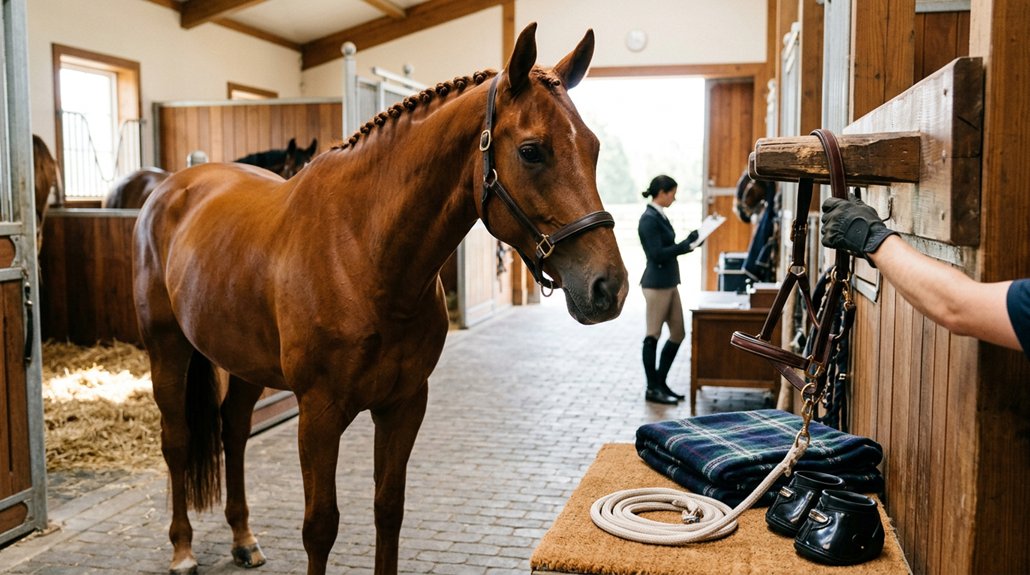
To start your horse ownership journey, first identify your riding goals and choose a suitable breed. Conduct detailed veterinary checks for soundness. Budget carefully for initial costs and ongoing care, including insurance and emergency funds. Prepare a safe and comfortable home with clean stables and secure pastures. Gather essential supplies like tack, grooming tools, and a first aid kit. Guarantee safe transportation arrangements and establish daily care routines. There’s more to explore for a thorough success.
Key Takeaways
- Assess your riding goals to choose a horse breed that aligns with your equestrian pursuits and personal needs.
- Conduct thorough veterinary health examinations to identify underlying issues and ensure long-term soundness.
- Plan your budget for horse ownership, including initial costs, routine healthcare, and emergency expenses.
- Prepare your home for a horse with safe stabling, secure pasture, and consistent feeding and cleaning routines.
- Organize transportation and immediate veterinary care upon your horse’s arrival to maintain optimal health conditions.
Identifying Your Riding Goals and Suitable Breeds
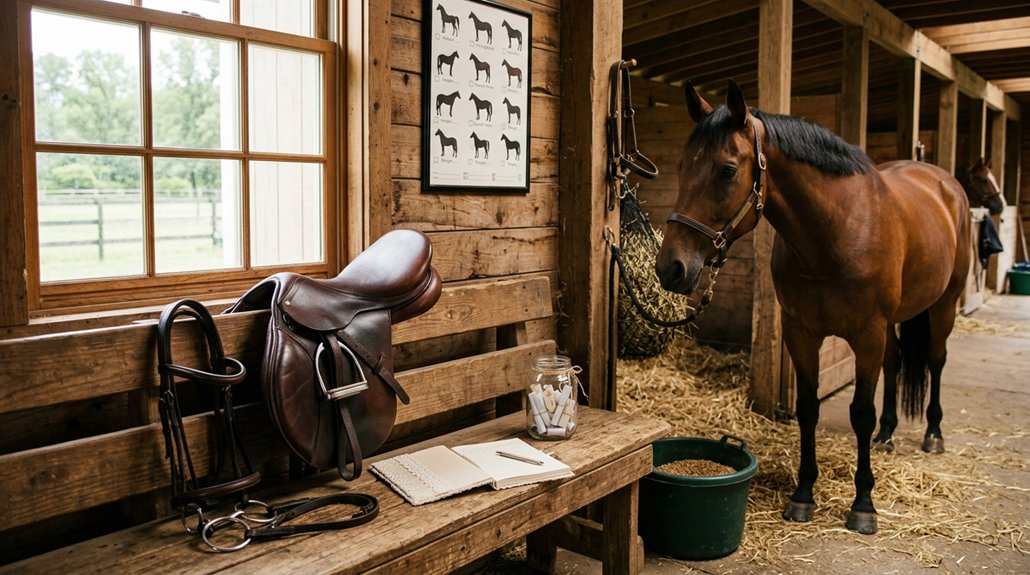
When starting on the journey of horse ownership, it’s essential to assess your riding objectives, as these dictate the breed and type of horse best suited for your needs. First, clarify if your riding goals lean toward leisure or competition, for this precision is vital. For example, if Western disciplines captivate you, Quarter Horses, known for their agility and versatility, might be suitable. If competitive racing or English riding appeals more, Thoroughbreds excel. Beginners often find comfort with docile breeds like Haflingers, while experienced riders might prefer spirited Arabians. Consider size and conformation relative to your physicality and intended use. Ensuring a match in temperament can harmonize your lifestyle and enhance long-term satisfaction, aligning with both budgetary constraints and equestrian pursuits.
Conducting Veterinary Health and Soundness Checks
Before you commit to horse ownership, conducting a thorough veterinary health and soundness check is essential to guarantee your horse’s fitness for its intended use. Understanding veterinary importance starts with an extensive health assessment, which identifies potential underlying issues or signs of lameness. Key components include evaluating the horse’s key signs, joint flexibility, and soundness to ensure future fitness. Explore the horse’s medical history—covering vaccinations, deworming, and previous injuries—to build an overall health profile. Since balancing conformation plays a role in preventing long-term soundness issues, scrutinize this aspect to anticipate performance limitations. Consulting an equine veterinarian familiar with the breed, and even considering a second opinion, provides invaluable insights into specific health considerations during this significant assessment.
Budget Planning for Long-Term Horse Ownership
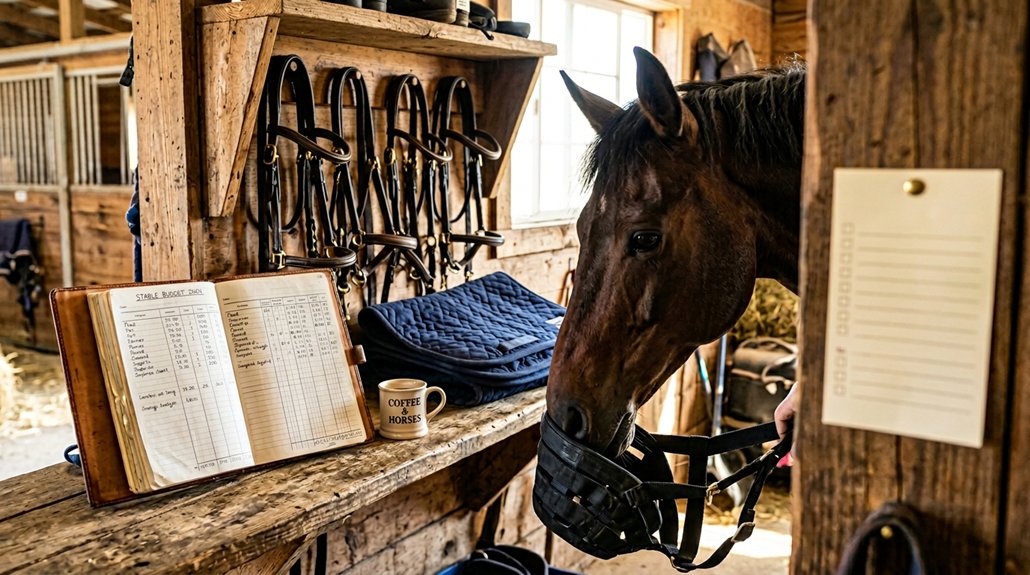
When planning for long-term horse ownership, you’ll need to carefully assess initial purchase costs, which can range widely based on the horse’s specific attributes. Beyond that, setting aside a monthly maintenance budget is essential, as feed, bedding, and farrier services can vary between $400 and $2,000 depending on your horse’s requirements. It’s also critical to allocate funds for unexpected expenses, such as veterinary emergencies, which can be substantial, in addition to reflecting on insurance options to mitigate financial risk.
Initial Purchase Costs
Purchasing a horse represents a significant financial commitment that goes well beyond the initial sale price. Your initial outlay will depend heavily on factors like breed selection, age, and training, with prices ranging from a few hundred to tens of thousands of dollars. Effective purchase negotiations can help manage costs, but don’t forget the ancillary expenses. Allocate funds for essential supplies: tack, grooming tools, feeding equipment, and stable setup can collectively cost over a thousand dollars. Additionally, budgeting for horse insurance, typically $200 to $1,000 annually, provides peace of mind for unexpected veterinary expenses. Creating a financial buffer for emergency bills and routine healthcare like vaccinations and dental care is crucial. Plan strategically to cover all initial costs thoroughly.
Monthly Maintenance Budget
Developing a thorough monthly maintenance budget is vital for sustainable horse ownership, ensuring you’re financially equipped for both predictable and unexpected expenses. Your monthly expenses will typically range from $300 to $1,000, influenced by your horse’s specific needs. Employ budgeting strategies that include the basics: $200-$600 for feed, hay, bedding, supplements, and routine veterinary care. Don’t overlook insurance, costing $30-$100 monthly, which can cushion liability and medical costs. Regular farrier visits are important, with expenses of $30-$150 every 6-8 weeks, based on shoeing requirements. Additionally, consider allocating an extra $50-$150 monthly to handle minor unforeseen costs efficiently. These calculated approaches will help maintain your horse’s health and well-being, supporting a practical long-term ownership experience.
Unexpected Expenses Fund
While establishing a monthly maintenance budget secures regular care, setting up an Unexpected Expenses Fund fortifies your financial readiness for potential crises. Emergency planning begins by accumulating three to six months of horse care costs, averaging $300-$600 monthly, ensuring you’re equipped for unpredictable scenarios. Effective financial forecasting involves anticipating emergency veterinary care costs, which may reach $2,500 for critical treatments like colic surgery. Allocate funds for unforeseen equipment repairs, such as saddles or trailer replacements, totaling several hundred dollars yearly. Consider alternative boarding expenses if your current facility becomes unavailable, varying based on region. Don’t overlook routine maintenance—budget $200-$400 yearly for deworming and dental care. Properly structured, your fund becomes an essential shield against unexpected burdens.
Getting Your Home Ready for Your New Horse
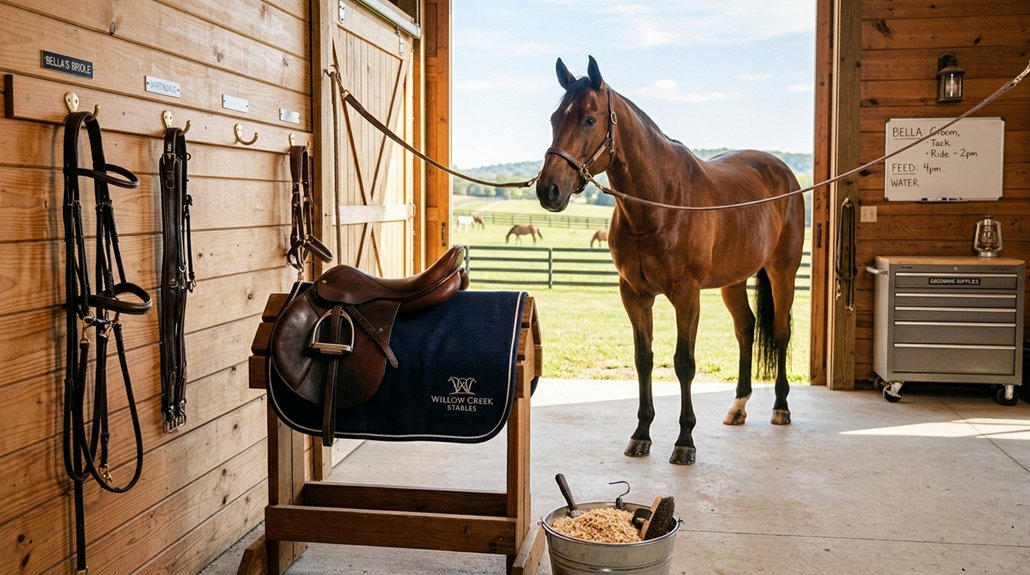
Preparing your property for a new horse involves meticulous attention to several critical factors that contribute to the animal’s well-being and safety. Begin with stable organization by confirming the stable is clean, safe, and equipped with quality bedding to reduce injury risks. Pasture management requires a secure, fenced area offering ample space for grazing and exercise; ideally, it includes shelter for protection against harsh weather. Verify constant access to fresh, clean water by installing water buckets or automatic waterers. Designate an area for storing feed and supplies—use pest-free containers to maintain hay and grain quality. Equip your barn with essential tools, including grooming supplies, first aid kits, and mucking materials. Proper preparation enhances your horse’s comfort and promotes a healthy, safe environment.
Gathering Vital Grooming and Health Supplies
When assembling essential grooming tools, you’ll want to guarantee your kit includes a range of brushes like stiff and soft brushes, a curry comb, and a hoof pick for thorough care of your horse’s coat and hooves. Equally important is an equine first-aid kit stocked with bandages, antiseptics, and a digital thermometer to swiftly address typical injuries and health concerns. Don’t overlook hoof care tools such as a hoof rasp, paired with a veterinarian-recommended deworming schedule, to maintain your horse’s peak health.
Essential Grooming Tools
Owning a horse means you must equip yourself with essential grooming tools that play a vital role in maintaining your horse’s health and appearance. Mastering grooming techniques starts with selecting a reliable curry comb to remove dirt and loosen hair efficiently, enhancing coat maintenance. Follow up with a stiff brush to clear heavy debris, guaranteeing deeper cleanliness. A soft brush comes next; it’s invaluable for adding a shine to the coat, enhancing your horse’s overall look.
Don’t overlook the hoof pick, necessary for inspecting and cleaning hooves, important to prevent injury or infection. Consistent use of these tools guarantees not just coat health but also strengthens the bond between you and your horse. Organize these supplies in a dedicated tote for easy access.
First Aid Necessities
A thorough first aid kit is indispensable for any horse owner, ensuring immediate attention to injuries and health monitoring. Essential equine first aid supplies include bandages, antiseptics, and self-adhesive wraps to effectively manage cuts and abrasions. Keep important tools like a digital thermometer to monitor your horse’s temperature, along with a hoof pick for injury prevention by keeping hooves free of debris. Integrate leg wraps and gauze into your kit to provide significant support during your horse’s recovery phase. Maintain a list with emergency contacts for veterinarians or nearby animal hospitals.
| Item | Purpose | Frequency of Check |
|---|---|---|
| Bandages & Wraps | Injury Care | Monthly |
| Digital Thermometer | Health Monitoring | Bi-Monthly |
| Antiseptics | Infection Prevention | Monthly |
| Emergency Contacts | Quick Reference | Quarterly |
Regularly check and replenish items.
Preparing for Your Horse’s Journey Home
As you prepare for your horse’s journey home, it’s vital to guarantee everything is meticulously planned and ready. First, assess transportation safety by selecting a trailer that accommodates your horse’s size and temperament. A secure, comfortable trailer minimizes stress and assures a safe journey. Upon arrival, have a well-prepared environment waiting. This includes adequate shelter, fresh water, and properly designated feeding stations to help your horse settle in more easily.
It’s important to schedule a veterinary check as soon as possible to evaluate your new horse’s health. This step allows you to address any immediate needs and tailor a care plan. Finally, confirm all necessary supplies like grooming tools, feeding equipment, and health care items are organized and easily accessible, setting you up for seamless daily maintenance.
Developing Daily Care Routines for Strong Bonds
Developing a daily care routine that encompasses feeding, grooming, and health checks is crucial for nurturing a strong bond with your horse. By establishing a consistent regime, you foster trust and security, which are fundamental for relationship building and effective health monitoring. Spend quality time grooming each day to familiarize your horse with your touch and enhance your connection. Regular health checks, including monitoring essential signs like temperature and heart rate, demonstrate your commitment to their well-being.
Here’s a concise checklist for relationship building:
- Consistent feeding schedules: Guarantee predictable meal times.
- Daily grooming session: Create a comfortable environment for bonding.
- Essential signs monitoring: Regularly check temperature and heart rate.
- Groundwork exercises: Enhance communication and reading body language.
- Routine stall maintenance: Keep their living area clean and secure.
Frequently Asked Questions
What Are the Legal Requirements for Horse Ownership in Different Regions?
You must understand zoning regulations and property assessments, varying by region. Guarantee compliance with local laws covering stable construction, waste management, and land use. Check regional paperwork and permits to avoid legal complications and fines.
How Can I Ensure My Horse Is Properly Identified and Registered?
Guarantee effective equine identification through microchip implantation for seamless tracking. Secure your steed’s spot in breed registries, solidifying its status. Safeguard with both microchip identification and breed registration to protect your horse’s identity and legacy.
What Types of Insurance Should I Consider for My Horse?
You’ll want mortality and major medical insurance, covering vet care for illnesses or accidents. Consider liability insurance too. Assess feeding options that affect your premiums, as horses requiring special diets might reflect higher risks.
How Do I Find and Choose a Reliable Farrier?
Search farrier recommendations through equestrian forums, seek hoof care expertise from local barns, and request vet referrals. Verify the farrier’s credentials, reliability, experience, and methodical approach to hoof care align with your horse’s specific needs.
What Emergency Preparedness Steps Should I Take for My Horse?
First, guarantee you’ve emergency supplies like first-aid kits and extra feed. Develop an evacuation plan, detailing transport and alternative shelter. Keep your horse’s documents ready and update your contacts list with veterinary and emergency services information.
Conclusion
So, you’ve decided to initiate this grand adventure of horse ownership, have you? You’ll need to channel your inner vet and financial planner, and transform your home into a horse haven. Don’t forget to commit to a grooming routine that rivals the most dedicated hairstylist’s. Ironically, the real journey begins with daily care routines that’ll strengthen your bond—but hey, no pressure. After all, you’re just aiming for equestrian perfection, right? Happy riding!