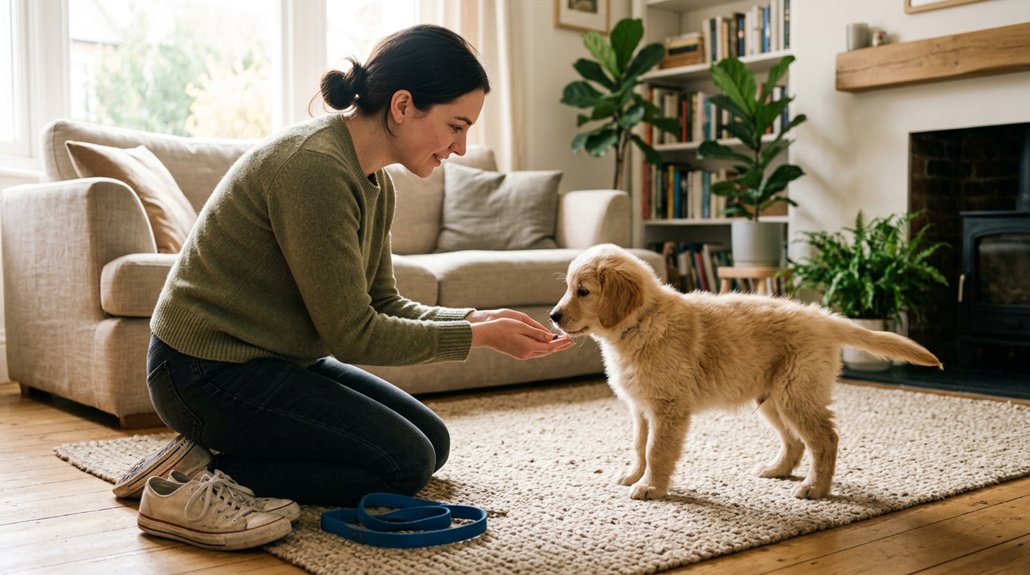
Building trust with a new dog takes patience and consistency. Set realistic expectations—connections won’t form overnight. Create a calm environment and engage in bonding activities like gentle play. Understand and respond to your dog’s body language to meet their needs. Develop trust through daily routines, using positive reinforcement to encourage good behavior. Gradually introduce new experiences, keeping their mind and body active. Communicating effectively will nurture a lasting bond. There’s more to discover on this journey.
Key Takeaways
- Engage in bonding activities like gentle play and short walks to foster initial connections.
- Create a calm environment using soothing music and consistent routines to reduce stress.
- Understand and respond to the dog’s body language to address emotional needs effectively.
- Use positive reinforcement consistently with treats or praise to encourage desired behaviors.
- Gradually introduce new experiences and environments to build confidence and trust.
Start by Setting Realistic Expectations
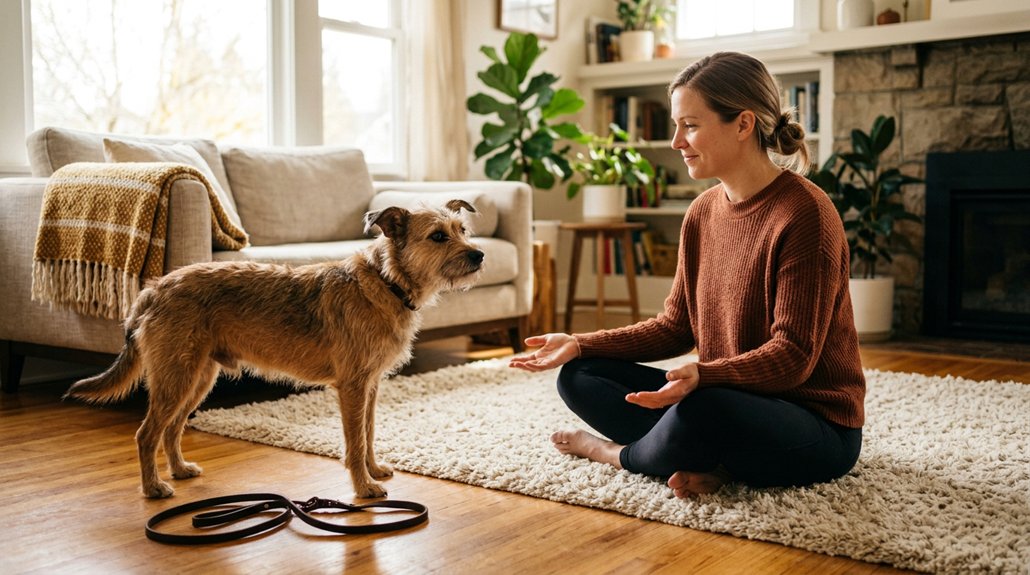
When welcoming a new dog into your home, it is vital to set realistic expectations from the start. Many new dog owners mistakenly anticipate instant bonding, but meaningful relationships often unfold over months or years. Recognize that your dog needs time to adjust and feel secure. Engage in bonding activities like gentle play and short walks; these not only build trust but also make your dog feel loved and understood. Remember, realistic timelines are important, especially if your dog has past trauma or limited socialization. Celebrate small milestones—like your dog choosing to sit beside you—as each marks progress. Patience and consistency form the foundation of trust, crafting a lasting connection built on mutual respect and understanding.
Establish a Calm Environment
When welcoming a new dog, it’s essential to keep their environment calm by minimizing loud disruptions. Use soothing music or white noise to soften sudden sounds and establish a quiet routine with consistent feeding and playtime. By providing a peaceful and predictable setting, you’ll help your dog feel secure and build trust more effectively.
Minimize Loud Disruptions
Creating a peaceful and calm environment is essential when welcoming a new dog into your home. Dogs are sensitive to loud disruptions, which can spike anxiety and create trust barriers. To build a stronger bond, minimize loud noises like sudden claps or yelling. Instead, use sound desensitization techniques and provide calming environments with soft music or white noise machines. These can effectively mask unexpected sounds, creating a soothing atmosphere. Avoid exposing your new companion to stressful settings, like chaotic gatherings, during their initial adjustment period. Gradually introduce them to new sounds in a controlled manner to build confidence and reduce fear. By doing so, you’re setting the stage for a smoother change and a happy, loyal relationship.
Encourage Quiet Routine
Building a harmonious environment for your new dog extends beyond minimizing loud disruptions; it’s equally important to embrace a quiet routine. Establishing consistent daily routines, like regular feeding and walking schedules, provides a predictable atmosphere that fosters security. This consistency is key to building trust, as your dog learns when to expect certain activities, reducing stress and anxiety. By minimizing noise and chaotic stimuli, you allow your dog to relax and discover their new home at their own pace. A calm atmosphere isn’t just peaceful—it’s an invitation for your dog to safely explore and start building a positive relationship with you. Gradually introducing new routines, without overwhelming your dog, guarantees they acclimate comfortably, further solidifying trust and comfort.
Understand Your Dog’s Body Language
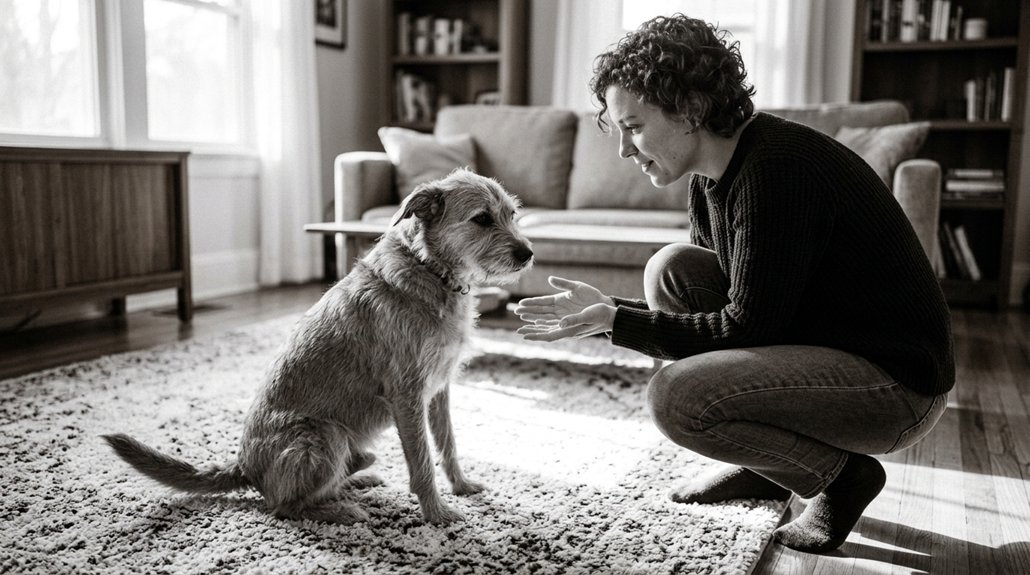
Decoding your dog’s body language is essential for establishing a strong, trusting bond. To interpret your dog’s signals accurately, pay close attention to tail communication and ear signals. A tail wagging in a wide arc often indicates a relaxed posture and happiness, while a stiff, upright tail suggests alertness or tension. Similarly, perked-up ears show curiosity, whereas flattened ears can reveal fear or submission, needing comfort.
Stress indicators like lip licking, yawning, or turning away should alert you to offer space or calming interactions. Recognizing these cues allows you to meet your dog’s emotional needs, reinforcing mutual trust. Use this table to distinguish behavioral signals:
| Body Language | Interpretation |
|---|---|
| Wide Tail Wag | Happy, Relaxed |
| Stiff, Upright Tail | Alert, Tense |
| Perked Up Ears | Curious, Interested |
| Flattened Ears | Fearful, Submissive |
Develop Trust Through Daily Habits
Understanding your dog’s body language forms the foundation for fostering a deeper connection, but it’s through consistent, daily habits that this bond truly flourishes. Establish a daily routine with regular feeding and exercise times, as this predictability provides your dog with a sense of security. Include bonding exercises such as gentle touch and grooming sessions to build trust through positive experiences. By dedicating time for play and daily interactions, you create opportunities for connection that strengthen your bond. Also, allow your dog to explore its environment at its own pace, fostering independence and confidence essential for trust-building. Consistency and patience are key; these habits will help your dog feel more secure and establish a lasting, trusting relationship.
Use Positive Reinforcement Techniques
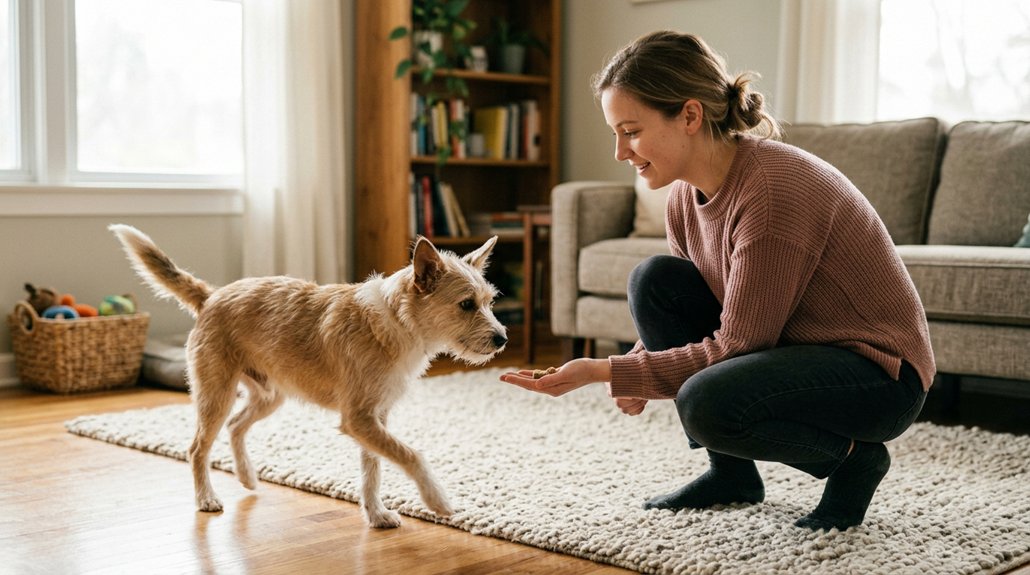
Use positive reinforcement techniques to strengthen the bond with your new dog by consistently rewarding desired behaviors with treats or praise. Avoid punishment-based methods, as they can confuse or frighten your dog, hindering trust-building efforts. Encourage incremental learning steps by incorporating simple commands and celebrating small successes, which keeps your dog motivated and keen to learn.
Reward Desired Behaviors Consistently
Establishing a trusting relationship with your new dog is best achieved by consistently rewarding desired behaviors through positive reinforcement techniques. The timing importance of these rewards can’t be overstated—deliver treats, praise, or play the moment your dog performs the desired action. Consistency cements understanding and fosters learning. Remember, reward diversity keeps your pup motivated and attentive. Rotate between different treats, engaging play, and affectionate praise to maintain your dog’s interest. Gradually reduce treat frequency while maintaining verbal and physical praise to reinforce behaviors without expectations for constant rewards. Your consistent approach will not only teach your dog valuable skills but also strengthen your bond, as your pet learns to associate you with positive experiences and trust.
Avoid Punishment-Based Methods
Though it might be tempting to fall back on punishment-based methods when your dog behaves undesirably, shifting to positive reinforcement techniques is essential for building trust. Embrace punishment free training by rewarding your dog’s good behavior with treats or praise. This fear free approach creates a safe environment, reducing anxiety and confusion, and allowing your dog to engage willingly. Dogs naturally respond better to positive reinforcement, and you’ll notice a clearer understanding of expectations without stress. Consistent rewards encourage desired behavior, strengthening the bond and fostering greater comfort in interactions. Studies confirm dogs trained using rewards show less aggression and higher well-being compared to punishment-based methods. Your focus on positivity will nurture a trusting, confident relationship with your new dog.
Encourage Incremental Learning Steps
Positive reinforcement is at the heart of encouraging dogs to learn at a comfortable pace. By rewarding desired behaviors with treats, praise, or playtime, you’re setting the stage for successful, stress-free learning. Start with incremental exercises that gradually introduce your dog to new commands or tricks. This approach helps your furry friend build confidence, knowing success is consistently within reach and acknowledged.
Celebrate these small achievements because they pave the way for bigger wins. Employing enjoyable activities, like interactive play, adds fun and depth to training sessions, strengthening your bond. Establish a routine that uses positive reinforcement consistently; it enhances your dog’s trust and security in their new environment. Gradual challenges guarantee your dog remains engaged and enthusiastic to learn.
Gradually Introduce New Experiences
When getting to know your new dog, gradually introducing them to different environments is essential for building trust and promoting their sense of security. Start with familiar scents that your dog recognizes, creating positive associations through treats and praise. Allow them to explore independently and limit exposure to overwhelming stimuli like loud noises, keeping stress at bay. Your role is to monitor their body language; if you notice any signs of discomfort, ease back and slow the introduction pace. Gradually shepherding them from small, familiar areas to larger spaces will foster confidence in their surroundings.
Begin with familiar scents and gentle praise to build trust, promoting exploration and confidence in new environments.
- Begin in a quiet environment with recognizable scents.
- Avoid crowded or chaotic settings initially.
- Treats and praise can reinforce positive experiences.
- Watch for signs of stress as you introduce new areas.
- Encourage exploration to boost confidence.
Keep Your Dog’s Mind and Body Active
Keeping your dog’s mind and body active is pivotal in establishing a robust and trusting relationship. Physical exercise is essential for your dog’s health, preventing obesity and providing a valuable energy outlet. Engage in fun activities like fetch or tug-of-war to stimulate both physical exercise and mental faculties, strengthening the bond between you and your dog. To guarantee mental stimulation, offer puzzle toys or interactive feeders. These not only challenge cognitive skills but also keep your dog mentally engaged throughout the day. Include varied activities such as agility training or scent work to promote exploration, which builds confidence in new environments. A well-stimulated dog tends to exhibit fewer behavioral issues, minimizing anxiety and boredom considerably. Keep your dog engaged!
Talk in Ways Your Dog Understands
Although communicating with a new dog might feel challenging at first, employing techniques that align with how dogs process information will greatly facilitate this process. Tone adjustments are key—use a calm, soothing voice to prevent anxiety. Verbal cues paired with command consistency are essential; dogs thrive on routine. Positive interactions, such as treats or praise, reinforce desired behaviors, promoting trust building. Pay attention to your dog’s body awareness. Their relaxed posture signals comfort, while tension or growling indicates fear that requires your intervention. Establish guidelines gently. Dogs interpret consistent communication as security.
Communicating effectively with your dog relies on calm tones, consistent commands, and rewarding good behavior to build trust.
- Tone Adjustments: Use a calm voice to reduce anxiety.
- Verbal Cues: Stick to consistent commands.
- Body Awareness: Notice and respond to body language.
- Positive Interactions: Reward good behavior.
- Command Consistency: Solidify routines for clarity.
Create Joyful Experiences Together
To truly bond with your new dog, focus on creating joyful experiences that both of you can savor. Engage in playtime activities like fetch or tug-of-war, which are essential for building trust and mutual enjoyment. Incorporate treats into training sessions to foster enjoyable interactions, teaching basic commands while reinforcing your positive bond. Explore new environments together, allowing your dog to gain confidence with you by their side. Plan exciting outings to pet-friendly parks or try agility classes to further deepen your connection. Finally, set aside time for relaxing or cuddling together. These low-pressure interactions enhance feelings of safety and trust. By weaving these experiences into your routine, you create a solid foundation for a lasting, joyful relationship.
Frequently Asked Questions
What Is the 3-3-3 Rule With Dogs?
The 3-3-3 rule outlines your dog’s adjustment timeline: stress in the first three days, personality emergence over three weeks, and settling by three months. Pair this with socialization techniques and trust-building exercises for a smoother change.
What Is the 7 7 7 Rule for Dogs?
Have you heard of the 7 7 7 rule for dogs? It’s essential for building trust. Use positive reinforcement and trust-building techniques over seven days, weeks, and months to create a strong, loving bond with your new dog.
Which Breed of Dog Is the Most Clingy?
You’d notice Cavalier King Charles Spaniels as particularly clingy breeds. They embody emotional support, following you everywhere. Consider Labradors, Shih Tzus, and Poodles too. Each craves companionship, making them ideal for someone seeking genuine affection and loyalty.
What Is “I Love You” in Dog Language?
“I love you” in dog language is expressed through relaxed body language, puppy communication like wagging tails, gentle eye contact, or seeking physical closeness. They might follow you, lean against you, or playfully bring you toys.
Conclusion
Building trust with a new dog is like planting a garden; patience and nurturing yield the best blooms. Set realistic expectations and create a serene environment to lay the foundation of a strong bond. Daily habits, positive reinforcement, and mindful communication are your tools. Embrace gradual introductions to new experiences while keeping your dog’s mind and body engaged. Through joyful shared moments, you’ll cultivate a relationship that’s as rewarding as it is enduring. Trust the process; you’ve got this.