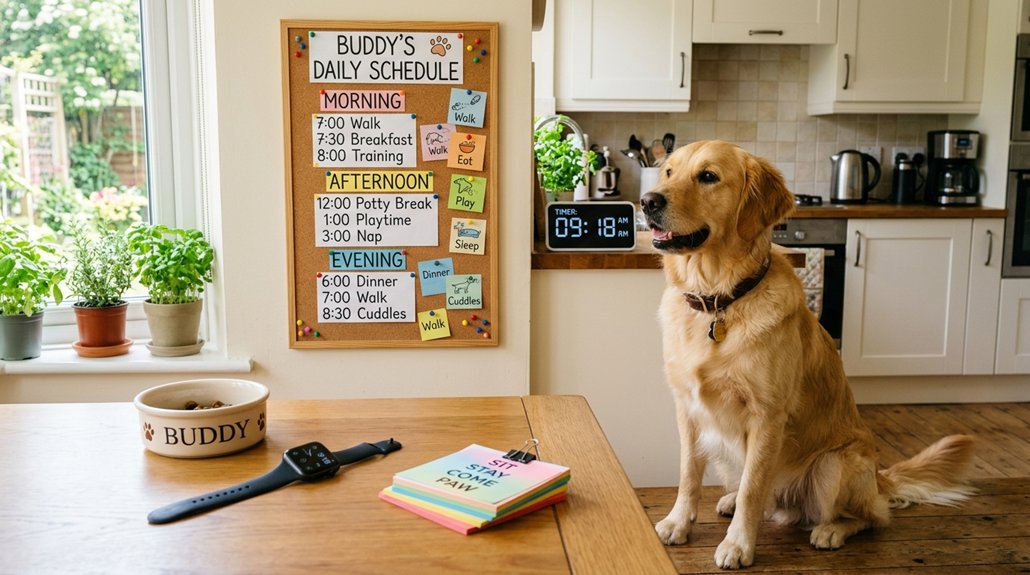
To set a daily schedule for your dog, start with a consistent wake-up time followed by a morning potty break. Feed them twice daily, spacing meals 8 to 12 hours apart, which helps digestion and bowel regularity. Incorporate exercise, like walks or play, tailored to their energy levels. Guarantee fresh water is always available, especially in warm weather. Establish an evening routine with relaxation and dental care. Explore further to refine routines for weekends and seasonal changes.
Key Takeaways
- Establish consistent feeding times to regulate appetite and digestion.
- Integrate regular grooming and training to enhance health and reinforce behaviors.
- Schedule exercise based on your dog’s size and energy levels.
- Adapt routine based on weather to ensure comfort and hydration.
- Maintain essential routines while allowing flexibility for special occasions.
Foundation for Your Dog’s Daily Routine
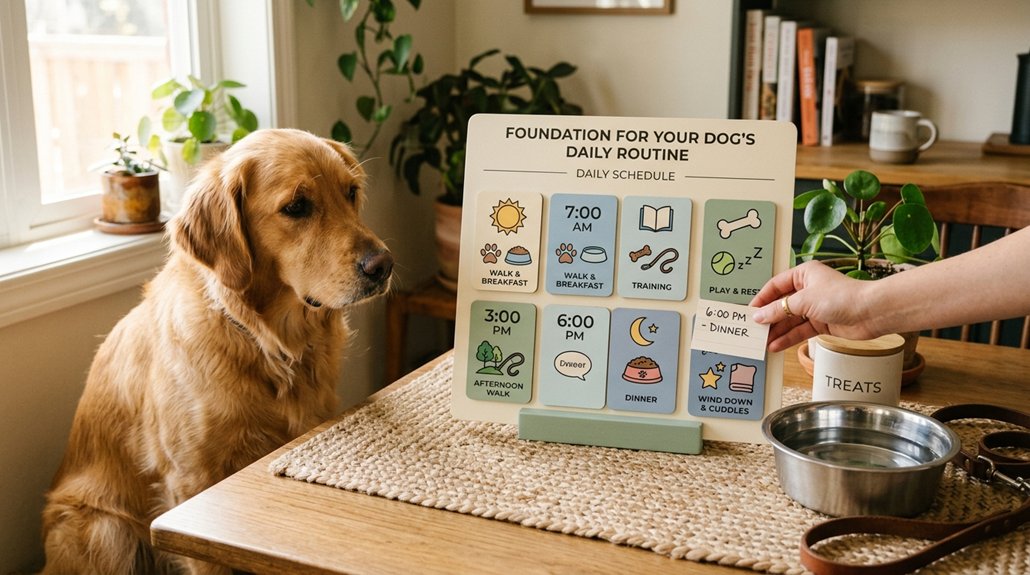
Establishing a daily routine for your dog is essential, as it allows them to thrive in a structured environment. Begin by implementing predictable grooming sessions to enhance their health and build trust. Consistency with grooming not only maintains cleanliness but fosters a bond, leading to a calm demeanor during these interactions. Reinforce training regularly within the schedule to promote desired behaviors. This should be strategically aligned after physical activity when the dog is most receptive. Structured training reinforcement enhances cognitive engagement, solidifying command responsiveness. Guarantee consistency in feeding twice daily, aligning with regular potty breaks to maintain digestive order. By integrating grooming and training into their routine, you’re not just providing structure but also enriching your dog’s life thoroughly.
Kickstart the Day With a Balanced Morning Routine
To kickstart your dog’s day with a balanced morning routine, establish a consistent wake-up time to reinforce structure and stability in their daily schedule. Prioritize a morning exercise session, such as a brisk walk, to enhance physical fitness and mental stimulation, setting the foundation for a positive and engaging day. Implement these practices alongside nutritious, age-appropriate meals to optimize your dog’s overall health and well-being.
Establish Consistent Wake-Up Time
Creating a consistent wake-up time for your dog forms the cornerstone of a well-structured daily routine. This predictability reduces anxiety and fosters overall well-being. Start by choosing a wake-up time that aligns with your lifestyle, utilizing wake up signals like gentle verbal cues or soft petting. Once awake, initiate morning rituals promptly, beginning with a potty break within minutes to maintain cleanliness and prevent accidents. Follow this with breakfast between 7–9 AM to enhance digestive health and solidify the routine. Afterward, engage in gentle play or offer mental stimulation to start your dog’s day positively. Consistency in these morning rituals is essential; it promotes predictability, ensuring your dog adapts and thrives within this structured environment. Through dedication, you’ll nurture a more balanced, content pet.
Prioritize Morning Exercise Benefits
Once your dog is awake and has enjoyed a brief period of stimulation and nourishment, channel their energy effectively by incorporating morning exercises into their routine. A brisk 20–30 minute walk will efficiently burn off morning energy, enhancing mood and fostering mental engagement. Morning exercise maintains consistent wake-up times, stabilizing internal clocks and curbing anxiety. Engaging your dog in gentle playtime before breakfast balances energy levels, aiding digestion. Following these activities with a timely potty break mitigates indoor accidents, ensuring comfort and contentment.
| Morning Activity | Benefit |
|---|---|
| Brisk Walk | Mood & Energy Enhancement |
| Gentle Playtime | Energy Balance & Digestion |
| Consistent Routine | Anxiety & Internal Clock |
| Early Potty Break | Comfort & Accident Prevention |
Prioritizing these exercise benefits cultivates a positive, calm start each day.
Feed Your Dog on a Predictable Schedule
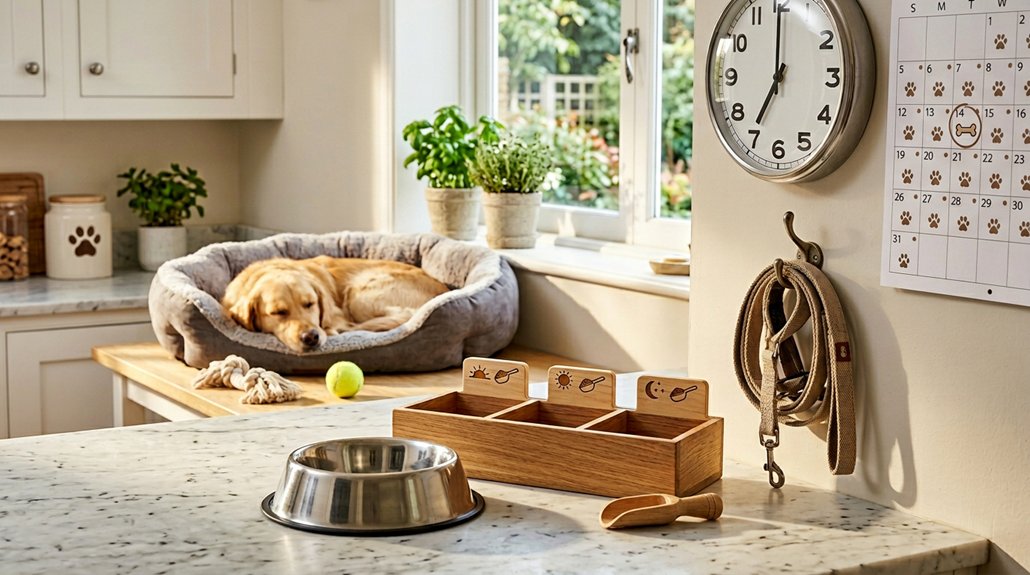
Feeding your dog on a consistent schedule is vital for maintaining ideal digestive health and regulating bowel movements effectively. Confirm that meal times are spaced 8 to 12 hours apart to mitigate excessive hunger and facilitate regular potty breaks. Precisely monitoring portion sizes according to your dog’s weight and activity level is essential in preventing obesity and promoting overall well-being.
Consistent Mealtime Benefits
Although it may seem simple, adhering to a consistent mealtime schedule for your dog greatly impacts their overall health and daily routine. Regular feeding times are essential for digestion regulation, as they promote efficient nutrient absorption and maintain regular bowel movements. This can considerably reduce indoor accidents, facilitating a cleaner living environment. Additionally, a steady schedule assists in appetite management, enabling you to discern hunger cues and adjust feeding times if necessary. It also helps stabilize your dog’s energy levels by preventing prolonged hunger between meals, vital for both adult dogs and rapidly growing puppies.
- Reduced likelihood of indoor accidents
- Improved ability to identify hunger cues
- Stabilized energy levels and mood
- Enhanced nutrient absorption ensuring ideal health
Portion Control Importance
A predictable feeding schedule is fundamental to effective portion control, pivotal for maintaining your dog’s health and preventing obesity. Establish consistency by offering two distinct meals daily for adult dogs and three to four meals for puppies with higher energy demands. Accurate portion sizes need close attention, tailored to your dog’s weight, activity level, and life stage, ensuring efficient weight management. By capping treats at 10% of daily caloric intake, you mitigate nutritional imbalances and excessive weight gain. Regular mealtime routines also alleviate anxiety, creating a sense of security as dogs anticipate their meals. Consistent feeding times help regulate digestion, preventing gastrointestinal issues and fostering a healthier gut. Commit to these guidelines for ideal canine health and effective portion control.
Optimize Playtime and Exercise for Energy Balance
To effectively optimize playtime and exercise for maintaining your dog’s energy balance, it’s crucial to tailor a regimen that aligns with their specific size and activity level. Aim for physical activities to range from 30 minutes for small breeds to up to 2 hours for larger, more active dogs. Incorporate mental stimulation through varied exercises like:
- Morning fetch sessions: Capitalize on early energy peaks with brisk games in the park.
- Agility training: Use obstacles to challenge both the body and mind.
- Interactive toys: Invest in puzzle toys that dispense treats for mental engagement.
- Daily walks: Structure walks with varied routes to prevent monotony.
This structured approach guarantees energy expenditure aligns with natural rhythms, reducing the likelihood of destructive behaviors while fostering a robust human-animal bond.
Wind Down With an Evening Routine
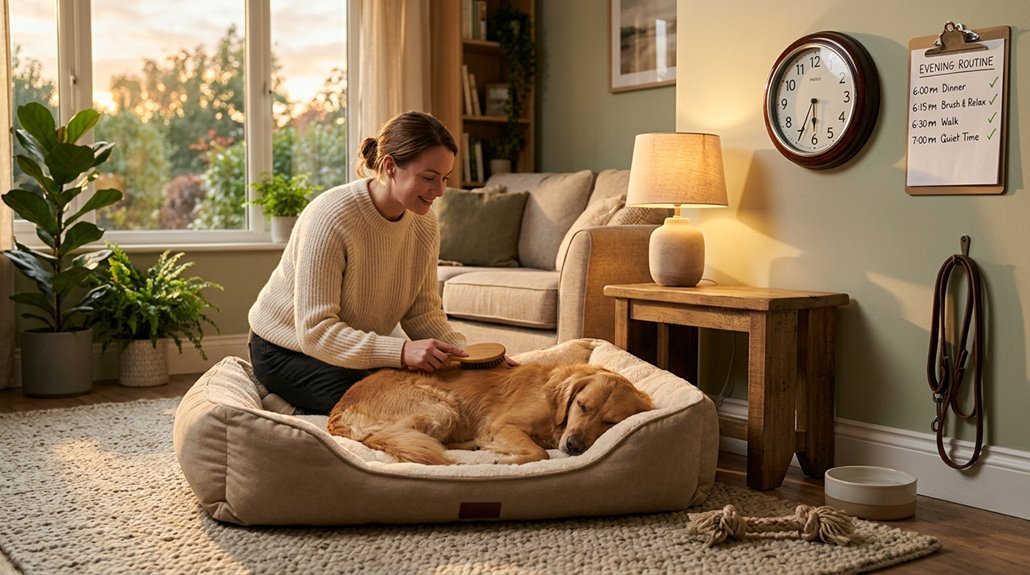
Establishing a consistent evening routine is pivotal for your dog’s well-being, promoting relaxation and reducing anxiety. An evening routine rooted in evening tranquility involves scheduled activities that prepare your dog for rest. Start with a calm walk post-dinner to aid digestive regulation and guarantee final potty relief. Serve dinner between 5-7 PM consistently to stabilize appetite patterns. Following the walk, engage in bonding activities, such as snuggling, grooming, or a gentle massage, to nurture your dog’s sense of security. Dental care, like brushing or providing dental treats, is essential for maintaining oral health within this routine. Adopting a predictable sequence—dinner, walk, bonding, dental care—reinforces stability, allowing your dog to embrace a serene and tranquil pre-bedtime phase.
Adapt Routines for Weekends and Seasons
While adapting your dog’s routine for weekends and changing seasons, it’s important to balance consistency with adaptability. Weekend outings like longer walks, hikes, or beach trips provide extra physical stimulation and bonding. However, maintaining consistent feeding and potty times will guarantee stability. Seasonal adjustments are significant; during extreme weather, modify outing schedules to avoid midday heat in summer or to guarantee warm gear during winter months. Prioritize hydration during hot weather with frequent access to fresh water, especially during outdoor activities. Flexibility in routines is imperative for special occasions or travel while adhering to important schedules to minimize stress.
Balance consistency with adaptability when adjusting your dog’s routine for weekends and changing seasons.
- Long walks and beach trips
- Consistent meal and potty times
- Weather-specific gear and schedules
- Frequent hydration in hot conditions
Frequently Asked Questions
What Is the 3-3-3 Rule for Dogs?
The 3-3-3 rule for dogs helps navigate dog anxiety and behavioral adaptation during the adjustment period. Focus on their exercise needs, use socialization tips, and leverage routine benefits to aid adjustment through environment changes in three structured phases.
What Is a Good Daily Schedule for a Dog?
Imagine your dog’s day as a symphony—each activity, such as structured feeding times, an exercise routine, engaging training sessions, and socialization activities, plays an essential part. Seamlessly woven together with playtime schedules and rest periods, harmony prevails.
What Is the 7 7 7 Rule for Dogs?
The 7-7-7 rule focuses on creating a balanced daily routine: 7 hours for exercise needs, 7 hours of rest, and 7 hours for feeding schedule, training sessions, socialization time, and health monitoring to guarantee peak development.
What Is the 10-10-10 Rule for Dogs?
The 10-10-10 rule involves dedicating 10 minutes daily to training, exercise, and play. This routine’s benefits include balanced mental and physical stimulation, promoting effective training techniques, consistency, and a strengthened bond with your dog.
Conclusion
Crafting a daily schedule for your dog is like setting the rhythm of a well-tuned orchestra, ensuring harmony in your pet’s life. By adhering to predictable routines, you meet their nutritional, physical, and emotional needs, fostering well-being and reducing anxiety. Whether it’s the measured timing of meals or the invigorating burst of playtime, each element contributes to a balanced lifestyle. Don’t forget to adapt for weekends and seasonal changes, ensuring your dog’s routine is as dynamic as life itself.