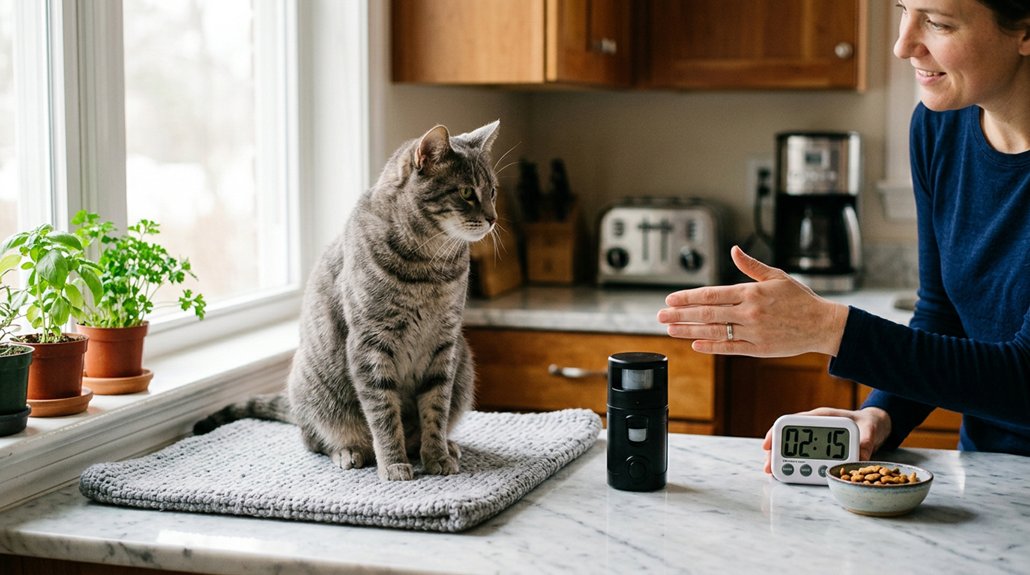
Training a cat to stay off kitchen counters involves understanding and redirecting their exploration instincts. Provide cat trees and shelving units for safe elevated spaces, satisfying their need for vantage points. Use textures like aluminum foil and scents like citrus to deter them from jumping up. Engage them with food puzzles and daily play to keep boredom at bay. Reward good behavior consistently with immediate treats. Explore further to transform your space into a cat-friendly environment.
Key Takeaways
- Provide cat trees and shelves for safe elevated spaces to explore.
- Use citrus-scented cleaners as natural deterrents on counters.
- Place crinkly aluminum foil or double-sided tape on counter surfaces.
- Engage cats with food-dispensing toys and regular play sessions.
- Reward desired behaviors with immediate and varied positive reinforcement.
Create a Cat-Friendly Environment
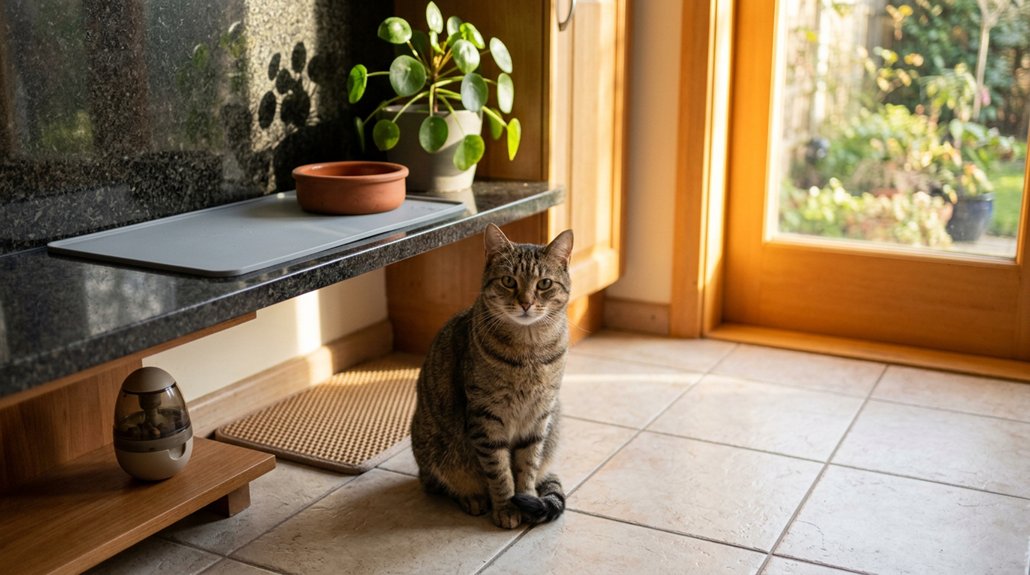
Designing a cat-friendly environment is essential in shaping a well-behaved and content feline. Elevate your cat’s experience with cat trees or shelving units, providing safe vantage points for exploration and observation. Such elevated spaces contribute to cat safety and prevent unnecessary risks. Guarantee indoor enrichment by integrating engaging toys and activities—these reduce boredom and discourage counter jumping. Establish a play area with food-dispensing toys to channel their natural curiosity on the ground. Regularly cleaning countertops and storing food effectively minimizes enticing scents that may lure cats onto elevated surfaces. Incorporate citrus-scented cleaners as natural deterrents, crafting a less appealing atmosphere on counters while creating a welcoming environment tailored to your cat’s needs and promoting positive behavior.
Learn Why Cats Jump on Counters
Although it may be frustrating when your cat leaps onto the countertops, it is crucial to understand that this behavior is embedded in their nature. Cats are innate explorers, and counter climbing is driven by their strong feline instincts. High places appeal to them for numerous reasons—primarily as superior vantage points to oversee potential prey or predators. Their anatomy, featuring strong rear leg muscles and a flexible spine, enhances their jumping prowess, effortlessly propelling them onto elevated surfaces like counters.
Kitchen counters, in particular, lure cats with enticing smells of food, crumbs, and the fascinating trickle of running water. By understanding these motivations, you can take practical steps to manage their behavior as you work towards diverting them from unchecked counter climbing.
Use Textures and Scents to Deter Cats
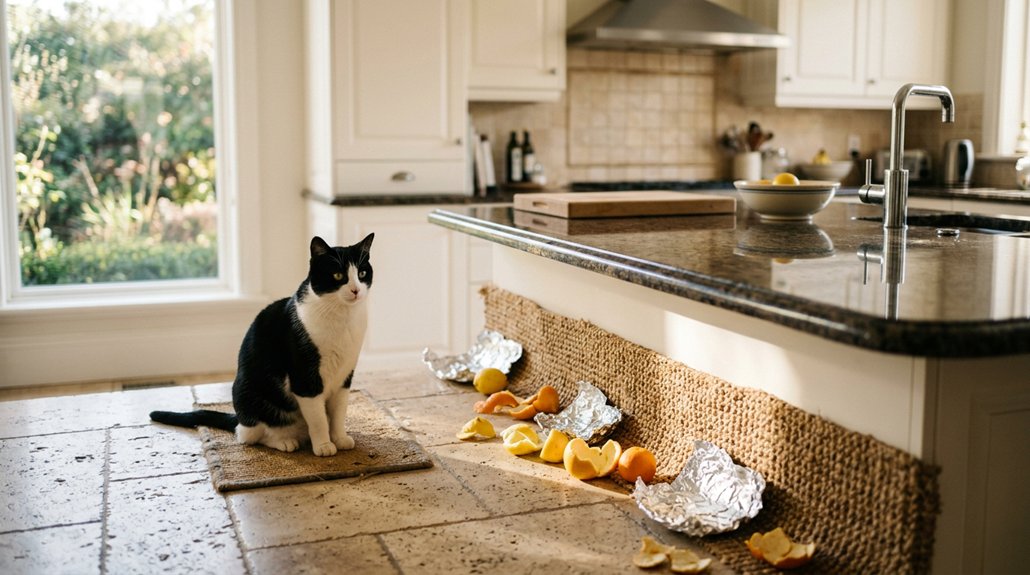
One effective method to deter cats from countertop exploration involves using specific textures and scents that they generally find unappealing. Texture deterrents like crinkly aluminum foil and double-sided tape exploit cats’ aversion to the noise and sticky feel, while flipped carpet runners introduce an uninviting surface. These approaches create a tactile barrier against curious paws.
In conjunction, scent profiles play an essential role. Citrus and eucalyptus are powerful repellents, as cats tend to avoid these odors naturally. Make certain surfaces are clean to eliminate alluring food residues, enhancing the efficacy of these deterrents.
- Cover counters with crinkly aluminum foil for sound-based defense.
- Apply double-sided tape for a sticky deterrent effect.
- Use citrus or eucalyptus scents as a natural barrier.
- Maintain cleanliness to minimize attractive food residues.
Provide Inviting Alternatives for Exploration
To successfully direct your cat’s curiosity away from kitchen counters, it’s important to offer enticing alternatives that cater to their natural tendencies for exploration and elevation. Strategically place cat trees and vertical spaces near windows to stimulate their innate interest in height. Engaging puzzles, such as food-dispensing toys, satisfy your cat’s mental needs while drawing attention away from counters. Designate safe climbing areas and perches with soft bedding and interactive toys to create inviting observation spots.
| Element | Purpose |
|---|---|
| Vertical spaces | Encourage elevation exploration |
| Engaging puzzles | Mental stimulation away from counters |
| Safe perches | Secure observation areas |
| Rotating climbing options | Maintain interest and reduce temptation |
| Daily play sessions | Prevent boredom and counter exploration |
Regularly update toys and climbing options to keep them intriguing.
Reward Desired Behaviors Consistently
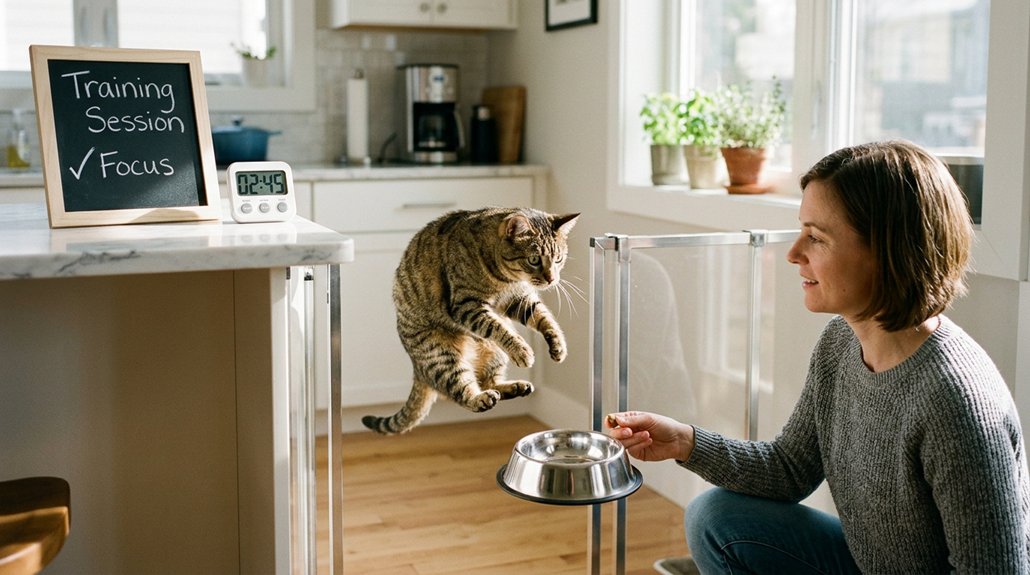
While offering enticing alternatives contributes to managing your cat’s curiosity, reinforcing their good behavior solidifies the habit. Utilizing consistent positive reinforcement is key. You should aim to provide a reward within two seconds of your cat displaying the desired behavior to optimize reward timing. This helps them connect the behavior with the reward effectively.
Reinforce good behavior with swift rewards; aim for a two-second timing for effective habit formation.
Consider these practical tips:
- Reinforcement Variety: Mix up rewards with treats, praise, and toys to maintain interest.
- Immediate Rewards: Always deliver rewards swiftly to reinforce appropriate choices.
- Food-dispensing Toys: Encourage floor-based play, diverting attention from counters.
- Regular Monitoring: Continuously adjust the type and timing of rewards to suit your cat’s responses.
This consistent approach not only trains your cat but enriches their living environment.
Frequently Asked Questions
Can Cats Be Trained to Stay off Kitchen Counters?
Yes, you can train cats to stay off counters by understanding feline behavior. Use counter training that incorporates positive reinforcement, deterrents, and alternatives like cat trees. Ensuring a clean space also minimizes their motivation to explore countertops.
What Is the 3-3-3 Rule for Cats?
The 3-3-3 rule is like a cat’s personal timeline for settling in, guiding you as feline behavior evolves. Expect gradual changes, essential for effective feline training, with patience, understanding, and consistent routines nurturing their comfort.
How to Keep Cats off Your Kitchen Countertops?
You’ll keep cats off countertops by providing countertop alternatives like cat trees or shelves. Discouraging behaviors using deterrents like double-sided tape or aluminum foil, plus rewarding positive behaviors, are scientifically supported methods that integrate practical, effective solutions.
What Is “I Love You” in Cat Language?
“I love you” in cat language often involves cat communication through slow blinking, purring, or kneading. Expertly observe feline behavior like nuzzling or following you, which signifies trust and affection—practical signs of your cat’s love.
Conclusion
Creating a cat-friendly environment is essential to keeping your feline off kitchen counters. Scientific studies suggest that cats often jump on counters seeking elevation, novelty, or food. Deterrents like sticky textures or citrus scents can be effective but must be used consistently to work. Provide elevated cat trees and reward good behavior, fostering a positive association. Successful training requires patience and consistent reinforcement, emphasizing a blend of understanding, deterrents, and alternatives to guide feline behavior constructively.