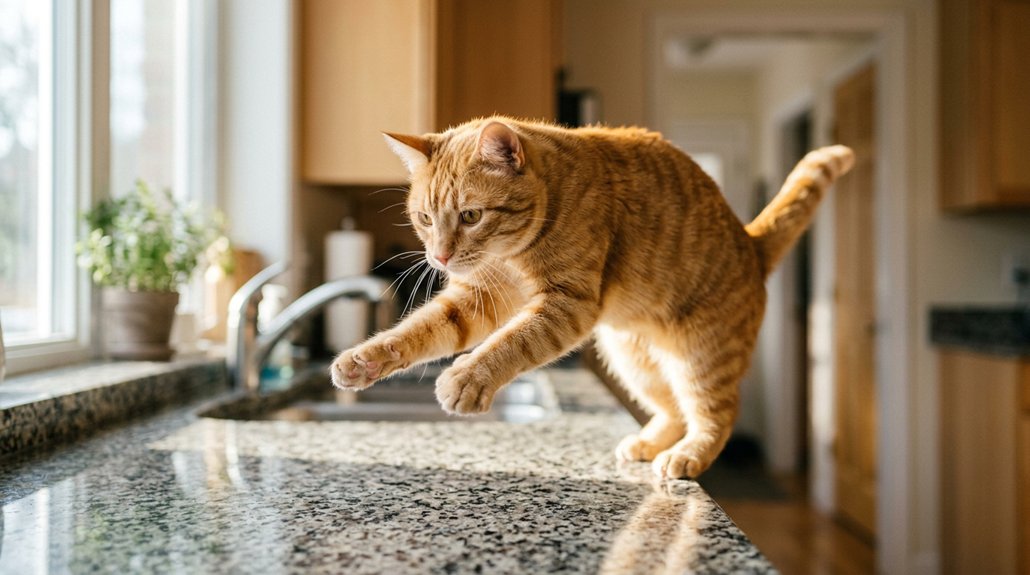
Cats jump on counters due to curiosity, safety, and enticing scents. To deter this, make surfaces uninviting with textures like aluminum foil or tape, and keep counters clean. Encourage alternative climbing by providing cat trees, rewarding positive behavior in designated spots. Use daily play to redirect energy and maintain consistent training. Implement long-term solutions with positive reinforcement, and understand occasional counter visits might occur. Discover more about maintaining consistent training and positive environments.
Key Takeaways
- Use aluminum foil or double-sided tape to deter cats from jumping on counters.
- Redirect your cat to a cat tree and reward its use with treats.
- Keep countertops clean and free of enticing food scents to reduce attraction.
- Engage your cat with daily interactive play to decrease energy focused on counters.
- Implement positive reinforcement by rewarding desired behaviors with treats and affection.
Why Cats Love Your Counters and How to Make Them Stop
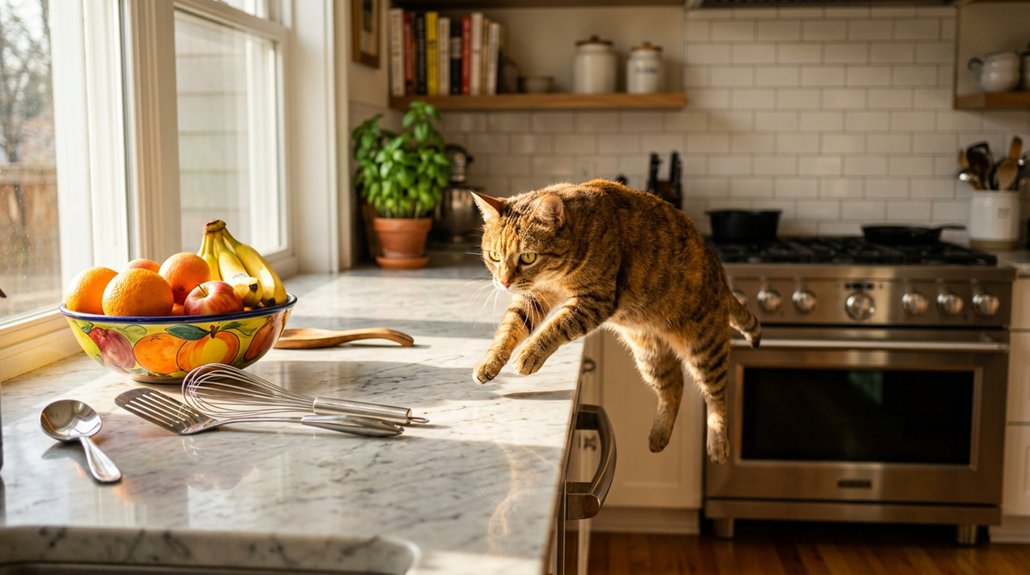
Although cats naturally gravitate towards counters, understanding their motivations can help mitigate this behavior effectively. Feline curiosity drives them to explore elevated places, satisfying their instinctual behavior of seeking both safety and observation points. Counters, being high and often central in a household, provide perfect platforms for this need. Additionally, the array of scents from food or other activities on these surfaces entices them further. Clean counters free of inviting odors are less appealing, reducing the urge to climb. Furthermore, cats may view jumping as a means to interact with you, often heightened by any reaction you provide. By thoroughly addressing these factors, you can better manage and redirect your cat’s natural inclinations away from counter-surfing.
5 Immediate Tactics to Discourage Counter-Surfing
To effectively discourage counter-surfing, employ aversion techniques such as placing aluminum foil or double-sided tape on countertops to make them less appealing to your cat. When your cat is caught on the counter, immediately redirect them to a suitable alternative like a cat tree, and reward this positive behavior to reinforce proper boundaries. Maintain vigilance in consistently using gentle verbal cues and keeping your surfaces free from tempting scents to minimize counter-surfing motivation.
Aversion Techniques for Counters
One immediate tactic to discourage counter-surfing involves leveraging your cat’s aversion to certain textures and sounds. By strategically using deterrent materials like aluminum foil or upside-down plastic carpet runners, you can create a sensory aversion environment. Cats typically dislike the crackling noise and the unusual texture these materials provide.
Implement double-sided tape on mats or placemats to develop a sticky surface that naturally dissuades your cat from making the leap. It’s crucial to relocate these deterrents regularly to maintain an element of surprise, preventing your cat from becoming accustomed to them. Avoid overly strong aversive methods like motion-activated air cans, which can heighten anxiety, especially in timid cats. Sensory aversion, when applied thoughtfully, can effectively reduce counter-surfing incidents.
Reward Positive Behaviors
While sensory aversion techniques can effectively dissuade feline counter-surfing, pairing these methods with positive reinforcement strategies enhances results. To implement a successful behavior modification approach, establish a consistent reward system. Immediately reward your cat upon choosing designated perches or cat trees, reaffirming positive behavior. Utilize a clicker or verbal cues paired with treats to reinforce commands like “tree” or “stool.” Over time, shift from treats to pets or play, creating associations with rewarded locations.
Crucially, when your cat is caught on the counter, gently redirect them to the correct spot, rewarding timely to encourage adherence to this new habit. Empowering change requires patience; consistent reinforcement leverages repetition and positive experiences, pivotal for your cat’s lasting behavioral transformation.
Make Countertops Unappealing
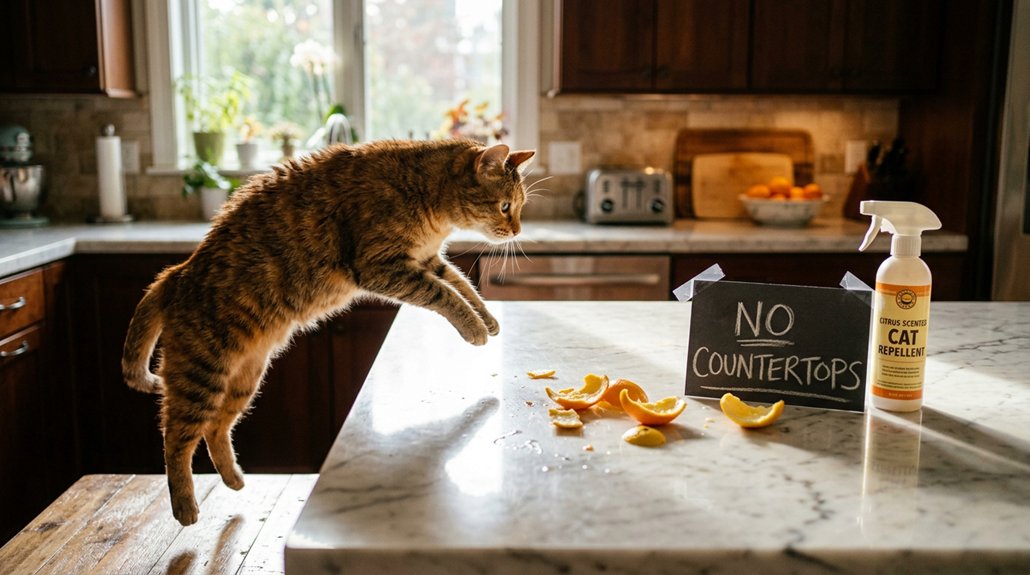
When aiming to make countertops less appealing to your cat, consider altering their texture. Cover surfaces with aluminum foil or upside-down plastic runners to create unease for their paws. Additionally, apply double-sided tape directly on countertops to deter exploration due to its sticky texture. Keep countertops clean by regularly performing scent removal to eliminate food residues that entice your cat. Though motion devices can be effective, use them sparingly to avoid causing undue stress for more anxious cats. To manage clutter, carefully rearrange kitchen items to minimize accessible areas, making countertops less interesting. Also, provide enjoyable distractions elsewhere, directing your cat’s attention away from countertops. Implementing these strategies can effectively deter your cat from these surfaces.
Find Better Places for Your Cat to Climb
A cat tree can be a valuable addition to your home, offering your cat a designated space to climb and perch. Climbing benefits include enhanced physical health, mental stimulation, and territorial satisfaction. To maximize these benefits, position the climbing structures—like cat trees or stools—strategically. Place them near high-activity areas, allowing your cat to stay engaged with household dynamics without needing counter access.
Make these climbing spots enticing by adding toys or food puzzles, encouraging exploration and positive interactions. This approach satisfies your cat’s instinctual needs while keeping surfaces clean. Redirect your cat gently to these locations whenever they show interest in counters. Consistency in these practices fosters an environment where your cat’s climbing desires are met without inconvenience to you.
Implement Positive Reinforcement Strategies
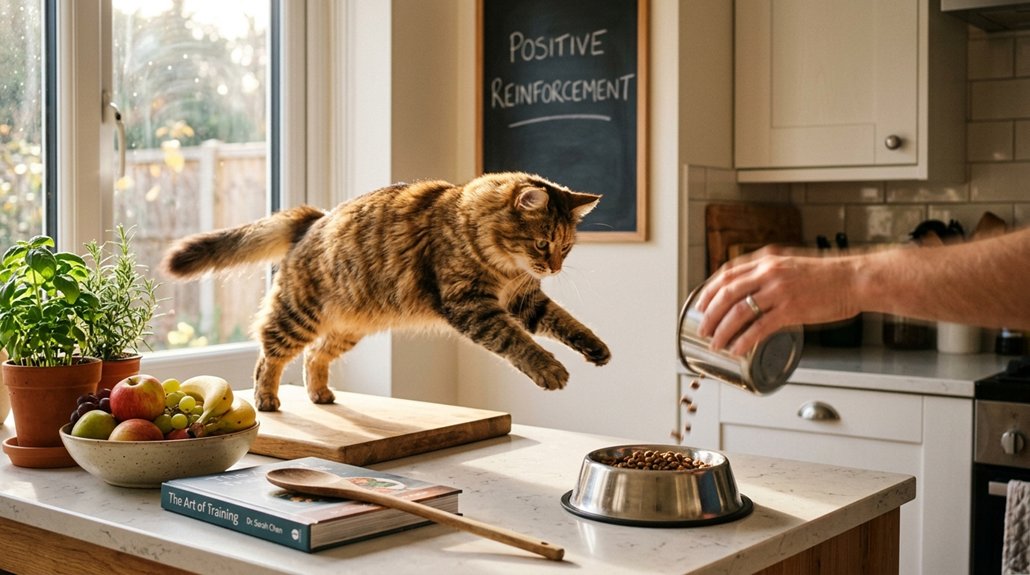
To effectively manage your cat’s behavior, focus on rewarding it for using designated perches and climbing surfaces. Implement strategies like clicker training to immediately reinforce desirable behaviors and guide your cat towards acceptable areas with consistent verbal commands. Encourage alternative activities through interactive toys and play sessions, which can help redirect energy and reduce counter-surfing.
Reward Desirable Behaviors
Implementing positive reinforcement strategies is essential in guiding your cat toward desirable behaviors while avoiding counter surfing. By using treat rewards, you can reinforce their decision to use alternative perching locations like a cat tree. Offer a treat immediately to create a positive reinforcement loop. Clicker training can also enhance this learning, establishing a clear connection between the click’s sound and receiving a reward for appropriate actions. Over time, gradually reduce treat rewards, shifting to verbal praise or gentle petting. Consistently redirect your cat from the counter to an approved perch, providing rewards for their compliance. A routine of daily play sessions and enriching activities will complement these efforts, ensuring your cat develops healthy habits and remains engaged.
Encourage Alternative Activities
Consider stimulating your cat’s natural curiosity and physical activity with alternative activities, as they play a pivotal role in deterring counter-jumping behavior. Enrich their environment and reduce counter-surfing by incorporating the following strategies:
- Designated Perches: Introduce cat trees or stools. Reward your cat with treats and affection when they use these instead of the counters.
- Food Puzzles: Offer food puzzles to mentally engage them. These can diminish boredom and satisfy their curiosity with rewarding challenges.
- Active Play: Conduct daily play sessions to channel excess energy, limiting their need for counter exploration.
- Training Techniques: Use verbal cues like “tree” or “stool” alongside rewards to direct attention to acceptable perching locations.
These methods collectively guide your cat away from counters effectively.
Utilize Interactive Toys
When looking to deter your cat from counter-surfing, utilizing interactive toys offers a practical solution that blends physical activity with mental stimulation. Food puzzles, for example, are excellent for enticing your cat away from counters by engaging them in problem-solving to access treats. Prey simulation through wand toys or laser pointers can satisfy their hunting instincts, reducing overall boredom. Implement daily interactive play to expend energy and reinforce acceptable behavior.
| Toy Type | Benefits | Examples |
|---|---|---|
| Food Puzzles | Mental Stimulation | Food-dispensing ball |
| Prey Simulation | Physical Engagement | Wand toys, lasers |
| Toy Rotation | Sustained Interest | Various new toys |
Reward your cat with treats or affection whenever they engage correctly to strengthen the association between interactive play and positive behavior.
Maintain Consistency in Training
To effectively train your cat to stay off counters, consistency is essential. Focus on behavior consistency by employing structured training techniques. Here’s a guide:
- Reinforce Daily: Establish clear boundaries with the same verbal commands like “off” or “no” each time your cat attempts to jump. This prevents confusion.
- Unified Household Approach: Guarantee everyone adheres to the agreed training techniques to solidify the message, avoiding mixed signals.
- Positive Reinforcement: Reward your cat consistently for choosing acceptable perching spots, strengthening association with positive behavior.
- Practice Patience: Remember that altering ingrained habits, like counter-surfing, requires time and persistence. Be patient as your cat adjusts.
Engage Your Cat With Daily Interactive Play
Daily interactive play sessions are essential for diverting your cat’s attention away from countertops by reducing excess energy and fulfilling their innate hunting instincts. Engaging activities such as feather wands, laser pointers, and toy mice offer significant playtime benefits. These tools stimulate mental and physical exercise, curbing the urge to counter-surf. By regularly incorporating varied toys and methods, you keep your cat interested and redirect their focus away from forbidden areas. A routine playtime can also strengthen the bond between you and your cat, promoting security and reducing attention-seeking behaviors like jumping on counters. Tailoring play sessions to their preferences reinforces appropriate behaviors, making countertops less appealing. Implementing this strategy guarantees a happier, more content pet.
Embrace Long-Term Solutions and Occasional Counter Visits
While it might be challenging to fully prevent your cat from jumping on counters, embracing long-term solutions can markedly reduce this behavior. To manage counter curiosity and encourage positive feline exploration, consider these strategies:
- Designate Vertical Spaces: Install cat trees or shelves to satisfy climbing instincts and deter your cat from seeking heights on counters.
- Establish Consistent Routines: Supervise your cat during meal preparation to limit counter access and reinforce boundaries.
- Offer Engaging Alternatives: Utilize food puzzles and toys to capture your cat’s attention, decreasing their interest in counter surfing.
- Maintain Clean Counters: Regularly wipe down surfaces to remove enticing smells and make counters less appealing.
Occasional counter visits may occur, but focus on positive reinforcement over perfection.
Frequently Asked Questions
What to Do When a Cat Keeps Jumping on the Counter?
To address a cat repeatedly jumping on counters, implement counter deterrent methods like double-sided tape or foil. Focus on cat training techniques, providing cat trees, and using positive reinforcement to steer them toward preferred behaviors instead.
What Is the 3-3-3 Rule for Cats?
The 3-3-3 rule for cats describes their adjustment phases: first 3 days for acclimation, next 3 weeks gaining confidence, and 3 months for settling in. Understanding this aids addressing cat behavioral habits and finding counter access solutions.
What Is “I Love You” in Cat Language?
In an ocean of affection, cats convey “I love you” through communication that includes slow blinks, soft purrs, grooming, kneading, and gentle vocalizations. These subtle actions illustrate their deep bond and affection with feline precision and sophistication.
What Is a Red Flag Behavior in Cats?
A red flag in cat behavior includes counter aggression or changes like litter box avoidance and excessive vocalization. These may reveal stress or unmet feline instincts, highlighting the need for environmental enrichment or possibly veterinary evaluation.
Conclusion
In addressing your feline’s penchant for elevated exploration, it’s essential to gently guide them towards more suitable heights. By maintaining consistency and enriching their environment with engaging activities, you’ll diminish the allure of countertops. Employing subtle dissuasion techniques can make these surfaces less irresistible, while positive reinforcement bolsters desirable conduct. Remember, patience and understanding are key to nurturing a harmonious coexistence, where occasional lapses are but minor hiccups in a journey towards mutual respect and contentment.