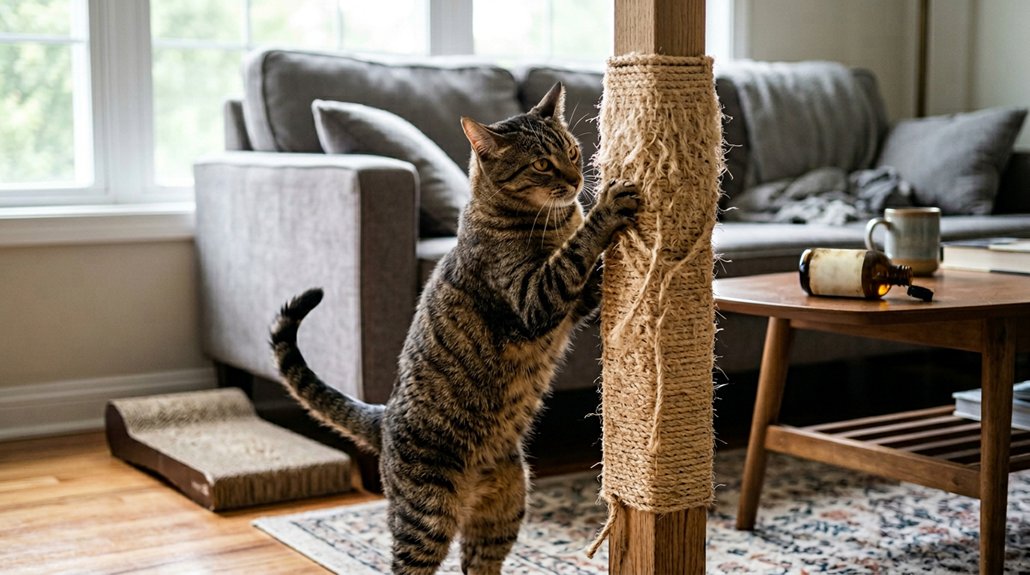
If your cat won’t stop scratching, first check for fleas, redness, or hair loss to identify possible causes. Behavioral changes may signal allergies or stress—consult a vet for persistent issues. Regular flea prevention and reducing household allergens can also help. Offer scratching posts and enrich their environment to lower stress. Track your cat’s behavior to tweak your approach. There’s more to uncover for a comfortable and itch-free environment.
Key Takeaways
- Conduct a thorough skin examination for fleas, allergies, or infections as causes of scratching.
- Consult a veterinarian for diagnosis and treatment if scratching persists or causes skin damage.
- Implement regular flea prevention and reduce household allergens to minimize scratching triggers.
- Provide environmental enrichment and stress management to alleviate boredom-induced scratching.
- Monitor progress and adjust strategies, consulting experts if necessary, to address persistent scratching.
Spot the Source of Your Cat’s Scratching
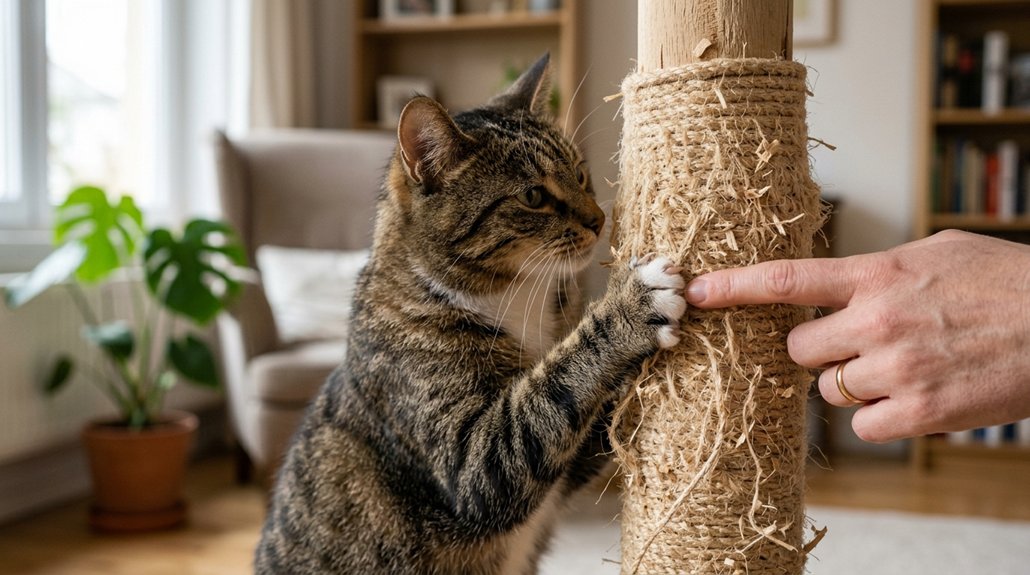
Identifying the cause of your cat’s incessant scratching is vital for addressing their discomfort and ensuring their well-being. Begin by making detailed behavioral observations to pinpoint affected areas—certain locations often suggest specific issues. For instance, scratching around the face and ears may indicate food allergies, frequently linked to beef, chicken, or dairy consumption. Such dietary considerations are important, given that they could also trigger gastrointestinal issues like vomiting or diarrhea. Flea bites lead to flea allergy dermatitis and localized itching, often severe due to flea saliva sensitivity. Don’t overlook environmental allergens such as pollen or dust mites, which may cause atopic dermatitis, affecting different breeds and ages. Finally, consider changes to their environment or routine, as stress and boredom can exacerbate scratching behaviors.
Examine Your Cat’s Skin for Clues
Occasionally, a thorough examination of your cat’s skin reveals the underlying culprits of their persistent scratching. Conduct a meticulous skin examination to identify any itch triggers that may be wreaking havoc on their comfort. You’ll want to look closely for:
- Fleas and Flea Dirt: These parasites are common culprits for relentless itching.
- Redness or Swelling: Could indicate allergies or infections.
- Hair Loss: Patchy areas may suggest ringworm or other skin issues.
- Localized Itching: Pinpointing specific areas could uncover irritants or allergens.
- Behavioral Changes: Anxiety or boredom may manifest as excessive scratching.
Compassionately addressing these concerns can vastly improve your cat’s well-being and help alleviate their discomfort. Make sure you pay thorough attention to these details for a healthier and happier feline companion.
Consult a Vet When Necessary
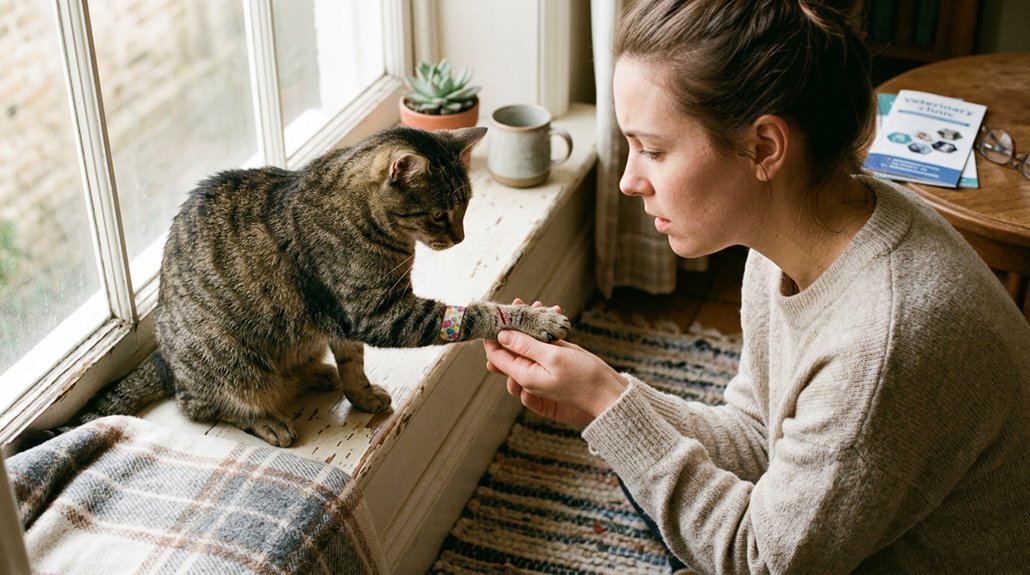
When your cat’s scratching doesn’t subside after a few days or leads to noticeable skin damage, it’s important to consult a veterinarian to uncover the root cause. Recognizing an emergency involves understanding symptoms like severe discomfort, visible swelling, or difficulty breathing, which necessitate immediate veterinary attention. Your vet can perform diagnostic tests, such as skin scrapings and allergy tests, to pinpoint the underlying issue. It’s vital to address these concerns promptly to prevent further complications. A tailored treatment plan might be necessary, including dietary changes and prescribing medications. By consulting a vet, you’ll guarantee your cat receives the precise care required, enabling a swift recovery and improved well-being, ultimately alleviating the distress caused by relentless scratching.
Keep Fleas at Bay With Prevention Tips
Addressing your cat’s scratching doesn’t just involve treating symptoms; prevention plays an essential role, especially in managing flea-related discomfort. Understanding the flea life cycle is important. Fleas lay eggs that can infest carpets and upholstery, making indoor prevention essential. Protect your cat year-round with veterinarian-recommended topical solutions or oral medications. Employ flea combs weekly to catch fleas before they multiply, particularly after outdoor adventures.
- Apply regular flea prevention treatments as your vet advises.
- Use flea combs often, especially during flea season.
- Vacuum areas your cat frequents to reduce flea eggs.
- Wash bedding and toys in hot water to kill fleas and their eggs.
- Consult a vet for analysis if your cat suffers from flea allergies.
These practices foster a flea-free environment for your beloved feline.
Remove Household Allergens Affecting Your Cat
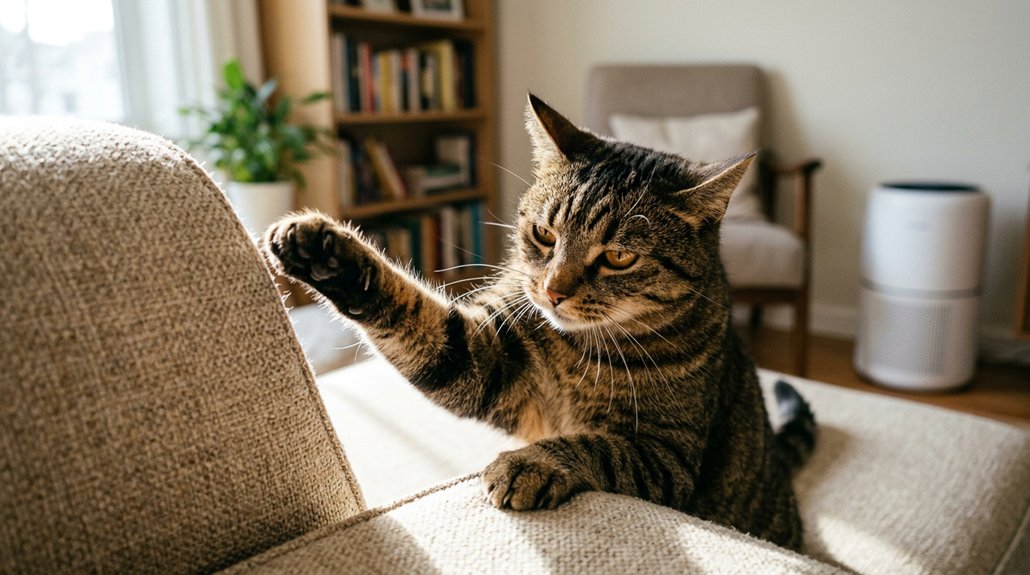
Your cat’s scratching might stem from common household allergens like dust mites, pollen, or certain cleaning products, causing discomfort and irritation. To help alleviate these symptoms, regularly vacuuming and using air purifiers can greatly reduce airborne particles, while hypoallergenic cleaning agents can minimize chemical exposure. By keeping windows closed during high pollen seasons and washing your cat’s bedding often, you can create a safer, more comfortable environment for your sensitive feline friend.
Identify Common Allergens
Cats can be sensitive to a range of household allergens, leading to persistent scratching and discomfort. Identifying the common culprits in your home is vital. Pollen sources can easily enter through open windows, while various mold varieties thrive in damp areas like bathrooms and basements. Dust mites are ever-present in bedding and carpets, and certain cleaning products can also be harsh on your cat’s sensitive skin. Recognizing these potential allergens is the first step in reducing your cat’s irritation.
- Keep windows shut during pollen-heavy seasons.
- Opt for unscented and natural cleaning solutions.
- Regularly clean and vacuum areas where dust mites congregate.
- Use mold inhibitors in humid areas to prevent growth.
- Steer clear of scented products that may irritate your cat’s skin.
Implement Allergen Reduction Strategies
Once you’ve identified the common allergens that may be causing your cat’s discomfort, it’s time to actively reduce them in your home. Start by enhancing your allergen awareness and adopt consistent cleaning habits. Regularly vacuuming and washing bedding will minimize dust mites and pet dander that could irritate your cat’s skin. Implement air purifiers with HEPA filters to capture airborne allergens like pollen and dust, promoting a cleaner environment. Store food in airtight containers to curb mold and pest-related allergens. A no-shoes policy in your cat’s spaces helps limit outdoor allergens. Finally, don’t forget regular grooming—it’s essential for removing allergens trapped in your cat’s fur. This thorough approach will create a comforting space for your furry friend.
Groom Regularly to Ease Itchiness
When you regularly groom your feline friend, you help alleviate itchiness by effectively removing loose fur, dirt, and allergens that can irritate their skin. The benefits of grooming go beyond cleanliness; it minimizes skin irritations and curbs scratching due to itching. Using the right grooming techniques, such as selecting a slicker brush for long-haired cats or a de-shedding tool for short-haired breeds, enhances their skin health. Occasionally bathing your cat with hypoallergenic or medicated shampoo soothes their skin and removes potential allergens. Grooming is also your chance to check for parasites or infections early, preventing future issues.
- Decrease shedding with routine use of appropriate brushes.
- Promote skin health via regular fur maintenance.
- Ensure early intervention for signs of skin issues.
- Bond with your cat through consistent grooming.
- Utilize hypoallergenic shampoos for sensitive skin.
Offer Scratching Posts as Furniture Alternatives
A multitude of scratching posts can serve as enticing alternatives to your furniture, satisfying your cat’s instinctual need to scratch. Providing various options using different scratching post materials like sisal, carpet, and cardboard can keep your cat’s paws away from your beloved sofa. Verify the scratching post is at least 1.5 times the length of your cat when fully stretched. This provides a comfortable and satisfying experience for your feline friend.
Consider cat tree options with both vertical and horizontal surfaces to cater to diverse scratching preferences. Position these alternatives near areas your cat already favors to encourage their use. Sprinkling a bit of catnip on them can enhance their appeal. Redirect your cat’s behavior effectively with these strategic approaches.
Ease Stress to Reduce Scratching
While offering scratching posts can mitigate furniture damage, addressing the root cause of your cat’s scratching is equally important. Stress triggers like new pets, moving, or routine changes can lead to excessive scratching. Implementing relaxation techniques and guaranteeing a stable environment can greatly reduce this behavior. Focus on:
- Environment: Maintain cleanliness and provide hiding spots.
- Routine: Adjust changes gradually to minimize anxiety.
- Playtime: Engage your cat with stimulating toys to combat boredom.
- Scent Therapy: Consider pheromone diffusers to manage anxiety-driven scratching.
- Calming Supplements: In severe cases, these can help alleviate stress.
Each of these strategies helps in creating a comfortable, stress-reduced environment, which is beneficial for your cat’s well-being. Taking a proactive approach guarantees a happier and healthier feline companion.
Apply Topical Treatments for Skin Relief
Relieve your cat’s skin discomfort effectively by applying topical treatments designed for inflammation and irritation. Start with vet-recommended hydrocortisone creams or anti-itch sprays to provide immediate relief. Make certain the affected area is clean and dry before application for ideal absorption and treatment effectiveness. Choose hypoallergenic or veterinary-recommended products to prevent worsening your cat’s condition. Use precise application techniques—apply a thin layer, massaging gently into the skin to avoid stress.
Carefully monitor your cat’s reaction to these treatments. Some may cause additional itching or allergic reactions, requiring prompt veterinary consultation. In severe cases, your veterinarian might suggest medicated shampoos or topical antifungal treatments for more thorough care. This approach guarantees your cat receives accurate and compassionate care, alleviating their discomfort swiftly.
Track Progress and Tweak Strategies
To effectively address your cat’s scratching, maintain a daily log to capture any changes or patterns in behavior, ensuring that you’re aware of any possible triggers. Pay close attention to your cat’s preferred scratching surfaces and be ready to adjust placement of posts or use deterrents as needed. Regularly evaluate the effectiveness of your strategies, modifying your approach based on their response, and consult a veterinarian or behaviorist if needed.
Monitor Changes Over Time
As you endeavor to manage your cat’s scratching behavior effectively, paying close attention to changes over time can provide essential insights. Identifying behavioral triggers and environmental factors plays an important role in this process. Regularly document your cat’s behavior, noting the frequency, intensity, and favorite locations. A reliable observation routine can uncover valuable patterns.
Consider these strategies:
- Track changes in your cat’s environment, diet, or health that may correlate with scratching behavior.
- Use a calendar or tracking app to record your cat’s responses to different management strategies.
- Consult with a veterinarian if scratching persists to guarantee a thorough evaluation.
- Monitor for any lack of improvement or new symptoms to facilitate timely intervention.
- Make certain your cat’s comfort by adapting strategies based on observed changes.
Adjust Based on Observations
Monitoring changes in your cat’s behavior lays the groundwork for adjusting your management strategies effectively based on observations. Conduct a thorough behavior analysis, focusing on scratching frequencies and locations. Logging these patterns, including specific times or interactions, provides insight into potential irritants or hidden conditions. For example, if your cat ignores certain scratching posts, adjustment techniques like repositioning or altering materials can be useful. Persisting issues might necessitate a veterinarian’s assessment to refine your strategies. Regularly review your adjustment outcomes, ready to refine your approach by shifting grooming habits or using new scratchers. Tailoring interventions based on real-time observations guarantees a compassionate, effective plan targeting your cat’s needs while maintaining environmental cleanliness and happiness.
Frequently Asked Questions
What Can I Do if My Cat Won’t Stop Scratching?
Evaluate your cat’s health for any underlying issues. Use scratching solutions like sturdy posts and prevention techniques such as claw trimming. Consult your vet if scratching persists. Engage your cat with interactive toys to prevent boredom and stress-related behaviors.
What Is the 3-3-3 Rule for Cats?
The 3-3-3 rule is a path guiding your cat from anxiety’s shadows to the light of comfort. Like leaves settling after a storm, your cat’s scratching behavior should lessen as they adjust at each stage.
What Are the Signs That a Cat Is About to Pass Away?
You’ll notice end of life signs like withdrawal, diminished appetite, and increased vocalization or silence. Feline behavior may shift to solitude, weight loss, and litter box issues. Be supportive and consult a vet for compassionate guidance.
What Is “I Love You” in Cat Language?
Imagine your cat, Ginger, slow blinking at you from across the room. That’s feline communication at its finest—saying “I love you.” Such cat behavior signifies trust and affection, deepening the human-feline bond with these silent gestures.
Conclusion
Understanding your cat’s scratching habits can feel like piecing together a perplexing puzzle, yet it’s a journey from chaos to calm. Juxtapose the frantic scratching with a serene, itch-free environment—it’s achievable. With expert guidance, heartfelt care, and strategic interventions, you can transform distress into comfort. Remember, while it’s essential to uncover the root causes, it’s equally important to tweak your tactics continuously. Your commitment can create a harmonious, scratch-free sanctuary for your beloved feline friend.