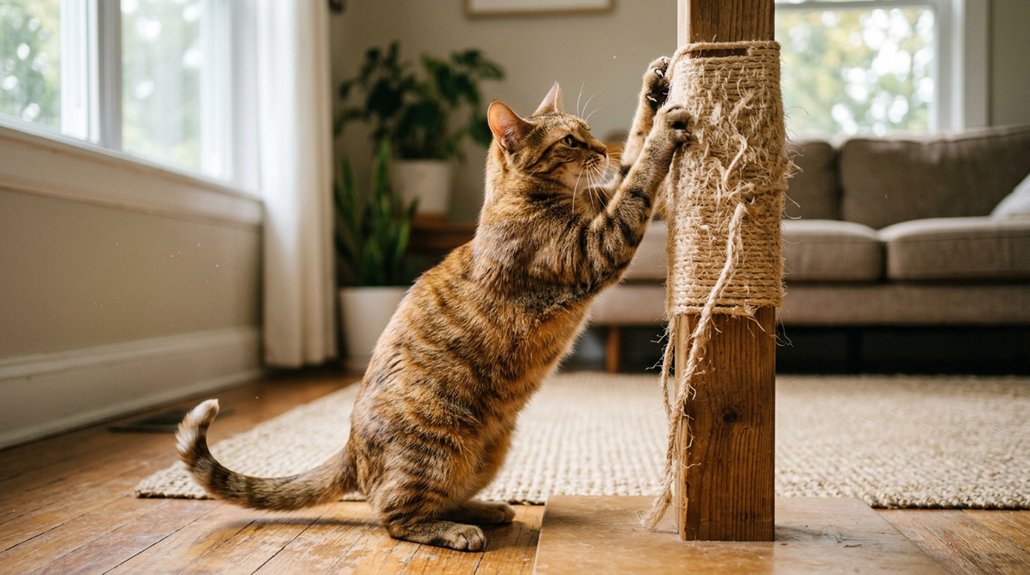
To train your cat to use a scratching post, first understand their scratching instincts and preferences. Choose a sturdy post around 30 inches tall, offering both vertical and horizontal options with diverse textures like sisal and cardboard. Place it in high-traffic areas near lounging spots. Use catnip for attraction and apply positive reinforcement with treats and praise. This encourages usage and builds positive associations. Exploit these strategies for a more thorough understanding of your cat’s scratching behavior.
Key Takeaways
- Place the scratching post in high-traffic areas frequented by your cat.
- Offer both vertical and horizontal scratching surfaces to cater to your cat’s preferences.
- Experiment with different textures like sisal and cardboard to determine your cat’s favored scratching material.
- Reward your cat with treats and praise to reinforce positive scratching habits.
- Use catnip or silver vine on the post to attract and maintain your cat’s interest.
Understanding Your Cat’s Scratching Post Needs
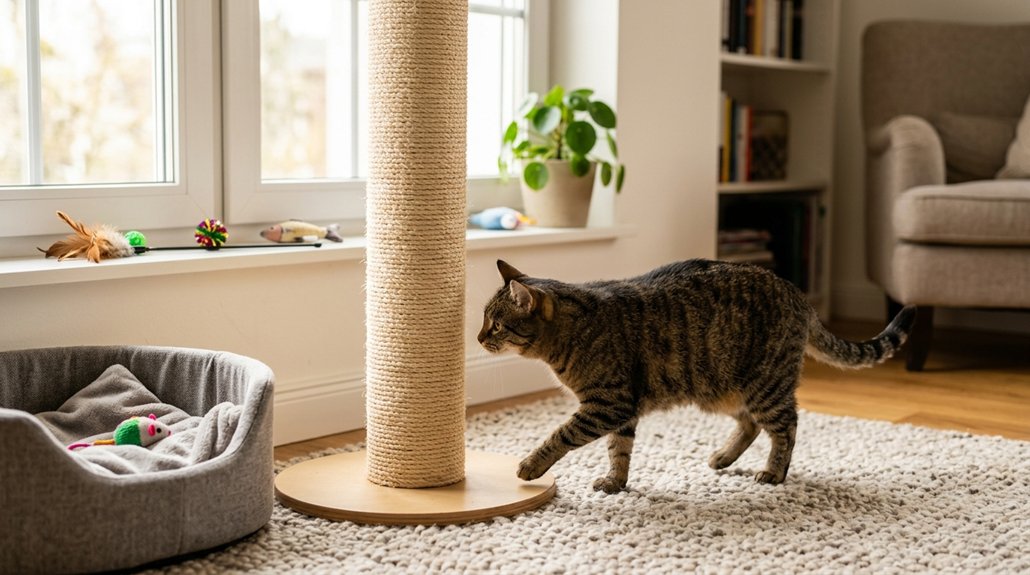
Understanding your cat’s scratching post needs involves recognizing several instinctual behaviors. Scratching is a fundamental activity; it aids in shedding old claw sheaths, and, importantly, is vital in territory marking. As a cat owner, acknowledging your feline’s scratching preferences is important. Some cats exhibit a predilection for vertical surfaces, reflecting their natural inclination to mark territory at greater heights, thereby asserting dominance. Conversely, other cats are drawn to horizontal planes which fulfill their specific kinesthetic satisfaction. It’s important to observe which textures appeal most to your cat. Sisal, cardboard, or tightly woven carpet can often cater to varied scratching preferences. By understanding these instincts, you’re better positioned to support their behavioral health and deter undesired furniture damage.
Choosing the Perfect Scratching Post
To effectively cater to your cat’s scratching instincts, select a post that’s at least 30 inches tall and offers robust stability to prevent tipping. Consider experimenting with varying materials like sisal, carpet, or cardboard to identify what aligns with your cat’s unique material preferences. Additionally, providing a combination of vertical and horizontal options will accommodate diverse stretching and scratching behaviors, enhancing their overall engagement.
Optimal Size and Stability
When selecting a scratching post for your feline companion, several important factors guarantee both ideal size and stability. Height specifications are paramount: an appropriate post should be approximately 30 inches tall. This height facilitates a cat’s full stretching capacity, essential for effective nail maintenance and satisfaction.
The post stability is equally important. Ensuring a 12-inch wide base minimizes wobbling and tipping, increasing the likelihood of regular use.
| Factor | Specification |
|---|---|
| Height | Approximately 30 inches |
| Base Width | At least 12 inches |
| Stability | Sturdy construction |
| Scratching Style | Vertical and horizontal |
Selecting a scratching post that matches these criteria not only meets physical needs but enhances your cat’s overall well-being. By choosing a structure that accommodates these factors, you promote a healthy, enriched environment for your pet.
Material and Texture Preferences
While selecting the perfect scratching post, it’s essential to take into account your cat’s material and texture preferences. Cats often show a strong sisal preference due to its satisfying rough texture aligning with their natural scratching instincts. Cardboard texture can also be highly appealing. Experimenting with carpet alternatives and wood options provides further insight into what your cat favors. Opt for posts offering multiple surfaces and varied textures to match these preferences. Height adjustments are significant, with a preferred post being around 30 inches, allowing full-body stretches. Analyze your cat’s existing scratching behaviors to pinpoint their favored materials, ensuring consistent use. Shifting seamlessly between this variety helps nurture your cat’s scratching habits towards the designated post effectively.
Placing the Scratching Post for Maximum Engagement
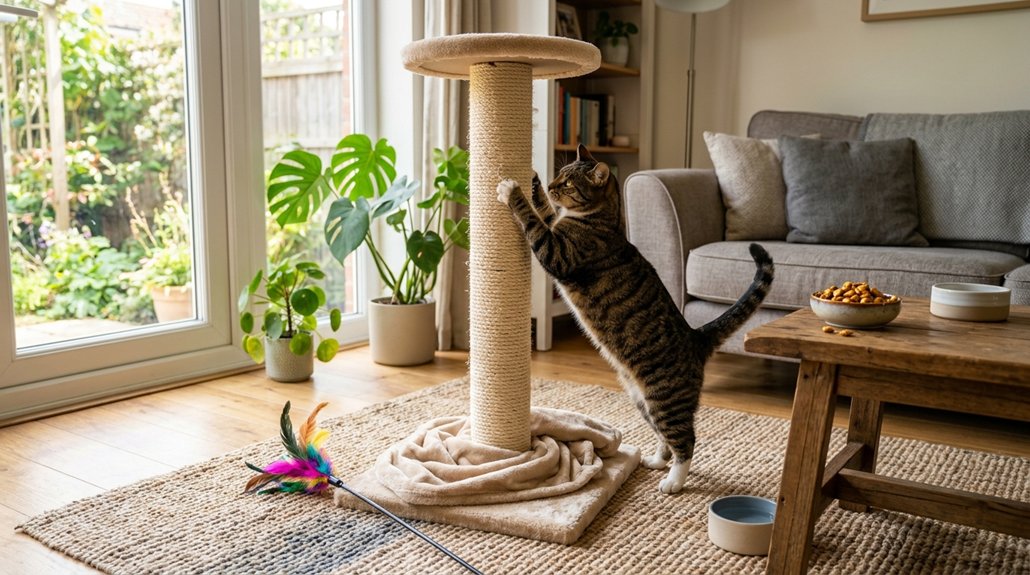
Ever wondered why your cat stubbornly chooses the couch over the scratching post? The issue often involves visibility factors and traffic patterns. Position your scratching post in high-traffic areas where your cat usually lounges. This bolsters visibility and frequency of use. Utilize data from existing scratch marks on furniture as indicators of preferred scratching zones and strategically place posts nearby to redirect behavior. Guarantee easy access by keeping areas clear of obstructions, eliminating barriers to usage. Avoid secluded or low-traffic zones like basements, as they’re less inviting. Additionally, placing posts near windows or visually stimulating locations can pique your cat’s interest. Proper placement isn’t just strategic but fundamental in steering your feline towards consistent post use.
Enticing Your Cat to Scratch
To effectively entice your cat to use a scratching post, you must strategically employ sensory stimuli and positive reinforcement, thereby promoting interaction and sustained behavior change. Start by sprinkling catnip on the post to capture your cat’s attention, encouraging exploration. If catnip proves ineffective, experiment with catnip alternatives like silver vine or valerian root, which might be more appealing. Enhancing the post’s allure further, use Feliway spray to create an inviting scent profile. During scratching playtime, introduce wand toys around the post to establish a positive association with scratching behaviors. This combination of stimuli increases the likelihood of habitual use. Gradually reward your cat with treats for any engagement with the post, such as sniffing or touching, reinforcing these preferred interactions.
Using Positive Reinforcement in Training
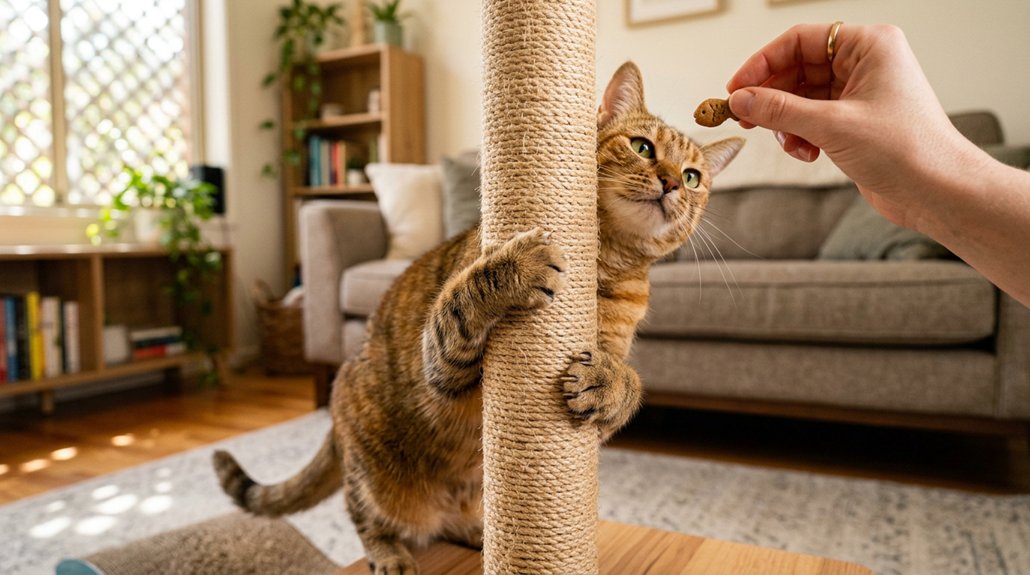
To effectively guide your cat’s behavior, employ positive reinforcement by rewarding good scratching behavior with treats immediately after use of the scratching post. Pair these rewards with verbal praise to strengthen the association between the desired action and positive feedback. Over time, you can reduce treat frequency but should continue verbal reinforcement to maintain proper behavior and discourage scratching on furniture.
Reward Good Scratching Behavior
When rewarding good scratching behavior in cats, some find that using positive reinforcement is highly effective. Immediate treat timing is vital in reinforcing the action, helping your cat associate the scratching post with rewards. Choose a reward variety tailored to your cat’s preferences, such as dreamies or playtime activities to maintain engagement. Consistency in reward delivery strengthens the association with positive behavior, promoting habitual use of the post. As your cat routinely uses the scratching post, gradually shift from treats to verbal praise and affection, reducing dependence on physical rewards. This scientific approach guarantees your cat not only optimizes its scratching behavior but also receives a varied enrichment experience. Remember, reinforcing good behavior requires strategic and timely application of positive stimuli.
Consistent Treat Distribution
Building upon the foundation of rewarding good scratching behavior, consistent treat distribution plays a pivotal role in maintaining your cat’s interest in the scratching post. To effectively utilize positive reinforcement, it’s essential to provide treats immediately after your cat uses the scratching post. This reinforces the desired behavior through:
- Reward Frequency: Start by rewarding every instance of scratching, gradually reducing as habits solidify.
- Treat Types: Employ high-value options like dreamies to maintain your cat’s motivation.
- Consistency: Guarantee treats are distributed consistently to reinforce learning.
- Progress Monitoring: Regularly evaluate your cat’s engagement with the post to adjust your approach.
Praise to Encourage Usage
While it’s important to maintain a structured approach, incorporating praise alongside treat distribution offers a complementary method for reinforcing your cat’s use of the scratching post. Engage in positive interaction by using vocal encouragement like “good kitty” immediately after your feline engages with the post. This effectively strengthens the behavioral association between the action and the reward. As your cat’s usage becomes routine, progressively diminish treat frequency, but continue with vocal encouragement to sustain motivation. Consistency is essential; guarantee that each interaction is rewarding to establish a clear behavioral pattern. Tailor your approach by observing your cat’s preferences, adjusting vocal praise and treats based on what elicits the strongest response. This nuanced reinforcement strategy fosters the habitual use of the scratching post.
Solving Your Cat’s Scratching Post Problems
Many cat owners face the challenge of a feline friend ignoring its scratching post. Recognizing your cat’s scratching alternatives and behavioral signs is essential in addressing this issue. If your cat avoids the post, analyze environmental factors and cat preferences scientifically:
- Location: Relocate the post near resting areas or windows, where your cat naturally gravitates.
- Surface Variety: Experiment with sisal, cardboard, or other textures to determine specific preferences.
- Scent Attraction: Apply catnip or silver vine on the post to stimulate interest.
- Clutter Control: Maintain a clean surrounding area; odor and disorder may deter engagement.
If furniture scratching persists, institute a multi-post zone and consistently reward appropriate behaviors, ensuring a harmonious indoor environment.
Frequently Asked Questions
Can You Train a Cat to Use a Scratching Post?
Yes, you can train a cat to use a scratching post by redirecting it from scratching alternatives. Employ positive reinforcement like treats and praise. Understanding their natural behaviors and preferences guarantees effective, scientifically-based training for territorial marking and claw maintenance.
What Is the 3-3-3 Rule of Cats?
Think of the 3-3-3 rule as a story of a seed growing into a vibrant flower. It illustrates feline behavior adjustments: three days to sprout curiosity, three weeks to nurture scratching instincts, three months for flourishing confidence.
What Is “I Love You” in Cat Language?
In cat language, “I love you” is shown through slow blinking, scent marking by rubbing, and purring. Understanding feline communication and body language helps you reciprocate affection, creating a stronger bond with your cat through non-verbal cues.
What Annoys Cats the Most?
What’s truly maddening for kitties? Loud noises and strong scents can drive them crazy, violating feline preferences. Nap disruptions and territorial invasions top the list, emphasizing how delicate cat behaviors are easily disturbed by anything unannounced or unexpected.
Conclusion
Training your cat to use a scratching post is akin to teaching an old dog new tricks—patience and persistence pay off. By understanding your cat’s inherent needs, selecting the right post, and placing it strategically, you lay the foundation for success. Encourage engagement using enticing methods and reinforce positive behaviors consistently. If challenges arise, address them promptly. With time and effort, you can transform your space, ensuring harmony for both feline and furnishings.