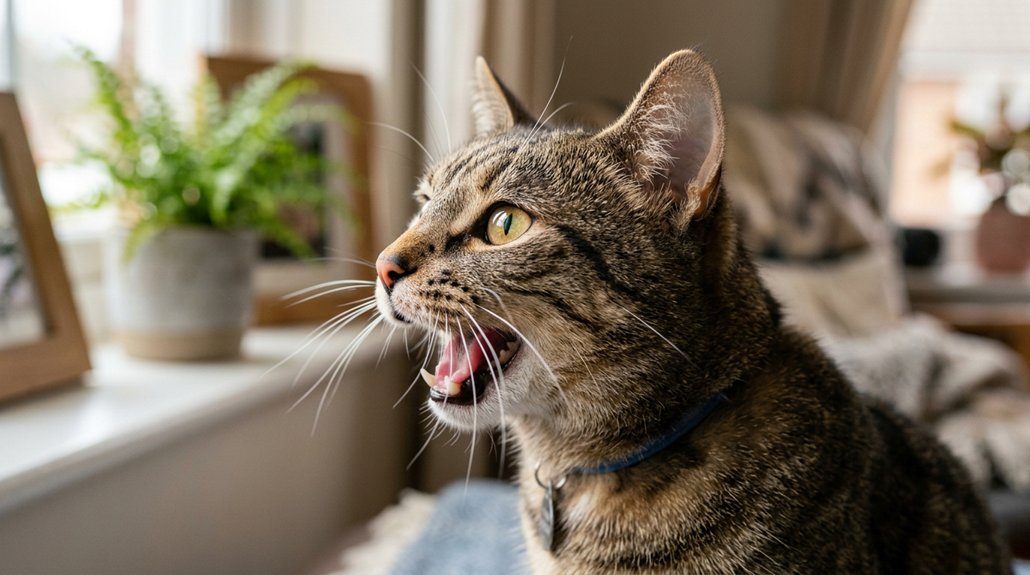
To understand different types of cat meows, recognize the variations in pitch and length. Short meows are friendly greetings, while mid-pitched ones signal hunger. Long, drawn-out meows demand urgent attention, and low-pitched sounds suggest dissatisfaction. High-pitched meows reflect anxiety; rapid sequences indicate pain or need. Observing body language aids interpretation. Sudden vocal changes may require veterinary attention. By identifying these vocalizations, you’ll enhance your bond and grasp the complexities of feline communication.
Key Takeaways
- Recognize short meows as friendly greetings, signifying social interaction desires.
- Interpret mid-pitched meows as requests, often related to hunger or needs.
- Understand long, drawn-out meows as urgent demands for attention.
- Identify high-pitched meows as signals of anxiety or urgent needs.
- Note low-pitched meows as expressions of unhappiness or discomfort.
Understanding Your Cat’s Vocal Language
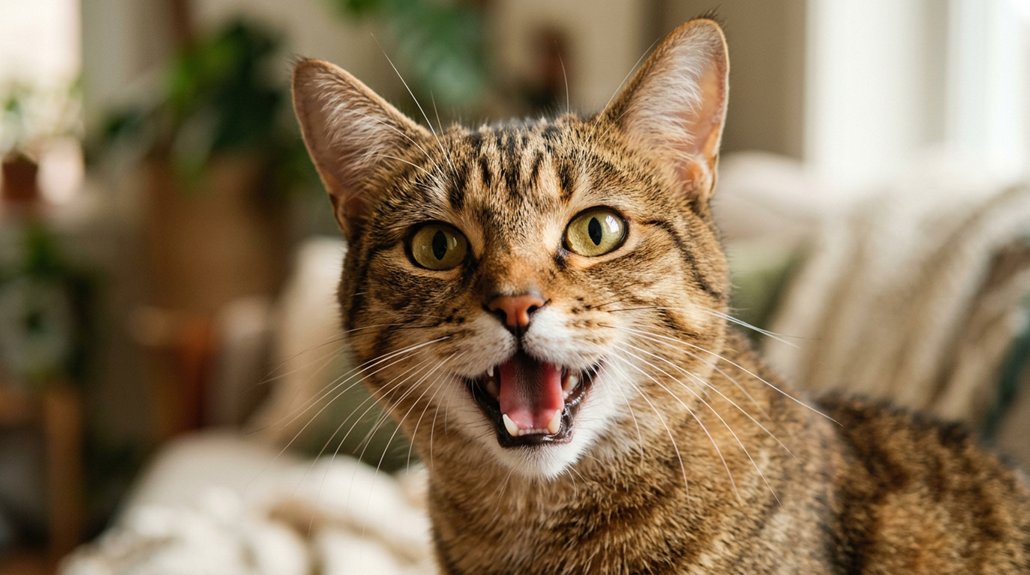
Although cats are often perceived as enigmatic, understanding their vocal language is essential for effective communication. Cat communication primarily revolves around meows directed at humans, as adult cats seldom vocalize to each other. Familiarize yourself with the nuances of feline emotions conveyed through meows; a short meow often indicates a greeting, whereas a longer, lower-pitched meow could reflect a complaint or unhappiness. High-pitched meows warrant attention, possibly signaling pain or discomfort. Each cat boasts a unique vocal style, shaped by its bond with you, so deciphering these sounds is important. Context and accompanying body language further illuminate a cat’s emotional state, enhancing your comprehension of its needs. Mastering this facet of cat communication fortifies your relationship.
Common Cat Meows and Their Meanings
When interpreting common cat meows, understanding their specific meanings can transform your interaction with these enigmatic animals. Greeting meows typically come as short sounds, resembling a friendly “Hi.” They reflect a cat’s positive mood upon seeing you. Mid-pitched meows, known as hunger calls, indicate requests for nourishment or possibly playtime, needing a timely response. Long, drawn-out meows scream urgency, demanding immediate attention, whereas low-pitched meows hint at dissatisfaction or displeasure with a situation.
| Meow Type | Description | Meaning |
|---|---|---|
| Short Meows | Brief and friendly | Greeting meows |
| Mid-Pitched | Moderate in tone | Hunger calls or requests |
| Long Drawn-Out | Extended and demanding | Urgent attention required |
| Low-Pitched | Deep and potentially aggressive | Discontent or discomfort |
Recognizing these can improve your bond with your feline companion.
Decoding High and Low-Pitched Meows
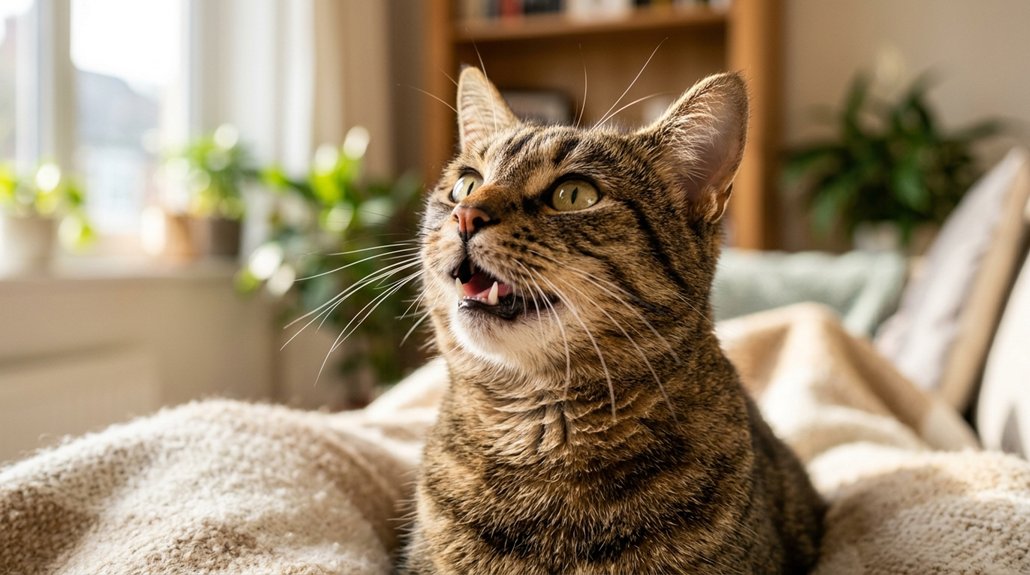
High and low-pitched meows can offer key insights into a cat’s emotional state, making it critical to decode these sounds accurately. High-pitched meows often indicate high pitched urgency, characterized by rapid sequences reflecting anxiety, surprise, or pain. These sounds may escalate, becoming longer and more drawn-out when a cat feels desperate for immediate attention, such as for food or comfort. In contrast, low pitched discontent is expressed through low-pitched meows. These sounds typically convey unhappiness or dissatisfaction and can signal that the cat is uncomfortable or voicing a complaint about its environment. Comparing pitch and length can help you discern the cat’s emotional state, while observing context and body language guarantees an effective interpretation of its needs.
Exploring Other Cat Sounds: Purrs, Chirps, Hisses
Beyond the nuances of meow pitches, understanding other cat sounds like purrs, chirps, and hisses offers deeper insight into feline communication. Purring meanings are most commonly associated with a cat’s contentment, but be aware that purring may indicate fear or pain when combined with tense body language. Chirping excitement, on the other hand, manifests as a bird-like sound. Your cat uses this to express enthusiasm, particularly when they spot prey they can’t physically reach. Hissing is unmistakably a sign of a cat feeling threatened or defensive. You’ll often see this paired with aggressive body language, such as an arched back or flattened ears. By recognizing these vocal cues, you can better understand and respond to your cat’s emotional state.
How to Respond to Cat Vocalizations
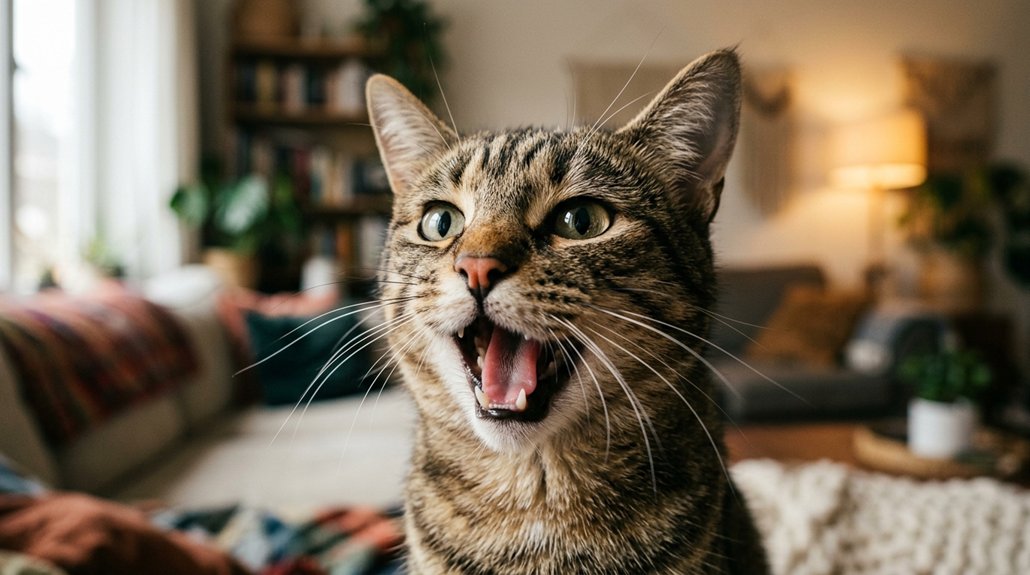
To effectively respond to cat vocalizations, you must first accurately interpret the pitch and length of the meows. Short meows suggest a friendly greeting, while drawn-out ones may convey desperation needing immediate attention. High-pitched meows require careful attention as they often indicate pain, anxiety, or irritation, necessitating prompt investigation. Observing behavior and interpreting context will aid in decoding your cat’s unique vocalization style, considering the relationship you share. Repeated meows usually signal excitement or comfort, urging you to offer interaction, therefore reinforcing positive communication. Monitor for any sudden or excessive vocalizations, which might point to potential health issues. If changes occur, consulting a veterinarian is advisable to guarantee your cat’s well-being. Familiarity breeds effective communication.
Frequently Asked Questions
What Is the 3-3-3 Rule for Cats?
The 3-3-3 rule for cats outlines the adaptation period post-adoption: first 3 days adjusting to a new environment, next three weeks building trust, and three months fully settling, aiding in interpreting sounds they’ll make during this adjustment.
What Is “I Love You” in Cat Language?
In cat language, “I love you” often involves specific cat vocalizations like soft trills, purrs, or chirps, along with gentle head bumps. Understanding feline communication patterns helps you decode when they’re expressing affection instead of seeking attention.
How Do You Say “Hi” in Cat Language?
“Hi” in cat language is typically conveyed through cat communication with a short meow. Meow variations like mid-pitched meows or chirps, influenced by your cat’s personality and relationship, can alter the greeting’s specific meaning and context.
What Annoys Cats the Most?
In their kingdom of tranquility, loud noises are the sirens disrupting peace. Sudden movements become jarring earthquakes; rough handling reads as betrayal. Unfamiliar scents invade like foreign armies, while chaotic environments and overcrowded spaces become unwelcome territories.
Conclusion
By tuning into your cat’s vocalizations, you’ll enhance your bond and understanding. Can deciphering a high-pitched plea for attention from a low-pitched demand for food improve your communication? Absolutely. Recognize that meows aren’t the only sounds that matter. Purrs signify contentment, while hisses warn of discomfort. Your responses should align with these cues: offer affection, guarantee safety, or respect their space. Mastering these acoustic cues sharpens your caregiving, fostering a harmonious relationship with your feline companion.