Start your kitten’s vet visits at around eight weeks old to guarantee their health and well-being. During this initial visit, they’ll receive vaccinations against diseases like feline distemper and calicivirus, and undergo an extensive physical examination to identify any congenital conditions or parasites. You’ll also discuss dietary needs and spaying/neutering plans. These early visits are essential for preventive care and establishing a health strategy, setting a foundation for your kitten’s future well-being. Explore further to enhance your understanding.
Key Takeaways
- Schedule the first vet visit for kittens at around 8 weeks of age.
- Immediate vet care is needed if the kitten lacks maternal care.
- Post-adoption health assessments should occur within a week.
- Initial vet visits allow for timely vaccinations and health checks.
- Early consultations help discuss diet and spaying/neutering plans.
Why Your Kitten’s First Vet Visit Matters
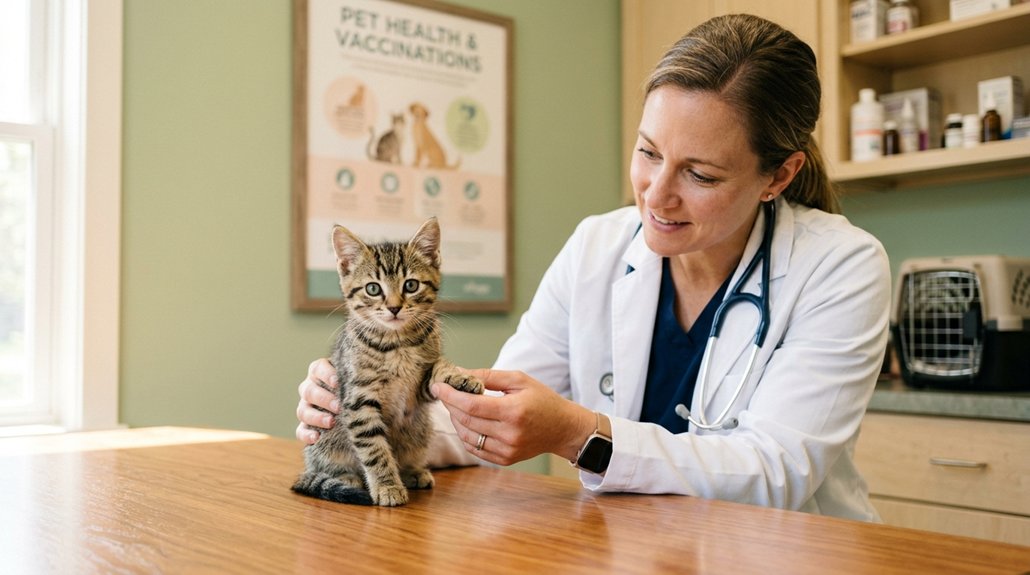
Because a kitten’s first vet visit is crucial, it typically occurs around 8 weeks of age and lays the groundwork for the animal’s lifelong health. During this critical appointment, kitten vaccinations are administered, initiating protection against contagious and potentially fatal diseases like feline distemper and calicivirus—essential to building early health defenses. The veterinarian performs a thorough physical examination to detect parasites and assess congenital conditions. This proactive approach in preventive care is fundamental for minimizing health risks and enhancing overall well-being. Additionally, these early health visits facilitate discussions on important topics, including dietary needs and spaying or neutering plans. By prioritizing your kitten’s initial vet visit, you guarantee the spread of infectious agents is curtailed, safeguarding both your pet and others in your household.
Timing Your Kitten’s First Vet Visit
Initiating your kitten’s veterinary care at the right time is instrumental in promoting a thorough health strategy. Timing is essential; recognize that the ideal kitten age for the inaugural vet visit is around 8 weeks. This guarantees timely administration of a vaccination schedule, as well as necessary deworming and a complete health evaluation. Consider the following guidelines:
- Immediate Care: If your kitten is a newborn without maternal care, seek immediate veterinary evaluation to assess health and nutritional needs.
- Post-adoption Examination: For adopted kittens, arrange a vet visit within a few days—up to a week post-adoption—to ensure adherence to legal requirements and early health assessment.
- Preventative Measures: Schedule the initial consult promptly to safeguard against spreading potential parasites or viral infections to other pets.
Preparing: What to Bring for Your Kitten’s Vet Visit
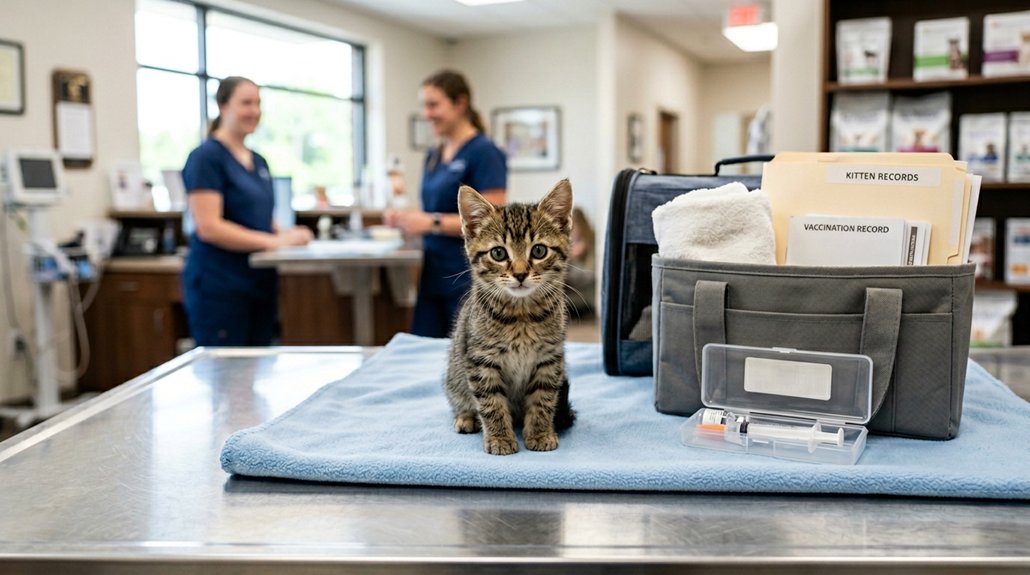
As you prepare for your kitten’s vet visit, assembling the right items guarantees a smooth and effective consultation. Start with paperwork preparation by bringing your kitten’s adoption documents, providing essential background for the veterinarian. Document any health concerns or behavioral observations to discuss. Transport tips include using a secure cat carrier, ensuring safe travel to the vet’s office. A carrier facilitates stress-free handling, shielding your kitten from potential hazards during transit. Additionally, collect a fresh stool sample for parasitic examination—a critical component of the initial health assessment. Finally, packing some cat treats can reward your kitten post-visit, fostering a positive association with veterinary care.
| Item | Purpose |
|---|---|
| Adoption paperwork | Background information |
| Health notes | Discussion points |
| Cat carrier | Safe transport |
| Fresh stool sample | Parasite testing |
Understanding What Happens During Your Kitten’s First Vet Exam
When you take your kitten for its first vet exam, the experience is both a critical and extensive evaluation of its overall health. Observing kitten behavior in the vet environment helps monitor stress levels and general temperament. Here’s what to expect:
- Physical Examination: The vet conducts a detailed check, evaluating eyes, ears, teeth, and body condition, while inspecting for external parasites like fleas and mites.
- Core Vaccinations: Administering initial vaccinations to protect against common feline illnesses is vital for your kitten’s immunity.
- Health Discussions: Expect guidance on spaying/neutering, nutrition, and lifestyle-specific care. The vet may also collect a fecal sample for testing intestinal parasites.
Monitoring weight and temperature guarantees proper growth, with follow-up appointments scheduled for vaccination boosters and ongoing health evaluation.
Key Lab Tests During the First Vet Visit
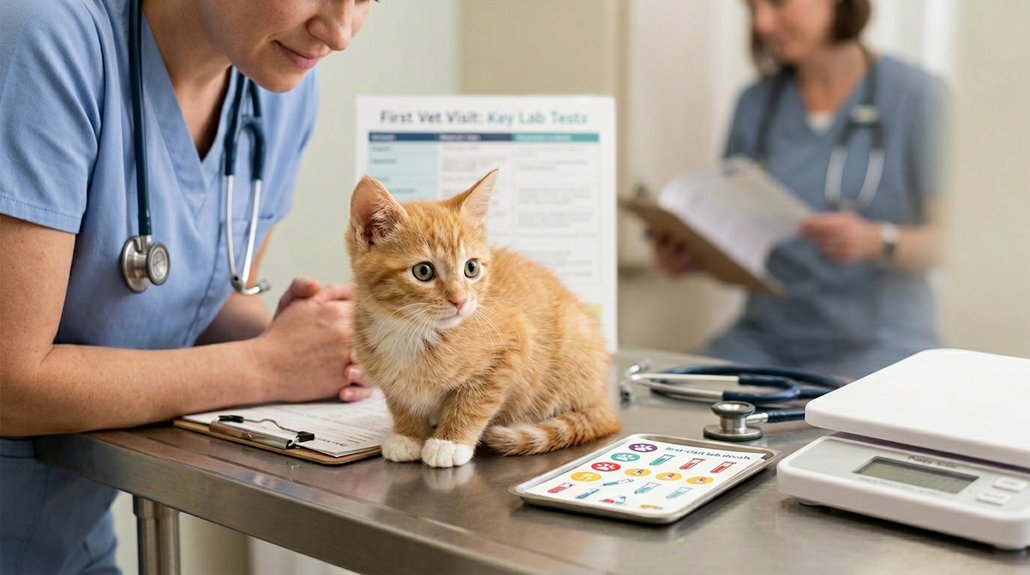
During your kitten’s first vet visit, essential lab tests play a vital role in evaluating their overall health. A fecal exam is indispensable for detecting intestinal parasites like worms and giardia, which can greatly impact your kitten’s well-being. Additionally, blood tests for FeLV and FIV are strongly recommended to identify any serious viral infections, particularly in newly adopted kittens after they reach nine weeks of age.
Essential Fecal Examinations
- Diagnostic Precision: Identifying specific parasites guarantees accurate diagnosis and effective treatment planning.
- Timely Intervention: Detecting parasites early allows for the immediate administration of deworming medication, preventing further health complications.
- Ongoing Monitoring: Since a single fecal exam may not identify all parasites, follow-up tests are essential for thorough health management.
Regular fecal examinations are vital in safeguarding your kitten’s gastrointestinal health, emphasizing the importance of early and consistent veterinary care.
Vital Blood Tests
Kittens require thorough veterinary care, making important blood tests an essential component of their initial checkup. Blood test significance can’t be overstated, especially for Feline Leukemia Virus (FeLV) and Feline Immunodeficiency Virus (FIV). These are critical assessments for newly adopted kittens, ideally starting at nine weeks of age. Early detection of these viral infections is essential as they can severely impact a kitten’s health and facilitate disease transmission to other cats. If FeLV or FIV is present, the kitten will need specialized care to manage health and prevent spreading the disease. Additionally, the veterinarian might recommend further blood tests to identify other potential health issues. Test results are instrumental in determining the vaccination schedule and establishing long-term preventive care strategies.
Common Costs for the First Vet Visit
You’ll find that the standard cost for a kitten’s initial vet visit often falls between $30 and $200, influenced by regional factors and the specific services rendered. Be prepared for potential additional expenses from necessary laboratory tests, vaccinations, or treatments that can elevate your total outlay considerably. To optimize your budgeting process, it’s advisable to discuss expected costs with your veterinary clinic, and consider wellness packages that could offer bundled savings.
Typical Vet Visit Fees
Steering the initial veterinary costs for a kitten can be a vital part of responsible pet ownership. Establishing a cost-effective approach to kitten healthcare involves understanding typical vet service fees. Generally, the first vet visit can range from $30 to over $200, influenced by the clinic’s location and degree of service provided.
To better navigate these expenses:
- Consult Local Clinics: Prices may vary considerably, so consult multiple vet offices to estimate possible costs.
- Explore Wellness Packages: Some practices offer discounted service bundles, potentially lowering initial financial outlay.
- Understand Legal Requirements: Depending on state regulations, an initial exam might be legally mandated within a specific timeframe, so prompt scheduling is essential.
Potential Additional Expenses
Once you’ve budgeted for the primary vet visit fees, it’s important to contemplate potential additional expenses that might arise. Preventative care is a priority, yet budget planning must account for unforeseen costs like laboratory tests and necessary treatments. Vaccinations are typically included in the initial visit but are vital for safeguarding your kitten’s health. Deworming, if required, can add $20 to $50 to your bill.
| Item | Estimated Cost |
|---|---|
| Vet Visit Fee | $30 – $200+ |
| Fecal Exam | Additional Cost |
| Core Vaccinations | Included / Varies |
| Deworming Treatment | $20 – $50 |
Anticipate follow-up appointments for continued care, including vaccinations and thorough check-ups, ensuring long-term health and well-being for your pet.
What Should You Ask Your Vet?
Key questions to ask include:
- What is the recommended vaccination schedule?
- How can I guarantee my kitten follows a balanced diet?
- What preventive measures should I adopt for flea and tick control?
These discussions will help secure your kitten’s health.
Keeping Your Kitten Calm During Vet Visits
To guarantee a calm vet visit for your kitten, it’s essential to acclimate them to the travel environment beforehand. Carrier acclimation is vital; introduce the carrier in familiar surroundings days ahead of the appointment. Incorporate a soft blanket or favorite toy to enhance comfort. Employ positive reinforcement by offering treats and praise to encourage voluntary exploration and entry into the carrier, thereby avoiding any stressful, forced interactions. During transit, securely position the carrier to minimize jostling, as abrupt movements can increase anxiety. At the clinic, a soft voice can create a reassuring atmosphere, enhancing your kitten’s sense of security. Post-visit, allow your kitten time to decompress at home, carefully monitoring for any mild vaccine or examination-related side effects.
Planning Future Vet Care: Follow-Ups and Next Steps
After your kitten’s initial vet visit, establishing a routine for their ongoing medical care becomes vital. Implementing a detailed plan that includes vaccination schedules, spay/neuter timing, and regular wellness exams can greatly impact your kitten’s overall health.
- Vaccination Schedules: Typically, follow-up appointments occur every 3-4 weeks until your kitten is 16 weeks old. This guarantees completion of the vaccination series to protect against infectious diseases.
- Spay/Neuter: Aim to schedule the spay/neuter procedure by 5-6 months to prevent unwanted litters and related health complications.
- Follow-Up Visits: Regularly monitor your kitten’s growth and preventive care needs, including flea and parasite control. Maintaining a thorough record of vaccinations and any necessary tests, like fecal or FeLV/FIV tests, supports ongoing health maintenance.
Frequently Asked Questions
At What Age Should a Kitten First See a Vet?
You should schedule your kitten’s first vet checkup around eight weeks of age. This visit is essential for obtaining necessary kitten vaccinations and conducting a thorough health exam, ensuring your pet’s well-being from an evidence-based medical standpoint.
What Is the 3-3-3 Rule for Kittens?
Imagine your kitten, Luna, adjusts using the 3-3-3 rule: three days to relax, three weeks for socialization, and three months of exploration, all while incorporating vaccinations and health checkups for ideal development and well-being.
Where Should a Kitten Sleep on the First Night?
On the first night, your kitten should sleep in a warm, confined space with a secure sleep environment. Establish bedtime routines by using soft bedding and familiar smells to provide comfort and mimic their natural instincts.
What Are the Signs of a Happy Cat?
A happy cat, like a serene dancer in a sunbeam, exhibits relaxed cat behavior—upright tail, soft ears, consistent purring, playful antics, and paw kneading, all closely tied to peak feline health and emotional well-being.
Conclusion
Your kitten’s care continuum commences with a thorough and caring vet visit. Prioritizing your pet’s health fosters a foundation of flourishing feline friendships. Equipped with expert insights, you’ll guarantee excellent evaluations and essential examinations. Through timely interventions and targeted treatments, you can tackle potential problems proactively. Professional partnerships with vets prepare your pet for a promising, playful future. Anticipate, ask, and adhere to advice. Anchored in awareness, your proactive approach promotes your kitten’s best health and happiness.