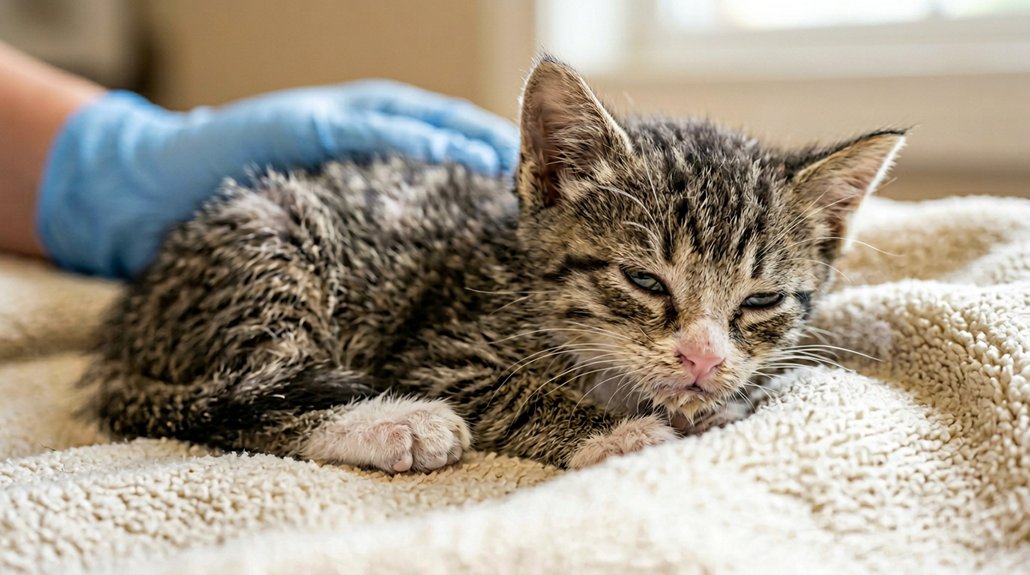
Kittens are prone to health issues due to their immature immune systems and unique vulnerabilities. They can easily contract respiratory infections, showing signs like sneezing and nasal discharge. Skin conditions such as mange or ringworm cause itching and hair loss. Intestinal parasites lead to vomiting and diarrhea. Fleas and ear mites result in excessive scratching. Ensuring proper nutrition and regular vet visits is essential. Explore more to understand early symptoms and effective preventive measures.
Key Takeaways
- Kittens are prone to respiratory infections with symptoms like sneezing and nasal discharge.
- Intestinal parasites in kittens can cause vomiting, diarrhea, and require regular deworming starting at eight weeks.
- Proper nutrition is critical, as imbalanced diets can stunt growth and lead to illnesses.
- Skin conditions like mange and ringworm cause itching and hair loss, necessitating prompt veterinary care.
- Kittens have sensitive immune systems, making them susceptible to infections; vaccinations starting between 6 to 8 weeks are essential.
Why Do Kittens Get Sick? Understanding Their Vulnerabilities
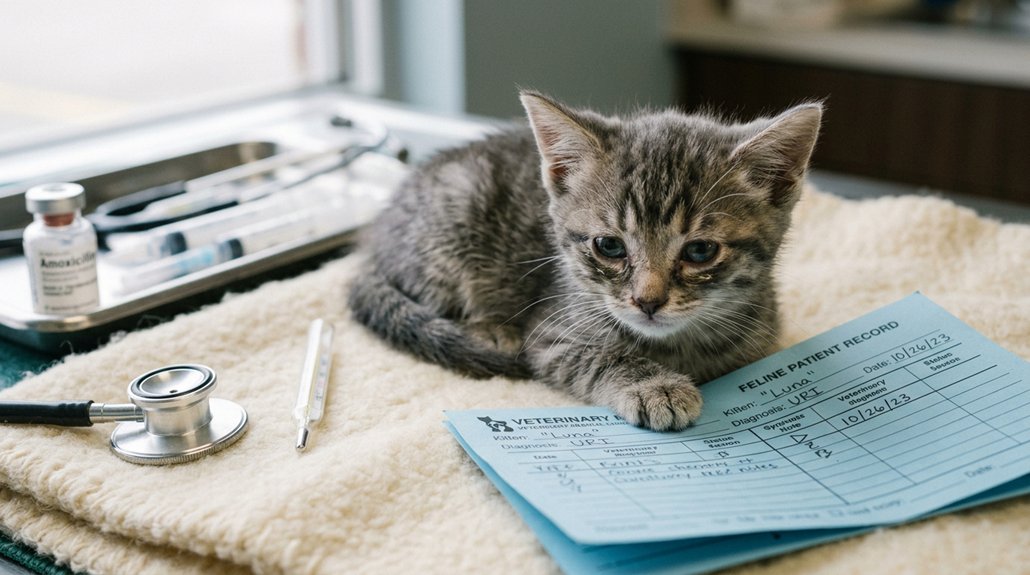
Because kittens possess sensitive bodies and an immature immune system, they’re particularly susceptible to various infections and diseases. Young age exacerbates their vulnerabilities due to several stress factors and inadequate social interaction, potentially suppressing their immunity. Proper nutritional needs are vital; imbalanced diets can stunt growth and foster illnesses. Pay attention to grooming practices, as poor hygiene increases the risk of infection. Environmental hazards, including fluctuating temperatures and toxic substances, can harm their health. Assess their breeding history for genetic issues that might predispose them to specific conditions. Hydration importance shouldn’t be underestimated, as dehydration can occur quickly, exacerbating health problems. Each of these elements plays a role in mitigating the likelihood of your kitten falling ill.
Spot the Symptoms: Early Signs Your Kitten Needs a Vet
When should you be concerned about your kitten’s health? Be alert to changes in kitten behavior and dietary changes. A sudden refusal to eat, lasting over 24 hours, is alarming as it can lead to dangerous conditions like low blood sugar and dehydration. Watch for signs of upper respiratory infections such as sneezing, nasal discharge, and excessive lethargy; these may require prompt veterinary intervention to prevent pneumonia. Severe vomiting or diarrhea persisting beyond a few hours should raise concern for potential gastrointestinal distress. Also, pay attention to urinary issues, indicated by blood in urine or difficulty urinating, needing immediate care. Finally, excessive scratching, hair loss, or visible parasites necessitate a vet visit to address infestations effectively.
What to Do If Your Kitten Has a Respiratory Infection?
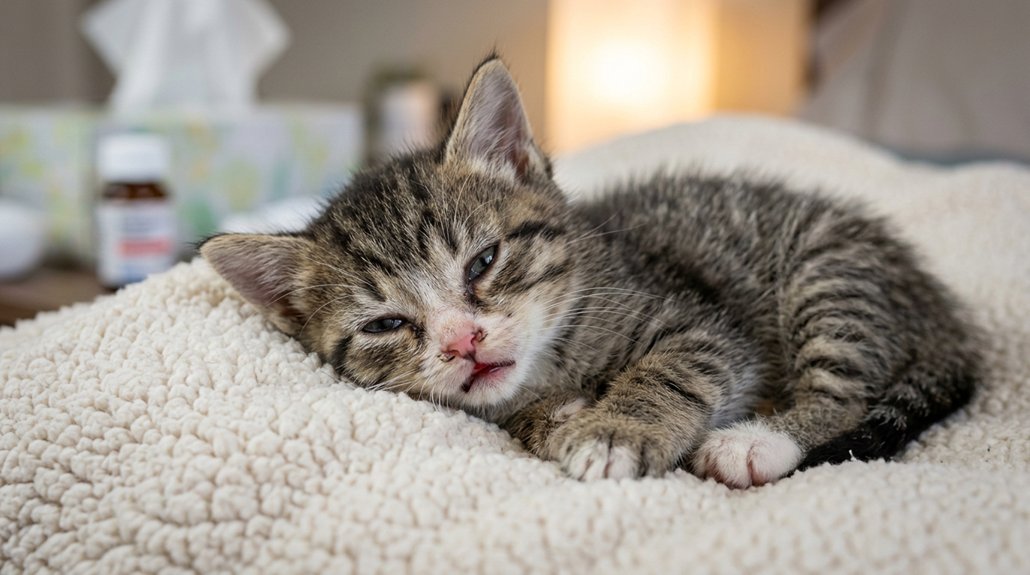
Being vigilant about your kitten’s health can sometimes reveal respiratory issues that require immediate action. If symptoms like sneezing or nasal discharge appear, consult a veterinarian promptly. Respiratory wellness is essential, so make sure your kitten remains hydrated. You might offer moisture-rich food or coax them to drink more water to prevent dehydration. Home remedies include maintaining a warm, comfortable environment; using a humidifier can ease congestion. Keep your kitten isolated from other cats, as these infections spread easily in tight quarters. Monitor their condition closely, and if they refuse food or symptoms worsen, it’s important to seek further veterinary attention quickly. Rapid intervention not only aids recovery but also guarantees your kitten remains on the path to good health.
How to Identify and Treat Fleas and Ear Mites
How can you effectively manage and treat fleas and ear mites in your kitten? Start with flea prevention by using veterinarian-recommended topical medications, or over-the-counter solutions, ensuring you’ve thoroughly cleaned your kitten’s environment. Regularly employ a flea comb to remove visible black bugs or flea dirt. For ear mite treatment, observe signs like excessive ear scratching, head shaking, and crumbly ear discharge. Seek topical medications prescribed by a vet for prompt resolution. Follow-up visits are essential to confirm the mites are completely eradicated. Implement regular grooming and parasite prevention measures to create a flea and ear mite-free zone. Early detection allows for swift action, minimizing discomfort and preventing anemia in kittens. Address infestations efficiently and prioritize your kitten’s comfort.
Detecting and Treating Intestinal Parasites in Kittens
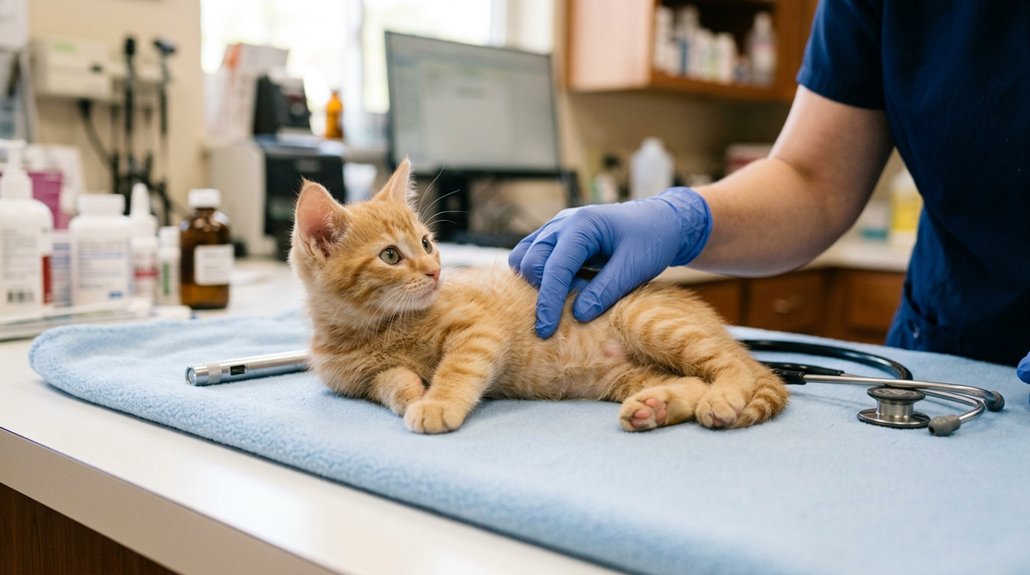
Detecting intestinal parasites in kittens requires close observation for symptoms like vomiting, diarrhea, and a bloated abdomen, often stemming from infections transmitted through contaminated fecal matter or an infected mother. Regular deworming, starting at eight weeks of age, and stool examinations by a veterinarian are critical steps for diagnosis and treatment, with deworming medications administered multiple times to combat infestation. To prevent re-infections, establish a regimen of preventative care including hygiene practices and consistent veterinary check-ups.
Symptoms and Transmission
When it comes to safeguarding the health of kittens, understanding the symptoms and transmission of intestinal parasites is vital. Clinical signs like diarrhea, vomiting, anemia, and weight loss can signal the presence of roundworms, hookworms, or giardia. The parasite lifecycle often begins when kittens ingest parasite eggs from contaminated food or surfaces, or through nursing from an infected mother. Important hygiene practices include cleaning contaminated areas to disrupt this cycle. Routine deworming starting at eight weeks is essential. Transmission commonly occurs in environments laden with waste or via infected soft spots in their surroundings. Identifying specific parasites through a veterinary stool examination guarantees proper treatment, emphasizing the need for thorough fecal monitoring and maintaining a clean, hygienic habitat.
Treatment and Prevention
Even though kittens are adorable and full of energy, they can fall prey to intestinal parasites that seriously affect their health. Detecting these issues often involves routine fecal exams by your vet to spot critters like roundworms and giardia. Symptoms such as diarrhea and bloated stomach demand prompt veterinary care. Deworming should begin at about eight weeks, employing anti-parasitic medications tailored to the parasite type. Administer these in multiple doses for efficacy. Incorporate dietary considerations, ensuring your kitten receives balanced nutrition to bolster their immune system. For parasite prevention, maintain a clean habitat, adhere to strict hygiene, and limit exposure to contaminated environments. Regular vet visits and vigilant parasite management will help keep your kitten thriving.
Managing Skin Conditions Like Mange and Ringworm
Addressing skin conditions like mange and ringworm in kittens is essential for ensuring their well-being and comfort. Mange stems from mites causing severe itching and hair loss, while ringworm, a fungal menace, leads to bald patches and spreads swiftly. Implementing effective skincare routines is vital; consult a vet for proper diagnosis and prescription of topical or systemic treatments. Environmental hygiene plays a significant role—regular grooming and thorough cleaning help prevent the spread, especially in homes with several pets. Always quarantine affected kittens to curb transmission risks. Prompt veterinary care is paramount to mitigate skin damage and distress.
“`markdown
| Symptoms | Preventive Measures |
|---|---|
| Itching, hair loss | Regular grooming |
| Bald patches | Cleaning surfaces |
| Skin lesions | Quarantine infected |
“`
Prioritize these actions to maintain kitten health.
Understanding Viral Risks for Kittens: Distemper, FIP, and FCV
Though often playful and energetic, kittens are vulnerable to several serious viral infections that can jeopardize their health if not adequately protected. Feline Distemper (FPV) is a highly contagious virus, transmitted rapidly through contact, which assaults the gastrointestinal system and suppresses the immune response. Your kitten’s health can decline swiftly, emphasizing the importance of hospitalization and isolation to control infection spread. Feline Infectious Peritonitis (FIP) emerges from a coronavirus mutation, often overwhelming the kitten’s immune defenses, causing symptoms like fever and fluid buildup. It’s typically fatal without effective interventions. Feline Calicivirus (FCV) transmits easily among cats, inducing oral ulcers and possibly severe respiratory symptoms. Vaccination can greatly mitigate these risks, fundamentally bolstering your kitten’s immune response against these viral threats.
Why Regular Vet Visits Matter for Your Kitten’s Health
Regular vet visits are essential to guarantee your kitten receives important vaccinations on schedule, protecting them from severe diseases like Feline Distemper and Leukemia. These check-ups also play an important role in detecting early health issues, allowing for timely interventions that can enhance their well-being. In addition, professional evaluations help monitor your kitten’s growth and development, guaranteeing they’re meeting key milestones and receiving the proper nutritional guidance.
Essential Vaccinations Schedule
Ensuring your kitten’s health from the start requires a well-planned vaccination schedule, which typically begins between 6 to 8 weeks of age. This fundamental vaccination timeline protects against Feline Distemper, FVR, and FCV. Your kitten will need vaccinations every 3-4 weeks until around 16 weeks, with core vaccinations being essential for their health. A Rabies shot, often required by law, is usually administered between 12 and 16 weeks. Annual booster frequency is critical for maintaining immunity through routine vet visits, ensuring your kitten remains healthy.
Consider the importance of:
- Cuddling with a healthy, playful kitten
- Rest assured, preventing cat flu
- Meeting legal requirements, hassle-free
- Weekly vet visits, ready to care
These steps create a strong foundation for your kitten’s lifelong well-being.
Detecting Early Health Issues
How important are regular vet visits in ensuring your kitten’s health? These check-ups are essential for kitten wellness and preventive care. Through early detection of health issues, veterinarians can monitor growth and administer vaccinations against diseases like Feline Distemper and Feline Leukemia, critical for a developing immune system. Routine visits establish a health baseline, allowing for prompt identification of changes in behavior or physical condition, such as weight alterations or excessive grooming. Veterinarians will also assess stool quality to diagnose and intervene in cases of intestinal parasites, common but harmful if untreated. Additionally, these visits build a collaborative relationship between you and your vet, offering consistent support and guidance to optimize your kitten’s care during their formative early life stages.
Monitoring Growth and Development
Understanding the significance of detecting health issues early paves the way for thoroughly monitoring your kitten’s growth and development. Regular vet visits are essential in tracking growth tracking and ensuring your kitten reaches important kitten milestones. Veterinary check-ups assess weight and developmental progress, allowing early detection of issues like malnutrition or parasites. They administer critical vaccines at prescribed intervals, such as feline distemper, essential for health.
- Prevention: Protect against life-threatening diseases with timely vaccinations.
- Intervention: Address malnutrition or parasites before they escalate.
- Longevity: Promote overall well-being to foster a longer, healthier life.
- Guidance: Consult on preventive measures (spaying, deworming).
Frequent visits during the first year are crucial for your kitten’s robust health, ensuring timely interventions on diet, dental care, and well-being.
Frequently Asked Questions
What Is the Most Common Illness in Kittens?
You’ll often see upper respiratory infections as the most common illness in kittens. They can develop symptoms leading to kitten respiratory issues. Don’t forget the importance of monitoring feline dental health to guarantee overall wellbeing.
What Is the 3-3-3 Rule for Kittens?
Imagine your kitten hiding under the couch. The 3-3-3 rule aids in understanding its behavior. Initially, hide and observe, then embrace socialization techniques at three weeks, finally engaging fully by three months, revealing their unique personality.
How Do Cats Say Goodbye?
Cats say goodbye through feline emotions and kitten signals like slow blinking, rubbing against you, or changing grooming habits. Recognize these signs and respond with calm reassurance, helping your cat feel secure during changes or partings.
Do Cats Forgive You for Yelling at Them?
Cats might forgive you for yelling, as their emotional responses and cat communication involve eventually seeking proximity or showing affection. Their recovery depends on positive interactions. Use calm, gentle communication for stronger bonds and effective understanding.
Conclusion
Caring for a kitten is like tending to a delicate flame; it requires vigilance and dedication. Just as you monitor a flickering candle, watch for signs of illness—early detection can save your kitten’s life. From respiratory infections to parasites, understanding potential health issues is essential. Don’t underestimate routine vet visits; they’re your kitten’s health insurance. By staying informed and proactive, you’re ensuring your kitten grows into a healthy, vibrant cat who enriches your life for years.