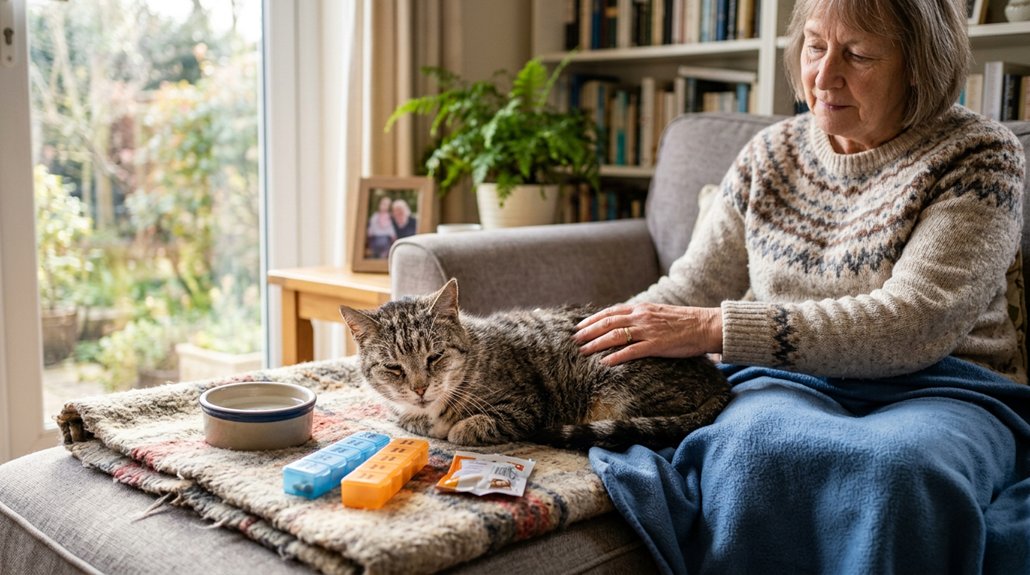
Caring for a senior cat involves tailored strategies to accommodate their changing needs. Regular grooming and accessible environments prevent discomfort and mobility issues. Diet and hydration adjustments, like incorporating wet food and fountains, are key to maintaining health. Bi-annual veterinary visits and monitoring weight or behavior guarantee early detection of issues. Engaging them in gentle play promotes cognitive and physical well-being. Explore further for an in-depth understanding of these essential care techniques.
Key Takeaways
- Incorporate orthopedic bedding and ramps to create safe, comfortable spaces for senior cats.
- Regularly groom and schedule veterinary check-ups every six months for optimal health monitoring.
- Ensure easy access to litter boxes and food stations to aid mobility and comfort.
- Integrate hydration techniques like water fountains and emphasize high-protein diets to maintain muscle mass.
- Engage senior cats with gentle, interactive play sessions to support cognitive and physical health.
Essential Care Strategies for Senior Cats
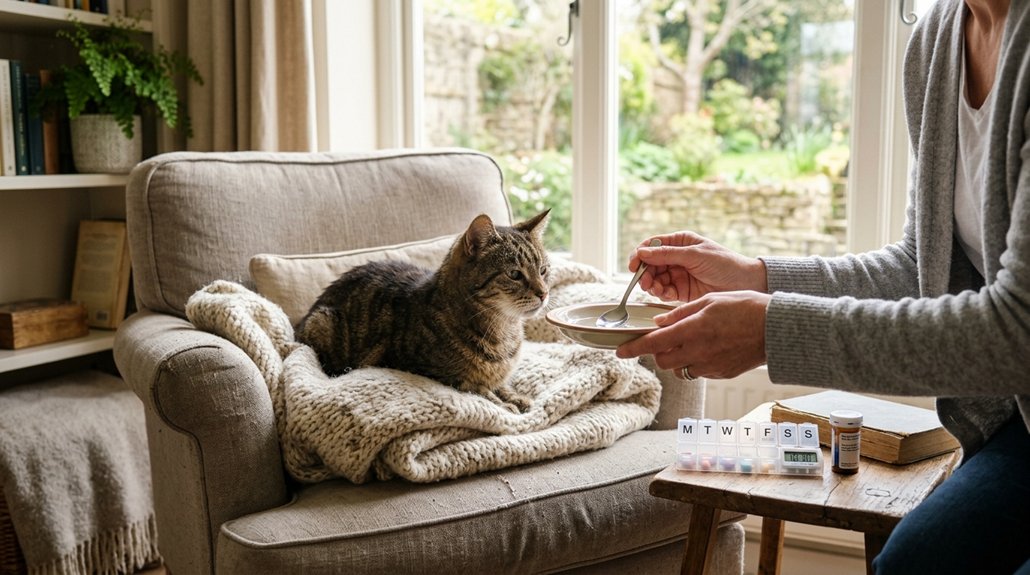
When caring for a senior cat, adopting essential care strategies is important to guarantee their well-being and quality of life. Senior cat grooming becomes a priority as mobility challenges often hinder their ability to self-groom, increasing the risk of matting and skin issues. Increased grooming sessions will help maintain coat health while allowing you to check for lumps or abnormalities. Addressing mobility challenges, providing accessible litter boxes and food stations can prevent undue strain and encourage hydration. Regular veterinary check-ups, semi-annually, are fundamental for monitoring health and early detection of potential issues—annual lab work will assess organ function. Dietary modifications, emphasizing higher protein intake, can stave off muscle loss, and tailored play sessions can support cognitive and physical health.
Adapting Your Home for Senior Cat Comfort
As cats age, their comfort becomes paramount, necessitating thoughtful adaptations within your home to support their changing needs. Establish warm, safe resting places devoid of drafts, incorporating orthopedic bedding to alleviate discomfort from arthritis. Promoting ease of movement is critical; install low-sided litter boxes on every floor, facilitating access for cats with mobility issues. Strategically position ramps or pet stairs as mobility aids, enabling them to safely reach elevated areas. Enhance stability by covering slippery surfaces with rugs or mats, preventing falls and fostering confidence. Consistent environmental optimization addresses senior cats’ physical limitations while maintaining their safety and well-being. These structured adaptations guarantee your senior cat enjoys a comfortable, accessible space, promoting overall health and reducing risk of injury.
Feed and Hydrate Your Senior Cat Properly
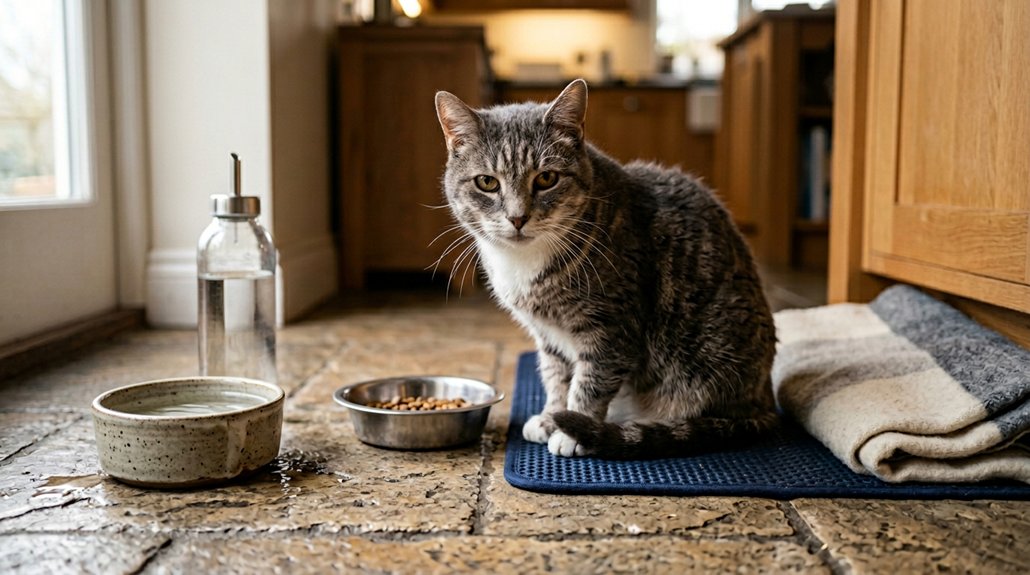
Properly feeding and hydrating your senior cat is vital to sustaining their health and quality of life. Guarantee constant access to fresh water; dehydration stresses organs notably. Consider hydration techniques like multiple water stations or a fountain to boost intake. Dietary preferences are also essential. Consult with a veterinarian to tailor a diet that meets specific health needs, particularly if kidney disease or muscle wasting is present. High-protein food may be recommended. Integrating wet food increases water consumption and appeals to senior cats with diminished taste and smell sensitivity. Maintain a consistent feeding schedule to minimize stress and enhance appetite. Regularly monitor weight changes as they may indicate health concerns, guaranteeing stable dietary habits and hydration levels.
Regular Health Checks for Senior Cats
Ensuring regular health checks for your senior cat is a fundamental aspect of maintaining their overall well-being. It’s recommended to schedule veterinary exams every six months. These exams are essential for monitoring health and detecting any issues early. During the annual geriatric exam, blood work and X-rays should be conducted to assess organ function and identify potential health problems. Due to cats’ tendency to hide signs of illness, it’s important to engage in health monitoring by observing any behavioral changes, alterations in appetite, energy levels, or litter box habits. Weight monitoring is imperative; noticeable fluctuations may indicate underlying health issues and require prompt veterinary attention. Additionally, routine dental care is crucial, as untreated dental disease can lead to severe complications.
Engage Your Senior Cat With Age-Appropriate Activities
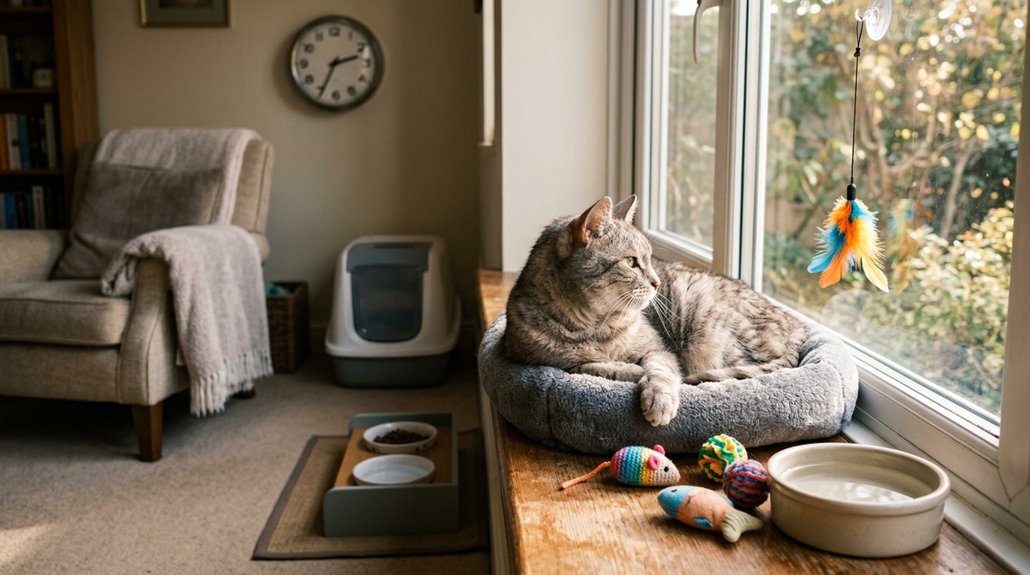
Keeping your senior cat engaged with age-appropriate activities can enhance their physical and mental health. Interactive toys that cater to their natural instincts are vital. Use lightweight balls or feather wands for short, gentle play sessions. These options minimize exertion while providing necessary physical activity. To boost mental stimulation, introduce food puzzle toys. These toys encourage your cat to forage, combining play with mealtime and offering cognitive engagement. It’s important to rotate toys regularly, ensuring novel stimuli that prevent boredom and maintain interest. Additionally, facilitate visual enrichment by providing secure window perches. This allows your cat to observe the outside world, offering entertainment without physical strain. By integrating these strategies, you effectively support your senior cat’s well-being.
Frequently Asked Questions
What Age Is Considered Very Old for a Cat?
A cat is considered very old at 15 years. You’ll notice aging through slowed movements and changes in senior nutrition needs. Regularly consult with a veterinarian to monitor health and adjust care strategies for your cat’s senior years.
What Is the 3-3-3 Rule for Cats?
The 3-3-3 rule for cats entails three adjusting stages: hiding for three days, adapting over three weeks, and settling within three months. Understanding cat behavior, especially alongside senior nutrition, helps you support their adjustment effectively.
What Are End of Life Signs in an Elderly Cat?
You’ll notice signs like decreased appetite, significant weight loss, or isolation. Pain management is essential if there’s distress. Adjust diets for easier digestion. Watch for labored breathing or grooming neglect, as these often indicate health decline.
What Not to Do With Aging Cats?
Avoid sudden changes like a surprise thunderstorm; they’re unsettling. Don’t fall for common misconceptions about aging, like overestimating dieting needs. Always confer with a vet before making dietary changes to guarantee you’re not compromising their health.
Conclusion
In the end, caring for your senior cat is akin to ensuring a smooth sail after a life well-traveled—an ounce of prevention is worth a pound of cure. By adapting your home, providing proper nutrition and hydration, conducting regular health checks, and engaging in age-appropriate activities, you’re making your feline’s golden years comfortable. Embrace these strategies with a compassionate heart and a scientific approach, and your senior cat will continue to thrive, purring happily by your side.