
To prevent fleas and ticks on your cat, conduct regular inspections, focusing on areas like the neck and tail base. Schedule routine vet check-ups for personalized treatments and constant health monitoring. At home, vacuum frequently, clean pet bedding, and manage yard conditions by mowing and clearing debris. Apply feline-specific topical treatments as directed, and support your cat’s diet with essential nutrients for enhanced resistance. Explore effective prevention strategies and minimize your cat’s risks further.
Key Takeaways
- Conduct regular vet check-ups for tailored flea and tick prevention strategies based on your cat’s age, weight, and health.
- Use cat-specific topical treatments monthly, applying directly to the skin between the shoulder blades.
- Vacuum frequently and wash pet bedding regularly to disrupt the flea life cycle in the home.
- Implement yard management practices like mowing the lawn and removing tall weeds to minimize flea and tick habitats.
- Provide a balanced diet with essential fatty acids, antioxidants, and probiotics to strengthen your cat’s immune system.
Understanding Fleas and Ticks: Key Facts for Cat Owners

While fleas and ticks might seem like minor nuisances, their potential impact on your cat’s health cannot be overstated. Understanding flea biology reveals that these wingless insects can produce millions of offspring over their 13-day to 12-month lifespan. The Ctenocephalides felis species primarily targets cats in North America, laying eggs in your cat’s fur, leading to environmental infestations. They flourish in warm, humid conditions, persisting year-round if a host is accessible. In contrast, tick behavior involves blood-feeding tendencies that transmit diseases like cytauxzoonosis, which can be fatal. These arachnids require vigilant prevention. Both pose significant risks not only to your feline friends but also to humans, underscoring the importance of proactive flea and tick control measures.
Inspection Methods for Fleas and Ticks on Your Cat
To effectively prevent flea and tick infestations, regular pet check-ups and proper grooming are essential. Use visual and tactile inspections, ensuring you check areas where pests commonly hide, like the neck and tail base. By maintaining a routine inspection schedule, you’ll intercept potential issues before they escalate, keeping your cat comfortable and healthy.
Regular Pet Check-Ups
Initiating regular pet check-ups is essential to maintaining your cat’s health, particularly when targeting potential flea and tick infestations. Consistently performing routine inspections serves as an effective preventive measure. Use a fine-toothed flea comb to inspect high-risk areas such as the neck, back, and base of your cat’s tail. Look for flea dirt, small black specks that reveal fleas when they turn reddish after wetting. Thoroughly examine the skin for ticks by parting the fur, paying close attention to the ears, neck, and between toes. Increase the frequency of these checks after outdoor excursions to catch infestations early.
| Emotion | Indicator | Action |
|---|---|---|
| Anxiety | Flea Dirt | Immediate Cleaning |
| Concern | Visible Fleas | Topical Treatment |
| Diligence | Routine Check | Reduction of Infestations |
| Relief | Clear Skin | Continue Inspections |
| Vigilance | Early Detection | Preventive Measures |
Proper Grooming Techniques
Guaranteeing your cat’s well-being involves more than just regular vet visits; applying proper grooming techniques plays an essential role in safeguarding against fleas and ticks. Utilize grooming tools like fine-toothed flea combs to meticulously inspect areas where fleas congregate, such as the neck, back, and base of the tail. These brushing techniques help detect flea dirt, identifiable as small black flecks that turn reddish when wet. Part your cat’s fur to check for ticks, focusing on hidden spots around the ears, neck, and between the toes. Regular grooming sessions will keep your cat’s coat clean, simplifying identification of pests. Additionally, implementing immediate checks after outdoor activities guarantees prompt detection and removal of ticks or fleas your cat may have picked up.
Visual and Tactile Inspections
How can you effectively safeguard your cat against fleas and ticks? Regular visual and tactile inspections are vital. Enhance your routine with precise flea combing techniques, focusing the fine-toothed comb on the neck, back, and tail base. This helps find nests of fleas and their droppings, known as flea dirt. When searching for ticks, part the fur to inspect hidden areas like behind ears, between toes, and around the face. Employ meticulous tick removal strategies immediately upon discovery.
| Inspection Method | Focus Areas |
|---|---|
| Flea Combing Techniques | Neck, back, and tail base |
| Tick Removal Strategies | Behind ears, between toes, face |
Look for signs such as scratching, hair loss, or irritation weekly, especially following outdoor activities, to catch any issues early and maintain your cat’s health.
Why Regular Vet Check-Ups Matter for Flea and Tick Control
Regular vet check-ups are essential for early detection of fleas and ticks, greatly reducing the risk of infestations that can lead to serious health problems in your cat. During these visits, a veterinarian can provide recommendations tailored to your cat’s specific needs, ensuring effective flea and tick prevention based on factors like age, weight, and existing health conditions. These check-ups not only help in adjusting treatment plans to address environmental and seasonal changes but also keep you informed on recognizing infestation signs for timely intervention.
Early Detection Benefits
Spotting potential issues early can make a significant difference when it comes to maintaining your cat’s health. Regular vet check-ups are essential for effective preventive measures against fleas and ticks. During these visits, veterinarians engage in health monitoring that allows for the prompt identification of infestations, preventing more severe complications like allergic reactions or skin infections. By catching these issues early, vets can guide you in managing conditions that might arise from flea bites. They track signs of anemia and other health concerns linked to parasites, ensuring timely intervention. Additionally, regular consultations provide updated insights into the most effective prevention products for your cat, customizing strategies based on lifestyle and local parasite trends, which ultimately strengthens long-term protection.
Tailored Treatment Options
A vital component of effective flea and tick control involves personalized treatment strategies tailored specifically to your cat’s needs. Regular vet check-ups enable personalized prevention by considering factors like your cat’s age, weight, and health status, ensuring treatment efficacy. During these visits, veterinarians assess the effectiveness of current preventatives and adjust as necessary, providing ideal protection against fleas and ticks. They also screen for potential issues such as allergic reactions, minimizing risks linked to specific treatments. By attending annual or bi-annual consultations, you’re ensuring timely detection and intervention in case of infestations. Staying informed about new products and emerging threats helps maintain a robust prevention regimen, safeguarding your feline friend from potential health issues arising from pests.
Choosing the Best Flea and Tick Prevention for Your Cat
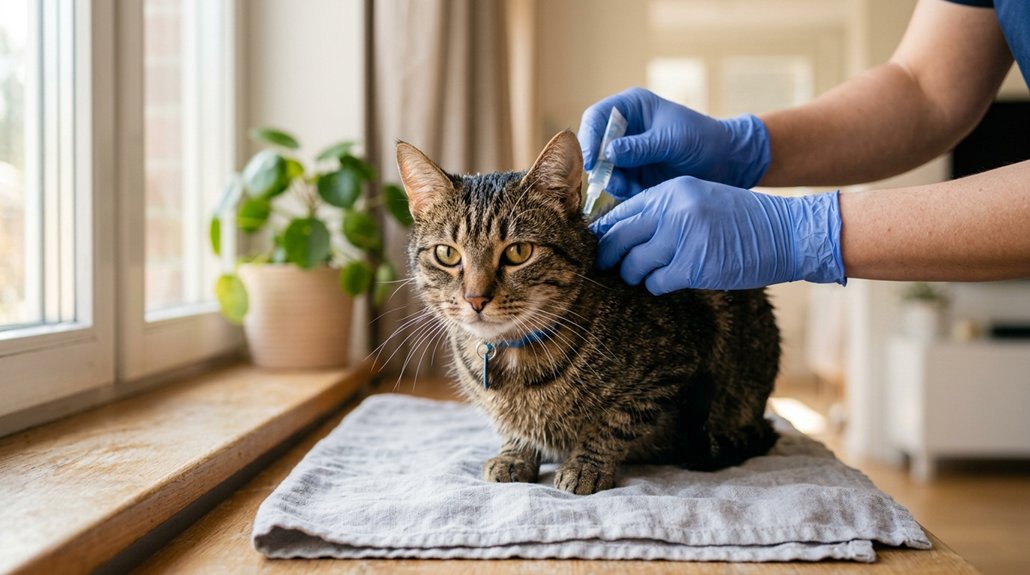
When faced with the task of choosing the best flea and tick prevention for your cat, where do you begin? Understanding the flea life cycle is vital. Effective treatments disrupt this cycle, preventing infestations. Consult your veterinarian for advice on cat-specific topical treatments offering prolonged tick prevention. Remember, not all products are safe; avoid those containing permethrin, as it’s toxic to cats.
Oral medications are also viable, though options may be limited. Verify your cat consumes full doses for full efficacy. Regular vet check-ups are important, especially if your cat has unique health or lifestyle factors. Tailor your approach to prevention, addressing the risks specific to your cat’s environment and needs to protect them reliably.
Home Strategies to Minimize Flea and Tick Presence
Although managing flea and tick populations at home might seem challenging, implementing strategic preventative measures can considerably reduce their presence. Start by regularly vacuuming carpets, rugs, and furniture to eliminate flea eggs and larvae, effectively disrupting the flea life cycle. Wash pet bedding frequently with soap and water, ensuring no fleas or eggs persist. Ticks, given their behaviour, may be mitigated by decluttering and tidying areas to prevent rodents, which carry fleas, from entering your home. Additionally, store food securely to avoid attracting potential flea carriers. For further defense, use EPA-registered insecticides in outdoor spaces to target fleas and ticks effectively. By maintaining cleanliness and reducing potential habitats, you can considerably decrease the chances of an infestation in your home.
Managing Your Yard to Reduce Flea and Tick Habitats

To effectively manage your yard and mitigate flea and tick habitats, start by maintaining regular lawn care practices. The right lawn maintenance supports pest control by modifying the environment to be less attractive for fleas and ticks. Regularly mow your lawn to expose soil to sunlight, which helps eliminate the dark, moist hideouts these pests favor. Additionally, removing tall weeds and excess organic debris is essential since these elements can harbor pests. Keep the grass trimmed short to reduce hiding spots and limit their attachment opportunities. Avoid over-watering to maintain drier conditions that deter infestations. Finally, securing pet food and reducing clutter can discourage rodents that attract fleas and ticks.
Maintain your yard diligently to reduce flea and tick habitats: mow, weed, trim, and control moisture.
- Regular lawn mowing
- Weed and debris removal
- Short grass maintenance
- Controlled watering
- Clutter reduction and removal
Applying Topical Treatments: A Step-by-Step Guide
Selecting the correct topical treatment is essential in safeguarding your cat against fleas and ticks effectively. Prioritize product selection tips by consulting your veterinarian for a cat-specific formula, ensuring topical treatment safety. Before application, clean the area between your cat’s shoulder blades, part the fur, and expose the skin. Apply the prescribed dosage of the solution directly onto the skin, steering clear of the eyes or mouth.
| Step | Action |
|---|---|
| Consult Vet | Get a cat-specific product for safety |
| Prepare Area | Clean, dry, and part fur to expose skin |
| Apply Solution | Directly on skin, avoid eyes/mouth, don’t touch till dry |
Monitor for adverse reactions like scratching. If symptoms appear, contact your vet. Administer treatments monthly or as advised to maintain protection year-round.
Nutrition’s Role in Boosting Your Cat’s Parasite Resistance
When it comes to fortifying your cat against fleas and ticks, nutrition plays a significant role in enhancing their natural defenses. A well-balanced diet, enriched with specific nutrients, is essential. Essential fatty acids like omega-3 and omega-6, sourced from fish oils, promote healthy skin and coat, decreasing infestation chances. High-quality protein supports robust health, important for parasite resistance. Antioxidant-rich diets with vitamins E and C elevate immune response, providing further immunity. Additionally, incorporating probiotics enhances gut health, a key factor in boosting overall immune function. If your cat’s diet lacks these elements, consider dietary supplements for an immune-boosting regimen.
- Essential fatty acids for skin health
- High-quality protein to strengthen health
- Antioxidant-rich foods for immune support
- Probiotics to improve gut health
- Dietary supplements for added nutrition
Avoiding Common Flea and Tick Prevention Errors for Cats
While boosting your cat’s nutritional defense is essential, understanding common errors in flea and tick prevention is equally important. A prevalent prevention pitfall is using products not specifically labeled for cats. Many canine treatments contain permethrin, a substance toxic to felines. Regular veterinary consultations are pivotal for tailoring prevention strategies to your cat’s unique health profile. Don’t overlook frequent checks for fleas and ticks, especially after your cat’s outdoor adventures; neglecting this can lead to rapid infestations. Avoid line of thinking that indoor cats are immune—fleas and ticks can hitch a ride inside. Misconception lies in assuming overlapping treatments boost effectiveness, but this can result in toxicity. Thorough, year-round prevention should eliminate any common misconceptions or errors.
Frequently Asked Questions
How Do I Protect My Cat From Ticks and Fleas?
To protect your cat from ticks and fleas, consider using natural remedies like diatomaceous earth in indoor environments. Regular vacuuming and washing bedding in hot water help eliminate pests and eggs, reducing infestation risks.
How Do I Get Rid of Fleas and Ticks on My Cat?
Think of getting rid of fleas and ticks as swiftly as brushing away sand from a beach towel. Combine natural remedies like cedar oil with consistent grooming tips such as combing and bathing for effective pest control.
What Prevents Fleas and Ticks on Cats?
You can prevent fleas and ticks on cats by using natural remedies like diatomaceous earth and cedar chips. Consistent grooming techniques, such as regular combing with a flea comb, also play a critical role in prevention. Consult a vet.
What Is the Best Flea and Tick Preventative for Cats?
You’re wondering about the best flea and tick preventative for cats. Combining natural remedies with topical treatments can be highly effective. However, consult your vet to tailor a safe plan specifically suited to your cat’s needs.
Conclusion
Protecting your feline friend from fleas and ticks is like traversing a labyrinth where bravery and wisdom prevail. By inspecting regularly, choosing the right deterrents, and transforming your home into a fortress, you mimic the heroes of yore who safeguarded kingdoms. Regular vet check-ups, ideal nutrition, and effective yard management form the magic shield ensuring your cat’s health. Avoid preventable missteps and your vigilant efforts will lead to a harmonious existence free from these unwelcome intruders.