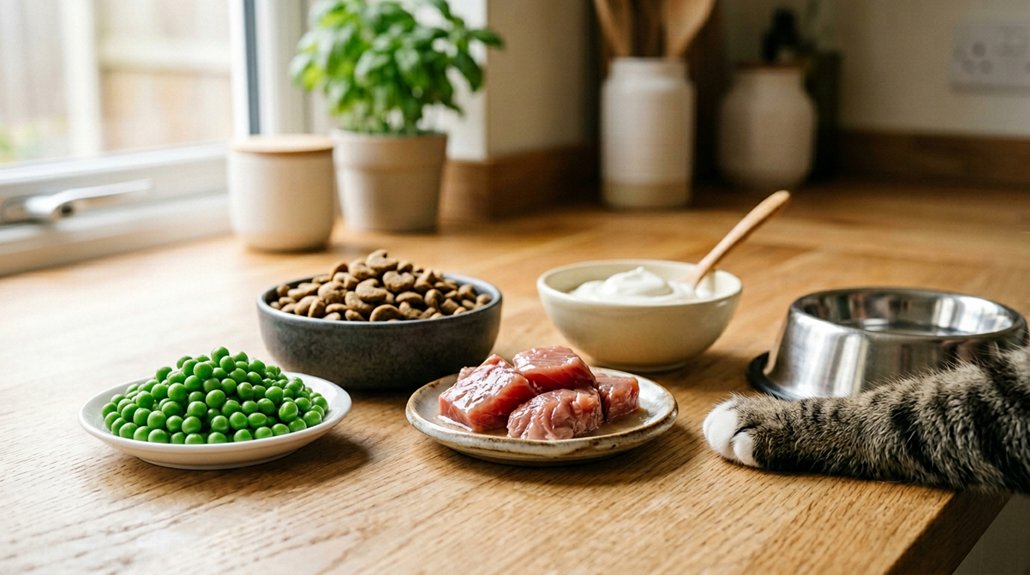
To support your cat’s health, prioritize a diet rich in high-quality animal proteins, essential amino acids like taurine and arginine, and healthy fats. Include vitamin A and B vitamins for metabolic health, alongside vital minerals such as calcium and phosphorus. Opt for safe human foods like cooked chicken and fish, and use grains sparingly. Avoid toxic foods like chocolate and grapes. Adhering to these guidelines guarantees a nutritionally balanced diet, with more insights available.
Key Takeaways
- Cooked chicken, turkey, and beef offer essential proteins and amino acids for heart and vision health in cats.
- Fish like salmon and sardines provide omega-3 fatty acids for improved skin and coat health.
- Fully cooked eggs deliver high-quality protein and vital vitamins for tissue repair in cats.
- Sweet potatoes offer beta-carotene and fiber, promoting digestive health and skin wellness.
- Whole grains like cooked oats and brown rice support gut health with fiber, but should be fed sparingly.
What Are the Essential Nutrients Cats Need?
When it comes to feline nutrition, understanding the essential nutrients cats need is fundamental, given their nature as obligate carnivores. Cats rely heavily on specific amino acids like taurine and arginine found mainly in animal tissues. Failing to provide these can lead to nutrient deficiencies, impacting your cat’s health. Alongside high protein diets, sufficient fat supplies energy and essential fatty acids such as linoleic and arachidonic acids, essential for skin, coat, and reproductive health.
Vitamin A and B vitamins, along with minerals like calcium and phosphorus, support metabolism and overall well-being. While AAFCO guidelines help guarantee commercial cat foods meet these needs, if deficiencies arise, dietary supplements might be necessary under veterinary guidance to restore balance.
Top Protein Sources for Cats’ Diets
A diverse range of protein sources is crucial for maintaining your cat’s health. Cats require animal-derived protein, necessitating a diet of at least 26% protein for adults and 40% or more for seniors. Key protein sources include cooked chicken, turkey, and beef, which supply critical amino acids like taurine and arginine, essential for heart and vision health. Fish such as salmon and sardines provide valuable omega-3 fatty acids for skin and coat health. Homemade recipes offer personalized options but must guarantee complete nutrition. Sometimes protein supplements can be beneficial to meet these dietary needs. Reputable meat byproducts from commercial foods can also be nutritious. Avoid relying on plant-based proteins, as cats’ utilization is inadequate, risking deficiencies.
Incorporating Healthy Grains for Cats
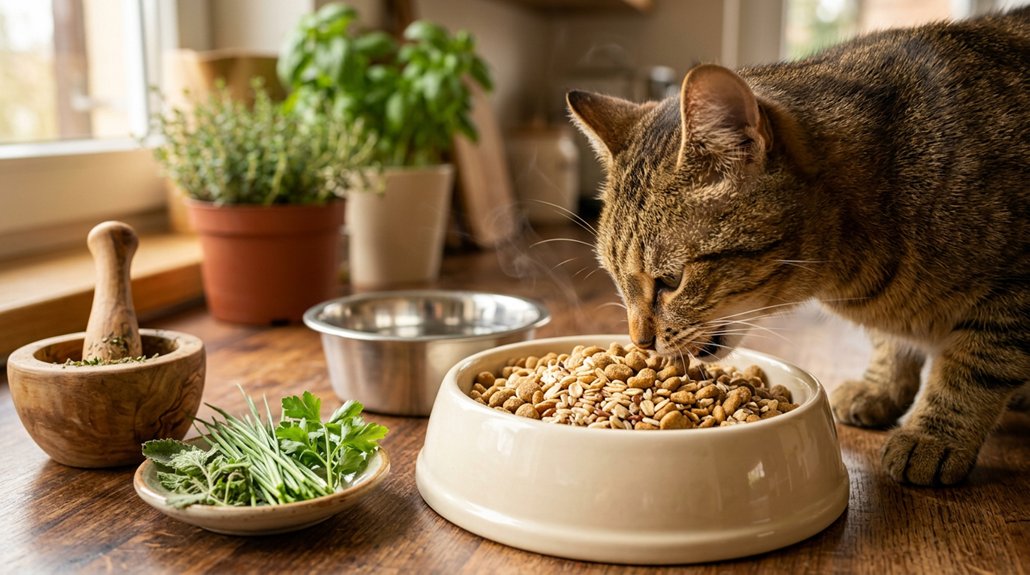
Though cats are obligate carnivores, incorporating small amounts of healthy grains like cooked oats and brown rice into their diet can enhance their overall nutritional balance. Grains provide essential fiber, supporting a healthy gut and aiding digestion. To maximize grain benefits, verify grains are well-prepared for ideal digestibility. Whole grains like barley and millet, rich in protein, can complement a cat’s diet, but must be offered sparingly.
| Grain Type | Primary Benefit | Digestibility Tip |
|---|---|---|
| Oats | Fiber supplement | Cook thoroughly, serve warm |
| Brown Rice | Gut health support | Rinse well, cook until soft |
| Barley | Protein enhancement | Soak before cooking |
| Millet | Nutritional balance | Cook in plenty of water |
| Corn | Caloric source | Grind or puree for ease |
Safe Human Foods to Share With Cats
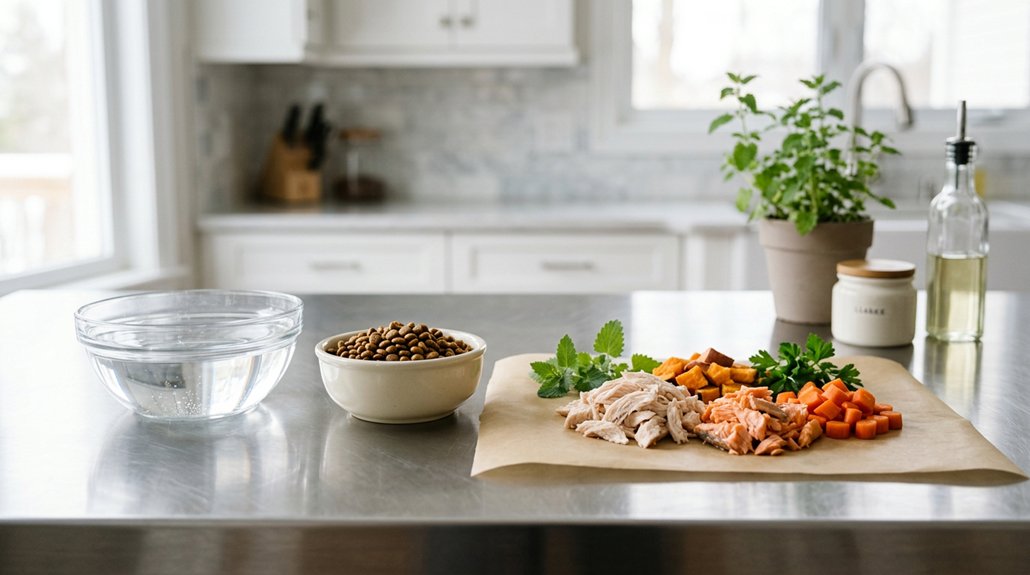
While healthy grains can offer supplementary fiber and nutrients to a cat’s diet, it’s also beneficial to contemplate certain human foods that are safe to share with your feline friend. Cooked chicken, turkey, and beef are excellent choices for homemade meals, providing crucial proteins that cats crave. Unseasoned cooked fish like salmon or sardines serve as safe treats, rich in omega-3 fatty acids which enhance skin and coat health. Fully cooked eggs bring high-quality protein and essential vitamins, boosting tissue repair and strengthening the coat. Sweet potatoes, packed with beta-carotene and fiber, promote digestion and skin health. Sharing these foods guarantees nutritional enrichment while adhering to veterinary guidelines. Always avoid toxic foods like onions, garlic, grapes, and chocolate to protect your cat’s well-being.
Unsafe Foods: What Not to Feed Your Cat
It’s vital to guarantee the well-being of your feline companion by knowing which foods are harmful to them. Some common household hazards include:
- Chocolate: Contains theobromine, causing vomiting, diarrhea, and even seizures in cats.
- Grapes and Raisins: Can lead to acute kidney failure, even in small amounts, so avoiding them is critical.
- Onions and Garlic: Both raw and cooked forms can damage red blood cells, leading to potential anemia.
- Macadamia Nuts: Cause lethargy, vomiting, and tremors.
Additionally, caffeine in coffee, tea, and sodas also presents a significant risk, leading to increased heart rate and restlessness. When identifying toxic plants and other hazards, stay vigilant and verify these items are inaccessible to your cat. Prioritizing safety helps maintain their health.
Frequently Asked Questions
What Is the Healthiest Food You Can Feed Your Cat?
You should feed your cat high-quality commercial food labeled ‘complete’ for its nutritional benefits. Prioritize ingredient quality, with animal-based proteins providing essential nutrients. Verify it meets AAFCO guidelines for your cat’s life stage to support excellent health.
How Do Cats Say Goodbye?
When push comes to shove, cats say goodbye through subtle behavior changes. You’ll notice feline emotions shift as they withdraw, become affectionate, or stop eating. Recognizing these cat behavior signals can help you guarantee their comfort in their final moments.
What Foods Help Cats’ Health?
You’ll find nutritional benefits in high-quality proteins like chicken, turkey, and fish, providing taurine. Essential ingredients include omega-3s from salmon, sardines, and antioxidants in cranberries. Incorporate eggs and sweet potatoes for digestion and skin health.
What Is the 25 Rule for Cat Food?
Imagine a universe of precise feeding guidelines, ensuring ideal cat nutrition. The 25% Rule dictates that your feline’s diet should boast at least 25% animal-based protein, essential for fulfilling their carnivorous needs and maintaining peak health.
Conclusion
In crafting your cat’s diet, it’s imperative to provide essential nutrients, focusing on proteins, while carefully incorporating grains. Did you know that proteins should make up about 26% of your cat’s diet? This highlights just how crucial they are for maintaining muscle and energy. Safely share select human foods, but always avoid harmful ones like chocolate and onions. With these guidelines, you’re ensuring a balanced, nutritious diet that supports your feline’s health and well-being.