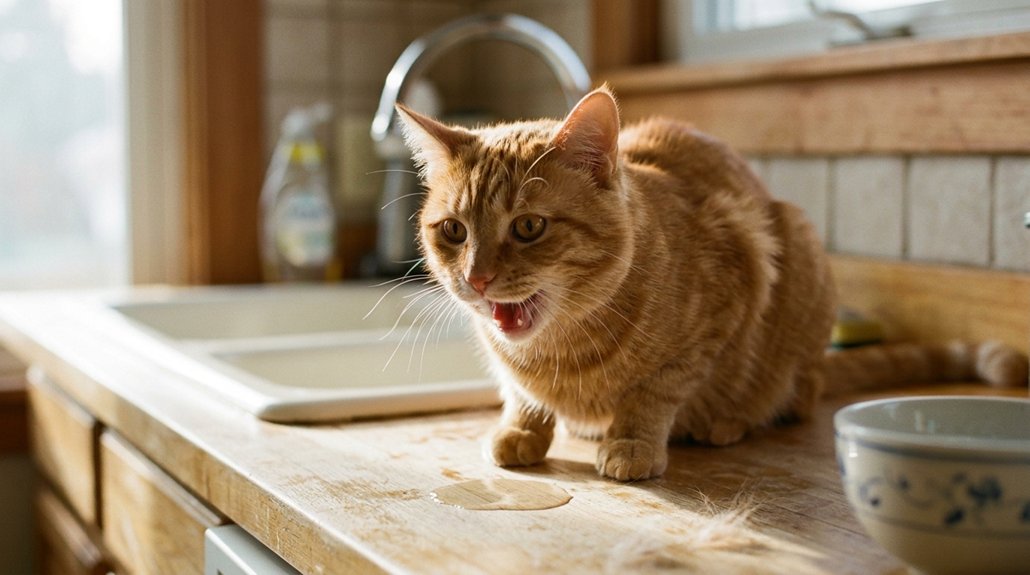
When your cat vomits, understanding the underlying causes is essential. Vomiting more than twice in succession, appetite loss, or blood in vomit requires a vet. Yellow vomit suggests bile issues, while blood or foreign objects signal urgency. Hairballs or dietary changes often trigger vomiting. Vets use exams and tests like blood work or X-rays to diagnose. Medications such as antiemetics or antacids might help. For deeper insights into managing your cat’s health, explore further.
Key Takeaways
- Vomiting in cats can result from hairballs, especially in long-haired breeds, needing regular grooming to manage.
- Dietary indiscretion, like overeating or spoiled food, often triggers vomiting in cats.
- Yellow vomit indicates bile, suggesting an empty stomach or gastrointestinal irritation.
- Signs like worms or blood in vomit demand immediate veterinary consultation for potential serious issues.
- Foreign object ingestion poses significant health risks and may require surgical intervention if the cat vomits.
Symptoms That Warrant a Vet Visit
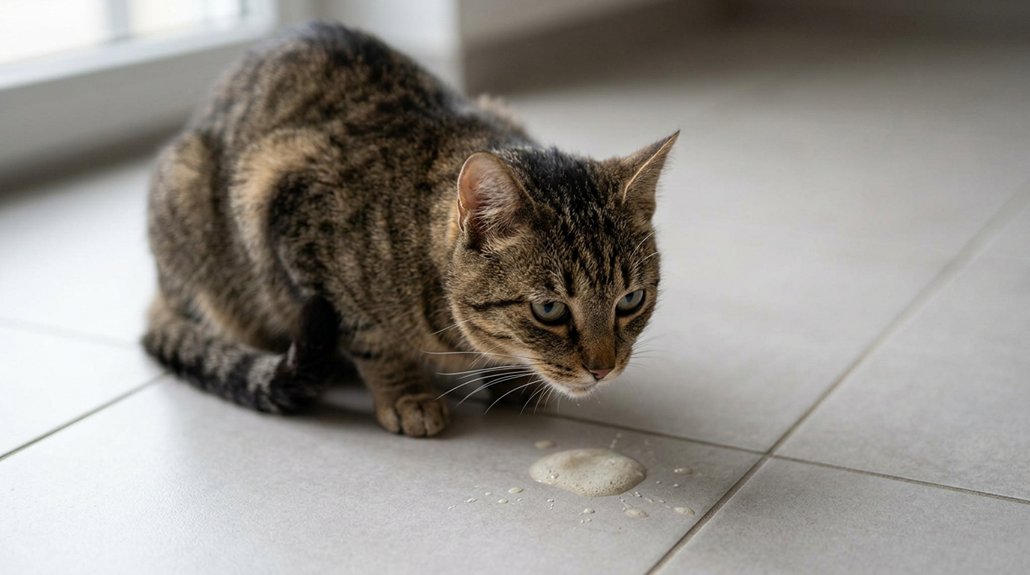
When it comes to your feline companion’s health, observing vomiting more than two to three times consecutively should prompt immediate veterinary consultation. Such episodes could be exacerbated by stress factors or recent dietary changes, leading to gastrointestinal distress. Combined symptoms like appetite loss, diarrhea, or lethargy amplify the urgency for medical evaluation. Significantly, if your cat abstains from eating or drinking for over 12 hours during these episodes, it’s vital to seek veterinary care promptly. Additional signs like worms in vomit necessitate a deworming regimen under professional guidance. Even chronic vomiting, irrespective of frequency, is concerning and requires examination, especially if your cat shows discomfort or anorexia. A thorough clinical evaluation will help decipher underlying issues accurately.
Identifying Vomit Types and Their Causes
Have you noticed that your cat’s vomit is a particular color or consistency? Vomit color can reveal significant health insights. Yellow vomit often indicates bile presence, suggesting an empty stomach or gastrointestinal irritation. Clear, foamy specimens may mean undigested food, while brown, grainy textures could signify internal bleeding or ulcers. Blood in vomit, particularly alarming, may point to serious conditions like ulcers or the ingestion of sharp objects. Hairball issues, a common feline concern due to extensive grooming, often lead to vomit containing fur, especially during peak shedding periods. Recognizing these distinct vomit characteristics helps in identifying potential underlying conditions, facilitating timely intervention and ensuring your feline friend receives appropriate care. Always consult a veterinarian for persistent symptoms.
Common Reasons Cats Vomit
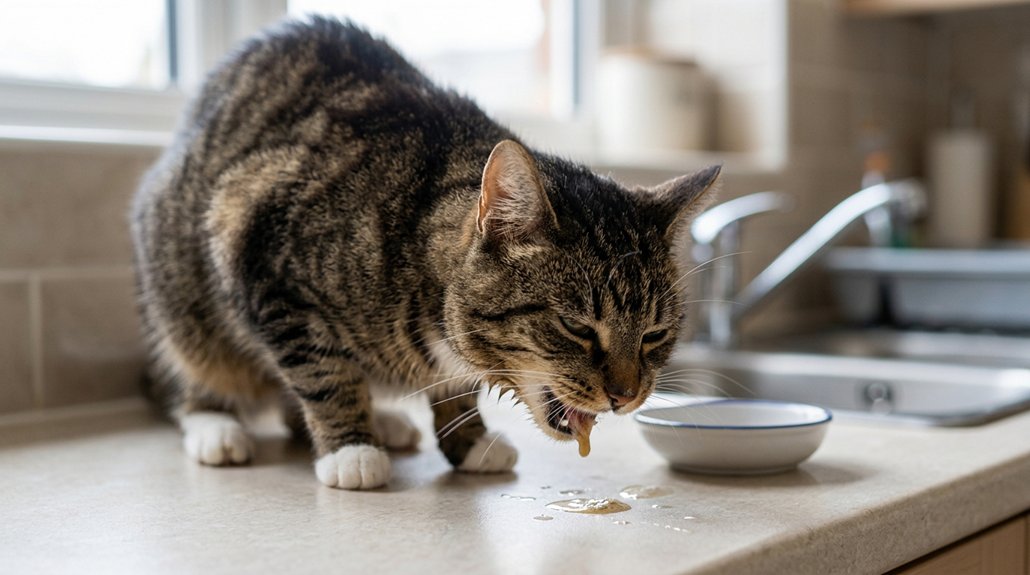
Although often distressing, understanding the common reasons behind your cat’s vomiting can offer crucial insights into their health. Vomiting due to hairballs, especially in long-haired breeds, highlights the need for hairball management through regular grooming. Dietary indiscretion—overeating or consuming spoiled food—triggers digestive upset. Dietary changes, such as portion control, can mitigate this. Ingesting foreign objects poses severe risks, often necessitating surgical intervention.
A structured approach to these issues is essential:
| Cause | Symptom | Solution |
|---|---|---|
| Hairballs | Vomiting, retching | Regular brushing |
| Dietary indiscretion | Digestive upset | Controlled portion sizes |
| Foreign objects | Repeated, forceful vomiting | Emergency vet care |
Food intolerances or infections further complicate matters, demanding immediate veterinary assessment and possible diet adjustments to alleviate discomfort.
Diagnosing Cat Vomiting: What Vets Do
To accurately diagnose the underlying cause of your cat’s vomiting, veterinarians rely on a methodical approach that integrates both physical examinations and diagnostic tests. During the physical examination, vets meticulously assess your cat for pain, abnormalities, or potential foreign bodies. Observations like vomit appearance, frequency, and any related symptoms, such as appetite changes, provide invaluable insights.
Diagnostic tests, including blood work, urinalysis, and abdominal X-rays, are essential to evaluate organ function and detect underlying health issues. If these initial tests are inconclusive, advanced diagnostics like ultrasound, endoscopy, or exploratory surgery may be necessary. Providing a detailed history of recent dietary changes, toxin exposure, or past medical issues helps refine the diagnostic process, making it more precise and effective.
Medicines and Remedies for Treating Cat Vomiting
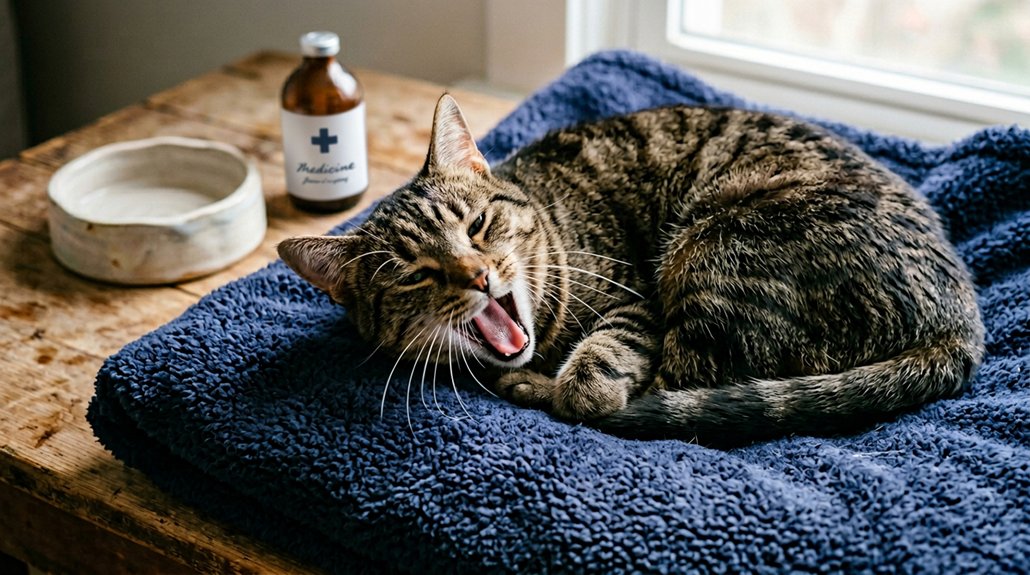
Effectively treating a cat’s vomiting requires an extensive understanding of the appropriate medications and remedies available. Common antiemetics, such as maropitant and metoclopramide, are highly regarded. Maropitant has a 4.4-star effectiveness rating, though it might cost you around $58.00. Antacids like famotidine also receive high marks for mitigating vomiting symptoms, priced at approximately $42.00. For bolstering digestive health, probiotics, such as Nutramax Proviable, with a 4.7-star rating, are advisable. When inflammation or infection is suspected, corticosteroids like prednisolone or antibiotics like ampicillin could prove indispensable. Consider dietary changes and consult your vet before attempting any home remedies. Tailored medical interventions guarantee ideal care, particularly when underlying health conditions complicate simple treatment avenues. Always prioritize professional guidance.
Frequently Asked Questions
When Should I Be Worried About My Cat Vomiting?
Be concerned about cat health when vomiting causes include more than two to three episodes consecutively, appetite loss, diarrhea, blood presence, or prolonged refusal of food and water, necessitating urgent veterinary evaluation for potential underlying conditions.
What Are the Signs That a Cat Is About to Pass Away?
You’re noticing end of life signs when your cat exhibits significant lethargy, loss of appetite, behavioral changes, labored breathing, coat deterioration, or incontinence. Prioritize feline comfort by consulting a vet for palliative care strategies and humane support.
What Should I Do When My Cat Is Vomiting?
Monitor vomiting frequency, document characteristics, and assess additional symptoms like lethargy or diarrhea. Consider dietary changes for mild cases, offering bland food like boiled chicken. Consult a vet before home remedies, especially if severe signs persist.
What Is the Most Common Cause of Vomiting in Cats?
The most common cause of vomiting in cats is hairballs, particularly in long-haired breeds. Implementing diet changes, such as enhancing fiber intake, can help move the ingested fur through the digestive tract, reducing vomiting frequency.
Conclusion
Remember, vomit is a symptom, not a diagnosis. Understanding the nuances of feline emesis—whether it’s regurgitation, undigested food, or bile—requires a discerning eye. Frequent vomiting signals it’s time for a vet’s expert diagnostic arsenal, from physical exams to ultrasounds. Treatment hinges on pinpointing the root cause, whether dietary changes or medications. So, stay observant, remain informed, and trust the specialists; their expertise transforms concern into clarity, turning uncertainty into well-being for your beloved feline friend.