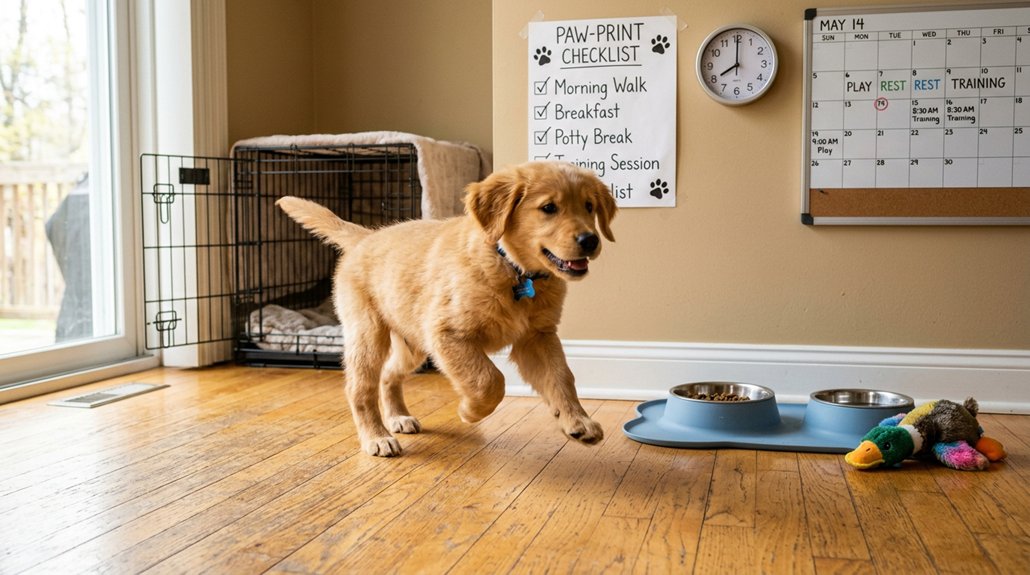
Establishing a healthy routine for your puppy is essential for their development and well-being. Consistent feeding times and potty breaks every two to four hours help set expectations. Incorporate short, varied play sessions and daily walks for physical and mental stimulation. Make certain your puppy gets 16 to 18 hours of sleep in a quiet space, including a calming bedtime routine. Early socialization with positive reinforcement is key. There’s much more to explore about building a well-rounded routine for your puppy.
Key Takeaways
- Establish consistent meal and potty schedules to promote healthy eating habits and bladder control.
- Incorporate short, varied play and exercise sessions daily to enhance physical and mental well-being.
- Ensure puppies get 16 to 18 hours of sleep in a quiet, distraction-free zone.
- Introduce puppies to diverse environments and social situations with positive reinforcement for well-rounded socialization.
- Use a calming bedtime routine with a last-minute potty break for a peaceful night’s sleep.
Why Routines Matter for Your Puppy’s Development
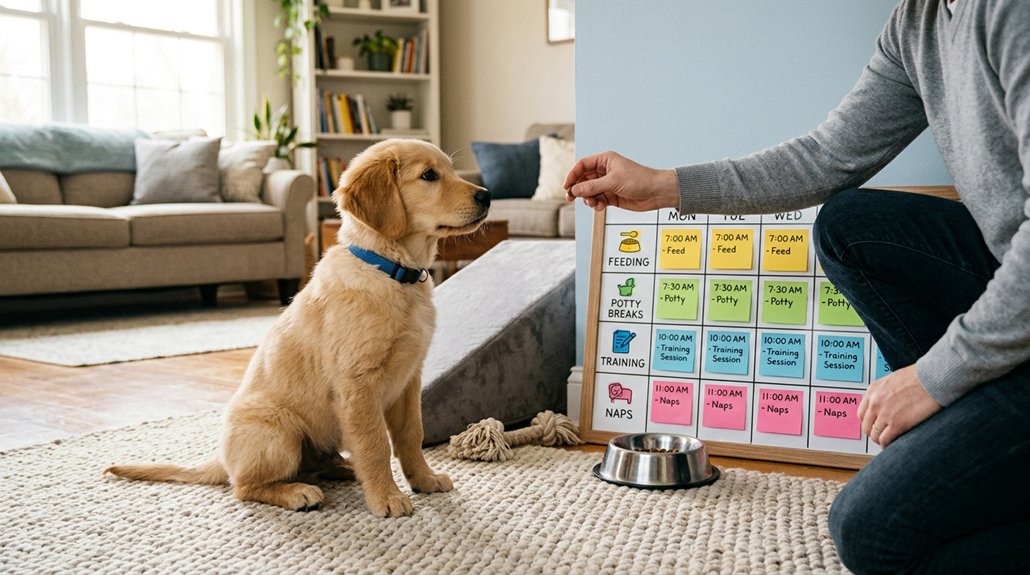
Although often overlooked, establishing a routine is fundamental to your puppy’s development. Routine consistency is key, as it helps your puppy feel secure and clearly understand expectations. This reduces anxiety and accelerates learning. Consistent schedules for feeding, play, and especially nap times—essential since puppies need 16 to 18 hours of sleep—foster good puppy behavior by promoting calmness and predictability. By structuring these activities, you minimize chaos and help your puppy adapt smoothly to its new environment. Additionally, such routines lay the groundwork for successful housetraining and shields against future behavioral issues. Early implementation of these practices is critical, as it cultivates a harmonious living environment and enhances your puppy’s well-being, ensuring effective management of their needs.
Make Feeding and Potty Time Easy
When establishing a routine for your puppy, integrating feeding and potty time into a structured schedule is essential. Begin by implementing consistent meal timing—three meals a day, ideally synchronized with your family’s, helps create a predictable environment. Leave the food down for just 15 minutes, encouraging your puppy to eat promptly and allowing you to monitor their health. For efficient house training, understand your puppy’s potty signals and schedule breaks every two to four hours. Consider these steps:
Consistent meal timing and quick potty breaks are key to establishing your puppy’s routine.
- Post-meal trips: Take your puppy outside after each meal, since they often need to go shortly after eating.
- Activity changes: Offer potty opportunities following play or rest.
- Designated areas: Use a pen to prevent indoor accidents.
- Adjust needs: Monitor and adapt to your puppy’s specific schedule.
Integrate Play and Exercise Into Daily Life
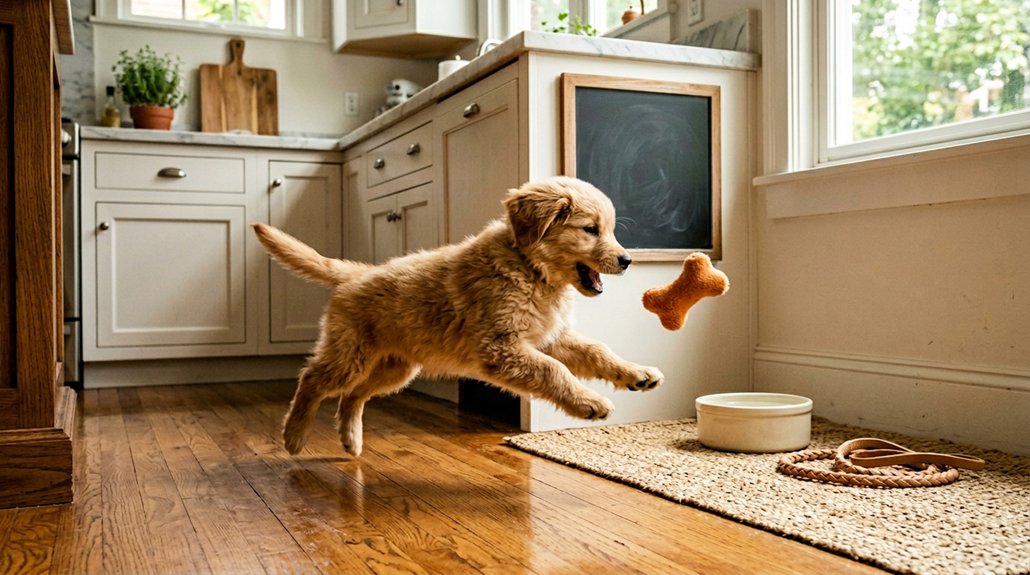
Integrating play and exercise into your puppy’s daily routine is indispensable for their physical health and cognitive development. Puppies gain more benefits from several short play sessions throughout the day than from one long interaction. This playtime strategy guarantees they remain engaged and happy. Aim for 10 to 30-minute daily walks, providing essential exercise and mental stimulation to prevent boredom and potential behavioral issues. Enhance this by introducing exercise variety through changing walking routes and diverse play activities. Puzzle toys or training games add important mental challenges that aid overall development. A consistent schedule is pivotal, as puppies thrive on routine, reinforcing positive behaviors. These scientifically backed methods bolster your puppy’s health and adaptability to new environments.
Create Restful Sleep Patterns and Bedtime Plans
Establishing restful sleep patterns is vital for puppies, as they typically need 16 to 18 hours of sleep a day for healthy development. Creating a calming bedtime routine is essential for achieving this. Implement quiet time with gentle bonding activities to prepare them for sleep and use a consistent sleep environment. A crate or specific quiet room minimizes distractions, offering a sanctuary for uninterrupted rest.
Puppies need 16 to 18 hours of sleep daily for healthy development.
Here’s a structured bedtime plan:
- Quiet Time: Engage in calming activities to guide the puppy towards sleep.
- Potty Break: Guarantee a last-minute trip to prevent accidents during the night.
- Sleep Environment: Utilize a designated quiet space to foster a peaceful atmosphere.
- Monitor Overnight Needs: Set an alarm for nighttime potty breaks, aiding toilet training and maintaining structure.
Incorporate Early Socialization for a Well-Rounded Puppy
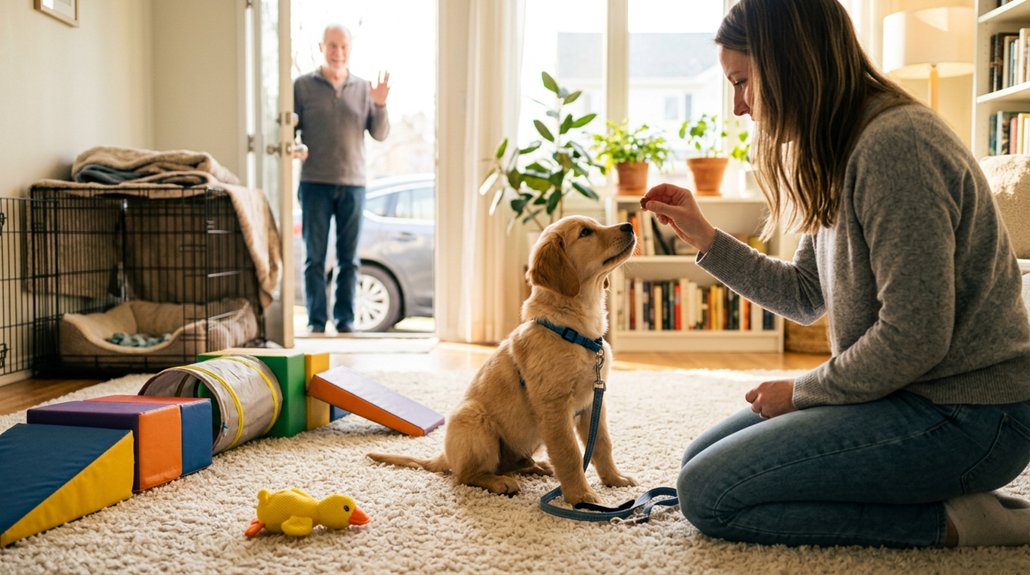
Exposing your puppy to diverse environments and stimuli between the ages of 3 to 14 weeks is crucial for fostering a well-rounded, confident dog. Implementing socialization strategies during this critical window guarantees your puppy adapts to new situations without fear or anxiety. Introducing them to a variety of sounds, people, and animals in controlled settings fosters positive puppy interactions. Regularly engaging in community parks, puppy classes, and structured socialization opportunities enhances their learning experience. It’s essential to monitor behavior, using positive reinforcement to encourage good responses. These efforts can prevent behavioral issues and promote a friendly disposition as your puppy matures. Establishing a foundation for effective training now pays dividends in obedience later in life.
| Strategy | Benefits |
|---|---|
| Diverse Environments | Reduces Fear and Anxiety |
| Puppy Classes | Enhances Learning Experience |
| Positive Reinforcement | Encourages Good Behavior |
| Community Park Visits | Promotes Social Interaction |
Frequently Asked Questions
What Is the 7 7 7 Rule for Puppies?
The 7 7 7 Rule for puppies involves introducing them to seven people, places, and sounds by seven months to enhance socialization skills. This method supports effective potty training and shapes well-adjusted adult behavior through repeated, positive experiences.
What Is a Good Daily Routine for a Puppy?
A good daily routine involves a consistent feeding schedule with three meals aligning with family meals. Include puppy exercise in short play sessions, frequent potty breaks every two to four hours, and establish regular nap times for growth.
What Is the 3-3-3 Rule for Puppies?
Imagine your puppy finally feeling at ease, tumbling joyfully around your home. The 3-3-3 Rule outlines a socialization timeline: 3 days of adjustment, 3 weeks of routine establishment, 3 months of meeting behavioral expectations.
What Is the 10-10-10 Rule for Puppies?
The 10-10-10 rule advises on puppy training by allocating 10 minutes each for physical exercise, mental stimulation, and socialization. These activities offer socialization tips essential for your puppy’s well-rounded development and ideal well-being.
Conclusion
Building a healthy routine for your puppy is like setting a solid foundation for a house—it supports everything that follows. By focusing on consistent feeding, potty training, exercise, sleep, and socialization, you’re crafting an environment that nurtures your puppy’s physical and emotional well-being. This structure not only promotes ideal growth but also enhances your pup’s ability to adapt and learn. Remember, a well-planned routine is essential for a happy, well-adjusted canine companion.