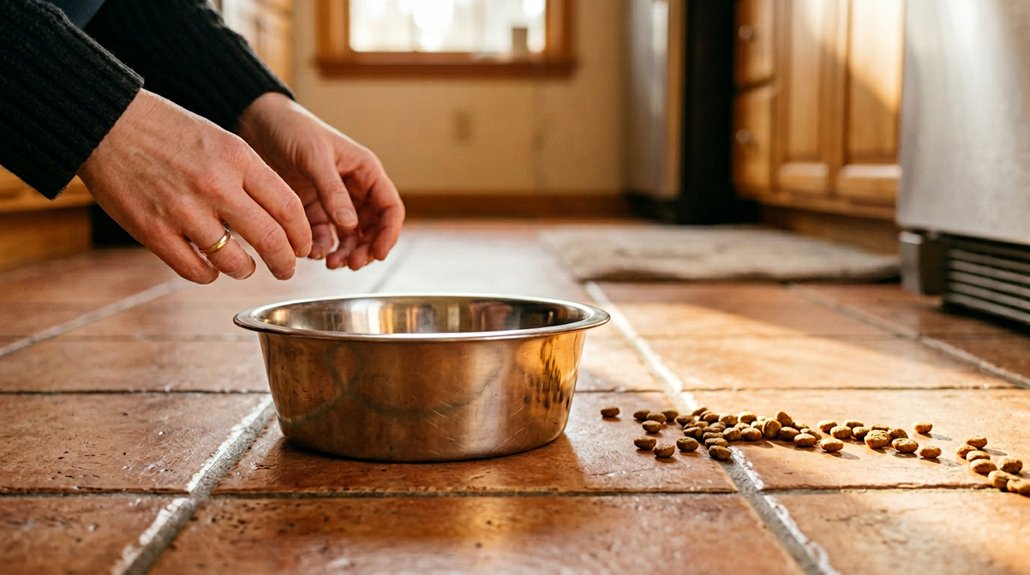
If your dog won’t eat, first consider possible causes like stress or illness. Try warming their food or adding enticing toppers such as chicken broth or tuna water to stimulate appetite. Switch between dry and wet food, and hand-feed small amounts to encourage eating. If the refusal persists beyond two days or is accompanied by symptoms like vomiting, consult a vet. Explore how to address behavioral changes and optimize nutrition for your dog’s health.
Key Takeaways
- Warm your dog’s food slightly to enhance its aroma and stimulate their appetite.
- Introduce enticing toppers like chicken broth to make meals more appealing.
- Ensure the feeding area is quiet and free from distractions to reduce stress.
- Monitor for health concerns like vomiting, lethargy, or dental issues and consult a vet if needed.
- Gradually rotate food types to keep meals interesting and prevent pickiness.
Immediate Steps to Take When Your Dog Won’t Eat
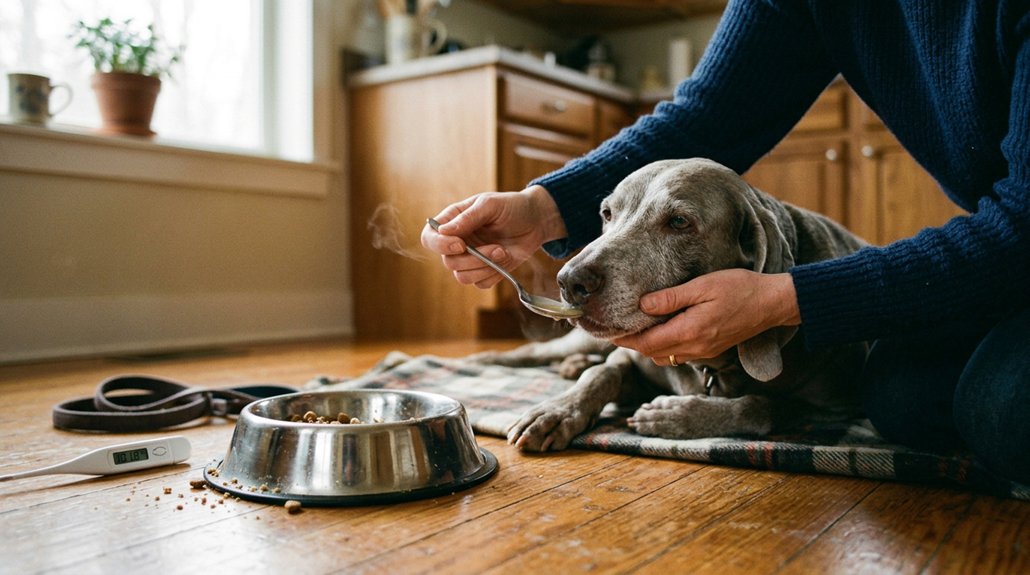
When your dog won’t eat, several immediate steps can help address the issue effectively. First, assess possible causes of anorexia in pets, such as stress, illness, or changes in routine. Implement effective feeding techniques, starting by warming food slightly in the microwave to enhance its aroma, potentially stimulating your dog’s appetite. Introduce enticing toppers like chicken broth, beef broth, or tuna water to make meals more appealing. Gradually shift between dry and wet food to accommodate preferences and prevent meal disinterest. Guarantee a quiet, comfortable environment, free from distractions, to minimize stress during feeding. If your dog refuses food for more than 24 hours, or exhibits additional symptoms, seek veterinary assessment to rule out underlying health issues.
Simple Ways to Get Your Dog Eating Again
To encourage your dog to eat again, establish a consistent feeding schedule that aligns with their natural habits, as routine can improve predictability and increase appetite. Enhance the appeal of their meals by slightly warming the food to intensify its aroma or by adding low-sodium broth or plain cooked chicken for additional flavor. Additionally, offering a mix of wet and dry food or rotating flavors could further stimulate interest and aid in their nutritional intake.
Encourage Routine Feeding Schedule
Incorporating a regular feeding schedule into your dog’s daily routine can greatly improve their eating habits and overall well-being. Establish set mealtimes, ensuring meal consistency, as it encourages your dog to eat regularly and fosters a sense of security. Feed your dog at least twice daily to maintain adequate nutrient intake and regulate appetite fluctuations. To discourage grazing and stimulate appetite, remove food after 10-15 minutes if it goes uneaten. Create an ideal feeding environment by selecting a quiet and distraction-free area, which can considerably enhance your dog’s comfort and willingness to eat. Additionally, observe your dog’s preferences, adjusting the feeding area and bowl height as needed. Implementing these strategies can support your dog’s nutritional health and improve their overall eating experience.
Enhance Food Appeal Strategically
Dogs often experience a lack of appetite for various reasons, and enhancing the appeal of their food can be an effective way to combat this issue. Improving food presentation through sensory enrichment can reignite interest in mealtime. Begin by warming the food slightly in the microwave, as enhancing its aroma can be inviting. Introduce enticing toppers like low-sodium broth or tuna water. Pour warm water over dry kibble, improving texture and ease of consumption. Rotate food types to maintain variety and stimulate interest. Hand-feeding small amounts fosters a comforting, stress-free environment, encouraging hesitant eaters.
| Technique | Benefit |
|---|---|
| Warm the food | Enhances aroma |
| Add broth or tuna water | Increases palatability |
| Soften kibble with water | Improves texture |
| Rotate food types | Keeps meals interesting |
| Hand-feed | Provides social interaction |
Spot Health Issues Affecting Your Dog’s Appetite
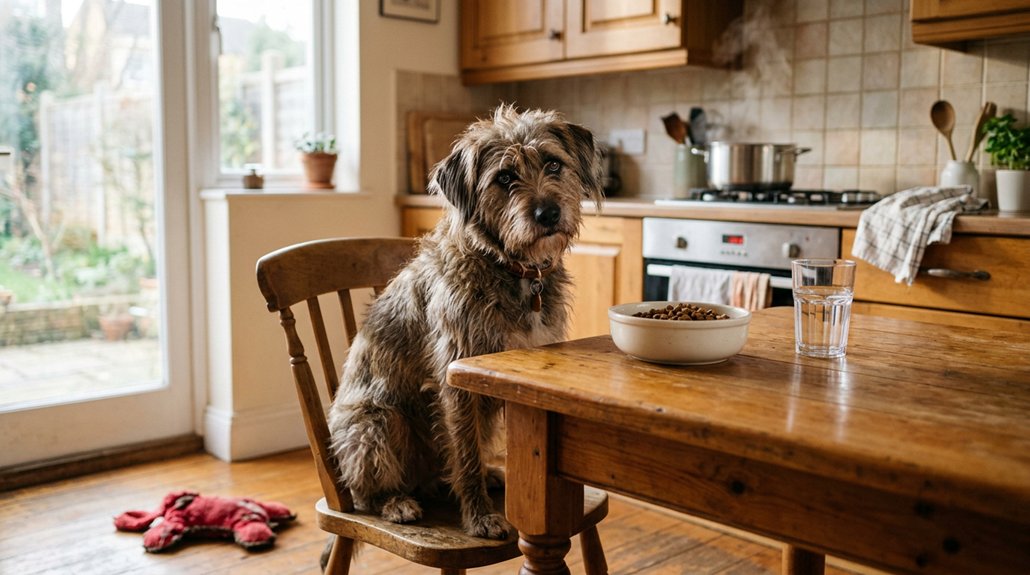
When your dog won’t eat, it’s crucial to recognize that this might indicate underlying health issues such as kidney failure, liver disease, or infections. Behavioral and environmental factors, like stress and anxiety, can also play a significant role in your pet’s appetite. Monitoring these signs and consulting a veterinarian promptly can help address the problem effectively.
Common Medical Conditions
Although a decrease in appetite might seem common, it’s often a sign that something’s amiss with your dog’s health. Gastrointestinal diseases like parvovirus and inflammatory bowel disease disrupt normal eating, causing discomfort. Organ dysfunctions, including kidney failure, liver disease, and pancreatitis, demand swift veterinary attention, as they greatly affect your dog’s appetite. Dental issues, such as periodontal disease or damaged teeth, result in pain and challenges in eating. With senior dogs, notable appetite changes shouldn’t be dismissed as mere aging; these often indicate underlying health problems. Be vigilant for infection signs, tumors, or diabetes, as these conditions manifest through reduced appetite. If your dog’s appetite loss persists beyond 24 hours, a veterinary consultation is critical to guarantee prompt and accurate diagnosis.
Behavioral and Environmental Factors
If your dog’s eating habits suddenly change, consider the potential behavioral and environmental factors at play. Anxiety triggers such as moving to a new home or introducing a new pet can disrupt your dog’s appetite. Dogs might also struggle with eating when owners or dominant dogs are absent, a result of pack mentality. To promote healthy eating habits, consider these factors:
- Quiet Space: Make sure your dog’s feeding area is calm and free from distractions.
- Consistent Schedule: Stick to regular meal times to prevent pickiness.
- Environmental Adjustments: Minimize stress with familiar objects and routines.
- Evaluate Triggers: Identify anxiety triggers that might be affecting appetite.
If concerning changes persist, consult a veterinarian to address potential underlying stressors.
When to See the Vet
Should your dog refuse to eat for more than 24 hours, it’s important to consult a veterinarian, as this could indicate a serious health issue. A missed meal or two warrants a vet consultation to rule out signs of illness, even if no other symptoms appear. Watch for additional concerning signs such as vomiting, diarrhea, lethargy, or excessive thirst. These symptoms may require urgent veterinary care. Also, pay close attention to dental issues; signs like foul odor, loose teeth, or difficulty eating should prompt immediate attention from your vet. Failure to address these problems could lead to further complications. Persistent refusal to eat and changes in energy levels or behavior call for a professional evaluation to safeguard your pet’s well-being.
Address Behavioral Changes Affecting Eating
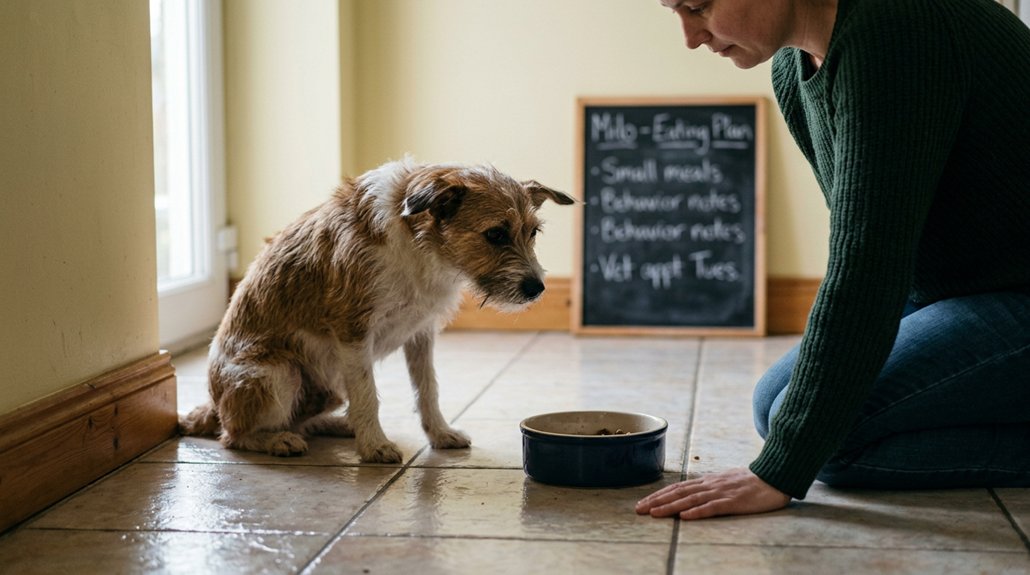
Behavioral changes can greatly impact a dog’s eating habits, making it essential to identify any underlying psychological factors. Anxiety triggers may arise from a stressful feeding environment. You should attempt to recognize and mitigate these issues to promote healthy eating. Start by observing your dog’s behavior during meals. Look for signs of stress, such as avoiding the food bowl or appearing nervous. Providing a calm, distraction-free feeding area can reduce these anxiety triggers. Guarantee consistency and structure within this space to offer comfort and security.
- Identify anxiety triggers by observing behavior around mealtime.
- Provide a quiet feeding environment free from disruptions.
- Engage in interactive feeding for positive social interactions.
- Allow time for adjustment when changing feeding routines or spaces.
Change Feeding Times and Food Types for Better Results
When a dog refuses to eat, altering feeding times and diversifying food types can markedly enhance its appetite. Establish a consistent meal timing schedule to help create routine, reducing pickiness and increasing willingness to eat at designated times. Implementing a diet rotation by alternating between dry and wet foods can stimulate interest and counter hesitance towards the current diet. Introduce this rotation gradually to avoid digestive issues. Additionally, consider enhancing food with low-sodium broth or cooked chicken to entice a reluctant eater. If disinterest persists, modifying the presentation by warming the food or changing the bowl type or location might improve appeal. These strategies effectively address feeding issues without causing stress, promoting a consistent eating habit in your dog.
Ensuring Balanced Nutrition Long-Term
To guarantee your dog’s long-term health, it’s vital to maintain a balanced diet that meets all their nutritional needs. Start by consulting with a veterinarian to verify the food you choose includes essential vitamins, minerals, and proteins. Regularly monitor your dog’s weight and body condition to spot any nutritional deficiencies. Meal timing is equally important; establish a consistent schedule to promote healthy eating habits. When necessary, consider nutritional supplements to close any dietary gaps. Additionally, variety can stimulate appetite and maintain balance.
- Gradually introduce both wet and dry food options.
- Use high-quality food toppers like low-sodium broth.
- Make sure changes between different food types are slow.
- Consistently check your dog’s weight and bodily condition.
This approach supports both peak nutrition and feeding satisfaction.
Explore Veterinary Solutions for Persistent Issues
While maintaining a balanced diet is key for your dog’s health, sometimes the issue goes beyond dietary adjustments alone. If your dog refuses food for more than two days or shows symptoms like vomiting or diarrhea, it’s essential to consult a veterinarian. They can identify underlying health issues and may suggest appetite stimulants, especially if severe appetite loss results from illness. Prescription diets addressing specific health concerns, like liver or kidney disease, are another option. Feeding alternatives, including syringe-feeding liquid diets, can be discussed if traditional methods fail. In extreme cases, placing a feeding tube might be necessary. Regular veterinary check-ups are vital, allowing for early detection and intervention, ensuring your pet’s nutritional needs are consistently met.
Frequently Asked Questions
How Do You Feed a Dog That Refuses to Eat?
Enhance your dog’s appetite with dog appetite boosters like warm, aromatic, low-sodium broth. Offer creative meal ideas by alternating dry and wet food. Hand-feed small pieces to increase comfort, and establish a consistent feeding schedule to encourage eating.
How Long Will a Dog Go Without Eating?
Like clockwork winding down, a dog’s appetite might wane due to various causes. Generally, they shouldn’t go over 24 hours without food, especially when canine health concerns arise. Consult a vet if refusal persists.
Should I Be Worried if My Dog Refuses to Eat?
Yes, you should be worried if your dog refuses to eat. Potential causes include health concerns, behavioral issues, stress factors, or changes in dietary preferences. Monitor feeding habits closely and consult a veterinarian if refusal persists.
What Is the 7 7 7 Rule for Dogs?
The 7 7 7 rule reminds you if your dog’s appetite drifts for 7 hours, watch for symptoms; if 7 days, vet time. Adapt feeding routines accordingly. Thirsty dogs without water for 7 hours? Swift vet visit needed.
Conclusion
When your dog won’t eat, it’s important to act promptly and assess the situation like a detective uncovering clues. Implement changes thoughtfully, considering potential health or behavioral issues. If the problem persists, don’t hesitate to consult your vet, as timely intervention can be life-saving. Remember, nourishing your dog is like fueling an engine; it’s fundamental for their health and well-being. By being proactive, you’ll guarantee your furry friend maintains a happy, balanced life.