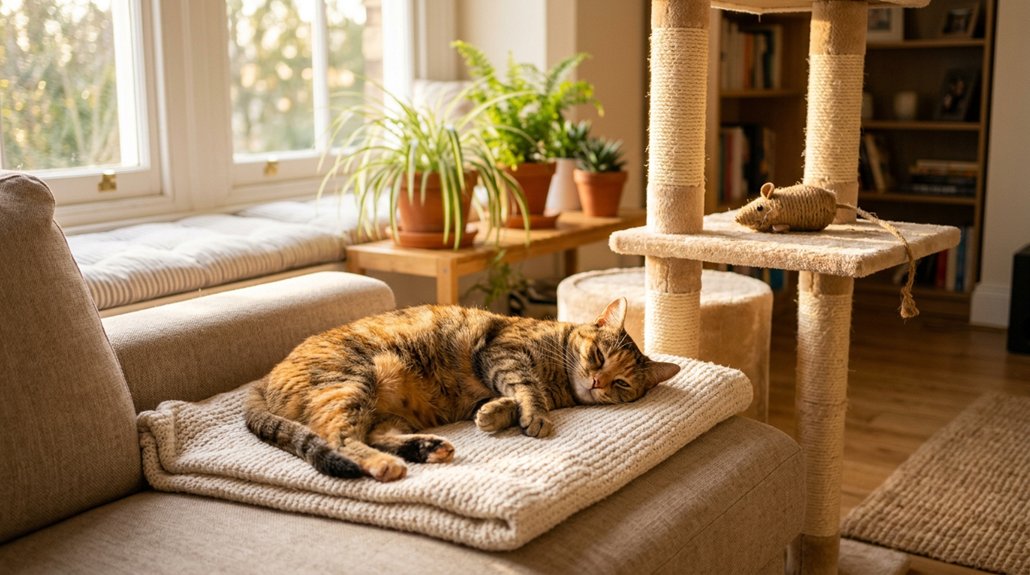
To keep your cat happy indoors, provide engaging toys that mimic prey, and use puzzle feeders for mental stimulation. Build a secure catio for safe outdoor exploration, and install climbing structures for vertical play. Set up a window perch with a view of bird feeders to keep them entertained. Consider adopting a companion cat for social interaction. Regularly rotate toys and dedicate daily playtime. Stay tuned for more comprehensive insights into creating an enriching indoor environment.
Key Takeaways
- Use interactive toys and puzzle feeders to engage your cat’s physical and mental abilities.
- Install a secure catio for safe outdoor experiences and environmental exploration.
- Provide vertical exploration zones with climbing structures and multi-level platforms.
- Set up window perches for safe bird watching to enhance mental stimulation.
- Consider adopting a second cat for social interaction and companionship.
Transform Indoor Spaces With Interactive Toys
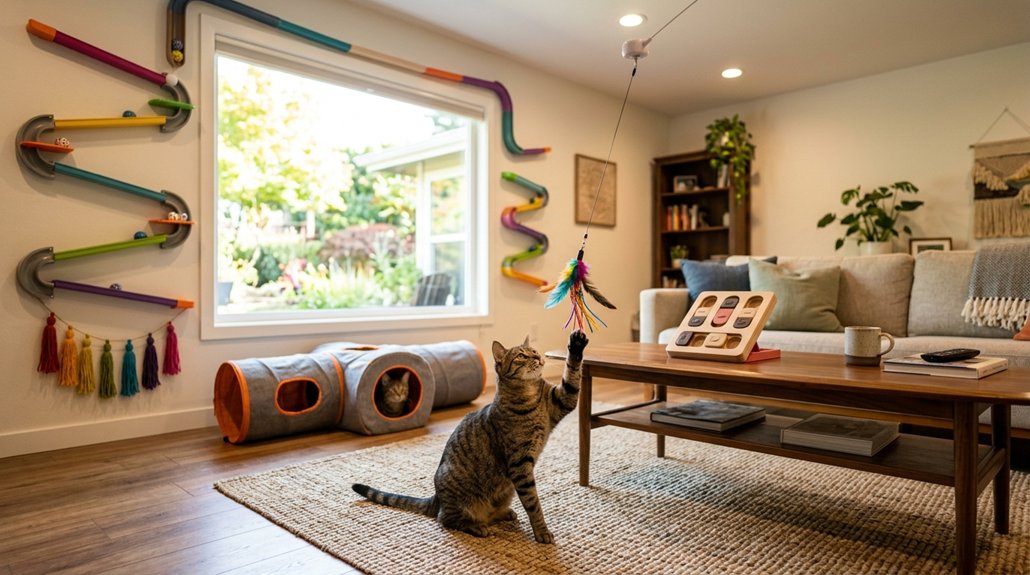
To transform indoor spaces and keep your cat happy, integrating interactive toys is crucial. The right toy selection will engage your cat physically and mentally. Start with puzzle feeders and treat-dispensing toys to stimulate problem-solving abilities while providing nourishment. These encourage natural hunting behaviors important for overall well-being. For interactive play that taps into predatory instincts, opt for toys mimicking prey, such as feather wands or battery-operated mice. Stalking and chasing these objects are essential to your cat’s exercise routine. Regularly rotating these toys guarantees ongoing interest and counters boredom, a critical aspect of mental health. Additionally, DIY activities like hiding treats or creating obstacle courses enrich their environment. These strategies not only entertain but also strengthen your bond with your pet.
Design a Secure Cat Catio
After transforming indoor spaces with interactive toys, consider enhancing your cat’s environment by designing a secure catio. A catio, an enclosed outdoor oasis, allows indoor cats to experience fresh air and nature safely, shielding them and local wildlife. Prioritize an escape proof design by using durable catio materials like galvanized wire and robust frames to guarantee stability and security. Ventilation is essential, so incorporate breathable sections while making sure all entry points remain secure. Integrate non-toxic, cat-safe materials to line the interior where your feline will explore. Augment the space with elevated perches and engaging toys for stimulation. Additionally, by adding safe plants like cat grass, you create a rich sensory experience. Proper positioning enhances wildlife views, increasing your cat’s satisfaction.
Let Them Climb
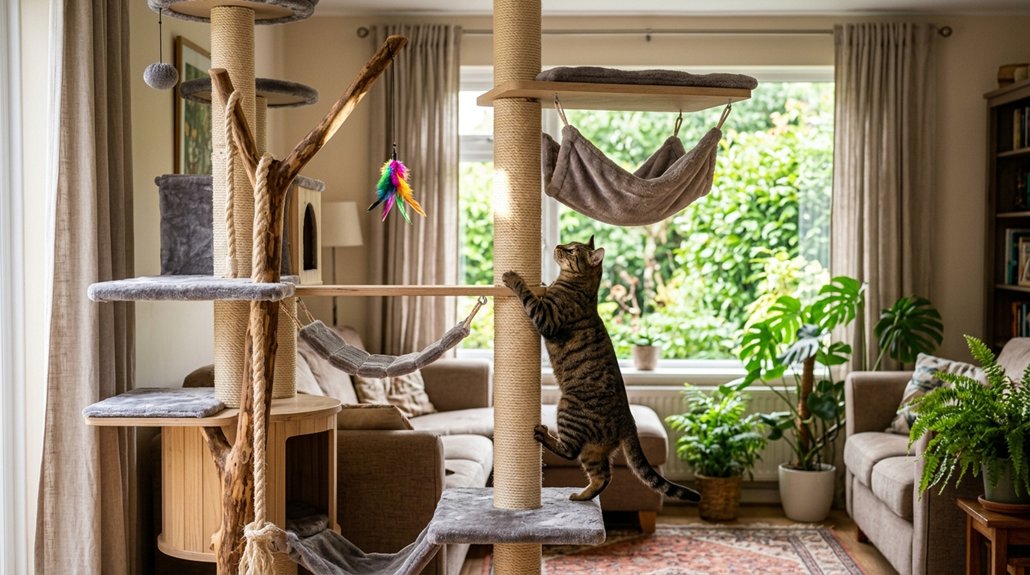
To keep your cat active and content indoors, design vertical exploration zones by installing sturdy climbing structures like cat trees and wall-mounted perches. These installations maximize indoor space usage, allowing your cat to engage in their natural climbing behavior while exploring elevated territories. Incorporating such features not only promotes physical exercise but also provides essential mental stimulation and stress reduction.
Design Vertical Exploration Zones
Creating vertical exploration zones is vital for a cat’s mental and physical well-being. Cats thrive on exercising their natural climbing instincts, so consider integrating multi-level platforms and climbing ramps into your home. Incorporate interactive shelving and observation perches, allowing your feline friends to explore elevated spaces independently. These structures promote structured play, essential for maintaining a healthy, stimulated indoor environment. Enhancing vertical areas with climbing tunnels or wall art can add aesthetic value while transforming your walls into a feline wonderland. Introduce vertical gardens to mimic natural outdoor elements, providing enrichment through textures and scents. A variety of these options deters boredom and guarantees your cat stays active, content, and secure within their territory from these elevated vantage points.
Install Sturdy Climbing Structures
Cats seek height and complexity in their living spaces, building on the foundation set by vertical exploration zones. To satisfy their natural instincts, install sturdy climbing structures like cat trees or wall-mounted shelves. These provide essential exercise options and mental stimulation. Cat tree styles should prioritize height and stability, ensuring safety while allowing your feline to survey their territory from various elevations. Such vertical spaces effectively alleviate boredom, reducing destructive behaviors by offering a haven for play, scratching, and relaxation. In multi-cat households, these structures mitigate competition by creating extra play and rest areas, fostering harmonious social interactions. Strategically install climbing structures near windows to enhance your cat’s experience, attracting their attention with birdwatching opportunities and outdoor stimuli.
Maximize Indoor Space Usage
Ideal indoor environments for cats require harnessing vertical spaces to address their instinctual needs effectively. Implementing custom climbing solutions like cat trees or wall-mounted shelves allows for the exploration of vertical space ideas. This not only fulfills their natural climbing instincts but also provides essential vantage points for observing surroundings. By giving your cat access to these elevated areas, you’ll foster a sense of security and promote physical activity.
Incorporate sturdy, carpeted perches to offer safe retreats where your cat can rest or find solitude. Multi-level structures are particularly advantageous, encouraging exercise and mental stimulation to combat boredom. Maximizing vertical space prevents undesired behaviors, such as scratching furniture or excessive vocalizations, ultimately nurturing a healthier, more content indoor life for your feline friend.
Set Up Safe Window Bird Watching
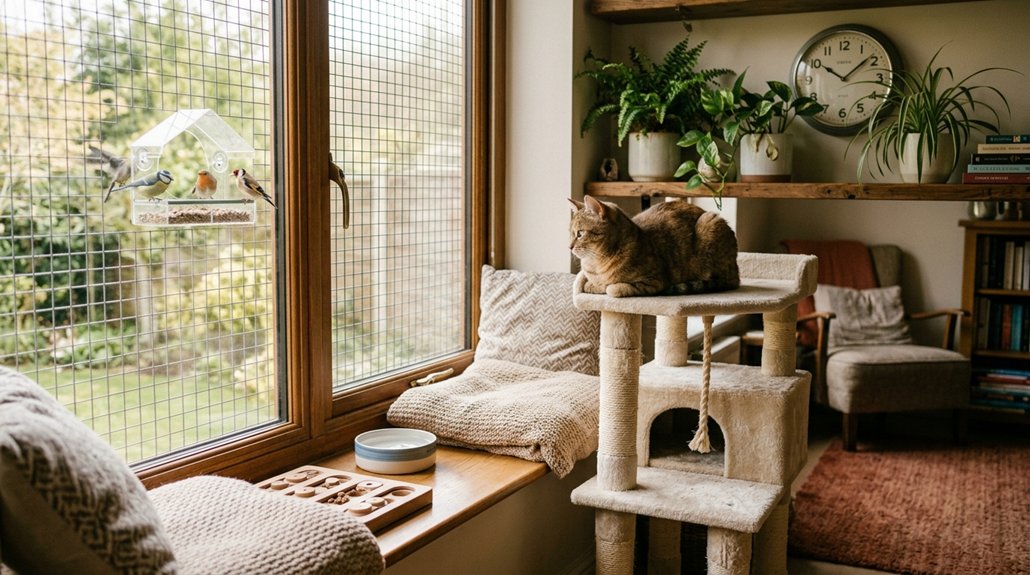
One simple way to enhance your cat’s indoor environment is by setting up a safe window bird-watching area. Consider an ideal window perch design that offers comfort and stability, allowing your cat to observe birds and small mammals with ease. Placement of bird feeders or baths just outside the window is critical; it engages your cat’s senses and reduces boredom. Strategically placed feeders will also minimize bird-window collisions, maintaining wildlife safety. Providing a dynamic view with a window perch will offer your cat a mental workout. Changing scenery will keep their interest piqued, enhancing mental stimulation. By doing so, you enrich your cat’s life indoors, ensuring their overall well-being and happiness in a secure environment.
Stimulate Their Mind With Puzzle Feeders
Puzzle feeders offer an engaging way to enrich your cat’s environment while promoting mental stimulation. By encouraging interactive feeding, they transform mealtime into a mentally enriching experience. These feeders simulate hunting by requiring problem-solving to access food, which can prevent boredom and related negative behaviors like scratching.
| Benefit | Description | Outcome |
|---|---|---|
| Mimics hunting | Requires solving challenges for food | Less boredom, happier cats |
| Slows eating | Distributes food gradually | Reduces obesity, improves digestion |
| Sense of reward | Success in “hunting” food | Enriches indoor life |
Cats experience a satisfying sense of accomplishment with each successful “hunt,” contributing to a fulfilling indoor environment. Slowing down a fast eater also aids digestion. Integrating puzzle feeders into your routine supports healthy, engaged cats.
Rotate Toys Regularly to Maintain Interest
To keep your cat engaged and mentally stimulated, it’s essential to rotate their toys regularly. By introducing a variety of interactive, puzzle, and physical toys weekly or bi-weekly, you prevent boredom and stimulate their natural hunting instincts. Pay attention to which toys captivate your cat the most, as this insight will help you tailor the rotation to keep their curiosity alive.
Engage Curiosity With Variety
While it might seem like an endless parade of toys, regularly rotating them is essential for keeping your indoor cat’s environment stimulating and engaging. Toy rotation plays a significant role in curiosity engagement, preventing boredom and ensuring active playtime. Cats are naturally drawn to novelty and introducing new or swapping existing toys mimics the thrill of hunting, boosting both mental and physical well-being. Interactive toys that simulate prey behaviors like pouncing and stalking can satisfy instinctual drives, promoting necessary healthy activity. By gradually cycling toys, you’re not just keeping your cat entertained but encouraging vital mental stimulation. This proactive approach reduces the risk of undesirable behaviors linked to boredom, making for a happier, more content feline companion.
Prevent Boredom With Changes
Engaging a cat’s curiosity requires more than just toy variety; systematically rotating these toys is key to maintaining interest and preventing boredom. Toy maintenance involves introducing different toys every few weeks to reignite your cat’s interest and promote mental enrichment. This approach mirrors their natural hunting instincts and reduces the likelihood of behavioral issues.
Consider the following methods:
- Interactive Toys: Rotate puzzle feeders or dynamic devices to keep mental stimuli fresh.
- Diverse Playthings: Integrate wand toys and diverse textures to mimic hunting behaviors.
- DIY Enrichment: Craft toys using household items for a cost-effective and stimulating setup.
Research underscores the benefits of varied play, indicating that cats with these opportunities show fewer signs of distress, such as excessive vocalization or scratching.
Stimulate Hunting Instincts
Release your cat’s natural instincts by strategically rotating their toy selection, ensuring your feline friend stays mentally and physically stimulated. Effective prey simulation is achieved with a variety of toys, including feather teasers and battery-powered mice, which encourage active hunting behavior. Engaging their instincts requires toy rotation every few days or weeks, preventing familiarity and keeping play sessions exciting. Cats prefer novelty; introducing new toys can reinvigorate their curiosity and energy. Interactive toys, like puzzle feeders, further enhance cognitive skills by blending play with problem-solving, mimicking the challenges of real hunting. Regular toy rotation provides diverse play experiences essential for enrichment and well-being, mitigating stress and unwanted behaviors in an exclusive indoor setting.
Enhance Play With Catnip
Many feline enthusiasts know that incorporating catnip into playtime can be a game-changer for your indoor cat. Catnip benefits include stimulating mental activity and encouraging healthy exercise patterns, offering an engaging and enriching experience. Understanding catnip varieties can enhance its impact:
- Dried Leaves: These are a classic choice and can be sprinkled on scratching posts or toys for easy access.
- Sprays: Perfect for targeting specific areas and ensuring controlled exposure.
- Live Plants: These offer a natural source for curious felines, introducing an interactive element.
Ensure you’re introducing catnip in moderate amounts, ideally a few times weekly, to prevent diminished sensitivity. Cats over six months benefit most as younger kittens lack the necessary receptors for an effective response.
Adopt a Companion Cat for Social Interaction
While catnip can invigorate your cat’s playtime, adopting a companion cat adds a layer of permanent social enrichment that temporary stimuli can’t provide. Cats are inherently social creatures; they thrive on interaction and companionship, reducing feelings of loneliness and boredom. Introducing a second cat can facilitate essential social bonding and feline communication, while also promoting mental and physical stimulation through play and exercise.
Shelters are filled with cats needing homes, so adopting another cat not only benefits your pet but also saves a life. To guarantee success, a gradual introduction process aids both cats in acclimating, fostering a strong social bond. This companionship often results in mutual grooming and synchronized play, enhancing well-being and happiness across their shared environment.
Consider Safe Outdoor Experiences
To safely enrich your indoor cat’s experience, consider building a secure catio that offers fresh air and space for natural behaviors without exposure to outside risks. Supervise outdoor exploration with methods like harness walks, ensuring your cat remains protected from potential dangers. Cat-proofing measures, such as removing toxic plants, further enhance safety and contribute to your cat’s wellbeing.
Build a Secure Catio
One effective way to enrich the life of your indoor cat is by building a secure catio that offers safe outdoor experiences. Selecting quality catio materials is essential to guarantee outdoor safety. Structures can range from compact window enclosures to spacious fenced areas, accommodating any living situation. By integrating elements like perches and climbing structures, you’ll enhance your cat’s environment considerably.
Here are three vital components to include:
- Sturdy Framework: Use weather-resistant materials to withstand the elements and guarantee durability.
- Enrichment Features: Incorporate interactive toys to engage your cat’s natural instincts and provide mental stimulation.
- Escape-Proof Design: Verify there are no gaps or weak points that could allow for accidental escapes or unwanted intruders.
A well-designed catio promotes overall well-being.
Supervise Outdoor Exploration
During moments of outdoor exploration, ensuring your feline’s safety is paramount. Supervised outdoor adventures offer cats the benefits of nature without compromising their well-being. Consider using catios or screened porches for safe exploration, allowing your pet to enjoy fresh air securely. Tailored for preventable freedom, these enclosures provide sensory enrichment away from hazards. Alternatively, harnesses and leashes afford more dynamic experiences, granting cats controlled adventures in calm neighborhoods. It’s crucial to keep them tethered under watchful eyes to counter potential threats like toxic plants, aggressive wildlife, or stray animals. These outings stimulate both mental and physical health by nurturing their instincts. Always assess the outdoor environment and be vigilant to maintain a balance between exploration and safety.
Dedicated Daily Interactive Playtime
Engage your cat’s natural instincts and strengthen your bond by dedicating time each day to interactive play. This practice is essential for effective cat communication and guarantees your feline friend’s exercise needs are met. By scheduling at least 15-30 minutes daily, you address their innate hunting behaviors, promoting both physical and mental well-being. Using various toys such as feather teasers or wand toys is ideal for mimicking stalking, pouncing, and chasing activities. To maximize the benefits:
Daily interactive play fulfills your cat’s instinctual needs, ensuring mental and physical wellness.
- Rotate Toys Regularly: This keeps the interactions fresh and prevents the loss of interest.
- Observe and Adapt: Pay attention to your cat’s preferences, modifying play to maintain engagement.
- Maintain Consistency: Regularity not only prevents boredom-related behaviors but supports overall health and emotional stability.
Frequently Asked Questions
What Is the 3-3-3 Rule for Cats?
The 3-3-3 rule for cats involves understanding feline behavior during adaptation to new homes. Expect hiding in the first three days, exploratory behavior in three weeks, and full adjustment, showing true personality, in three months. Patience’s essential.
How Do I Make My Indoor Cat Happier?
To make your indoor cat happier, use interactive toys like feather teasers to engage them. Provide vertical spaces such as cat trees, allowing them to climb and explore, which satisfies their natural instincts and boosts overall well-being.
What Is “I Love You” in Cat Language?
In cat language, “I love you” is communicated through feline communication cues like slow blinking, gentle purring meanings of contentment, head-butting, and chirping. These behaviors indicate trust, affection, and deep emotional connection with your feline friend.
What Color Cat Is Least Desired?
In the shadowplay of cat color preferences, black cats often seem overlooked due to superstitions. Adoption statistics reveal they linger in shelters longer. Awareness campaigns aim to debunk myths, highlighting these felines’ affectionate nature to potential adopters.
Conclusion
Creating a fulfilling indoor environment for your cat is essential for their happiness and health. Imagine Oliver, a domestic shorthair, thriving indoors with interactive toys, a secure catio for fresh air, and a perch overlooking a bird feeder. His owner noticed markedly reduced stress behaviors and increased playfulness. By investing in engaging activities and environments, you’re not just keeping your cat entertained—you’re enhancing their overall well-being. Remember, happy indoor cats lead healthier, enriched lives.