
To build a strong bond with your cat at home, guarantee their basic needs are met with safe, serene spaces and a structured routine. Promote autonomy by letting them approach you on their own terms. Engage in active play to mimic natural hunting instincts. Reduce stress using calming techniques like pheromone diffusers. Maintain consistency to foster security and trust. Your daily interactions contribute considerably to their well-being, and there are further steps that deepen this enriching connection.
Key Takeaways
- Create a safe and serene environment with designated rest and feeding areas to reduce stress.
- Engage in daily play sessions using interactive toys to enhance physical exercise and bonding.
- Establish consistent routines for feeding, play, and grooming to promote security and trust.
- Allow cats to explore independently and approach at their own pace to foster comfort.
- Invest in daily interactions and gentle routines to strengthen companionship and well-being.
Quick Start Guide to Bonding With Your Cat
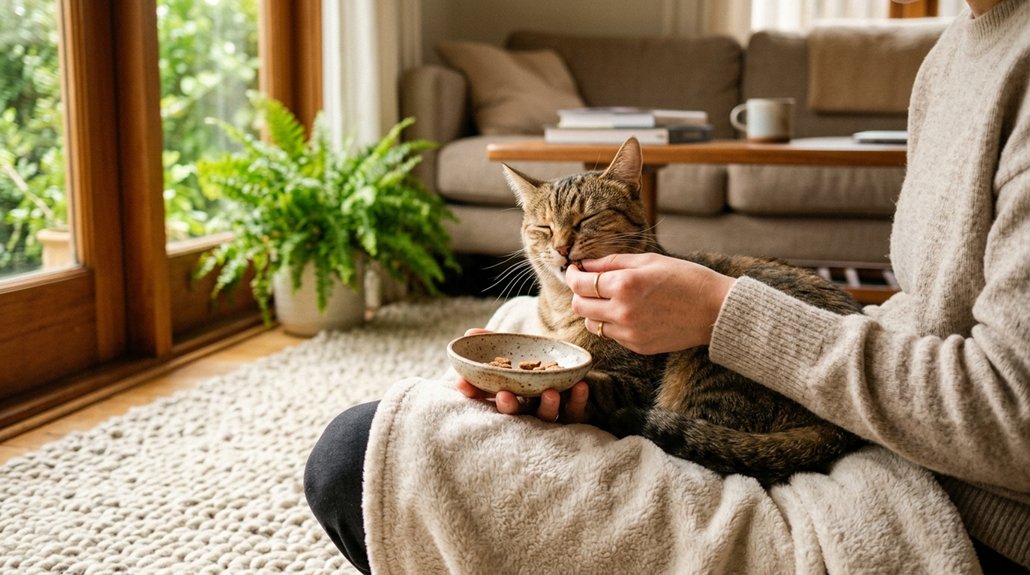
When you’re bringing a new cat into your home, ensuring their basic needs are met is your first priority. Once these essentials are addressed, focus on socialization and bonding. Start with controlled socialization tips; provide your cat with time to acclimate by establishing safe areas where they can decompress. Encourage bonding activities by allocating regular play sessions using interactive toys that replicate hunting behaviors—these not only stimulate your cat cognitively but also enhance your emotional connection. Respect your cat’s personal space, allowing them to initiate interactions to establish trust. Finally, consistency is key: develop a routine with scheduled feeding, play, and grooming times. This structured approach cultivates security and paves the way for a trusting, enduring relationship with your feline companion.
Meet Basic Needs for Comfort and Security
To establish a foundation of comfort and security for your cat, it is crucial to meet their basic needs by ensuring safe rest areas, private feeding locations, and accessible litter boxes. Position their food and water in low-traffic zones to reduce stress and promote a sense of safety during their adjustment period. By addressing these primary needs, you facilitate an environment where your cat’s trust can grow, paving the way for a stronger bond.
Ensure Safe Rest Areas
Establishing safe rest areas is essential for meeting your cat’s basic needs for comfort and security. Cats have particular resting preferences, so it’s crucial to create designated comfort zones that cater to these needs. Start by offering quiet, low-traffic spaces equipped with cozy beds or caves where your feline can relax and decompress. Recognize their favored resting spots by observing their behavior, tailoring the environment to suit these inclinations.
Provide multiple locations throughout your home, as cats enjoy different comfort zones throughout the day. This variety helps minimize stress and contributes to their overall well-being. Be mindful of maintaining an ideal living space by keeping food, water, and litter box stations separately located, contributing to your cat’s peaceful and secure environment.
Provide Private Feeding Locations
Creating sanctuary-like spaces for your cat isn’t just about resting areas; it’s also notable in their feeding environments. Position your cat’s food and water bowls in low-traffic, quiet zones to mitigate stress, facilitating a sense of security while eating. Implementing a structured feeding schedule with multiple small meals a day not only creates positive behavioral associations but also cultivates trust. Prioritize bowl hygiene by cleaning bowls regularly to prevent bacterial growth, thereby enhancing your cat’s well-being.
| Feeding Aspect | Recommendations | Benefits |
|---|---|---|
| Location | Low-traffic, quiet areas | Reduced stress and increased safety |
| Feeding Schedule | Multiple small meals daily | Builds trust and positive associations |
| Bowl Hygiene | Regular cleaning | Prevents bacteria, secures health |
Incorporating these measures guarantees comfort, bolstering a healthy cat-owner bond.
Offer Accessible Litter Box
Guaranteeing your cat has access to an appropriate litter box is fundamental for their comfort and security. Prioritize litter box accessibility by situating it in a quiet, low-traffic area. This positioning not only provides essential privacy but also minimizes stress, which is vital for promoting healthy litter box habits. Select a box that accommodates your cat’s size and weight, particularly benefiting kittens and senior cats with mobility challenges.
Daily scooping and regular litter changes maintain a hygienic environment, aligning with feline litter box preferences for cleanliness. Provide one litter box per cat plus an additional one to circumvent territorial disputes and guarantee smooth access. Experiment with various litter types to identify your cat’s preference, encouraging consistent and appropriate usage.
Create Safe Spaces for Your Cat
When integrating a new feline family member into your home, it’s important to provide safe spaces that guarantee their well-being and comfort. Designate specific hiding spots such as cozy beds or caves, located in low-traffic areas to assure privacy and minimal disturbances. These zones allow your cat to retreat and feel secure, especially during those initial days of adjustment. Incorporate vertical enrichment by installing cat trees or shelves, as many cats appreciate having elevated perches to oversee their environment while feeling secure. Observe your cat’s chosen hiding places, as their preferences will reveal where they experience the most comfort and safety. Allow your cat to independently explore and select these safe zones, respecting their need for autonomy and sanctuary.
Encourage Your Cat to Make the First Move
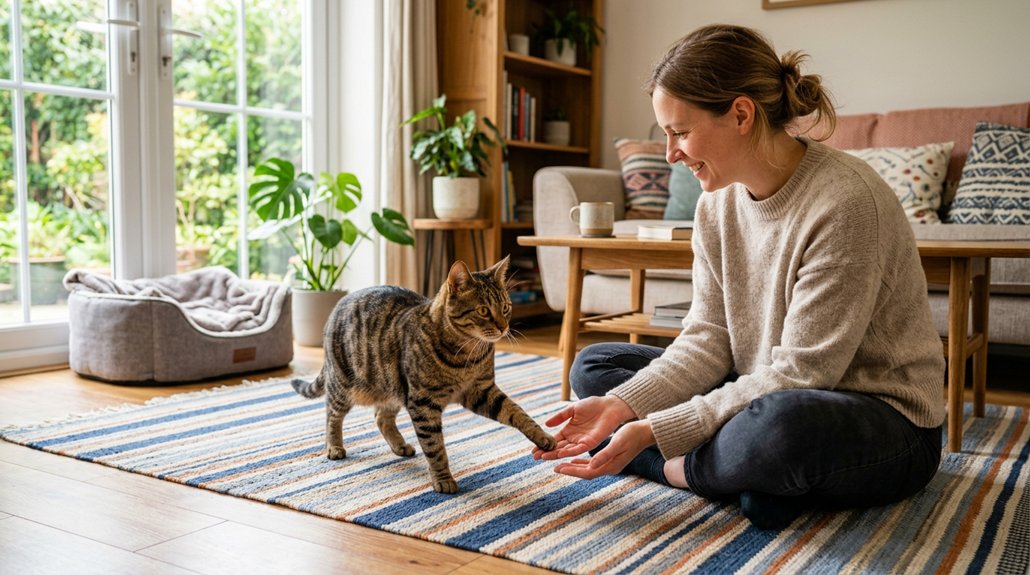
To cultivate a harmonious relationship with your cat, it’s essential to foster their independence by permitting them to approach you at their own pace. Hold out your hand with the palm up and watch for signs of interest such as head butting or nudging, indicating they are ready to engage. Always be mindful of your cat’s body language; respecting signals of discomfort like tail thrashing will prevent stress and reinforce trust.
Foster Independence in Interactions
Cultivating an independent dynamic in interactions with your cat is essential to fostering trust and mutual respect. By allowing independent exploration, your feline friend can engage with their environment without stress, promoting autonomous decision-making. Present your hand gently, inviting your cat to initiate contact through familiar signals like sniffing, which parallels the social grooming behaviors seen in natural feline communities. This approach enhances their sense of safety and autonomy.
Pay close attention to signs of interest such as head-butting or gentle nudging. Respond positively to these cues, reinforcing their desire to interact while maintaining equilibrium in your bond. Always observe your cat’s body language, as respecting their signals guarantees they feel secure in their environment, ultimately strengthening your connection through mutual understanding.
Respect Personal Space Signals
Recognizing and respecting the subtle signals of personal space in cats is essential to fostering a healthy and trusting relationship. Cats communicate comfort zones through tail language and various behaviors. For instance, a thrashing tail signifies agitation and a desire for distance, while a gentle, upright tail indicates curiosity and readiness for interaction. Encourage your cat to make the first move by offering your hand for sniffing, demonstrating that you respect their boundaries. Create an environment that supports their security by providing cozy hideouts and elevated perches. These alternatives allow them to approach you when they feel safe. Remember, forcing affection can impede trust, making them apprehensive in future interactions. Respecting their space builds a bond grounded in mutual understanding.
Playtime: A Key to Bonding Daily
Daily playtime is essential for fortifying the bond between you and your cat, providing not only physical exercise but also important mental stimulation. Engaging in creative playtime at least twice daily for 15 minutes each session helps mimic natural hunting behaviors, utilizing interactive toys like feather wands or laser pointers. These bonding activities activate your cat’s predatory instincts and enhance trust and companionship.
To keep your feline friend interested, rotate toys regularly to prevent boredom and increase engagement. End each session with a treat to reinforce positive experiences, creating rewarding associations with playtime. This method establishes a stronger bond by catering to your cat’s attention span through short, enjoyable routines that highlight your investment in this crucial daily interaction.
Reducing Stress for a Relaxed Companion
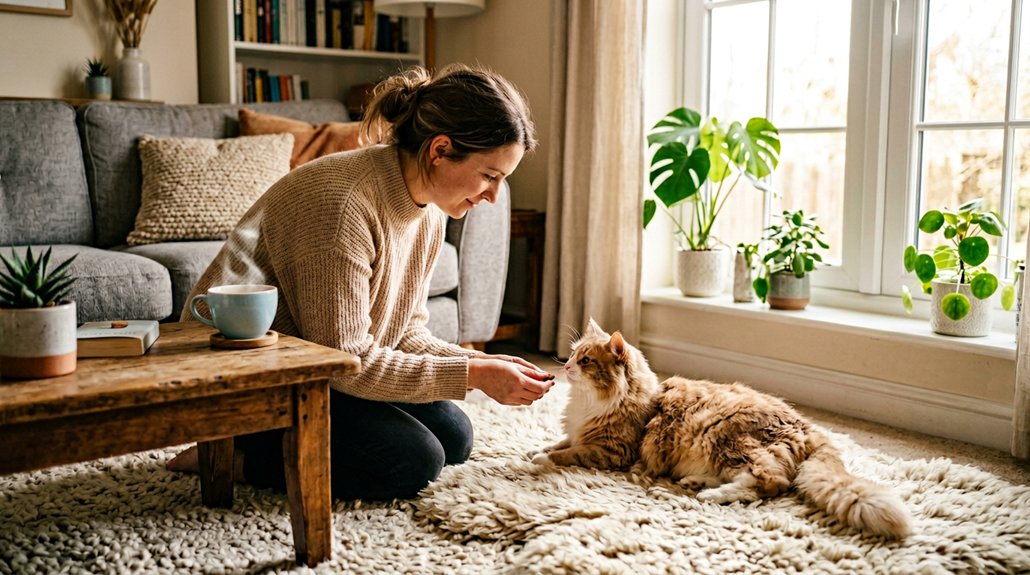
To guarantee your cat becomes a relaxed companion, you must address stressors that could affect their well-being. Implement calming techniques, such as introducing pheromone diffusers or playing soft music, to facilitate anxiety reduction. Cultivating an environment rich with cozy hiding spots—like cardboard boxes—gives your cat secure retreats, promoting tranquility. Engage them with regular enrichment activities, including stimulating scratch posts and guided outdoor time, to alleviate boredom and instill confidence. Consider integrating calming supplements or probiotics into their diet to manage stress in anxious or traumatized cats, consequently enhancing emotional stability. Maintain a comforting atmosphere through gentle routines, as predictable interactions decrease anxiety, allowing them to feel safe in their daily life. These measures collectively foster a serene feline companion.
Keep a Routine for Stability
Establishing a consistent routine is paramount for your cat’s psychological well-being, as it minimizes unpredictability that can trigger anxiety. The routine benefits are significant; regular feeding times, play sessions, and grooming rituals bolster your cat’s sense of security. Predictable schedules allow your feline to adapt more effectively to its environment, fostering increased trust and comfort at home. To maximize the consistency impact, guarantee these elements are integrated daily. If modifications are necessary, introduce changes gradually to maintain stability. This fosters smoother adjustments and prevents undue stress. Including play and social interactions within your routine not only satisfies natural instincts but also strengthens bonding. By meeting your cat’s physical and emotional needs consistently, you enhance its overall well-being, guaranteeing a harmonious household.
Frequently Asked Questions
How Do I Deepen My Bond With My Cat?
To deepen your bond with your cat, incorporate interactive playtime activities and utilize proper grooming techniques. Respect your cat’s behavioral cues and provide positive reinforcement, ensuring a consistent routine for your feline to foster trust and security.
What Is the 3-3-3 Rule With Cats?
The 3-3-3 rule is like reading a novel of your cat’s heart: three days of observing behavior nuances and body language, three weeks for emerging personality, three months to establish trust with confidence and affection.
What Is “I Love You” in Cat Language?
“I love you” in cat language involves slow blinking, purring, and head-butting. Recognize these cat gestures and feline sounds as signs of affection. Responding with slow blinks and gentle pets can reaffirm the bond positively, promoting feline socialization.
Which Cat Breed Is Most Clingy?
The Ragdoll cat is the most clingy breed, known for its extraordinary companionship and affectionate nature. It’s slightly edged by Siamese affection and Persian cuddles, which also exhibit high affiliative behaviors and social interaction preferences.
Conclusion
To strengthen your bond with your cat, consider that cats form long-lasting memories, particularly of interactions that are emotionally significant. A study in “Animal Cognition” found they can remember human gestures for over ten years. By consistently meeting your cat’s needs for security, play, and routine, you create positive associations that contribute to their cognitive and emotional well-being. Like humans, cats thrive on predictable, loving relationships, and your efforts deepen mutual trust and companionship over time.