
To stay consistent living with a cat, establish regular feeding, grooming, and play routines tailored to their needs. Define designated spaces in your home for rest, play, and meals. Set household rules and use positive reinforcement to encourage good behavior. Employ technology for reminders and monitoring, and keep detailed logs of your cat’s behavior. Maintain open communication with all caregivers. By following these guidelines, you can guarantee a harmonious home life, with additional insights available.
Key Takeaways
- Establish regular feeding times to support the cat’s digestive health and prevent obesity.
- Designate specific areas for resting, playing, and feeding to optimize the cat’s well-being.
- Use positive reinforcement to encourage desired behaviors and create clear boundaries.
- Implement technology like automated feeding machines and smart cameras for consistent monitoring.
- Communicate household rules and delegate responsibilities among caregivers to minimize conflicts.
Establish Regular Feeding and Play Routines
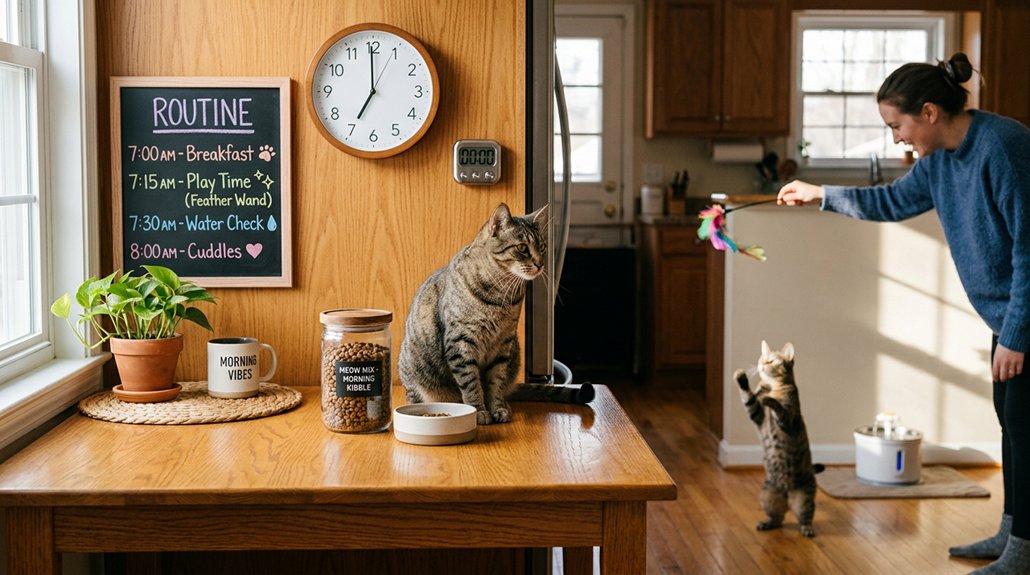
To maintain a healthy and happy life for your cat, establishing regular feeding and play routines is essential. Implement meal timing by providing meals at the same time each day. This training tip guarantees your cat’s digestive health and helps prevent obesity by avoiding the pitfalls of free feeding. Consistent meal timing also fosters a sense of security and routine.
Incorporate interactive play sessions of 15-30 minutes at regular intervals. This practice stimulates mental and physical activity, supporting your cat’s overall well-being. Scheduled playtime strengthens the bond you share with your pet, helping to reduce anxiety and enhance adaptability. Remember, cats thrive on routine, with consistency greatly reducing stress levels and promoting emotional stability in their environment.
Define Specific Spaces for Your Cat’s Activities
To optimize your cat’s well-being, designate specific areas in your home for resting, playing, and feeding. Allocate a cozy nook for rest, create interactive play zones with toys, and set up consistent feeding stations to reduce stress and establish routine. Incorporate vertical elements like cat trees to enhance their environment, ensuring each area is well-equipped and regularly maintained for cleanliness and organization.
Designated Resting Areas
Establishing designated resting areas for your cat isn’t just about comfort—it’s essential for their sense of security and well-being. By creating cozy corners using preferred materials like soft blankets or plush pads, you offer a sanctuary tailored to their relaxation needs. Each cat in a multi-cat household should have their own resting spot, plus an additional one, to prevent territorial conflicts and guarantee harmony.
Select materials that appeal to different preferences—some cats love the enveloping warmth of a fuzzy blanket, while others might prefer the vantage point of an elevated perch. Position these areas in quiet, low-traffic zones to minimize stress. Regularly maintain these spaces by cleaning and replacing old items, fostering an inviting environment for your cat’s tranquil retreats.
Interactive Play Zones
While creating designated resting areas helps provide comfort and security, focusing on interactive play zones is another key step in enhancing your cat’s environment. To establish effective interactive play zones, follow these structured guidelines:
- Create Defined Areas: Designate clutter-free spaces for play activities, allowing your cat to engage in a focused, playful environment without distractions.
- Incorporate Enrichment Tools: Equip these zones with interactive toys, scratching posts, and climbing trees to stimulate natural feline behaviors and maintain engagement.
- Regularly Rotate Play Objects: Refresh the items in play zones to prevent monotony and encourage consistent interest. This introduces new stimuli, keeping your cat’s playtime dynamic.
Specific Feeding Stations
Although often underappreciated, defining specific feeding stations for your cat is essential to creating a structured and stress-free routine. By associating these spaces with meal times, you help establish predictable environments that cater to your cat’s food preferences and foster security. Each cat should have its own station to minimize competition and reduce stress. Place these feeding areas in quiet, low-traffic locations to enhance comfort during meals. By regularly checking and refilling food and water, you guarantee constant access, reinforcing established habits while mitigating anxiety over resource availability. Occasionally rotating the feeding station’s location can stimulate curiosity yet still maintain routine, striking a balance between predictability and engagement, which is paramount for your cat’s overall well-being.
Set Household Rules for Consistent Cat Care
To maintain a cohesive environment for your cat, it’s crucial to establish clear household rules regarding feeding routines and resource allocation. Make sure you provide meals at consistent times daily and designate areas for bedding, play, and litter boxes to prevent territorial disputes. By aligning your family on these protocols, you can reduce stress and foster a stable, predictable environment for your cat.
Establish Feeding Routines
A consistent feeding routine is essential for your cat’s well-being, and establishing such a routine involves several key steps. To guarantee your feline’s dietary needs are met effectively, consider these guidelines:
- Meal Timing: Feed your cat at the same times each day. This helps them predict their meals and supports their natural biological clock.
- Portion Control: Use measured portions tailored to your cat’s dietary requirements. Adjust these as necessary, based on their health and activity level, to avoid overfeeding or underfeeding.
- Feeding Area: Designate a specific, distraction-free zone for feeding. A quiet environment encourages your cat to eat comfortably.
Monitor your cat’s eating habits consistently and communicate any changes with household members. Automatic feeders can help maintain this routine if you’re away.
Define Resource Allocation
When establishing a cohesive environment for your cats, it’s important to define resource allocation to guarantee harmony among them. Implement clear guidelines for resource distribution, making sure each cat has access to multiple food and water bowls, with one litter box per cat plus an extra. Designate resting areas to respect their territorial needs and rotate playtime to prevent jealousy, providing proper supplies to foster a balanced ecosystem. Consistent communication of household rules among all family members is crucial to maintaining order and minimizing conflict.
| Resource | Guidelines |
|---|---|
| Food & Water Bowls | Multiple per cat to avoid competition |
| Litter Boxes | One per cat plus one extra for ideal hygiene |
| Resting Areas | Separate spaces for each cat to respect territory |
Regularly monitor conditions to guarantee proper maintenance and stability.
Employ Positive Reinforcement Techniques First
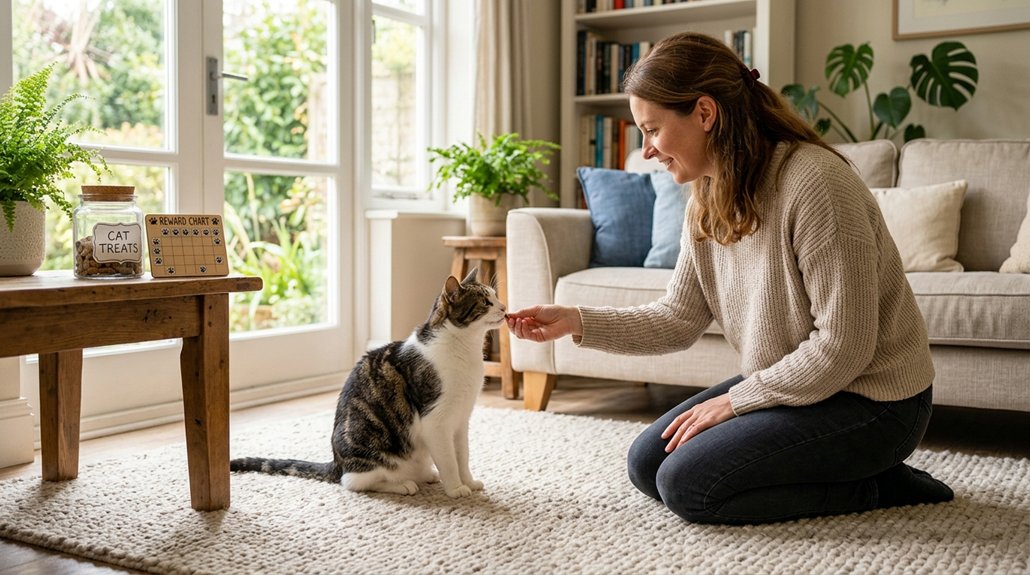
Implementing these strategies also strengthens the bond between you and your cat, building trust and harmony.
Respond Consistently to Cat Behavior
To effectively manage and shape your cat’s behavior, it is vital to establish and maintain consistency in your responses. Implementing clear behavior cues is significant. When your cat crosses established boundaries, react immediately with uniformity. Use the same verbal cues or actions to signal disapproval, ensuring your reactions remain steady across situations to avoid mixed signals. Consistency in these responses helps prevent confusion and undesirable behavior.
Positive reinforcement should be equally consistent. Reward desired actions with treats or praise every time they occur, reinforcing a clear association that encourages repetition. Establish clear rules about where your cat can sit or what surfaces are off-limits. This consistent framework enables them to adapt more effectively, aligning their behavior with your household expectations.
Keep an Eye on Your Cat’s Behavior Changes
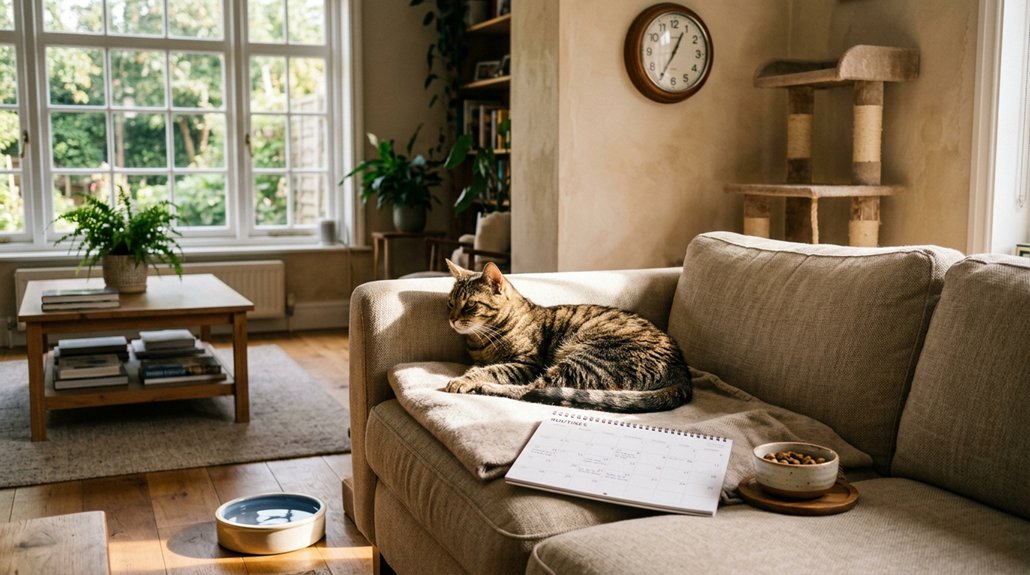
Building on the importance of consistency in responding to your cat’s behavior, staying attentive to their behavior changes is equally important. Regular observation is key to noting stress indicators, such as unexpected aggression or withdrawal. These can often signal environmental stressors or changes in household dynamics. Implement the following strategies:
- Behavioral Logs: Keep detailed records of your cat’s behaviors to identify patterns and triggers, aiding in timely interventions.
- Assessments: Conduct regular behavioral assessments, especially after introducing new pets or significant changes, to maintain household harmony.
- Monitor: Watch for any sudden changes in your cat’s demeanor, as these could indicate underlying health issues requiring veterinary attention.
Boost Routine Consistency With Technology
While maintaining a consistent routine for your cat can be challenging, technology offers precise solutions to streamline this process. Utilize automated feeding machines to guarantee meals are served at the same time daily, fostering a predictable feeding schedule and minimizing anxiety. Integrate pet monitoring through smart cameras for real-time observation of your cat’s behavior when you’re away, enabling timely adjustments to their routine. Smartphone apps can set reminders for activities like litter box cleaning and playtime, enhancing your adherence to daily schedules. Additionally, smart home devices, such as automated litter boxes, keep the litter area consistently clean, promoting comfort. Employ interactive toys controlled via smartphone apps to provide ongoing mental stimulation, rounding out an engaging, structured routine for your feline friend.
Tailor Routines to Your Cat’s Needs
After leveraging technology to streamline your cat’s routine, it’s time to fine-tune the schedule to suit their individual needs. Cats thrive on routine, so establish a grooming schedule that aligns with their breed and hair type. Long-haired cats need more frequent brushing to avoid matting and guarantee comfort.
Steps to Tailor Your Cat’s Routine:
- Grooming Schedule: Adapt to your cat’s specific grooming needs, guaranteeing regular brushing and maintenance.
- Behavioral Observations: Monitor your cat’s likes and dislikes, adjusting feeding, play, and rest schedules accordingly.
- Litter Box Maintenance: Keep a consistent routine, maintaining one box per cat plus an extra to reduce territorial stress.
Maintain Open Communication and Logs Among Caregivers
Effective communication among caregivers is paramount when managing a consistent routine for your cat. Establish a shared log to track feeding, medication, and behavior. Regular caregiver meetings guarantee that everyone is aligned with the cat’s needs and adjusts responsibilities as necessary. Clarifying roles will prevent overlap and confusion. Equip caregivers with robust communication tools to update and access the shared log and calendar effortlessly, scheduling playtime and vet appointments cohesively.
| Emotion | Situation | Solution |
|---|---|---|
| Frustration | Missed feeding schedule | Utilize shared log |
| Confusion | Overlapping responsibilities | Role clarification |
| Overwhelm | Managing unexpected changes | Caregiver meetings |
| Connection | Sharing cat’s behavior insights | Communication tools |
| Satisfaction | Consistent and unified cat care routine | Collaborative effort |
Encourage open dialogue; it enhances understanding.
Frequently Asked Questions
What Is the 3-3-3 Rule With Cats?
The 3-3-3 rule outlines a cat’s acclimation period: first three days, expect cautious behavior; three weeks, gradual comfort; three months, full integration. Understanding these phases aids patience and fosters positive feline behavior adaptation in new environments.
What Is the 3:2:1 Rule in Cats?
Think of the 3:2:1 rule as your cat’s daily compass: three play sessions for mental and physical stimulation, two feeding times for mimicking natural instincts, and one enrichment interaction to strengthen bonds, ensuring consistency in feline behavior.
What Color Cat Is Least Desired?
In feline adoption trends, black cats are the least desired due to cat color preferences influenced by cultural superstitions and biases. These factors contribute to lower adoption rates, necessitating awareness campaigns to debunk myths and improve adoption chances.
Can I Leave a Cat Alone for 4 Days?
Think of your cat not as Schrödinger’s but as a living being needing care. Four days alone isn’t advisable. Guarantee cat care with automated feeders, entertain for mental stimulation, and manage their litter to prevent stress.
Conclusion
To maintain consistency with your feline friend, remember that a well-oiled machine requires routine care and effort. Stick to regular feeding and play schedules, establish defined spaces, and guarantee that all household members adhere to clear rules. Positive reinforcement and observant responses to behavior are key. Utilize technology to streamline routines and always be ready to tweak them to fit your cat’s unique needs. Keep lines of communication open among caregivers for seamless coordination and feline harmony.