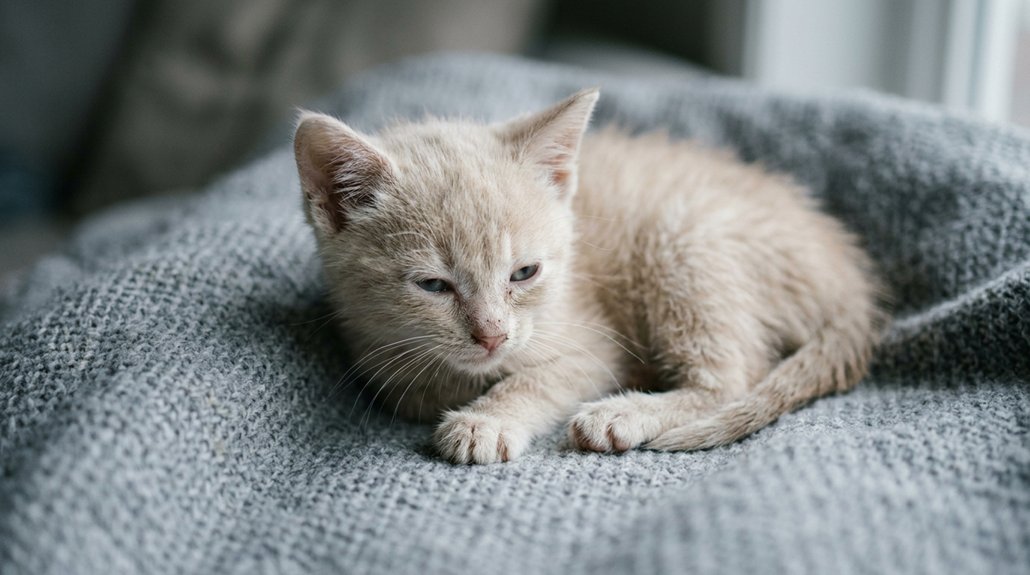
If your kitten suddenly refuses food or water for over 24 hours, becomes excessively lethargic, or shows signs like respiratory distress, nasal discharge, or digestive issues, it might be ill. Watch for abnormal behavior such as hiding or aggression, and physical symptoms like red eyes or greasy fur. Pay attention to litter box habits, as changes can indicate health problems. Quick intervention is vital, and gaining further insights into these signs will aid your kitten’s recovery.
Key Takeaways
- Sudden refusal to eat or drink for over 24 hours indicates a potential health issue.
- Social withdrawal or unusual aggression can signal discomfort or illness in kittens.
- Monitor for physical symptoms like nasal discharge, eye redness, or excessive itching.
- Vomiting, diarrhea, or straining to urinate are urgent signs needing veterinary evaluation.
- Ensure regular grooming and skin assessments to identify health issues early.
Identifying Initial Signs of Kitten Sickness
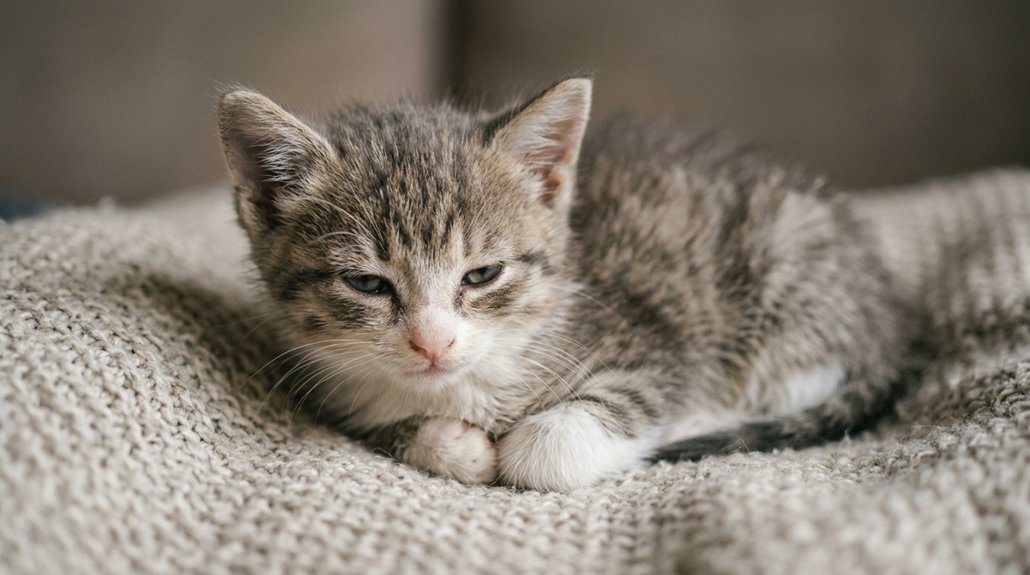
When you’re caring for a kitten, recognizing the early signs of sickness is crucial, as these signs can often be subtle. Pay close attention to subtle signals like a sudden refusal to eat or drink, especially if it’s been over 24 hours. This represents an early warning of potential conditions like hepatic lipidosis, necessitating immediate veterinary care. Additionally, monitor their litter box habits meticulously; straining or producing scant amounts of urine can be an early indicator of a urinary blockage or infection. Be vigilant for physical symptoms such as nasal discharge, squinting, or excessive itching. Changes in grooming habits can also be telling. By understanding these early warnings, you can guarantee your kitten receives timely intervention and care.
Behavioral Changes That May Signal Illness
Detecting subtle behavioral changes in your kitten can reveal essential clues to their health status. Social withdrawal, such as a normally interactive kitten suddenly avoiding contact, may indicate discomfort or illness. Unusual aggression or drastic reactions to benign stimuli suggest underlying distress or pain. Excessive hiding, beyond typical playful seclusion, is often a defense mechanism when they’re unwell. Clingy behavior, where your kitten becomes excessively attached or needy, could signal anxiety linked to illness. A marked decrease in playfulness or lack of curiosity might reflect lethargy or malaise. Altered vocalization, such as increased meowing or silence, can indicate discomfort. Each shift in behavior warrants vigilant observation and possible veterinary consultation to guarantee your kitten remains healthy and happy.
Physical Symptoms to Monitor
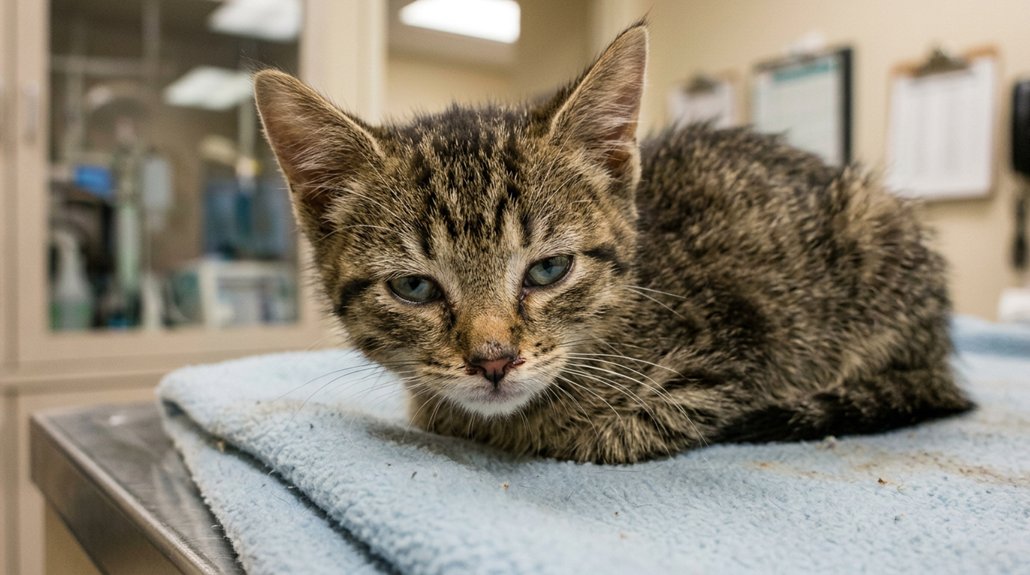
As you monitor your kitten’s health, pay close attention to eye health concerns such as discharge, redness, or squinting, which can indicate underlying conditions. Regularly assess your kitten’s weight by gently feeling their ribs and spine for any subtle changes that could signify abnormal weight loss. Additionally, observe their coat and skin condition; a greasy or matted coat can be a sign of poor grooming habits linked to illness or discomfort.
Eye Health Concerns
Spotting the early signs of eye health concerns in your kitten requires careful attention to physical symptoms. Look for eye discharge as a potential indicator of conjunctivitis or underlying infections. Conjunctivitis treatment is essential to address symptoms like excessive eye rubbing and squinting. Persistent discharge may signify a viral or bacterial infection; prompt veterinary evaluation can prevent progression. Observe for redness or swelling around the eyelids which could suggest inflammation needing timely intervention. Be alert to changes in eye appearance, such as cloudiness or dilated pupils, as these may indicate more serious health issues, requiring immediate care. Monitoring these symptoms closely guarantees early detection and effective management, safeguarding your kitten’s ocular health.
Abnormal Weight Changes
In addition to maintaining ocular health, observing your kitten’s weight closely can offer critical insights into their overall well-being. Weight monitoring is essential, as sudden weight loss might indicate serious health issues like infections or cancer, while unexpected gains could lead to obesity risks and diabetes. Be vigilant—frequent weight checks can reveal subtle changes that might otherwise go unnoticed.
| Weight Pattern | Potential Concerns |
|---|---|
| Sudden loss | Infection, cancer |
| Excessive gain | Diabetes, obesity risks |
| Fluctuations | Check for ribs and spine |
| Stable | Normal growth |
| 10%+ change | Prompt veterinary consult |
Feeling your kitten’s ribs and spine can help detect deviations before they become serious. Confirm that regular veterinary assessments are part of your routine, fostering a healthy growth trajectory.
Coat and Skin Condition
Monitoring your kitten’s coat and skin condition is essential for identifying potential health concerns early. A greasy or matted coat may reveal poor grooming habits, often signifying underlying health issues. Keep an eye out for excessive flaking or altered skin texture; these changes might indicate dehydration or other illnesses, warranting veterinary evaluation. Additionally, observe for dullness in coat shine, as it can point to nutritional deficiencies or more severe health problems. Skin changes like redness, bald patches, or persistent itching could suggest allergies or infections requiring prompt veterinary intervention. Regularly assess skin elasticity with the tenting test to evaluate hydration; decreased elasticity may signal dehydration. Early detection through these observations can guarantee your kitten receives timely medical care.
Digestive and Eating Issues
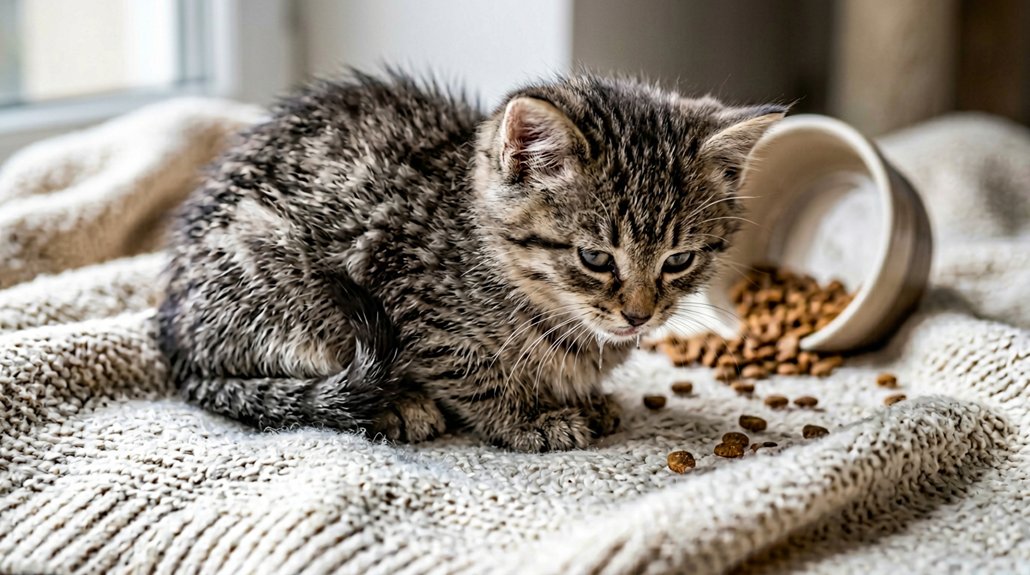
Noticeable changes in your kitten’s dietary habits, such as refusal to eat or sudden anorexia, could indicate serious underlying health issues and should prompt immediate veterinary evaluation. Keep an eye out for abnormalities like diarrhea or vomiting, as these digestive disruptions can quickly lead to dehydration and necessitate urgent care. Monitoring your kitten’s weight and litter box behavior regularly will help identify potential issues with nutrient absorption or gastrointestinal health.
Dietary Changes Impact Health
When introducing new foods to your kitten, it’s important to proceed cautiously, as sudden dietary changes can trigger digestive issues like vomiting or diarrhea. A rapid switch may overwhelm their system, leading to food intolerance or nutrient imbalance. Regularly monitor the stool for any signs of inconsistency—mushy or irregular stools can indicate digestive distress or indicate an underlying illness. Confirm your kitten’s diet is specifically formulated for their growth, as improper nutrient ratios, particularly of calcium and DHA, can negatively affect development. Avoid feeding adult cat or human foods, as these can disrupt their delicate digestive balance. Should your kitten cease eating for over 24 hours, seek veterinary attention promptly to prevent complications like dehydration or hepatic lipidosis.
Recognizing Appetite Variations
Appetite variations in kittens can serve as early indicators of potential health issues and warrant your attentive observation. Understanding appetite patterns and hunger cues is essential in maintaining your kitten’s health. A sudden decrease in appetite persisting beyond 24 hours can result in hepatic lipidosis, requiring urgent veterinary intervention. Conversely, an abrupt increase in appetite or thirst might signal endocrine disorders like diabetes or hyperthyroidism, necessitating a professional evaluation. Observing changes in litter box behavior, alongside stool quality, offers insights into gastrointestinal health. Monitor their normal eating patterns closely, as any persistent deviation could be symptomatic of illness. Sharing these observations with your veterinarian guarantees a thorough examination and aids in diagnosing and addressing underlying conditions promptly. Prioritize your kitten’s health by maintaining vigilance.
Addressing Digestive Concerns
Observing your kitten’s eating habits can reveal more than just preferences; it also provides essential insights into their digestive health. Pay close attention to stool monitoring, as changes in stool quality, including diarrhea or irregular consistency, necessitate professional veterinary evaluation. If your kitten stops eating for over 24 hours, seek immediate veterinary care due to potential hepatic lipidosis risks. A change in appetite could indicate digestive or other underlying health issues. Litter box habits, such as straining or excessive licking of the genital area, might signal urinary or digestive concerns. Additionally, signs of dehydration, such as vomiting, lethargy, and dry gums, should never be ignored, as they often correlate with digestive problems requiring veterinary intervention. Stay vigilant to guarantee your kitten’s wellness.
Severe Condition Signals
Should your kitten exhibit any severe condition signals, immediate action is essential. Recognizing respiratory distress, such as labored or open-mouth breathing, can save your kitten’s life. Dehydration signs, like lethargy and dry gums, are critical and necessitate prompt veterinary intervention. Furthermore, if your kitten stops eating for over 24 hours, don’t delay in seeking professional help.
Non-brown diarrhea or persistent vomiting may signal serious gastrointestinal issues and require an urgent vet visit. Seizures, collapse, or sudden unconsciousness are grave emergencies needing immediate assessment to pinpoint causes. Here’s a concise guide to assess urgency:
| Symptom | Recommended Action |
|---|---|
| Respiratory Distress | Emergency Vet Visit Immediately |
| Dehydration Signs | Prompt Veterinary Evaluation |
| Stopped Eating > 24 Hours | Urgent Veterinary Consultation |
| Seizures or Collapse | Immediate Emergency Evaluation |
Watch Out for These Common Kitten Illnesses
While it might be easy to mistake common kitten behavior for something benign, being vigilant can help identify illnesses before they become severe. In kitten healthcare, recognizing symptoms of Feline Distemper (FPV), which necessitates vaccination, is vital. This virus can rapidly progress if unnoticed. Intestinal parasites like hookworms and roundworms are prevalent, causing gastrointestinal distress. Regular deworming and veterinary checkups are essential to prevent complications. Upper respiratory infections from viruses like Feline Calicivirus (FCV) and Feline Viral Rhinotracheitis (FVR) manifest as nasal discharge and lethargy, highlighting vaccination importance. Feline Infectious Peritonitis (FIP) demands close observation, given its potential fatality. Finally, excessive itchiness may indicate flea infestations, potentially leading to broader health concerns if unaddressed.
Urgent Reasons to Visit the Vet
Spotting illness in your kitten early can often prevent severe outcomes. Recognize urgent symptoms needing immediate action to safeguard their health. If your kitten stops eating for more than 24 hours, seek immediate veterinary attention, as this can indicate hepatic lipidosis—a serious condition. Labored or open-mouth breathing requires urgent consultation to rule out severe respiratory distress. Don’t ignore signs like straining to urinate or frequent, unsuccessful litter box visits; these may signify a critical urinary blockage demanding emergency care. Severe vomiting and diarrhea, especially with lethargy or dehydration, also necessitate prompt intervention. In addition, noticeable behavior changes, such as excessive hiding or reduced sociability, might suggest underlying health issues. Take immediate steps to consult your veterinarian when these symptoms occur.
How to Keep Your Kitten Healthy
To guarantee your kitten’s ideal health and development, it’s essential to provide a complete and balanced diet rich in crucial nutrients like calcium and DHA. Adhering to nutritional guidelines guarantees peak bone health and brain development. Schedule regular veterinary checkups every six months, enabling early detection of health anomalies. Vaccinate promptly to safeguard against Feline Distemper, Calicivirus, and Leukemia Virus, mitigating severe health threats. Introduce new food textures gradually; observe stool quality to prevent dietary-related ailments like dehydration and low blood sugar. Emphasize playtime importance to foster physical activity, aiding muscle growth and cognitive function. While focusing on nutrition and routine healthcare, maintain external parasite control—critical in preventing parasitic infections that affect quality of life. Prioritize these aspects in nurturing a robust kitten.
Creating a Safe and Clean Environment for Kitten Wellness
Nurturing a thriving kitten extends beyond nutrition and medical care to encompass a well-maintained environment. Prioritize litter box hygiene by scooping daily and changing the litter weekly, promoting a clean space and aiding in health monitoring through waste inspection. Implement safe cleaning practices by utilizing non-toxic products, safeguarding your kitten from harmful chemicals that could induce illness. Guarantee a protected play area by removing potential hazards like small objects or toxic plants that could be ingested. Regular grooming is critical to avert matting and prevent skin conditions, while maintaining a well-ventilated, draft-free living area reduces respiratory risks and promotes wellness. These measures collectively foster a secure, healthy habitat for your kitten’s ideal growth and happiness.
Frequently Asked Questions
How Do Kittens Act When They Are Sick?
When your kitten is sick, you’ll notice increased lethargy, less purring behavior, and reduced playful engagement. Watch for matted fur and altered grooming. These lethargy signs mean veterinary care is critical to identify and address underlying health issues.
What Is the 3-3-3 Rule for Kittens?
Coincidentally, the 3-3-3 rule outlines a kitten’s behavior during acclimation. In this timeframe, observe health indicators like appetite and sociability. Your awareness guarantees timely identification of any irregularities, safeguarding your kitten’s health and emotional well-being.
What Is “I Love You” in Cat Language?
In feline communication, “I love you” manifests through slow blinking, soft purring, or gentle head bumps. These actions foster emotional bonds, signaling affection and contentment. You understand their language by reciprocating with calmness and gentle interaction.
How Can I Tell if My Kitten Is Unwell?
Wondering if your kitten’s unwell? Use a symptoms checklist: observe any sudden behavioral changes, appetite loss, or altered litter habits. Be empathetic—seek a vet visit if these persist. Early detection guarantees your kitten’s health is prioritized.
Conclusion
Just like a lighthouse guides ships through stormy waters, your attentive care can steer your kitten away from illness. Being mindful of behavioral changes, physical symptoms, and eating habits allows you to catch any issues early. Recognizing severe condition signals and common illnesses guarantees prompt action. Always prioritize creating a hygienic and safe environment, and remember, when in doubt, consult your vet. By doing so, you’re safeguarding your kitten’s journey to a healthy life.