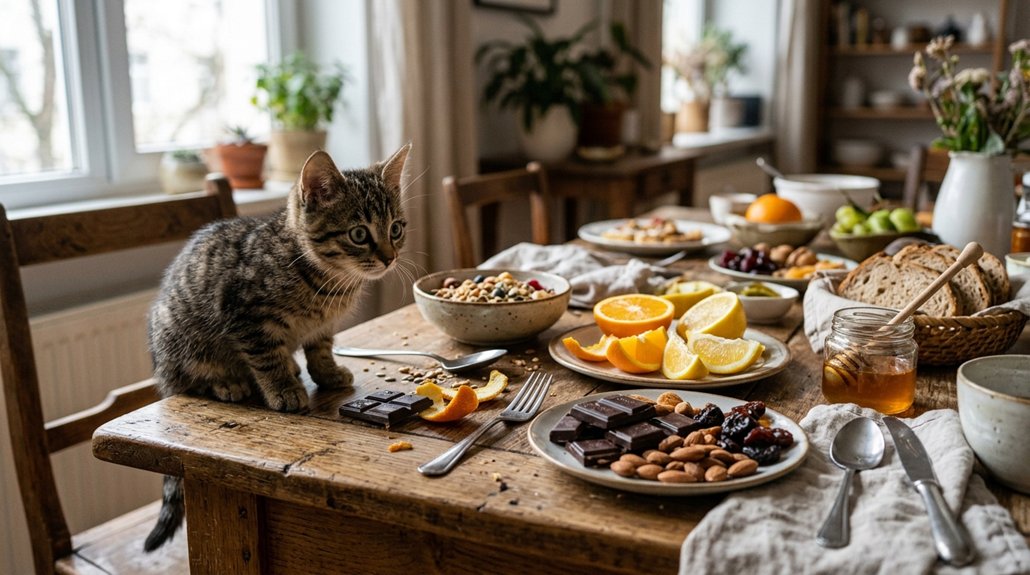
Kittens should never eat chocolate, caffeine, onions, garlic, grapes, raisins, alcohol, yeast dough, or raw fish, all of which can be toxic. Many are also lactose intolerant, reacting adversely to dairy. Macadamia nuts and fatty foods aren’t safe either, as they can cause digestive distress or pancreatitis. Prioritize a balanced diet with safe alternative treats like plain cooked chicken or commercial kitten treats. Exploring further will enhance your understanding of kitten dietary needs.
Key Takeaways
- Chocolate and caffeine can cause severe health issues like vomiting, hyperactivity, and seizures in kittens.
- Onions and garlic can lead to feline anemia and gastrointestinal irritation in kittens.
- Grapes and raisins may cause acute kidney failure, posing a serious threat to kittens.
- Alcohol and yeast dough can result in life-threatening toxicity, requiring immediate veterinary care.
- Macadamia nuts and high-fat foods can cause weakness, hyperthermia, and pancreatitis in kittens.
Which Human Foods Are Dangerous for Kittens?
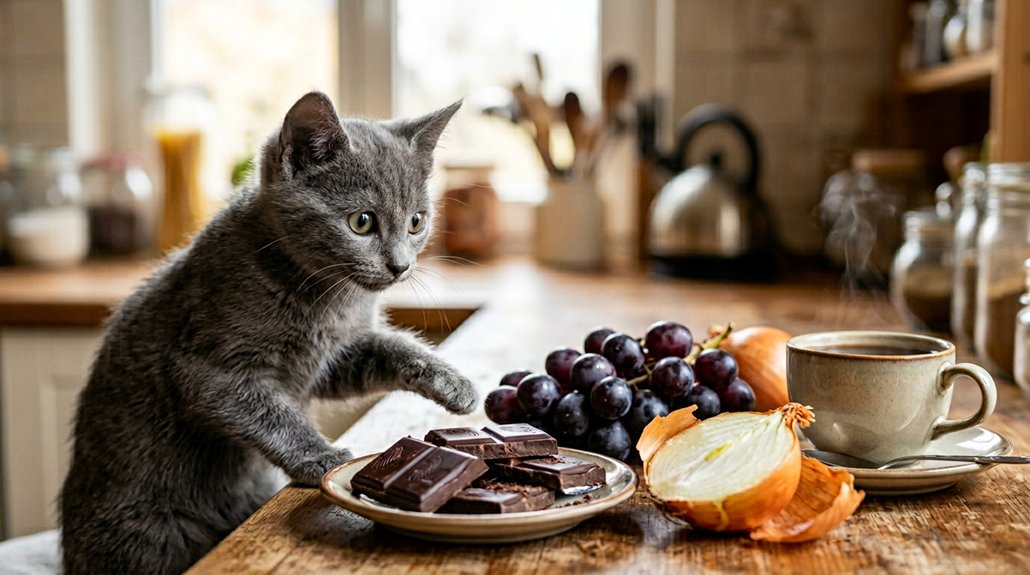
Why are some human foods so dangerous for kittens? It comes down to specific compounds that harm a kitten’s delicate systems. Kitten food safety is vital as certain human food risks come from ingredients like chocolate and caffeine, which contain methylxanthines. These compounds can induce vomiting, tremors, and seizures. Onions, garlic, and chives also pose significant risks by damaging red blood cells, leading to anemia. You should avoid grapes and raisins entirely; they can cause acute kidney failure, posing a severe threat to small feline bodies. Even a tiny amount of alcohol is life-threatening, potentially resulting in liver and brain injury. Understanding these kitten food safety principles can help you avoid potentially fatal human food risks and guarantee your kitten’s well-being.
Why Dairy Causes Digestive Upset in Kittens
When considering your kitten’s diet, it’s important to understand that many kittens are lactose intolerant, which means they lack enough lactase enzyme to break down lactose in dairy. As a result, offering dairy can lead to distressing symptoms like vomiting and diarrhea, indicating gastrointestinal upset. Given the common sensitivity, it’s best to exclude dairy from their diet to promote their digestive health.
Lactose Intolerance in Kittens
Despite the common perception that cats love milk, kittens often struggle with lactose intolerance due to insufficient levels of the lactase enzyme required to digest lactose in dairy. This can lead to significant digestive upset and may affect kitten nutrition adversely. Rather than dairy, consider these prudent steps for maintaining excellent digestive health in your kitten:
- Introduce dairy alternatives: Goat milk or specially formulated lactose-free cat milk can be suitable choices.
- Monitor kitten’s response: Observing for any signs of discomfort can help you adjust dietary choices.
- Avoid regular dairy: Consistent exposure can exacerbate digestive issues, leading to chronic discomfort.
- Consult a veterinarian: Getting professional advice on suitable dietary plans guarantees balanced nutrition.
- Read product labels: Being diligent with ingredient lists prevents unintended lactose consumption.
Implementing these strategies fosters gentle digestion and overall wellness.
Symptoms of Dairy Consumption
Have you ever wondered why kittens often experience digestive issues after consuming dairy? Many kittens are lactose intolerant due to insufficient lactase enzyme production, making them unable to effectively digest the lactose in dairy. This leads to gastrointestinal upset, with common dairy symptoms like vomiting and diarrhea. The severity of these symptoms can vary depending on each kitten’s sensitivity. Long-term consumption exacerbates these digestive issues, causing chronic problems. To prevent such adverse effects, it’s recommended to avoid feeding dairy products to kittens.
| Dairy Symptoms | Causes | Prevention |
|---|---|---|
| Vomiting | Insufficient lactase | Avoid dairy products |
| Diarrhea | Lactose intolerance | Monitor diet carefully |
| Chronic upset | Recurring dairy intake | Provide alternative foods |
Understanding these effects reinforces the need for tailored dietary choices.
How Grapes and Raisins Can Harm Kittens
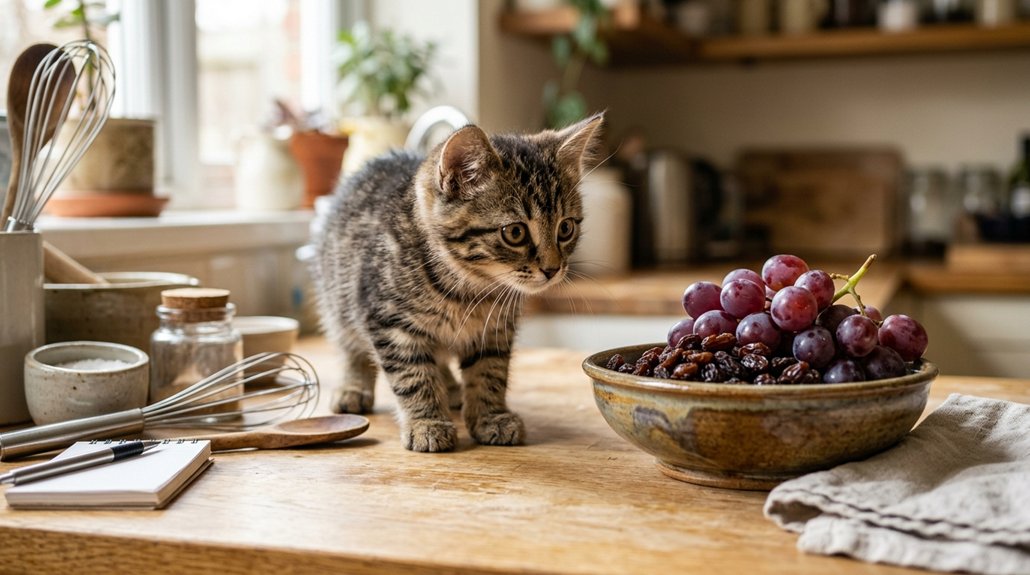
Acute kidney failure is a serious risk for kittens who ingest grapes or raisins, highlighting the importance of keeping these fruits far from their reach. Though grape toxicity is more commonly reported in dogs, kittens can suffer severe consequences too. The unpredictability of raisin hazards is alarming, as even small quantities can be detrimental. If your kitten consumes grapes or raisins, watch for warning signs:
Grape and raisin ingestion poses acute kidney failure risks for kittens, making vigilance and prevention crucial.
- Vomiting or diarrhea
- Lethargy and weakness
- Decreased appetite
- Abdominal pain
- Sudden changes in urination
Importantly, there’s no established safe threshold, meaning any exposure can be dangerous. Toxic reactions might develop without previous exposure, underscoring the need for vigilance. Always guarantee grapes and raisins are out of your kitten’s environment to avoid health crises.
Why Chocolate and Caffeine Are Major Threats to Kittens
You’ll be surprised to learn that both chocolate and caffeine contain compounds that can be extremely harmful to kittens. Chocolate contains theobromine, a toxic stimulant that can lead to severe health issues like heart problems and muscle tremors, particularly in its dark and unsweetened forms. Additionally, caffeine found in everyday beverages can cause restlessness and rapid breathing, making it essential to keep these substances completely out of reach.
Toxic Ingredients in Chocolate
When considering the dietary safety of your kitten, understanding the toxic ingredients in chocolate is vital. Theobromine toxicity poses a significant threat due to its harmful effects on kittens’ health. This toxic stimulant can cause severe problems, including heart complications and seizures. It’s important to recognize chocolate symptoms to guarantee prompt action. Kittens ingesting chocolate may exhibit:
- Vomiting and diarrhea, disrupting their digestive system.
- Hyperactivity and tremors, indicating overstimulation.
- Seizures, a potentially life-threatening condition.
- Severe heart issues, jeopardizing their tiny hearts.
- Fatal complications, underscoring the importance of vigilance.
Dark and baking chocolate contain higher concentrations of methylxanthines, increasing the risk factor. Even minimal amounts can be perilous, making it essential to keep all forms of chocolate out of your kitten’s reach.
Caffeine’s Impact on Health
Although tempting to share your morning coffee or tea with your kitten, it’s critical to understand the severe implications caffeine can have on their health. Caffeine sources like coffee, tea, and energy drinks contain methylxanthines, which are toxic to kittens. Their immature bodies struggle to process these substances, leading to symptoms such as hyperactivity, tremors, and seizures. Even small quantities can provoke restlessness, rapid breathing, and potential heart palpitations, jeopardizing kitten safety. Chocolate—especially dark and unsweetened varieties—also harbors methylxanthines, particularly theobromine, presenting significant risks. While white chocolate is less dangerous, vigilance is required. To guarantee kitten safety, it’s essential to keep all caffeinated items and chocolate entirely inaccessible, averting dangerous health emergencies due to accidental ingestion.
Safeguarding Kittens From Risks
Understanding why chocolate and caffeine are significant threats to kittens builds upon the dangers associated with methylxanthines. Chocolate contains theobromine, exceptionally toxic to kittens, causing heart issues, seizures, and tremors. Dark chocolate and unsweetened varieties pose higher risks due to their concentrated levels. Caffeine, another methylxanthine found in coffee, tea, and energy drinks, triggers symptoms like restlessness and severe agitation. They’re both perilous even in minor quantities, requiring immediate veterinary care upon ingestion. Prioritize kitten safety and poison prevention by keeping these items out of reach. Here’s how you can visualize the risks:
- Heart complications from chocolate ingestion
- Muscle tremors threatening your kitten
- Severe agitation from caffeine exposure
- Rapid breathing indicating distress
- Immediate veterinary intervention needed when ingested
How Onions and Garlic Harm Your Kitten
Even a small amount of onions or garlic can be harmful to your kitten, as they contain compounds that damage red blood cells, leading to feline anemia. The onion toxicity and garlic risks extend to causing gastrointestinal irritation, resulting in vomiting, diarrhea, and general discomfort. These symptoms might seem minor initially, but repeated exposure can lead to lethargy and decreased appetite, posing serious health concerns over time. It’s essential to recognize that all members of the onion family, including chives and shallots, are equally dangerous for kittens. They should be entirely avoided to prevent chronic health problems associated with regular consumption. Awareness of these foods’ impact is important for fostering a safe environment and ensuring your kitten’s long-term well-being.
Why You Should Avoid Feeding Tuna and Raw Fish to Kittens
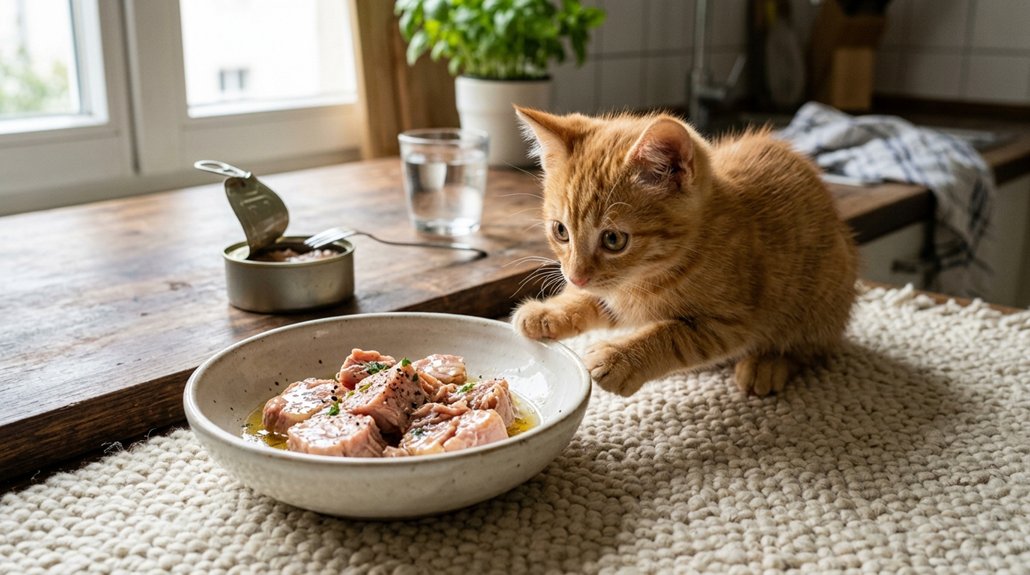
Just as onions and garlic are harmful to your kitten, so too is the regular feeding of tuna and raw fish. Tuna, although a tempting treat, can lead to mercury toxicity, affecting your kitten’s health. Additionally, raw fish carries the risk of salmonella and E. coli infections, which can be life-threatening.
Consider these risks:
- Thiaminase Enzyme: Raw fish contains thiaminase, which destroys critical vitamin B1.
- Mercury Concerns: High mercury levels in tuna can cause poisonings.
- Dietary Imbalance: Frequent feeding might create a distaste for nutritionally balanced kitten foods.
- Health Threats: Salmonella and E. coli can result in severe illness.
- Nutritional Deficiencies: Tuna lacks essential nutrients needed for growth.
Explore fish alternatives to guarantee your kitten receives a balanced diet.
Understanding the Dangers of Alcohol and Yeast Dough for Kittens
Kittens’ curiosity can lead them to dangerous substances, chief among them being alcohol and yeast dough. Alcohol toxicity is a serious threat; just a tablespoon can cause severe vomiting, diarrhea, and more, possibly leading to liver and brain damage. Yeast dough dangers are equally concerning. Once ingested, it can rise within a kitten’s digestive system, causing gas, bloating, or even a life-threatening stomach twist. Additionally, as the dough ferments, it produces alcohol, compounding the risk of alcohol toxicity. Immediate veterinary care is essential to address these risks, as symptoms can rapidly escalate.
| Substance | Potential Issues | Immediate action |
|---|---|---|
| Alcohol | Vomiting, liver injury | Seek veterinary care |
| Yeast Dough | Gas, stomach twisting | Veterinary intervention needed |
| Fermentation | Alcohol production | Heightened toxicity risk |
Stay vigilant about these dangers for your kitten’s safety.
Avoid Nuts and Fatty Foods for a Healthy Kitten
You should be aware that nuts, especially macadamia nuts, pose severe risks to kittens, resulting in symptoms like weakness and hyperthermia within just 12 hours. Furthermore, fatty foods, including oils and meats, can cause gastrointestinal distress, leading to vomiting and diarrhea. To prevent potential long-term health issues such as pancreatitis, it’s essential to maintain a balanced diet free of these harmful foods.
Macadamia Nut Dangers
Though often overlooked in feline care, understanding the risks associated with macadamia nuts is essential for your kitten’s health. While primarily observed in dogs, macadamia nut toxicity poses significant pet health risks to all animals, including kittens. Symptoms can manifest within 12 hours of ingestion and may include:
- Weakness
- Incoordination
- Hyperthermia
- Vomiting
- Tremors
Macadamia nuts are high in oils and fats, leading to potential gastrointestinal issues like vomiting and pancreatitis. Although recovery usually occurs within 24-72 hours with veterinary intervention, prevention is key. Avoid allowing your kitten access to these nuts entirely. Being informed and proactive helps safeguard your kitten’s well-being. Ascertain their diet is free from nuts and excessively fatty foods to maintain ideal health.
Risks of Fatty Foods
Addressing the hazards of macadamia nuts highlights the broader issue of high-fat foods and their effects on kitten health. Fatty food effects can be detrimental, leading to digestive issues such as vomiting and diarrhea. These symptoms indicate disrupted digestive health, which can cause severe long-term complications. Additionally, high-fat diets pose the risk of pancreatitis, a serious condition necessitating veterinary care. Kittens are particularly vulnerable to the negative impacts of excessive fat, similar to how macadamia nuts affect dogs by causing weakness and other symptoms. It’s essential to avoid feeding your kitten any nuts and high-fat foods. Instead, opt for commercially formulated kitten food, explicitly crafted to meet their nutritional needs without the associated risks of fatty human foods.
Safe Treat Alternatives for Your Kitten
While ensuring your kitten’s diet is balanced, it’s important to contemplate safe treat alternatives that support their development. Homemade treats, such as small portions of unseasoned, cooked chicken, beef, and fish, provide suitable options devoid of harmful additives. Commercial options designed for kittens, like TEMPTATIONS™ treats, offer flavors such as Kitten Chicken and Dairy, ensuring they meet essential nutritional requirements.
Consider the following safe alternatives:
- Homemade treats using small amounts of cooked, plain meats.
- TEMPTATIONS™ Kitten Chicken treats as tasty, commercially formulated options.
- Dairy-flavored commercial treats, fitting for kittens’ palates.
- Cooked fish, sparingly offered and free of seasoning.
- Cooked beef, ensuring it’s plain and additive-free.
Keeping Your Kitten’s Diet Nutritious and Safe
Confirming your kitten’s diet is nutritious and safe involves understanding both what foods to include and, importantly, which to avoid. Safe feeding is paramount for kitten nutrition. Onions and garlic can cause anemia and gastrointestinal irritation, severely affecting their wellbeing. Chocolate and caffeine are toxic, with potential side effects like vomiting and seizures. Grapes and raisins pose a risk of kidney damage, so keep them inaccessible. Many kittens struggle with lactose; consequently, dairy products could lead to digestive upset and diarrhea. Additionally, avoid fat trimmings and raw meats; these may cause gastrointestinal distress and expose kittens to harmful pathogens such as Salmonella and E. coli. Prioritize a balanced, commercial kitten diet to guarantee a foundation of health and safety.
Frequently Asked Questions
What Is the 3-3-3 Rule for Kittens?
The 3-3-3 rule guides you in understanding a kitten’s adjustment period: three days to settle, three weeks to show its personality, and three months to feel at home. Prioritize kitten nutrition and offer only safe treats.
How Do Cats Say Goodbye?
How do cats communicate goodbye? Through feline behavior changes, your cat may become more vocal or seek increased affection. Their instinctive communication, like rubbing against you or altered litter box habits, signifies emotional shifts they sense around them.
What Is a Silent Killer for Cats?
A silent killer for cats, toxic plants like lilies can cause kidney failure. They’re hidden dangers in homes. Even minimal exposure is harmful. Avoid keeping these plants around as part of responsible pet care.
Where Should a Kitten Sleep on the First Night?
Think of the kitten’s bed as a nest for a delicate bird. It should include soft kitten bedding in a quiet, warm, draft-free environment. Make certain the sleep environment promotes security, preventing stress during this change.
Conclusion
To guarantee your kitten stays healthy, it’s vital to avoid harmful foods like chocolate, onions, and dairy. Surprisingly, 60% of household pets suffer from dietary-related issues due to accidental ingestion of these items. By understanding these hazards, you can protect your kitten’s well-being. Opt for specialized kitten treats as safe alternatives, making certain their diet is both nutritious and appropriate. Your diligence in avoiding these harmful substances will set a solid foundation for your kitten’s vibrant and healthy life.