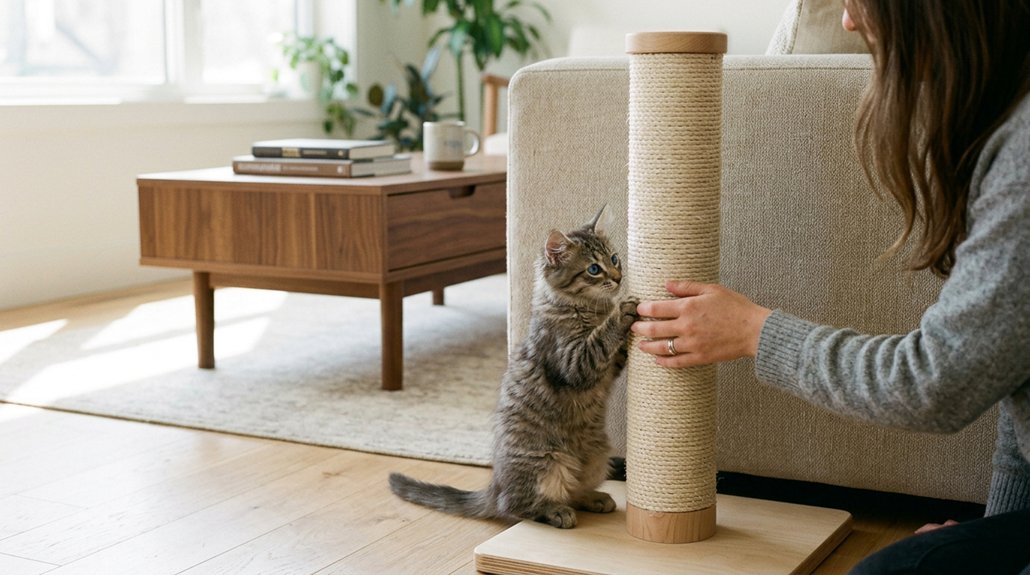
To train your kitten not to scratch furniture, cater to their natural instincts with suitable outlets. Choose stable, tall scratching posts with varied materials like sisal or carpet. Position them strategically near play areas and tempting spots. Reinforce correct behavior with treats and praise, gradually shifting to verbal commendations. Regular claw trimming prevents damage, while environmental enrichment and interactive play reduce unwanted scratching. For persistent issues, professional advice is suggested. Discover strategies to maintain a scratch-free home.
Key Takeaways
- Provide multiple scratching posts with varied materials near tempting furniture to redirect scratching behavior.
- Use positive reinforcement by rewarding the kitten with treats and praise for using appropriate scratching surfaces.
- Regularly trim the kitten’s claws to minimize damage and ensure comfortable use of scratching posts.
- Apply deterrents like double-sided tape on furniture to make it less appealing for scratching.
- Engage the kitten in interactive play to channel energy and encourage the use of designated scratching zones.
How Scratching Helps Kittens and How to Direct It
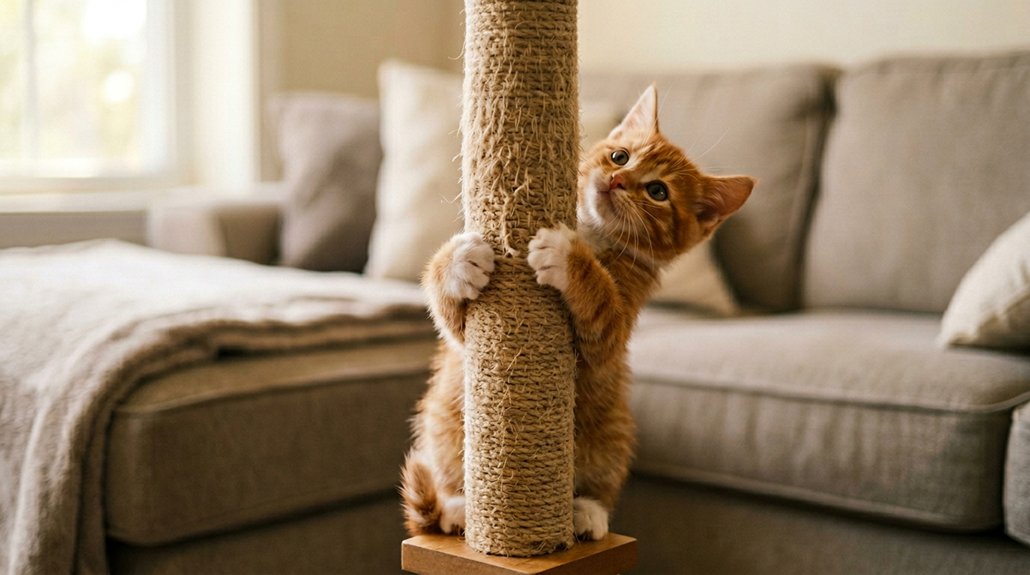
Scratching is a vital behavior for kittens, essential for exercising their muscles, stretching their bodies, and maintaining claw health as they develop. It’s an instinctual action that serves multiple scratching benefits, including territory marking via scent glands in their paws. Understanding these behaviors is a core aspect of kitten essentials, allowing you to direct their energy positively and mitigate damage potential. Introduce diverse scratching surfaces like sisal or carpet to cater to their preferences, honing their innate desire to scratch. By engaging your kitten in regular play, you can help redirect excessive energy away from unintended targets like furniture. Combine this with positive reinforcement—such as treats or praise—to reinforce appropriate use of designated scratching areas, ensuring continued desirable behavior.
Choosing the Best Scratching Posts for Your Kitten
Selecting the right scratching post for your kitten is vital for their development and well-being. Factors like scratching post features and kitten texture preferences play significant roles in encouraging the desired behavior. Opt for posts at least 24 inches tall to satisfy natural stretching instincts. Providing a variety of materials—sisal, cardboard, and carpet—allows you to identify what your kitten prefers for effective scratching. Verify stability, as a sturdy post prevents tipping during active play.
Choose a stable, 24-inch scratching post with sisal, cardboard, or carpet to promote healthy kitten scratching behavior.
Here’s what to look for in a scratching post:
- Minimum height of 24 inches
- Made from sisal, cardboard, or carpet
- Sturdy and stable construction
- Placement in high-traffic play areas
- Inclusion of catnip or hanging toys
Position these strategically to redirect unwanted behavior and promote healthy claw maintenance.
Crafting Scratch-Friendly Zones in Your Home
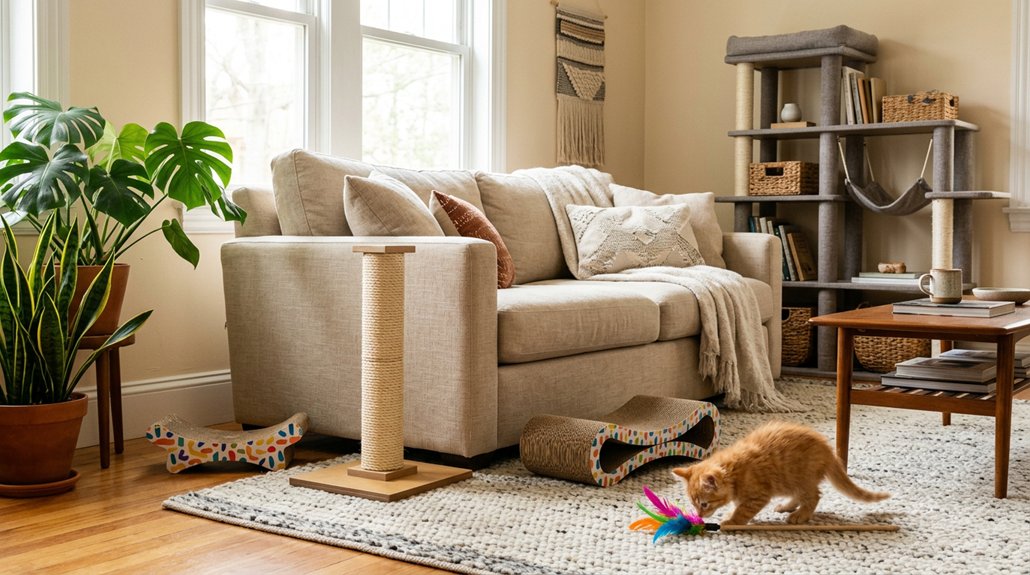
To effectively train your kitten, position scratching posts near their favored furniture and play areas to guide their scratching behavior appropriately. It’s essential to provide a variety of textures—such as sisal, cardboard, and carpet—to cater to your kitten’s preferences and maintain their interest. Regularly evaluate the positioning and materials of these scratching zones to adapt to your kitten’s evolving needs and guarantee ongoing behavioral reinforcement.
Optimal Post Placement
When you’re creating scratch-friendly zones for your kitten, start by considering how strategic placement can greatly influence their behavior. Effective post positioning is critical. By placing scratching posts in high-traffic areas and near furniture your kitten often targets, you redirect their scratching instinct.
- High-Traffic Placement: Position posts where your kitten often plays or rests.
- Near Temptation Zones: Place posts next to sofas or curtains, offering attractive alternatives.
- Vertical Reach: Confirm posts are tall enough (at least 30 inches) for a full stretch.
- Varied Locations: Distribute posts across different rooms to cater to your kitten’s roaming nature.
- Continuous Assessment: Regularly evaluate post placements and adjust as your kitten’s preferences evolve.
This strategic post positioning curtails unwanted furniture scratching while aligning with natural kitten behavior.
Material Variety Matters
Diverse materials are essential when crafting scratch-friendly zones for your kitten. Provide a variety of scratching surfaces to cater to their texture preferences—integrate sisal rope, cardboard, carpet, and wood. Each material meets different natural instincts and keeps engagement high. Scratching posts should be placed at various heights and angles, such as vertical, horizontal, and slanted, accommodating your kitten’s exploratory behavior. Enhancements like catnip or hanging toys adjacent to these surfaces increase appeal, encouraging regular use. Stability is fundamental; make sure scratching posts are robust to support full stretches, critical for musculoskeletal health. Regular assessment and rotation of scratching zones maintain your kitten’s interest, deterring unwanted scratching habits on furniture and promoting harmony within your home’s environment.
Positive Reinforcement Strategies
To effectively train your kitten, utilize positive reinforcement by immediately rewarding desired scratching behavior with treats and praise. Guarantee a scratching post is conveniently placed near areas where the kitten is tempted to scratch furniture, guiding them towards the preferred behavior. Enhance the attractiveness of these alternatives by incorporating elements like catnip or interactive toys, making it easier for your kitten to explore and engage with appropriate scratching options.
Reward Desired Scratching Behavior
- Offer treats immediately post-scratch for effective reinforcement.
- Identify preferred scratching surfaces and reward usage.
- Utilize catnip and toys as supplementary attractions.
- Maintain consistent reward techniques for ideal learning.
- Shift gradually from treats, sustaining verbal praise.
Consistency and an understanding of your kitten’s preferences are key to successful training.
Encourage Exploration of Alternatives
Encouraging your kitten to explore alternative scratching options is essential for maintaining your furniture’s integrity. Utilizing positive reinforcement, you can guide their behavior by rewarding them with treats or praise when they choose a designated scratching post. To entice your kitten, incorporate exploring textures and enticing scents such as catnip sprinkled on the scratching surfaces.
| Element | Strategy |
|---|---|
| Textures | Provide varied, sturdy scratching posts |
| Scents | Sprinkle catnip on designated posts |
| Redirection | Redirect when caught scratching furniture |
| Engagement | Use toys to divert excess energy |
Stop Your Kitten From Scratching Where It Shouldn’t
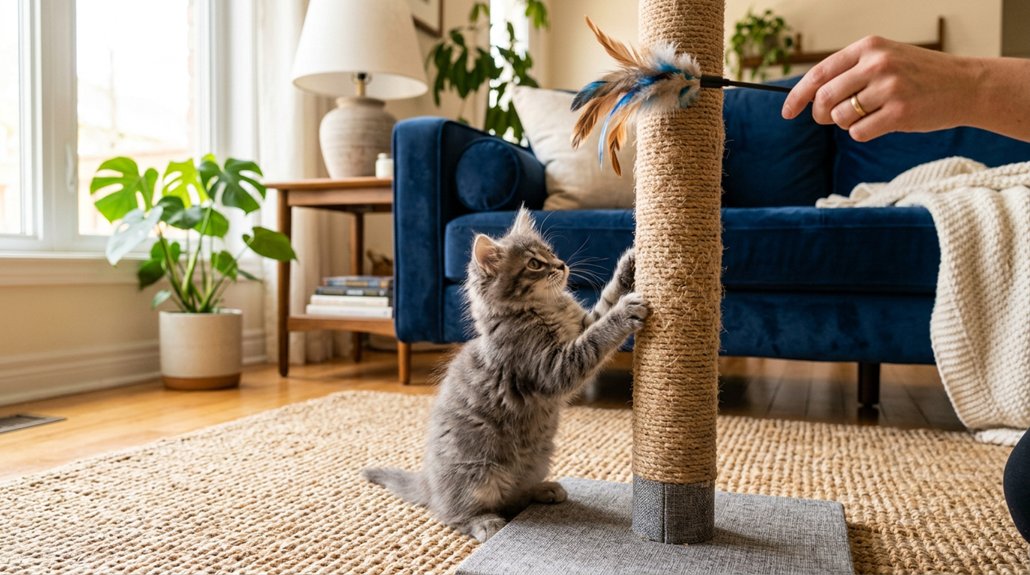
Scratching is a natural behavior for kittens, but it can lead to unwanted damage if not properly redirected. You must understand their need for scratching alternatives to protect your furniture. Position scratching posts strategically near vulnerable areas, guiding your kitten to appropriate surfaces. Utilize double-sided tape on furniture, as the sticky sensation deters further contact. Regular claw trimming is essential in minimizing potential damage and complements efforts in redirecting their focus.
To reinforce ideal behaviors, offer your kitten rewards when they use the correct spots. Consistently applying these methods helps integrate good habits into your kitten’s routine.
- Position scratching posts near furniture
- Apply double-sided tape to undesirable scratching areas
- Trim your kitten’s claws regularly
- Reward usage of scratching posts
- Reinforce positive practices
Playtime: Reducing Scratching Through Interactive Fun
Engaging your kitten in interactive playtime is vital for channeling their natural energy and reducing the impulse to scratch furniture. Interactive toys that mimic prey movements tap into kitten instincts, offering a constructive outlet for their hunting behavior. Using feather wands and balls can effectively divert attention from furniture. Incorporate these play sessions into your daily routine to not only provide physical exercise but strengthen your bond with your kitten and reinforce desirable behaviors.
Address your kitten’s instinctual needs with toys that dispense treats, which reward successful hunting. By satisfying these instincts, you decrease frustration that often leads to destructive scratching. This approach utilizes positive reinforcement, teaching your kitten to associate play with rewards rather than resorting to damaging household items. Regular, engaging play is significant for this behavioral adjustment.
Regular Claw Care for Less Damage
Maintaining your kitten’s claws in ideal condition with regular trimming, ideally every 2-4 weeks, is essential to minimizing damage to household surfaces. Utilize sharp, cat-specific nail trimmers for clean cuts, reducing discomfort and preventing snagging that can lead to fabric destruction. Introduce this process gradually, guaranteeing a positive experience and reinforcing with treats post-trim. Additionally, nail caps offer a temporary, non-intrusive method to protect surfaces while training and claw care continue.
- Trim claws every 2-4 weeks to prevent fraying and damage.
- Use cat-specific nail trimmers for effective results.
- Introduce claw trimming gradually to guarantee kitten comfort.
- Reinforce with treats to create positive associations.
- Consider nail caps as a protective measure against scratching damage.
Humane Alternatives to Declawing
While declawing might seem like a quick fix for preventing unwanted scratching, it’s important to understand the humane alternatives available. Declawing is more than trimming nails—it involves amputating the last bone in each toe, often leading to pain and long-term issues. Instead, consider vinyl caps, which fit over the claws, providing a pain-free solution. Regular nail trimming and humane training with positive reinforcement can guide your kitten’s natural behaviors effectively.
Here’s a comparison to help choose what’s best for your kitten:
| Alternative | Benefits | Drawbacks |
|---|---|---|
| Vinyl Caps | Safe, painless, covers claws | Needs regular replacement |
| Behavioral Training | Encourages natural behavior | Consistent effort required |
| Declawing | Eliminates destructive scratching | Painful, unethical |
Choose methods supporting your pet’s well-being.
Seeking Help for Persistent Scratching Issues
Sometimes, scratching issues seem never-ending despite trying various methods. If your kitten’s scratching behavior is persistent, consider a behavior assessment by consulting a Certified Applied Animal Behaviorist (CAAB or ACAAB). This can help identify stressors and develop customized strategies. For deeper insights, engage a board-certified veterinary behaviorist (Dip ACVB) to explore underlying issues.
Persistent scratching may require consultation with a CAAB or Dip ACVB to uncover stressors and underlying issues.
Key actions include:
- Monitoring for environmental stressors: Identify triggers like noise or other pets.
- Environmental enrichment: Enhance your kitten’s surroundings to satisfy natural behaviors.
- Journal keeping: Record scratching habits to facilitate accurate assessments.
- Humane deterrents: Employ them to discourage unwanted behavior.
- Update scratching surfaces: Adjust according to your kitten’s evolving preferences.
These steps, alongside professional guidance, can effectively address persistent scratching.
Frequently Asked Questions
How Do I Keep My Kitten From Scratching My Furniture?
Place sturdy scratching alternatives near the furniture for your kitten. Protect furniture with deterrents like double-sided tape. Reinforce usage of scratching posts with treats. Engage them in play and trim claws regularly to reduce damage.
Can I Redirect Scratching Behavior?
Yes, you can redirect scratching behavior by providing scratching alternatives that are appealing and strategically placed. Use positive reinforcement, such as treats and praise, to encourage your kitten to consistently choose these alternatives over your furniture.
What Is the 3-3-3 Rule for Kittens?
The 3-3-3 rule outlines a kitten’s behavioral adjustment: overwhelmed first three days, exploratory confidence by three weeks, and secure routine by three months. During each phase, provide environmental enrichment to support healthy kitten behavior development.
What Age Do Kittens Start Scratching Furniture?
Imagine your living room as a jungle gym for a tiny panther. Kittens begin scratching furniture around 8 weeks, driven by instinctual behavior and scratching reasons like marking territory and physical development, essential to their growth.
Conclusion
Training your kitten not to scratch your furniture is essential for preserving both sanity and style. By providing an endless sea of enticing scratch-friendly zones, employing positive reinforcement, and incorporating interactive play, you’ll transform your home into a veritable kitten sanctuary. As you commit to regular claw care and consider humane alternatives to declawing, you’ll foster a harmonious environment. Remember, if scratching persists, consult an expert to prevent turning your home into a shredded masterpiece.