
During your rescue cat’s first week, expect signs of anxiety like hiding and reduced appetite. Establish a cozy space with essentials, ensuring it’s safe and secure. Implement a consistent routine with regular feeding to build trust. Initially, allow access to one room for controlled exploration, expanding as comfort increases. Celebrate milestones like successful litter box use and improved appetite. Understanding these adjustments offers vital insights into fostering a harmonious shift into their new home.
Key Takeaways
- Provide a dedicated cozy, quiet space equipped with essentials for the cat’s initial adjustment period.
- Follow a consistent feeding routine to establish stability and reduce anxiety.
- Allow gradual exploration, starting with a single room, to build trust and comfort.
- Use positive reinforcement like treats and gentle praise to encourage desired behaviors.
- Watch for signs of stress like hiding or reduced appetite as part of the normal adjustment period.
Understanding Your Cat’s First Week Behavior
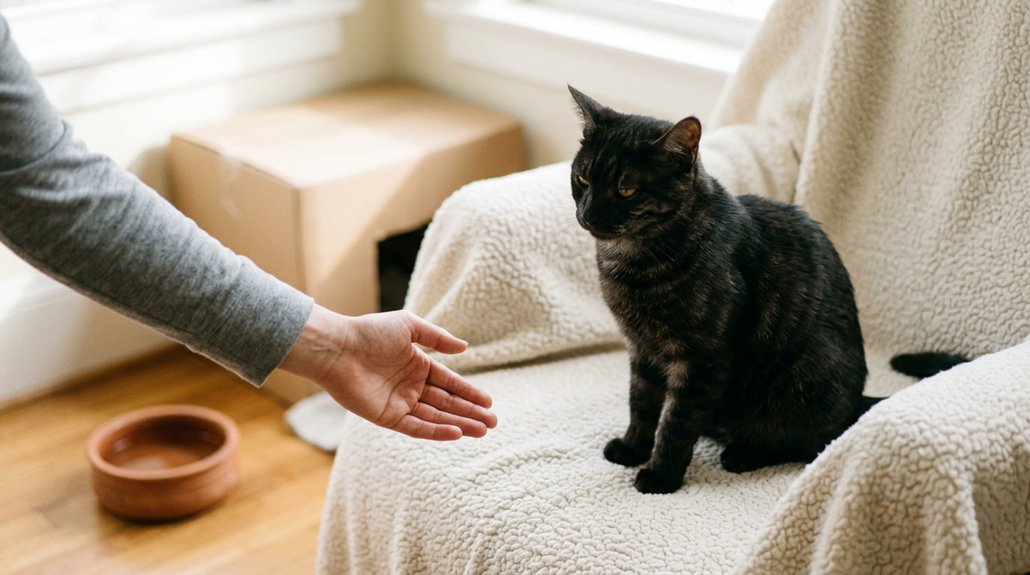
Although excitement may accompany bringing home a rescue cat, it’s essential to understand their behavior during the first week, which may differ markedly from later stages. Initially, your cat may demonstrate cat anxiety through behavioral signs like hiding, a reduced appetite, or avoiding interactions. These signs are normal as they adapt to new surroundings. Allow your cat to explore at their own speed, fostering a sense of control. The establishment of a consistent feeding routine is vital; it provides stability and eases anxiety. Expect timidity, following the “3–3–3 Rule,” illustrating gradual adjustment over time. Sitting nearby and softly speaking can encourage comfort and facilitate exploration. Patience is key in monitoring behavioral signs and supporting your cat’s change.
Setting Up a Cozy, Secure Space
Creating a cozy and secure space for your rescue cat is crucial for their adaptation and comfort. Start by preparing a quiet room or a cozy corner, offering a safe environment tailored to their needs. Equip this space with essentials: a litter box, food and water bowls, a comfortable bed, and a scratching post. Ensuring safety is imperative; keep doors closed and remove hazards like cords, small objects, and toxic plants. Creating hiding spots with boxes or blankets will allow your cat to feel secure and explore at their own pace. Maintain cleanliness and organization by designating specific areas for food, water, and litter. These measures will enhance your cat’s comfort, aiding in their seamless integration into your home.
Establishing a Routine to Build Trust
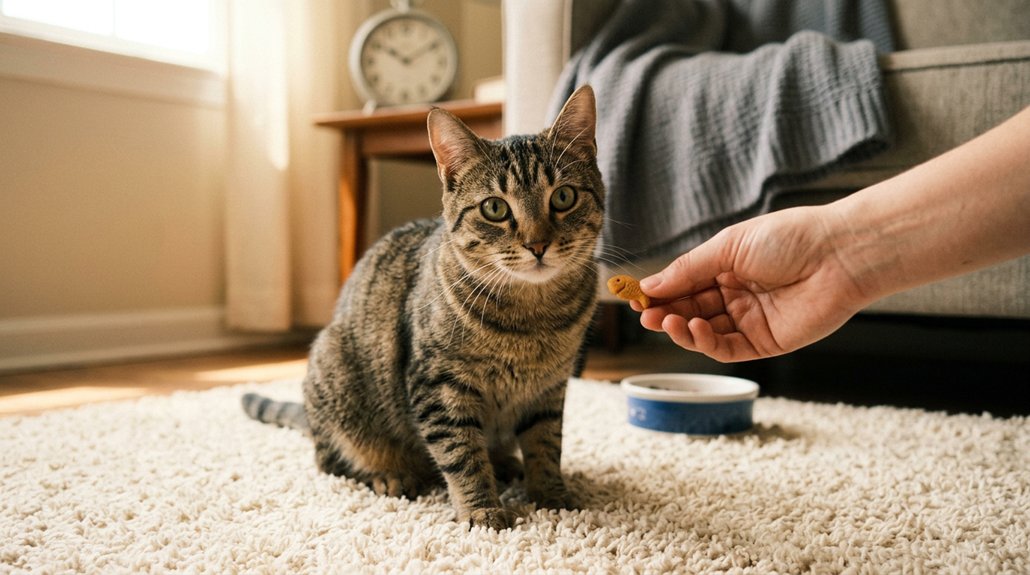
To help your rescue cat adjust effectively to its new environment, establishing a consistent daily routine is paramount. This involves focusing on structured activities to guarantee predictability and security. Here’s how you can manage it:
- Regular Feeding Times: Schedule consistent feeding to create stability.
- Structured Playtime: Engage your cat in interactive play to build trust.
- Gradual Introduction: Allow your cat to explore different areas gradually, fostering comfort.
- Positive Reinforcement: Use treats and gentle praise to encourage desired behaviors.
These elements not only facilitate a sense of security but also enhance the bonding process through positive reinforcement. Monitor your cat’s reactions closely, adjusting routines as necessary to maintain a stress-free environment. By diligently observing their comfort levels, you’ll foster a trusting relationship efficiently.
Helping Your Rescue Cat Explore Safely
Ensuring that your rescue cat explores their new environment safely is essential for their well-being. Start with a controlled exploration method by allowing your cat access to just one room. This safe space should house essentials: a litter box, food and water bowls, and cozy hiding spots. Gradually expand your cat’s territory as they grow more comfortable. Be vigilant for stress indicators—like hiding or disinterest in interaction—and offer retreat options when necessary. Vertical spaces such as cat trees or shelves can enhance security and foster exploratory behavior while your cat observes their environment. Incorporate interactive toys to engage your cat during this adjustment phase, balancing curiosity with their need for comfort, ensuring a gentle yet effective exploration process.
Celebrating Milestones in Your Cat’s Journey
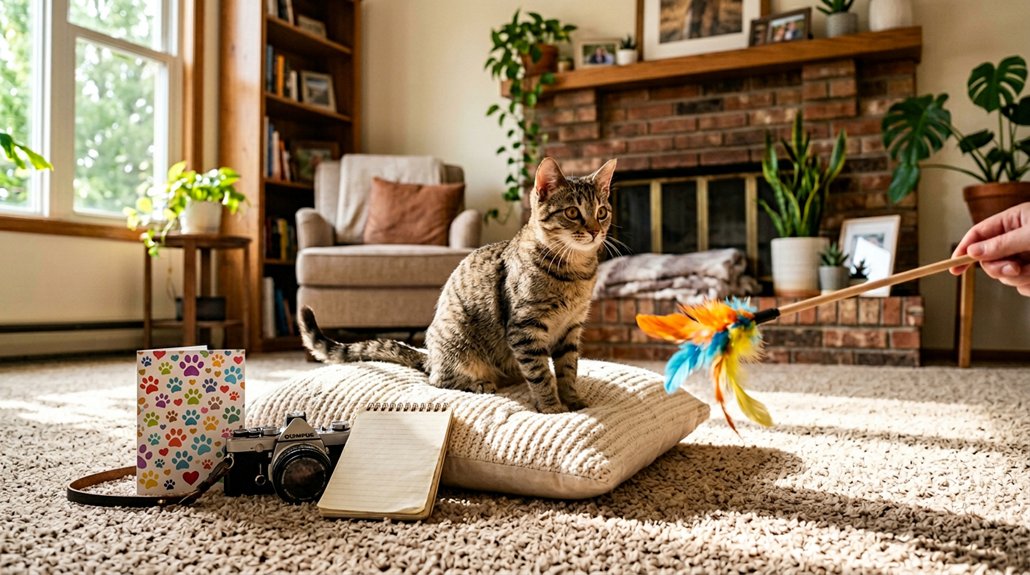
As your rescue cat starts to navigate its new environment, recognizing milestones can guide you in its adaptation process. Celebrate the first successful use of the litter box, signaling their comfort within the new surroundings. Observing when your cat ventures beyond its safe room—usually around days 4-7—marks a significant trust-building phase. These achievements reflect increasing confidence vital for their integration. Additionally, it’s important to monitor their eating and activity levels. A return to normal habits indicates adjustment maturity. Consider these key milestones:
- First litter box use: Confirms comfort.
- Exploration beyond safe room: Signals trust-building.
- Initiated play and interaction: Reveals growing confidence.
- Improved appetite and engagement: Signifies adjustment.
Documenting these helps you track progress and understand patience’s role.
Frequently Asked Questions
Where Should a Rescue Cat Sleep the First Night?
You’ll want your rescue cat to sleep in a designated safe space on the first night. Include comforting items like familiar blankets and guarantee the room’s quiet, hazard-free, and isolated to foster a secure acclimation process.
What Is “I Love You” in Cat Language?
In cat language, “I love you” manifests through slow-blinking, gentle purring, and head-butting, indicating affection. Feline vocalizations and cat body language, such as kneading, further reveal their comfort and happiness being around you.
What Is the 3 3 3 Rule for Rescue Cats?
The 3-3-3 rule outlines a structured adjustment timeline for rescue cats. Initially, expect behavior signs like hiding within three days. After three weeks, exploration increases, stabilizing by three months as their comfort and trust solidify.
What Are the Red Flags When Introducing Cats?
Red flags in cat introductions are anxiety signs like the calm before a storm. Watch for cat behavior: growling or hiding. Guarantee proper introduction techniques and space requirements, as rushing these can exacerbate stress or conflict.
Conclusion
In the initial week with your rescue cat, understanding their behaviors lays a foundation for a trusting relationship. Though you may fear they’ll never adjust, setting up a cozy, secure space helps ease their change. Establishing a routine builds trust, vital for a stable bond. Facilitate safe exploration to quench their curiosity without overwhelming them. Celebrate each milestone, no matter how small, as it marks progress in their journey towards feeling at home with you.