
During the first 24 hours with your new cat, establish a quiet sanctuary with essentials like a bed, bowls, and a litter tray. Allow the cat to leave the carrier at its own pace and minimize stress by limiting visitors. Observe behavior to gauge comfort, and offer familiar items to ease the adjustment. Be patient with any diminished appetite. Encouraging gradual exploration will be key to building a trusting relationship and preparing for further integration into your home.
Key Takeaways
- Create a sanctuary space with essentials like a cozy bed, food, water bowls, and a litter tray for initial comfort.
- Allow the cat to leave the carrier at its own pace to minimize stress and anxiety.
- Limit visitor access and provide quiet areas to help the cat feel secure and support acclimation.
- Monitor behaviors like hiding and vocalization to gauge comfort levels and emotional state.
- Maintain the new cat’s current diet to avoid gastrointestinal distress during the transition period.
Setting Up Your Cat’s Sanctuary Space
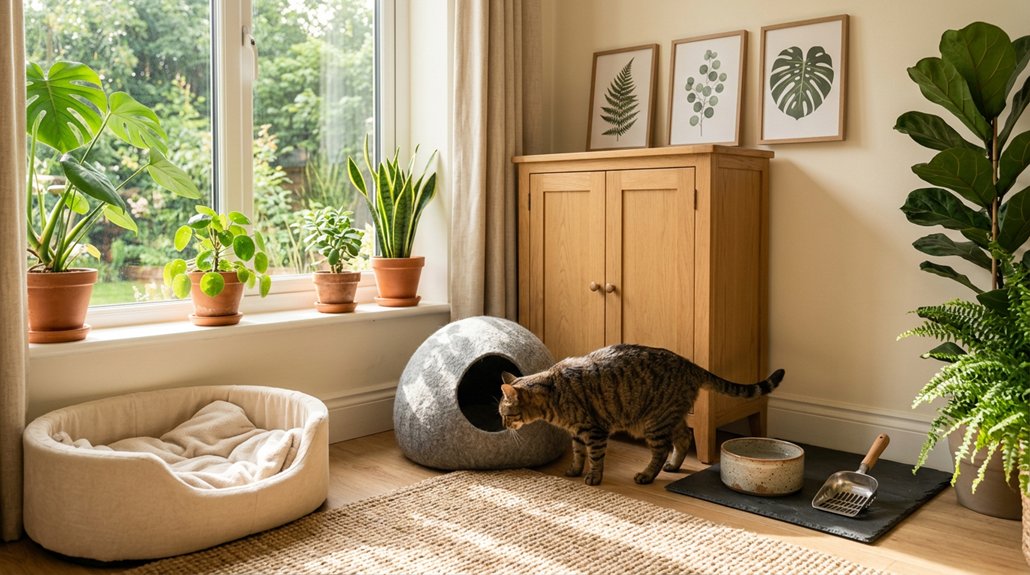
When bringing a new cat into your home, guaranteeing a smooth changeover is crucial; consequently, setting up a dedicated sanctuary space is essential. Start by selecting a quiet, secluded room to serve as the sanctuary. This space should be equipped with sanctuary essentials: a cozy bed, food and water bowls, and a litter tray to minimize stress. Include familiar items, like a blanket or toy from their previous home, to comfort your cat and establish a sense of security. Be meticulous in removing hazards—secure cords, eliminate small objects, and confirm the space is safe. Allow your cat to exit their carrier at their own pace, and provide ample hiding spots, such as cardboard boxes, to support their acclimation.
Strategies for Calming Stressed Cats
Integrating a new cat into your home can be challenging; however, effective strategies for calming a stressed feline are essential. Begin by allowing your cat to explore their environment leisurely. This alleviates anxiety and fosters a sense of security. A designated sanctuary room equipped with essentials—food, water, and a litter box—serves as a refuge and aids in stress relief.
To ease the adjustment:
| Strategy | Purpose | Benefit |
|---|---|---|
| Familiar Items | Comforting scents | Anxiety reduction |
| Positive Reinforcement | Trust-building | Calming environment |
| Accessible Water | Basic need | Appetite support |
Be patient if appetite diminishes, as it often occurs during stressful times. Use positive reinforcement like gentle encouragement to help the cat feel welcomed and secure. Providing familiar items comforts them, vital in reducing anxiety.
First 24 Hours: Introducing Your Cat to Their New Environment
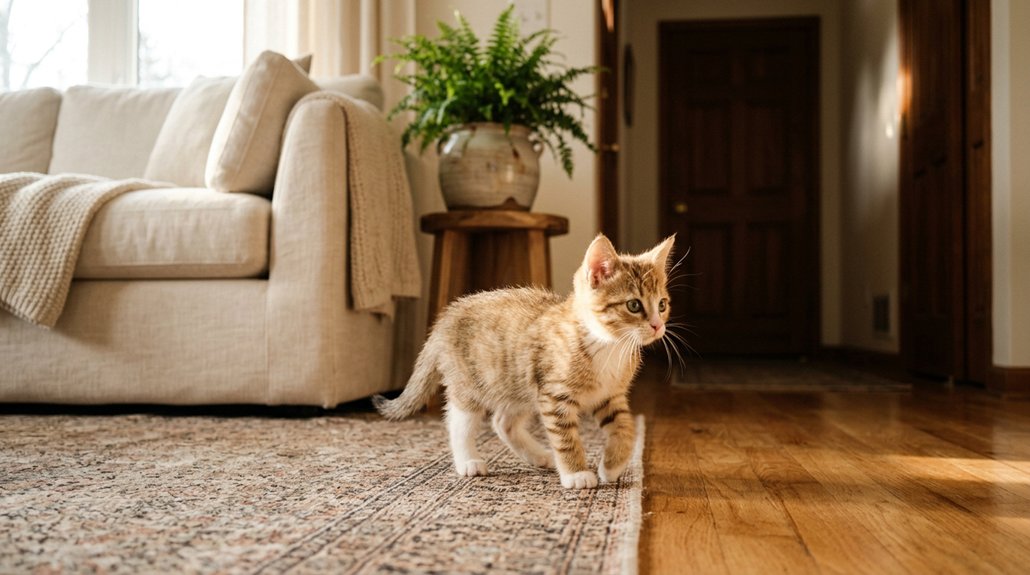
To guarantee a smooth change for your new cat, begin by creating a dedicated sanctuary space that includes essentials like food, water, a litter box, and a cozy bed. Encourage your cat to explore this area at their own pace by allowing them to leave the carrier voluntarily without pressure. This approach minimizes stress and promotes a sense of security, crucial for their acclimation to the new environment.
Creating a Sanctuary Space
As you introduce your new cat to their environment, it’s important to establish a quiet sanctuary space to minimize stress and facilitate a smooth shift. A well-thought-out sanctuary design is key to cat comfort. Designate a secluded room where you can control access, making sure it houses essential items: food, water, and a litter tray. To create familiar surroundings, include a comfortable cat bed or a blanket from their previous home.
Providing safe and secure options for retreat is essential:
- Hiding spots: Make certain boxes or covered areas are available.
- No disturbances: Limit visitor access, especially on the first night.
- Monitor behavior: Be patient as your cat adjusts, noting their comfort level.
Tailor the space with patience, letting them acclimate at their own pace.
Encouraging Safe Exploration
While providing a sanctuary is essential, encouraging safe exploration within the first 24 hours helps your cat adapt effectively to their new environment. Start by setting up a safe space containing food, water, and a litter box, enabling your cat to investigate independently. Exploration tips include situating familiar items—such as a blanket or toy from their previous home—to foster recognition and comfort. Observing your cat’s behavior is vital; look for signs like playful interaction or assertive exploration. Once your cat exhibits these behaviors, gradually expand their access to other areas while supervising closely. Use encouragement and occasional treats to reinforce positive associations and build trust. Avoid haste; let your cat explore at its own pace to minimize stress and anxiety.
Understanding Your Cat’s Behavior on Their First Night
During the first night with a new cat, understanding their behavior is essential for guaranteeing a smooth shift. You may notice hiding behaviors as your feline searches for secluded spots to feel secure, a common stress indicator in a new environment. Vocalization patterns, such as meowing or crying, could suggest they’re unsettled or seeking your comfort. It’s vital to monitor these expressions alongside stress indicators for signs of significant discomfort.
Monitor vocalizations and hiding as your new cat settles; these behaviors indicate how they’re adjusting to their environment.
- Consider providing a quiet, secure area where they can hide if they feel overwhelmed.
- Be patient and allow them to explore at their own pace, which helps acclimate them without added pressure.
- Make sure they have immediate access to food, water, and a litter box to ease their change and reduce anxiety.
Starting With Proper Nutrition for Your Cat

When you bring a new cat home, start by maintaining their current diet to minimize digestive issues and stress. Plan a gradual changeover over a week, incorporating increasing percentages of the new food to aid adaptation. Make sure constant access to fresh water, as consistent hydration is vital for their health during this period of adjustment.
Gradual Diet Transition
To guarantee a smooth adjustment for your new cat, begin by feeding them the same diet as they had at the shelter. This approach minimizes disruptions to their system and respects any pre-existing dietary preferences or food sensitivities. Alter their diet gradually over a week, starting with a mix of 25% new food to 75% old food. Adjust the proportions every few days, ultimately reaching 100% new food by the end of the week.
Monitor your cat’s response to these changes closely:
- Observe any signs of gastrointestinal upset: such as diarrhea or vomiting, which may indicate dietary intolerance or sensitivity.
- Track their overall eating habits: noting any significant changes in appetite.
- Limit treats during the alteration: maintaining nutritional balance is essential.
Ensuring Hydration Access
As you’ve been observing your cat’s dietary changes, it’s equally important to focus on their hydration needs. Providing access to fresh water is essential for your newly adopted cat’s health, as it aids in reducing stress and supports overall well-being. Place multiple water bowls in different areas of the designated room to cater to your cat’s water preferences and encourage exploration. Monitoring water intake is imperative, as anxiety can deter drinking. Consider utilizing a water fountain; many cats are naturally drawn to running water, enhancing their interest. Daily checks of water bowls for cleanliness and fresh water are key hydration tips, promoting healthy habits. Proper hydration access will guarantee that your cat feels secure and comfortable in its new home.
Litter Box Setup and Training Basics for New Cats
A well-prepared litter box is essential in ensuring seamless litter box training for your new feline friend. Start by selecting a quiet and easily accessible location to place the uncovered litter box. This choice encourages instinctual use. Prioritize litter box maintenance by scooping daily and fully cleaning it every two weeks using mild soap to prevent aversion due to strong odors. Cats are highly scent-sensitive, and a poorly maintained box can deter use.
Consider these key points:
- Daily scooping: Critical for cleanliness and avoiding training issues.
- Box location: Quiet, low-traffic areas are ideal for stress-free access.
- Cleaning products: Opt for unscented, mild soap to accommodate your cat’s sensitivity.
Patience is key; your new cat will likely use the box when they feel secure, often when you’re not nearby.
Bonding Tips for Your New Fur Friend
Your first day with a new cat is crucial for establishing a strong, trusting relationship. Start by letting your cat explore their sanctuary room freely, minimizing anxiety. Providing familiar items, like a blanket or a toy from their previous home, aids in their comfort and security. Incorporate trust building activities such as using treats strategically. This guarantees that interactions are positive experiences. Consider simple bonding games using interactive toys, which can strengthen your connection while engaging your cat’s curiosity.
Create a consistent routine for feeding and playtime; predictability fosters a secure adjustment to their new environment. Pay close attention to body language to gauge their comfort. Offering space when needed shows understanding and respect, which greatly enhances your relationship over time.
Know When to Consult a Vet for Health Concerns
When welcoming a new cat into your home, it’s imperative to stay vigilant for any signs that may necessitate veterinary attention. Various behavioral signs can indicate potential health concerns, so it’s essential to maintain clear veterinary communication. Monitor appetite; refusal to eat for over 24 hours could signal stress or illness. Look for:
- Lethargy or unusual grooming habits signifying possible underlying issues.
- Drastic changes in litter box habits, like increased urination, which require immediate veterinary advice.
- Signs of distress, such as excessive hiding or hissing, possibly indicating both anxiety and health problems.
If your cat exhibits increased aggression or withdrawal, consult a vet promptly to rule out health complications. Being proactive guarantees your cat’s well-being and quick adjustment to their new environment.
Creating a Long-term Care and Integration Plan
While preparing to integrate a new cat into your home, establishing a thorough care plan is essential to ensuring their smooth shift. Begin with integration strategies by setting up a sanctuary room equipped with food, water, a litter box, and a cozy bed. This secure space allows acclimatization at their own pace. Use familiar items like blankets or toys from their previous environment to reduce anxiety. Gradually introduce your cat to the rest of your home once they’ve settled. Monitor behavior closely during initial days, noting signs of stress, and provide reassurance. For long-term care, engage in consistent play and establish bonding routines, which address the cat’s physical and emotional needs while reinforcing a secure, trusting relationship.
Adjusting Feeding Schedules for a Happy Cat
Establishing a long-term care and integration plan gracefully flows into the next vital aspect of welcoming a new feline companion: adjusting feeding schedules for maximum feline contentment. Understanding feeding frequency and portion control becomes essential during this delicate phase. Begin by maintaining the shelter’s diet to prevent digestive upset. Gradually modify by mixing new food, starting with a 25% new to 75% old ratio over the first few days, increasing progressively. Always monitor eating habits, ensuring stress doesn’t deter appetite. Assess the cat’s health and behavior to determine feeding options—once daily, twice daily, or free-choice feeding.
- Continuous observation: Monitor for signs of digestive issues or stress.
- Incremental change: Prevents abrupt dietary adjustments.
- Behavioral consideration: Tailor feeding schedule for health optimization.
Frequently Asked Questions
How Can I Ensure My New Cat Feels Safe and Secure in Its Space?
You can guarantee a safe space by providing comfort items, like soft bedding and familiar scents, in a quiet room. Minimize noise, introduce gradual interactions, and maintain consistent routines to help your cat adjust and feel secure.
What Signs Indicate My Resident Cat Is Stressed About the Newcomer?
A watched pot never boils; observe your resident cat’s body language for stress signs like aggression or hiding. Respect boundaries by offering a gradual introduction to the newcomer to guarantee a smooth adjustment process. Stay vigilant.
How Long Should I Keep the New Cat Isolated From Resident Cats?
You should isolate the new cat from resident cats for a week, facilitating a gradual introduction. During this time, engage in scent swapping to familiarize them, ensuring a smooth changeover and minimizing stress for all pets involved.
What Toys Are Best for Engaging a New Cat in a Calm Environment?
“Slow and steady wins the race.” Opt for interactive toys that stimulate curiosity while ensuring a serene atmosphere. Incorporate ones infused with calming scents to ease anxiety; wand toys and puzzle feeders can effectively engage your cat in play.
How Do I Manage Work Commitments During the Cat’s First 24 Hours?
Adjust your work schedule by utilizing remote options, enabling flexibility. Prioritize tasks, guarantee time for observation, and plan breaks for interaction. If necessary, alert colleagues about potential distractions, ensuring professional obligations are balanced with your cat’s needs.
Conclusion
You’ve survived the first 24 hours with your new feline overlord—I mean, companion. Just remember, you’re in charge, except when it comes to food, playtime, nap time, and, well, everything else. As you continue this journey, rely on those squeaky toys and scratching posts to maintain your sanity. It’s all about balance, after all. But hey, if things get tricky, there’s always a cat-sized therapist just a vet visit away. Best of luck!