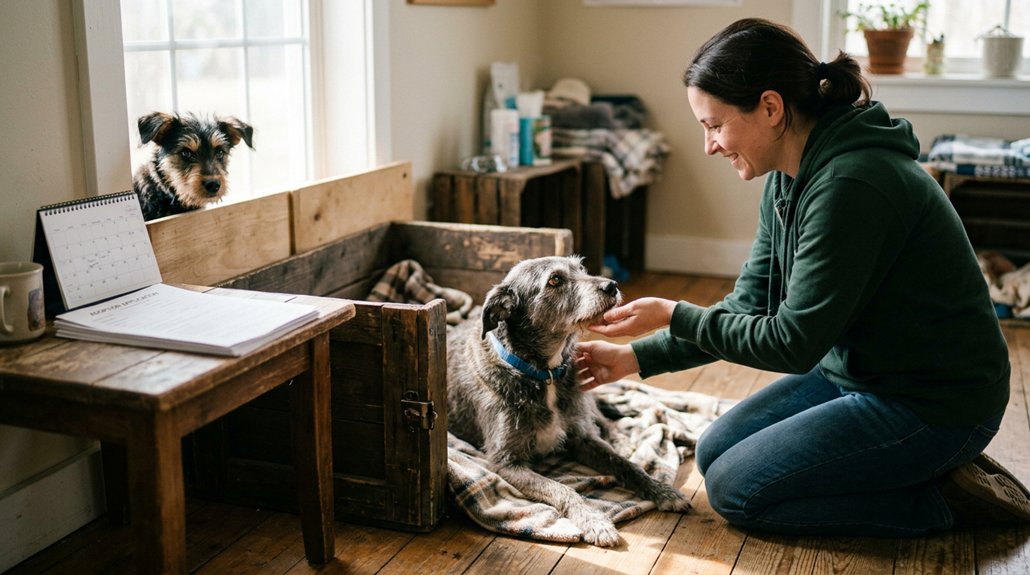
Adopting a dog brings immense joy and challenges. Initially, focus on welcoming your new companion and establishing a calming routine. Understand initial behavior shifts and patiently manage potential challenges. Crucial training with positive reinforcement builds trust, while creating a safe space, like a crate, provides comfort. Engage in socialization efforts and incorporate play into training to enhance bonding. Patience and consistency are crucial as your dog adjusts, offering deeper rewards as the relationship grows. Explore further for more insights.
Key Takeaways
- Initial days are crucial for setting routines and providing a calm, stress-free environment for your new dog.
- The 3-3-3 Rule outlines stages: settling, learning, and bonding, important throughout the dog’s adoption adjustment period.
- Behavioral changes may emerge post-honeymoon period; patience and understanding are key to managing challenges.
- Training with positive reinforcement builds trust and addresses common issues like separation anxiety and resource guarding.
- Gradual exposure and socialization require patience; adjust interactions and environments based on the dog’s comfort level.
Welcoming Your New Dog: First 3 Days Strategies
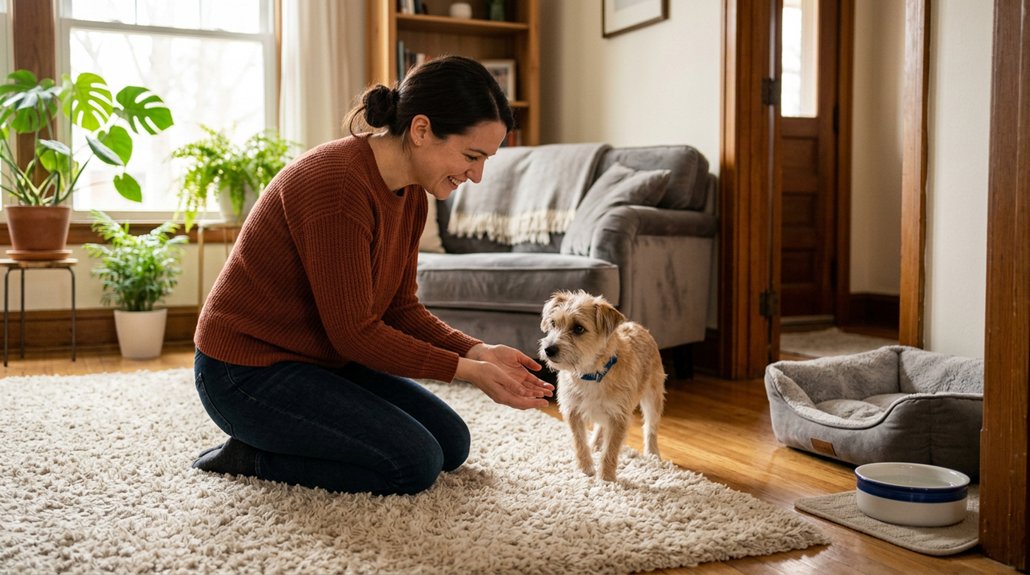
When you bring your new dog home, those initial three days play an essential role in setting the tone for your future together. During this time, focus on decompression strategies to ease the change. Your dog might feel overwhelmed, showing changeable behaviors like hiding or a loss of appetite. Create a calm environment by limiting stimuli, which allows your pup to explore at their own pace. A simple routine for feeding and potty breaks provides predictability, reducing anxiety. Understand that stress reactions such as excessive sleeping or hyperactivity are common. Stay patient and positive, as your reassurance helps them adjust. Clear communication and consistent boundaries will make your dog feel secure, building trust and a strong bond.
Building a Routine: Establishing Safety in 3 Weeks
As you settle into life with your new dog, the next three weeks are pivotal in establishing a routine that instills a sense of security and comfort. Consistent feeding schedules, regular potty breaks, and daily exercise offer adjustment support while minimizing anxiety. However, allow for routine flexibility; your dog’s preferences might surprise you, so observe closely to fine-tune these routines. Positive reinforcement training with basic commands and boundaries during this phase builds trust and understanding between you and your furry friend. Gradually introduce your dog to other family members and varied environments to boost their confidence and comfort level. Patience and attentiveness to your dog’s needs will help both of you adjust, creating a loving and structured foundation for years to come.
Decoding the Honeymoon Period
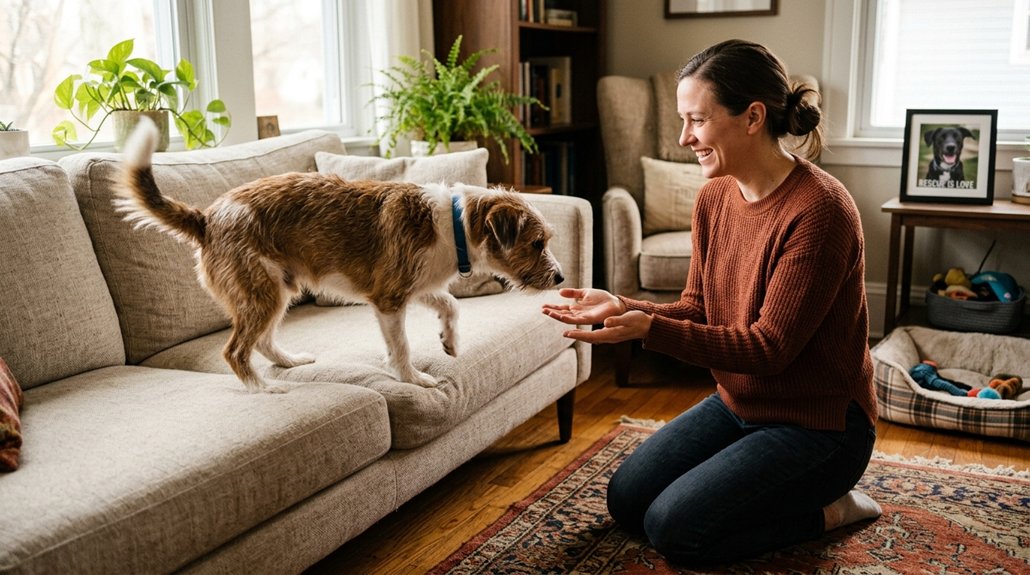
As you welcome your new dog, it’s natural to experience a “honeymoon period” where everything seems perfect, but remember that changes in behavior are part of the adjustment. Your dog might initially mask some past tendencies, and recognizing these shifts will help you navigate any unexpected challenges with patience. Being mindful of this phase will empower you to build a strong foundation for a lasting bond.
Behavior Changes Over Time
While welcoming a newly adopted dog into your home can be an exciting experience, understanding the behavior changes over time is essential for a smooth changeover. During the initial honeymoon phase, your dog might seem perfect as they navigate their new environment. However, as they decompress and adjust to your daily routine, you’ll encounter the 3-3-3 Rule: 3 days to settle, 3 weeks to learn, and 3 months to truly bond.
Don’t worry if you notice behaviors like quirks or issues; these are common as your dog reveals their true personality. Recognize that what seems like defiance might actually be stress or a simple need for safety. Addressing behavioral triggers with compassion and training will foster trust and secure a lasting bond.
Navigating Unexpected Challenges
Adjusting to a new home is a significant تغيير for any adopted dog, and the honeymoon period often presents unexpected challenges. Initially, dogs might seem perfect, similar to feeling abroad, but as they relax, unexpected behaviors—like anxiety or destructiveness—can appear. These are not permanent traits but signs of stress. To support your dog’s adjustment, have patience and don’t pressure them to be flawless. The 3-3-3 Rule is helpful: allocate 3 days for decompression, 3 weeks for understanding routines, and 3 months for full adjustment. Here are some adjustment tips:
- Provide a calm environment to lessen stress.
- Recognize early signs of discomfort or fear.
- Use positive reinforcement for desired behaviors.
- Seek professional help if problems persist.
How to Create a Safe Space With Crate Training
Creating a safe space for your dog with crate training can be a life-changing experience for both of you, promoting comfort and security. Start by setting up the crate in a quiet area, which will serve as your dog’s personal retreat. Remember, positive associations are key—feeding meals inside the crate and gradually increasing crate time can help your furry friend feel more at home and less anxious.
Benefits of Crate Training
- Establishes a safe space, enhancing comfort
- Encourages improved potty habits naturally
- Reinforces positive associations through meal feeding
- Promotes a sense of security with proper sizing
Gradually introducing your dog to the crate, using treats and praise, helps build a trusting relationship with this cozy sanctuary.
Setting Up a Crate
While crate training has its advantages in nurturing your dog’s sense of security, setting up the crate effectively can further enhance this safe haven. Start by selecting a properly sized wire crate. It should allow your dog to stand up, turn around, and lie down comfortably. A spacious crate contributes to crate comfort and can help your furry friend view it as their sanctuary. Line the crate with a cozy dog bed or soft blankets to create an inviting atmosphere. To make this space truly positive, feed all meals inside, boosting the crate’s association with pleasant experiences. Monitor your dog’s behavior and make necessary training adjustments. By gradually closing the crate for short periods, you’ll reinforce it as a place of comfort rather than confinement.
Crate Training Tips
To guarantee your dog feels at home in their crate, it’s important to introduce it as a welcoming and secure environment. Start by selecting a properly sized crate that allows your dog to stand, turn, and lie down comfortably. Begin with positive crating techniques—let your furry friend discover the crate with enticing treats, toys, or even by placing their meals inside. Here are some helpful tips for effective crate safety and comfort:
- Establish positive associations by feeding all meals inside the crate, reinforcing it as a safe haven.
- Position the crate in a quiet, calm area for your dog to unwind.
- Leave soothing background music when you leave, comforting them in your absence.
- Use crate training as a tool for house training, minimizing accidents and promoting cleanliness.
Teaching Essential Commands: A Guide to Effective Training
Teaching your dog essential commands is a rewarding journey that strengthens your bond and guarantees their safety and well-being. As you start on this path, building solid behavioral foundations with advanced training techniques is fundamental. Begin with basic commands like “Sit,” “Come,” and “Stay,” gradually introducing engaging activities that challenge your pet and keep them interested. Incorporate training tools, such as raised beds, to teach command variations like “Place” and make sure calm behavior is established. The “Leave It” command is vital, especially during walks, and can be reinforced with supportive videos. Always use positive reinforcement—treats, praise—to encourage learning and create positive associations. Remember, consistency, and occasional breaks for playtime will maintain your dog’s enthusiasm to learn and strengthen obedience.
Top Behavioral Challenges and How to Solve Them
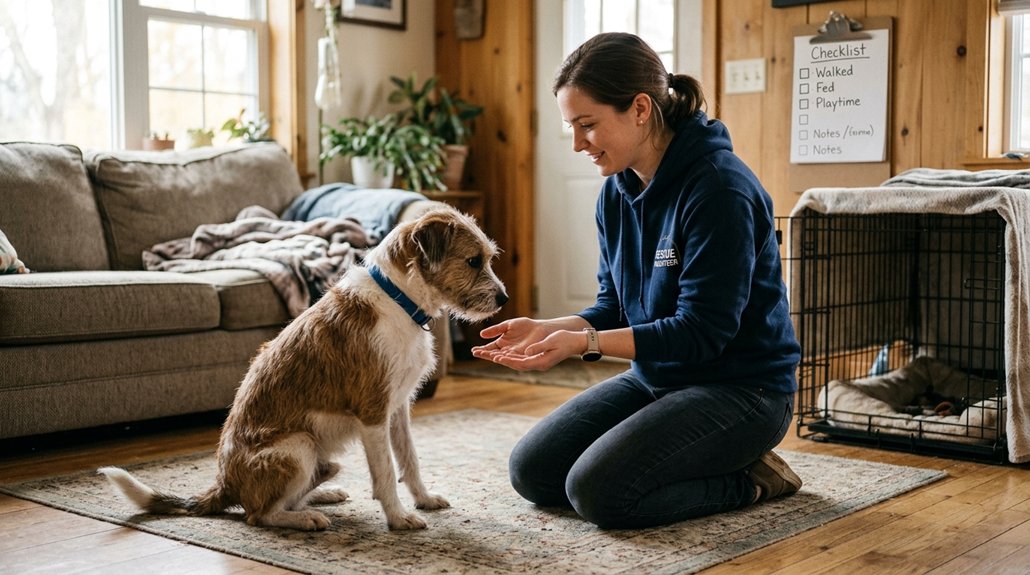
Every dog presents unique behavioral challenges, and understanding these is essential for a happy, harmonious life together. You might notice separation anxiety, which often leads to barking or destructiveness. Gradual departure training and creating positive associations can help ease this. Resource guarding, a response based in scarcity, might cause aggression over food or toys, but with “trade-up” strategies, you can reduce this tension. House soiling is a sign of stress or incomplete potty training; a consistent schedule is your best ally here. Destructive behaviors often signal boredom or anxiety; keeping your pup engaged with puzzle toys and regular exercise can help. Finally, fear responses to new environments demand patience; apply desensitization techniques for building confidence.
How to Socialize Your Dog With People and Pets
When socializing your dog with people and pets, start gradually by introducing them in a calm and controlled setting to make your furry friend feel safe. It’s essential to build positive associations by rewarding your dog with treats and praise when they remain calm during these early interactions. Pay close attention to their stress indicators, and if any aggressive behaviors arise, don’t hesitate to seek help from a professional trainer to guarantee a safe and effective socialization journey.
Gradual Exposure Techniques
Although introducing your dog to new people and pets can seem overwhelming, using gradual exposure techniques guarantees a smoother and more comfortable socialization process. Start in a controlled environment like a crate, where your dog can safely observe new stimuli from a distance. Gradual exposure involves introducing one stimulus at a time, focusing on low-pressure situations. Closely monitor your dog’s body language for signs of stress—adjust the pace accordingly. Remember, patience is key. Using positive reinforcement like treats or praise encourages calm behavior, enhancing your dog’s confidence over time.
- Start in a controlled environment for safe observations
- Introduce new stimuli one at a time to minimize stress
- Monitor body language to affirm comfort and adapt as needed
- Use positive reinforcement to encourage calm behavior
Building Positive Associations
While introducing your dog to new people and pets can initially seem intimidating, creating positive associations helps guarantee successful socialization. Start with gradual introductions in controlled environments. This gives your dog the chance to observe from a safe distance, perhaps using a crate to feel secure. Allow new friends to approach at their own pace; it’s vital not to overwhelm your pup. Positive reinforcement plays a key role here—use treats or gentle praise when your dog interacts calmly. This encourages them to associate these experiences with good feelings. Consistent exposure to different sounds and environments, perhaps with apps like Sound Proof Puppy Training, builds confidence. Remember, patience and understanding are essential as your dog navigates these new social landscapes.
Monitoring Stress Indicators
Recognize the subtle cues your dog shares to understand their comfort level during socialization efforts. Monitoring stress signals through body language like yawning, lip licking, or turning away helps you assess their feelings toward new experiences. By gradually introducing unfamiliar people or pets, you allow your dog to adjust without overwhelming them. Positive reinforcement with treats and praise strengthens their confidence in these interactions.
- Start introductions from a distance, letting your dog observe first.
- Use a crate initially to help them feel secure during new encounters.
- Desensitize reactivity by slowly increasing exposure to new sounds.
- Offer soothing distractions, like calming music or favorite toys, while they adapt.
Supporting your dog’s emotional needs fosters their progress towards comfortable socialization.
Why Patience and Consistency Matter in Adoption
Understanding why patience and consistency matter in dog adoption can greatly impact your success and satisfaction with the process. During the initial adjustment period, employing thoughtful adjustment strategies is key. Give your dog time to acclimate, remembering this can take from weeks to months. A consistent routine provides security, helping reduce anxiety and supporting better behaviors. Expect some stress or boundary testing—this is normal.
Utilize positive reinforcement techniques to build trust and encourage desirable actions. Such an approach not only eases your dog’s adjustment but also strengthens your bond. Maintain flexibility to adapt to your dog’s evolving needs, enhancing the overall experience. Your patience and consistent efforts will pave the way for a fulfilling relationship, ensuring a smoother journey in your dog’s new home.
Incorporating Play: Training Through Fun and Games
Ever wonder how incorporating play into your training routine can transform your dog’s learning experience? Engaging in trick training through playful games like “roll over” or “puppy push-ups” boosts your dog’s enthusiasm and makes learning fun. By rewarding with game rewards—such as quick tug sessions or fetch during breaks—you create a rich, rewarding learning environment. This not only maintains their interest but also satisfies natural instincts. Here’s how to make training a delightful journey for both of you:
- Trick training boosts motivation: Turning tasks into playful challenges enhances engagement.
- Play as a game reward: It keeps the experience positive and fulfilling.
- Interactive games reduce stress: They make sessions enjoyable and low pressure.
- Biologically fulfilling exercises: Activities like tug satisfy energetic drives.
Strengthening Your Bond Beyond Three Months
As you reach the pivotal three-month milestone in your adoption journey, it’s important to focus on strengthening the bond you’ve been building with your dog. Establishing trust building practices is crucial as they deepen their reliance on you. Consistent positive reinforcement during training helps maintain and reinforce behaviors learned over the initial months. To forge a deeper emotional connection, engage in regular playtime with interactive activities like teaching new tricks. Incorporating daily routines, including walks, feedings, and training, provides stability, enhancing your dog’s sense of security. Be attuned to their body language and emotional cues to understand their needs intuitively. Setting aside dedicated quality time for relaxation guarantees your dog feels valued, nurturing the relationship as you thrive together in a loving home.
Frequently Asked Questions
What Vaccinations Does My Newly Adopted Dog Need Immediately?
Your newly adopted dog needs the rabies, distemper, and parvovirus vaccines at their initial vet visit. The vet will outline a vaccination schedule, ensuring they’re protected and healthy. It’s a big step, but you’re doing great!
How Do I Travel Safely With My New Dog?
Ironically, your dog’s not asking for a passport. Equip yourself with dog travel gear and pet safety tips—like using seat belts or carriers—to keep your furry companion safe, comfortable, and surprisingly patient on your adventures.
Is Pet Insurance Recommended for Newly Adopted Dogs?
Yes, it’s advisable to get pet insurance for newly adopted dogs. You’ll explore various insurance options to guarantee your furry friend’s health needs are covered. Check your pet policy thoroughly to avoid unexpected expenses.
How Can I Find Reliable Pet Care for When I’m Not Home?
You’ll find reliable pet care by researching local pet sitters and dog walkers. Check reviews, ask for references, and make certain they’re experienced. It’s crucial to feel confident in their ability to keep your pet happy and safe.
What Should I Feed My Adopted Dog for Optimal Health?
Feeding your adopted dog is like fueling a racecar; you’ve got to choose wisely. Follow feeding guidelines carefully, focus on balanced nutrition, and explore expert nutrition tips to guarantee your furry friend thrives with vibrant health.
Conclusion
So, after traversing the delightful chaos of adoption, you’ve gone from “What have I done?” to “Look at my perfect pupper!” Remember, your furry friend didn’t come with a how-to guide—just a tail wag and occasional destruction. As you survive whirlwind misadventures and minor home renovations, take heart. You’ve become an expert in bark diplomacy and accidental slipper sacrifices. With patience and paw-sitive vibes, you’re on track to a lifelong, slobber-filled adventure. Hang in there!