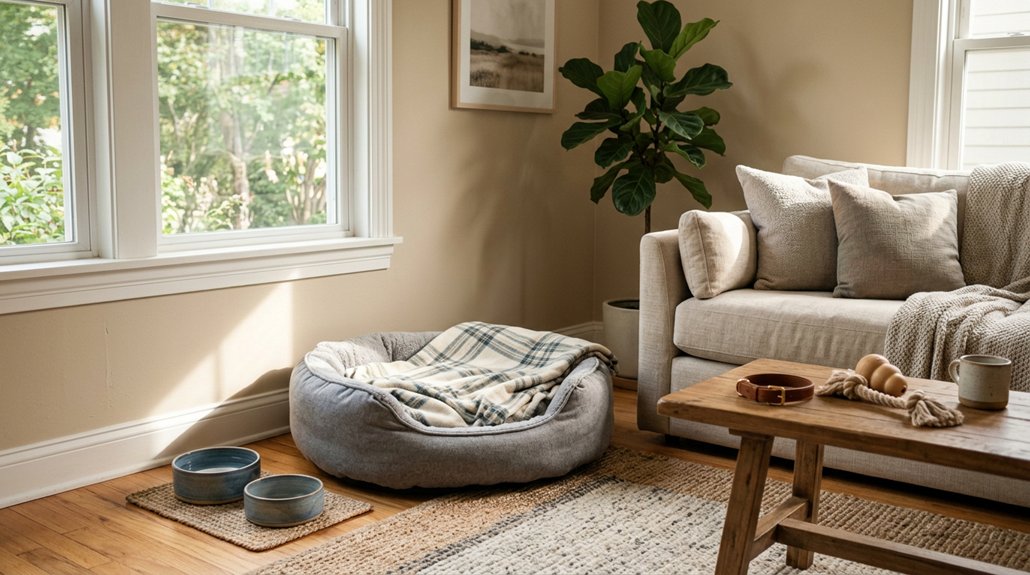
Before bringing your adopted dog home, guarantee a safe, cozy environment by removing hazards and designating a quiet retreat. You’ll need essential supplies like a fitted collar, leash, and durable bowls. Prepare for their initial adjustment with calming strategies, including minimizing disruptions and observing body language. Establish a consistent routine for feeding, bathroom breaks, and exercise to build trust. By understanding these basics, you’ll set a solid foundation for a smooth change and much more awaits.
Key Takeaways
- Expect to prepare your home by removing hazards and creating a safe, cozy space for your adopted dog.
- Gather necessary supplies such as a collar, leash, bowls, bed, food, grooming tools, and training equipment.
- Anticipate initial stress and anxiety in the dog; create a quiet environment to encourage calming and gradual adjustment.
- Establish feeding, bathroom, and exercise routines to foster stability and ease the transition for your adopted dog.
- Plan to address potential destructive behaviors with supervision, appropriate chew toys, and positive reinforcement.
Preparing Your Home for a New Dog
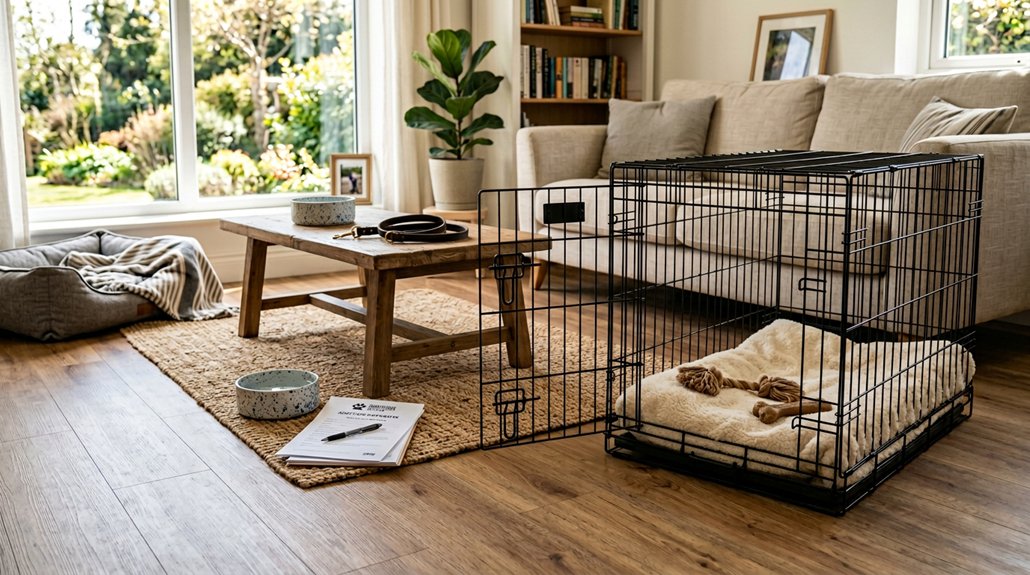
When you’re welcoming a new dog into your home, creating a safe and inviting environment is essential for their comfort and well-being. Start by eliminating hazards with these dog proofing tips: remove any toxic plants, secure cleaning supplies, and hide electrical cords. This approach promotes home safety while preventing accidental harm. Designate a cozy retreat for your dog, such as a crate, helping them adjust seamlessly. Also, clear your home of small objects and valuables that might be chewed or damaged as your dog curiously explores their new space. Use baby gates or barriers to manage your dog’s access to specific areas. These measures guarantee your dog feels secure and your home stays intact during their adjustment.
Essential Supplies for Your Rescue Dog
When welcoming your rescue dog home, ensuring you have the right essentials is key to their comfort and health. Start with a checklist that includes a properly fitted collar and leash, durable stainless steel or ceramic bowls, and a cozy bed or crate to establish a safe space. Remember, high-quality food and engaging toys are just as important in promoting a smooth change and minimizing anxiety.
Basic Necessities Checklist
Bringing your newly adopted dog home is an exciting and rewarding experience, but it also comes with responsibilities. Start by ensuring you have the essential supplies to keep your furry friend happy and healthy. Opt for stainless steel or ceramic food and water bowls; they’re durable, easy to clean, and hygienic. Choose high-quality dog food aligned with your dog’s age, size, and health needs for a balanced diet. A comfortable dog bed is vital for your pup’s relaxation. Equip yourself with grooming supplies and training tools for maintenance and guidance. A correctly-sized dog crate aids in house training and offers a personal space. Finally, a well-fitting collar and sturdy leash are important for safe walks and outings.
Safe Space Setup
Creating a safe space for your newly adopted rescue dog is pivotal in ensuring a smooth adjustment to their new environment. Start by preparing a dedicated safe retreat at home, such as a crate or a cozy corner. Equip this retreat with a comfortable dog bed and access to fresh water to enhance dog comfort. Use durable stainless steel or ceramic food and water bowls for easy cleaning. Provide high-quality dog food tailored to their age and health needs. Incorporate chew toys and enrichment items to aid mental stimulation and deter negative behaviors. Baby gates can help manage exploration, creating secure zones. For controlled setting introductions, have a sturdy leash and well-fitting collar ready. Each step builds a reassuring welcome for your dog.
Calming Strategies for Your Rescue Dog’s First Days
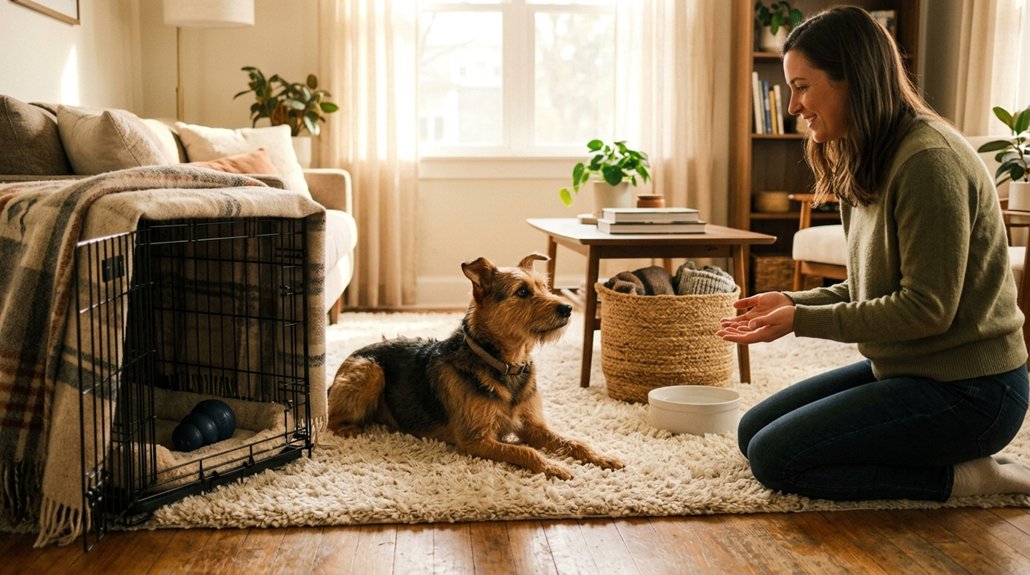
For your rescue dog’s first days at home, it’s essential to focus on strategies that promote calmness and security. Start with effective decompression techniques by creating a quiet, cozy space with familiar toys and comforts. This sanctuary will help your dog adjust while providing a stress-free environment. Pay close attention to stress signals like pacing, whining, or panting, which indicate your dog might be overwhelmed. Respond by minimizing external stressors, such as limiting visitors and disruptions. Use positive reinforcement, rewarding calm behavior with treats and verbal praise, to gradually build trust and confidence. Always observe your dog’s body language and modify your approach accordingly, ensuring your rescue dog feels secure and supported during this critical adjustment phase.
Establishing a Routine and Feeding Practices
Establishing a consistent feeding schedule for your newly adopted dog is essential to creating a sense of stability and routine. Gradually shifting your dog to a new diet over several days will help ease potential gastrointestinal discomfort and stress. Always provide fresh water and a quiet, distraction-free space during meals to reassure your dog and foster healthy eating habits during this adjustment period.
Meal Transition Strategy
When welcoming your newly adopted dog into your home, managing their diet shift requires careful planning to guarantee they settle comfortably. Understanding their meal types and food preferences is essential for this change. Here’s an effective strategy to assure a smooth dietary adjustment:
- Mixing Meals: Gradually introduce new foods by mixing 2/3 of their previous food with 1/3 of the new food over 3-4 days.
- Monitor Appetite: Keep an eye on your dog’s appetite and be ready for temporary fluctuations due to environmental stress.
- Enticing Combinations: Encourage eating by mixing kibble with canned food if they show reluctance.
- Hydration: Confirming fresh water is always available is important to keep your dog hydrated during this change.
Consistent Feeding Schedule
A well-structured feeding schedule is essential for helping your adopted dog settle into their new home. Establish a consistent feeding frequency by providing meals at the same times each day, as this reduces anxiety and aids in adjusting to their new routine. Gradually change your dog’s diet over 3-4 days, mixing 2/3 of their previous food with 1/3 of the new diet to prevent digestive issues. Pay attention to their food preferences in case stress dampens their appetite—mixing enticing canned food with kibble can help. Always guarantee your dog has access to fresh water to stay hydrated. Sticking to a regular feeding routine also supports house training by developing predictable elimination patterns, fostering a more harmonious change for both of you.
Routine Adjustment Period
Bringing consistency into your dog’s life can markedly ease the shift into their new home, diminishing adjustment anxiety. Establish a routine to provide reassuring structure and routine benefits, like reduced stress and smoother house-training. Here’s how:
- Feeding Schedule: Feed your dog at the same times daily to set expectations and ease anxiety. Keep their previous diet initially for 3-4 days while slowly introducing new food.
- Water Monitoring: Watch their water intake closely since stress might alter thirst, ensuring your dog stays hydrated.
- Scheduled Walks: Regularly timed walks boost familiarity and comfort while positively impacting adjustment.
- Positive Reinforcement: Use treats and praise when they eliminate outside, reinforcing good habits and promoting confidence.
These steps foster a secure environment for your new companion.
Home Exploration for Rescue Dogs
Welcoming your newly adopted dog into its forever home is an exciting moment, yet it requires a mindful approach to guarantee a smooth change. Upon arrival, let your dog explore while keeping them on a leash. The leash benefits both you and your dog by ensuring safety, preventing any sudden bolting, and allowing gentle redirection from restricted areas. Carefully encourage exploration in different parts of the home at a slow pace, empowering your pup to gain confidence and familiarity. Observe exploration signs in your dog’s body language to assess comfort or stress levels, making necessary adjustments to support their ease. Remember to provide quiet time as the environment may initially feel overwhelming, allowing your furry friend to adapt at their own pace.
Introducing Your Dog to Family
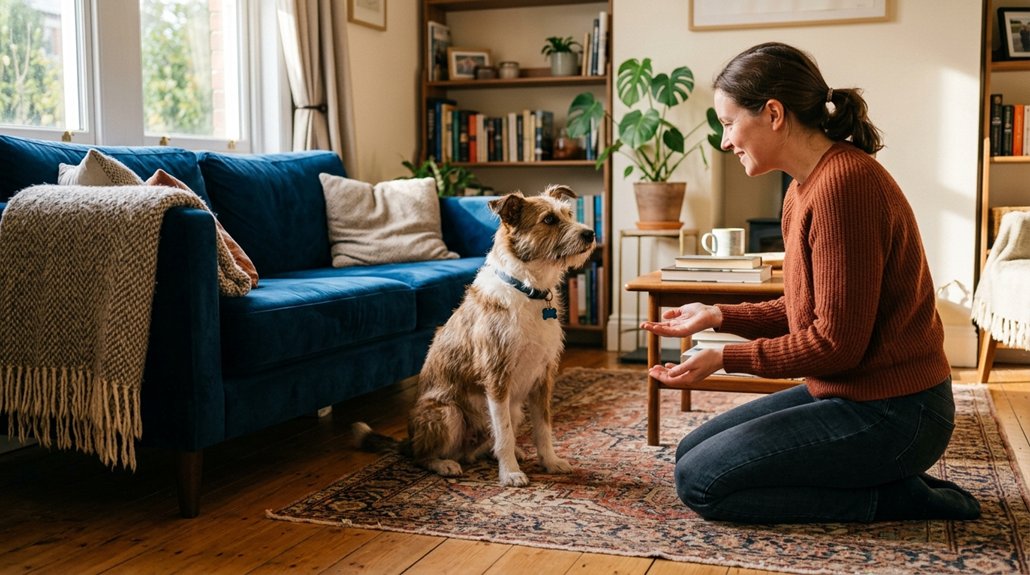
When you bring your new dog home, it’s essential to introduce them to your family with a plan that prioritizes their comfort and security. Understanding family dynamics and employing effective introduction techniques can make this adjustment smooth for everyone involved. Here’s how to proceed:
- Introduce family members one at a time to avoid overwhelming the dog, fostering a sense of security in its new environment.
- Encourage calm interactions using treats and praise, which help build trust and comfort for your dog.
- Allow your dog to gradually familiarize itself with each person’s sight and scent to reduce anxiety during introductions.
- Monitor the dog’s body language for any stress indicators, adjusting interactions as needed to maintain a calm and quiet atmosphere.
Common Behaviors and How to Handle Them
Adopting a dog can indeed be a rewarding experience, yet it often comes with initial challenges as the pet adapts to a new environment. Shyness or fear may manifest in your dog’s body language, indicating the need for gentle interactions. Create a quiet space where your dog feels secure. Anxiety signs, such as decreased appetite or vocalization cues like barking and whining, are common; maintaining a consistent feeding schedule and daily routine can alleviate these issues by providing predictability. Remember, housetraining accidents might occur, highlighting the need for a steady bathroom schedule. To address destructive chewing during this adjustment phase, provide appropriate chew toys. These steps will guide your new companion toward a smooth progression into their forever home.
Frequently Asked Questions
Where Should an Adopted Dog Sleep First Night?
Your adopted dog should sleep near your bedroom on their first night. Provide a cozy bed or crate, ensuring the area is quiet and safe. Use familiar items for comfort; it’s part of ideal sleeping area preparations.
What Is the 3-3-3 Rule for Adopted Dogs?
The 3-3-3 rule outlines the adjusting period for adopted dogs through emotional stages. Initially overwhelming, they gradually settle in after three weeks, and by three months, they’re often comfortable, having built trust with you. Be patient.
What to Do the First Day You Bring Home a Rescue Dog?
Did you know 64% of rescue dogs experience anxiety in new homes? Start with calm initial introductions, prioritize crate training to provide security, and most importantly, grant your dog time to adjust and build trust confidently.
Is It Okay if I Leave My Dog Home Alone for 8 Hours and 5 Days a Week?
Yes, it can work if your dog’s gradually adjusted. Start with short alone times to prevent separation anxiety. Use mental stimulation and consider a dog walker for breaks. Puppies need more attention, so take different measures with them.
Conclusion
Welcoming your rescue dog home is akin to initiating a journey with Odysseus—you’ll face trials and triumphs. By preparing your home, gathering essential supplies, and employing calming strategies, you pave the way for a smoother change. Establish a routine that mirrors the predictability of Penelope weaving her tapestry, ensuring stability. With patience and empathy, guide them through new explorations and interactions. Remember, every wag and whimper is a step towards building a loyal companion.