If you want peaceful fish that get along with others, choose calm species like neon tetras, guppies, platies, corydoras, otocinclus, and kuhli loaches. You’ll get the best results when you match fish by size, temperament, and water needs, and keep schooling fish in proper groups. Give them plants, hiding spots, moderate lighting, and clean filtration. Avoid aggressive cichlids, fin-nippers, and fish that need very different temperatures—you’ll see why a balanced setup matters.
Key Takeaways
- Choose peaceful schooling fish like neon tetras, celestial pearl danios, and guppies, and keep them in proper group sizes.
- Match tankmates by adult size, temperament, and water needs to reduce aggression and stress.
- Pair fish that use different tank zones, such as midwater schoolers with bottom dwellers like corydoras or kuhli loaches.
- Use planted tanks with hiding spots, soft sand, moderate lighting, and strong filtration to support calm community behavior.
- Avoid aggressive cichlids, territorial males, coldwater fish, and predatory species that may bully or eat peaceful tankmates.
What Makes a Fish Community-Safe?
A fish is community-safe when it’s naturally peaceful, non-territorial, and unlikely to nip fins or bully tankmates, which is why species like tetras, rasboras, danios, guppies, platies, and Corydoras catfish are such common choices. You should look for calm behavior, small mouths, and a willingness to share space and food. In groups, schooling fish usually need proper numbers so their social hierarchy stays stable and they don’t show stress indicators like hiding, darting, or faded color. Match tankmates by size and water needs, since many community setups work best around 74–80°F and pH 6.5–7.5. You’ll also get better results with varied plants, cover, and open swimming areas, plus foods all fish can accept, so shy species aren’t pushed aside.
Best Small Schooling Fish for Community Tanks
When you’re choosing small schooling fish for a community tank, it usually pays to think in groups, not individuals, because species like neon tetras, celestial pearl danios, and guppies are far more relaxed and active when they have enough companions. For the best results, match species to your tank’s space and planting.
Small schooling fish thrive in groups, becoming more relaxed, active, and colorful in a well-planned community tank.
- Neon tetras shine in neon schooling groups of six or more.
- Celestial pearl danios are nano explorers that do best in ten-plus.
- Guppies and platies are hardy, peaceful options that settle in quickly.
- Cherry barbs add color and usually keep to themselves.
Keep your water stable, feed varied foods, and avoid overcrowding so your fish stay bold, colorful, and stress-free.
Peaceful Bottom Dwellers That Clean Up Leftovers
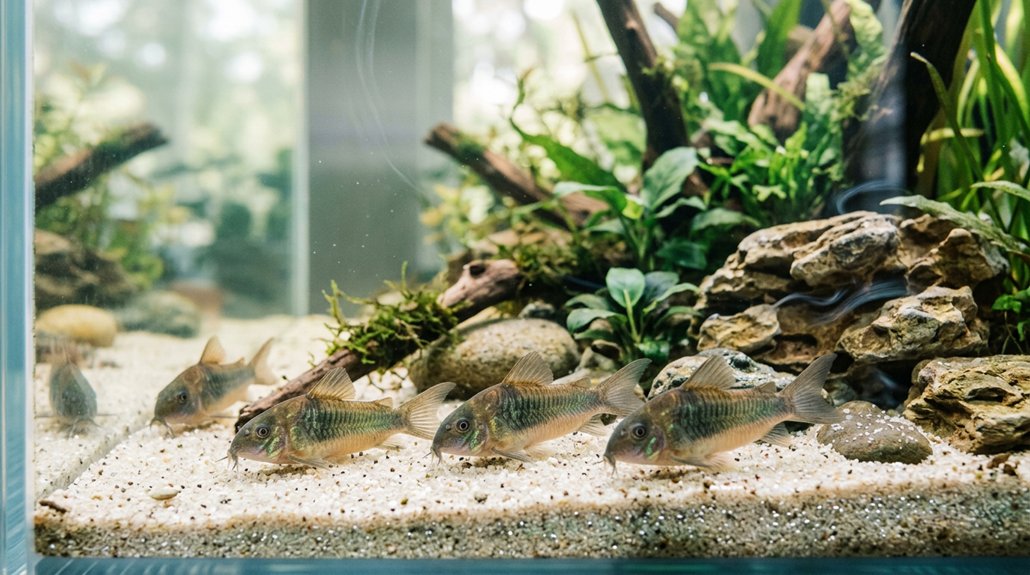
Once your schoolers are settled, the next best helpers for a peaceful community tank are the bottom dwellers that tidy up leftover food without causing trouble. You can rely on corydoras, the classic silt loving scavengers, to cruise in groups of 3–6 and vacuum uneaten bits from the substrate. Kuhli loaches need at least five, prefer soft sand, and’ll sift through 20-gallon-or-larger tanks for scraps while staying gentle with substrate safe gouramis. Bristlenose plecos grow to about 4–5 inches and help with diatoms and leftover vegetables; offer wafers, pellets, and blanched greens. Otocinclus are tiny, shy algae-eaters that do best in groups of six or more, especially in planted tanks with biofilm. Keep all of them on smooth sand or fine gravel to avoid injury.
Colorful Livebearers for Community Tanks
You can add bright, peaceful livebearers like platies, guppies, and mollies to a community tank for steady color and easy care. They’ll usually get along well with tetras and corydoras, but you should plan for frequent fry because these fish breed readily in good conditions. A planted tank with moderate flow, around 74–80°F, and a simple diet of flakes, pellets, and frozen foods will help them stay healthy and active.
Bright, Peaceful Livebearers
Bright, peaceful livebearers like guppies, platies, and mollies are among the easiest colorful fish to add to a community tank because they’re hardy, active, and generally get along well with other gentle species. You’ll notice how well they fit with tetras, corydoras, and small plecos.
- Guppies stay small, breed readily, and their fry become free-swimming quickly; watch Guppy genetics if you’re choosing colors.
- Platies are peaceful, bright, and accept flakes or pellets while handling 70–82°F.
- Mollies bring surface movement and need some Mollie brackishness, meaning slightly harder, mineral-rich water.
- Since all three breed fast, plan fry control or keep one sex.
Avoid aggressive or fin-nipping tankmates, and you’ll keep their color and calm behavior on display.
Easy Care Community Colors
Easy-care livebearers can bring a lot of color to a community tank without adding much hassle, especially guppies, platies, and mollies. You’ll get low maintenance colorways that stay active and hardy in 70–82°F water. Guppies are vivid and breed fast, so expect fry unless you separate them. Platies are peaceful, playful, and happy on pellets or flakes, making them easy to feed. Mollies adapt well to many conditions and do best when you add vegetable matter to their omnivorous diet. These fish are ideal for beginner friendly pairings with tetras, corydoras, and small peaceful catfish. Since livebearers reproduce readily, plan your stocking carefully and add plants or breeding traps to give fry hiding spots and keep the tank from overcrowding.
Small Algae Eaters for Planted Aquariums
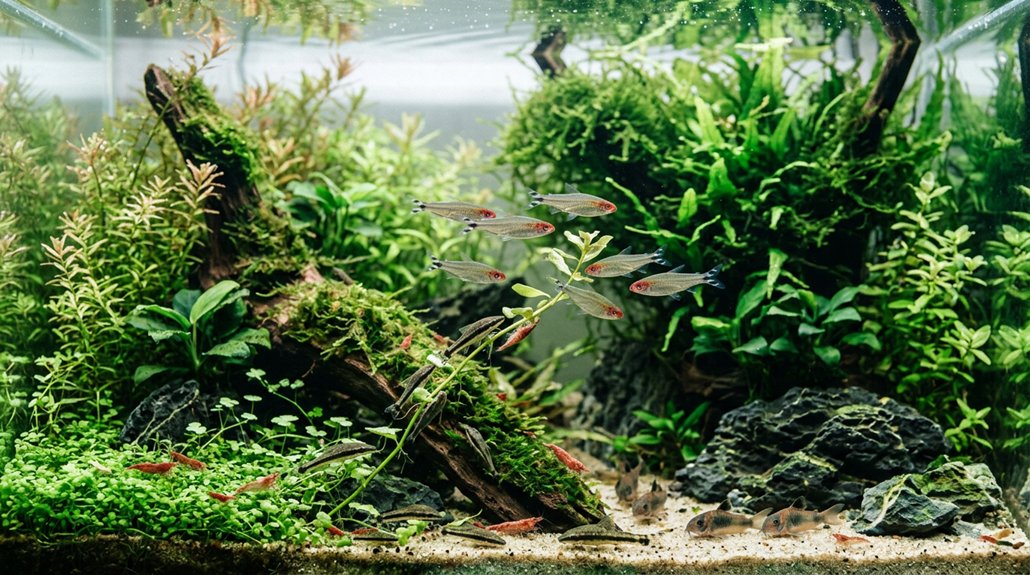
Adding small algae eaters to a planted aquarium can help keep glass, leaves, and hardscape clean without disrupting the tank’s balance. For effective algae strategies, match each species to your tank’s needs and size. 1. Otocinclus stay 1.5–2 inches and do best in groups of six or more. 2. Bristlenose Plecos reach 4–5 inches, eat diatoms and soft algae, and’ll take veggies or wafers. 3. Nerite snails graze film algae on glass and décor, and they won’t breed in freshwater. 4. Amano shrimp excel at biofilm control, so check shrimp compatibility with your fish first. Siamese Algae Eaters also tackle black beard and hair algae, but they need room and calm tankmates.
Gentle Centerpiece Fish for Calm Tanks
A calm tank can still have a strong focal point, and the best centerpiece fish are the ones that add color and movement without upsetting the peace. In a planted 10–20 gallon setup, a single dwarf gourami can be an excellent choice because it stays compact, shows rich color, and usually remains gentle if you avoid keeping males together. If you want something smaller and more active, celestial danios create a shimmering focal point best kept in a group of ten or more. For a different look, sparkling gouramis and peacock gudgeons stay calm when you give them cover and steady tankmates. Keyhole cichlids and kribensis can also work, but they’re more likely to claim space when breeding, so add hiding places and keep the environment balanced.
Match Fish by Size and Temperament
Matching fish by size and temperament helps keep the tank peaceful from the start. With size based pairing, you’re less likely to see bullying or accidental predation.
- Match adults, not juveniles, so tiny neon tetras or celestial pearl danios aren’t housed with 4–5 inch plecos or gouramis.
- Use temperament matching by putting calm schooling fish, corydoras, and otos together, while keeping semi-aggressive cichlids or large barbs separate.
- Pair fish that swim in similar zones and activity levels; midwater tetras and surface platies usually clash less.
- Keep water parameters aligned, around 74–80°F and pH 6.5–7.5, so fish stay comfortable and predictable.
When you plan carefully, your tank feels steadier, and every fish gets space without constant stress.
Which Fish Need Groups To Thrive?
Even peaceful fish can become stressed or shy if they’re kept alone when they naturally live in groups. You’ll see the best behavior when you respect their group dynamics: Neon Tetras, Cardinal Tetras, Rummynose Tetras, and Celestial Pearl Danios usually need at least 6, and often 8–12 for tiny species, so they’ll school, forage, and color up normally. Corydoras catfish should be kept in same-species groups of 3–6 or more; otherwise, they’re often skittish and inactive. Otocinclus and similar small algae-eaters also need 6+ to feel secure and respond to social triggers. Dwarf schooling fish, including nano rasboras, usually won’t show natural behavior in small numbers. A few peaceful species can live singly, but true social fish need company to thrive.
Best Community Tank Fish Combos
For a reliable community tank, it’s best to pair fish that fill different zones of the aquarium without competing for the same space. You can build balanced groups like this:
For a reliable community tank, pair fish that use different zones and avoid competing for the same space.
- Neon Tetras (6–10), Corydoras (4–6), and a pair of Platies or Mollies in 20+ gallons.
- Dwarf Gourami, or Sparkling Gouramis, with Celestial Pearl Danios and Otocinclus for planted tanks.
- Guppies, Platies, or Mollies alongside peaceful tetras and small catfish in a spacious setup.
- Bristlenose Pleco, Kuhli Loaches, and Corydoras with soft sand and hiding spots.
Keep Aquarium lighting moderate for calm behavior and healthy plant growth, and stay on top of Filtration maintenance so waste doesn’t build up. Choose tankmates that match in size and temperament, and you’ll reduce stress while keeping your community active and colorful.
Community Tank Fish To Avoid
When you’re planning a peaceful community tank, the biggest mistakes usually come from mixing fish that have very different temperaments, sizes, or care needs. Avoid aggressive cichlids, especially African species, if you keep small schooling fish or shrimp; they’ll often claim territory, stress tankmates, or eat them. Skip large plecostomus and predatory loaches in planted setups, since their size and constant grazing can uproot plants and crowd out corydoras and other bottom-dwellers. Don’t pair larger bichirs, freshwater sharks, or semi-aggressive barbs with tiny fish like celestial pearl danios or rasboras, because they may harass or swallow them. You should also avoid mixing coldwater goldfish with tropical livebearers, and never keep multiple territorial males, such as dwarf gouramis or kribensis, in a small tank.
Frequently Asked Questions
What Fish Can Live Together Peacefully?
You can keep neon tetras, rummynose tetras, guppies, platies, corydoras, otocinclus, dwarf gouramis, and bristlenose plecos together for aquarium harmony, if you match feeding schedules, respect nocturnal behavior, and check breeding compatibility.
What Are the Most Peaceful Community Fish?
You’ll find neon tetras, corydoras, guppies, platies, otocinclus, and bristlenose plecos among the most peaceful community fish. In planted tanks, keep them in groups; their nocturnal schooling and gentle habits reduce stress and conflict.
What Fishes Get Along With Each Other?
You’ll get along best with neon tetras, guppies, platies, corydoras, otos, and bristlenose plecos; they’re the diplomatic committee of any aquarium setup. Keep feeding schedules steady, group schooling fish, and avoid bullies or territorial species.
What Is the Friendliest Fish?
Neon tetras’re often the friendliest fish you’ll keep; they’re peaceful, schooling, and easygoing. You’ll still need good aquarium etiquette and steady feeding schedules, since groups of six or more help them thrive and stay calm.
Conclusion
When you build your community tank with calm, compatible fish, you create a living tapestry where every species has room to shine. By matching size, temperament, and social needs, you help your fish thrive with less stress and more natural behavior. Keep an eye on group sizes, tank space, and feeding habits, and you’ll set the stage for harmony. With the right mix, your aquarium won’t just function—it’ll glow with balance and life.