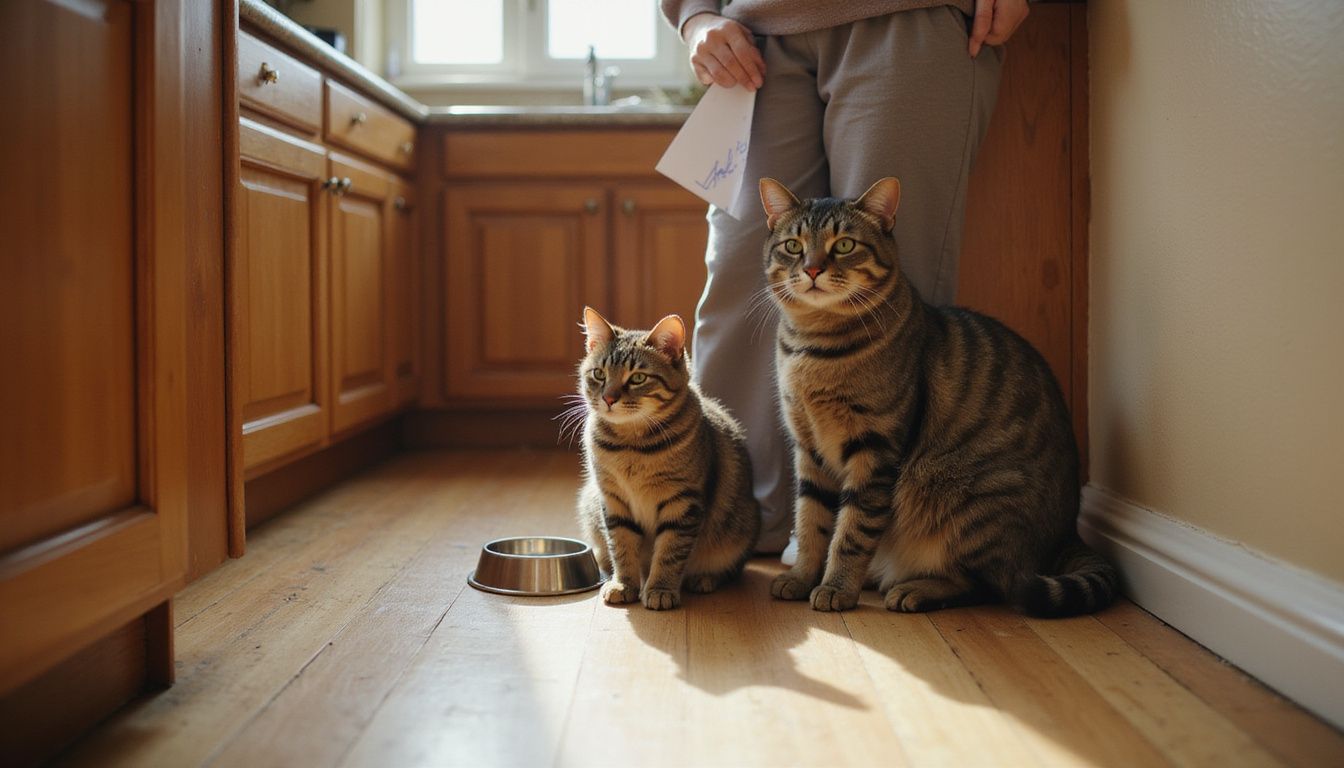
Have you noticed your cat’s belly swaying a little more when she walks?
You’re watching her get rounder, and part of you wonders if it’s even a problem.
Here’s the honest answer: it is. Overweight cats are three times more likely to develop diabetes than cats at a healthy weight, and that extra fat also raises the risk of arthritis and a shorter life.
The good news is that helping your cat lose weight safely does not have to feel complicated. I’m going to walk you through the exact steps, from teaming up with your vet to adjusting meals and adding more playtime, so you can watch that number on the scale go down the right way.
Key Takeaways
- Overweight cats face serious health risks including diabetes, arthritis, and shorter lifespans, with obese cats being three times more likely to develop diabetes.
- Consult a veterinarian before starting weight loss programs to rule out underlying medical conditions and prevent dangerous hepatic lipidosis within 2 to 3 days.
- Feed cats high-protein, low-carb diets with portion control at 80 to 90 percent of maintenance needs for safe weight loss of 0.5 to 1 pound monthly.
- Most cats reach their ideal weight within 6 to 12 months through scheduled meals, interactive play lasting 5 to 10 minutes daily, and climbing structures.
- Track weight weekly at first, then monthly, and schedule vet check-ins every 4 to 6 weeks to keep the plan on track.
One indoor adult domestic shorthair started at 15.8 pounds with a target of 10.0 pounds. The owner followed a vet-supervised plan with portion control, high-protein wet food, and daily play sessions. Over nine months, the cat lost an average of 0.6 pounds per month, with weekly weigh-ins tracking 38 separate weights along the way. The scale steadily moved down about half a pound a month, and the cat stayed bright and active the whole time.
How can I assess my cat’s weight and overall health?

Your cat’s weight tells you a lot about her health. A vet can measure her body condition score and catch problems early, before they turn into something bigger.
When should I consult a veterinarian about my cat’s weight?
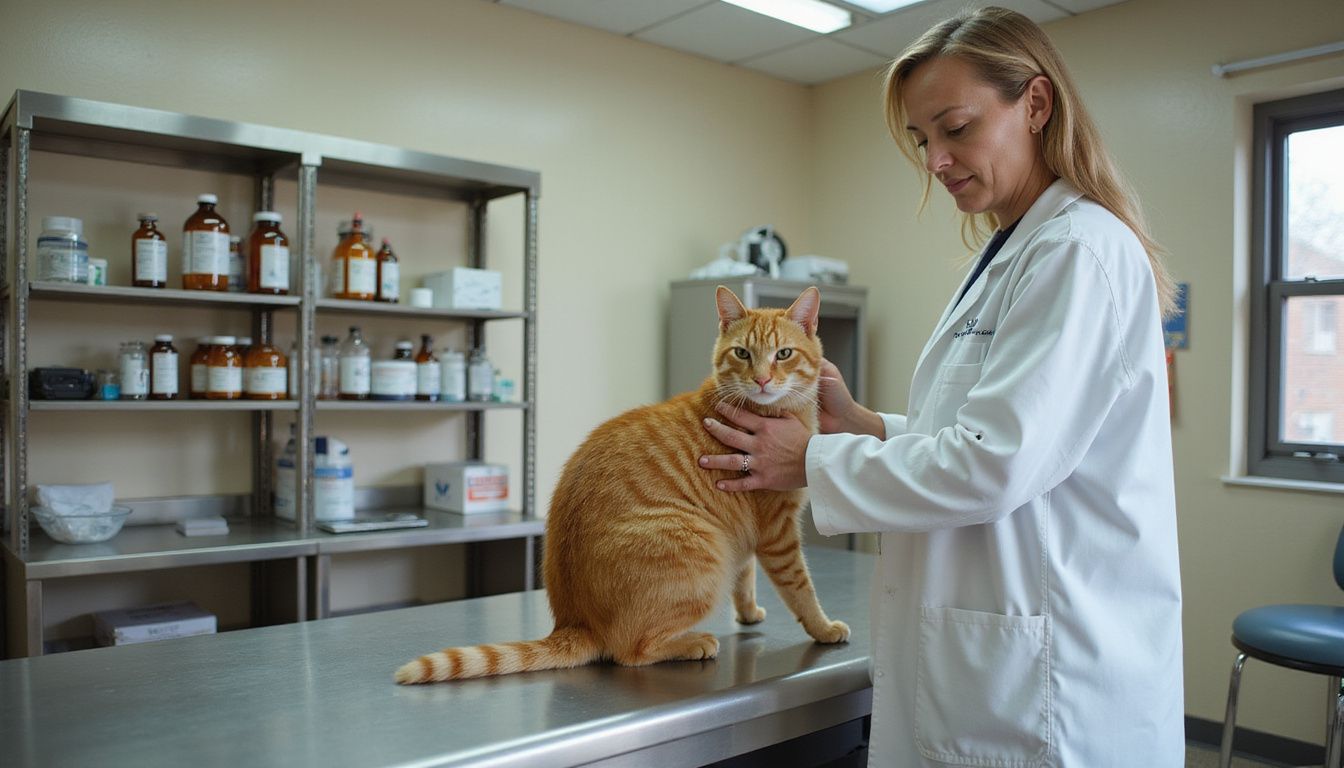
Your cat needs a vet visit if her body condition score hits 6 out of 9 or higher. This scoring system measures how much fat covers her ribs and spine. A vet can feel those bones easily on a healthy cat, but they’re hard to find on an overweight one.
A professional health check matters before you start any weight loss plan, since an underlying condition might be behind the weight gain. Diabetes, thyroid problems, and joint pain can all change how your cat looks and acts.
Your vet will rule out or treat these issues first, so weight loss happens safely. Rushing into diet changes without guidance can backfire badly, and if you’re just adopting a cat, this is exactly the kind of thing worth asking about at that very first checkup.
According to 2026 survey data from the Association for Pet Obesity Prevention, 61% of cats in the U.S. are considered overweight or obese, yet only 1 in 5 owners who try a weight loss plan see it through to lasting success. That gap is exactly why teaming up with your vet from day one gives your cat better odds.
The best time to see your veterinarian about your cat’s weight is before problems start piling up.
Cats can develop hepatic lipidosis, a dangerous liver condition, within just 2 to 3 days of not eating due to stress or a sudden diet switch. This is why veterinary supervision matters so much for a safe weight loss journey.
Call your vet right away if your cat skips food for 24 hours during a weight loss plan. A full exam should confirm her current weight, target weight, and overall health status, including diabetes risk, pain levels, mobility, appetite, and any medications she’s on.
What is the ideal weight range for my cat?
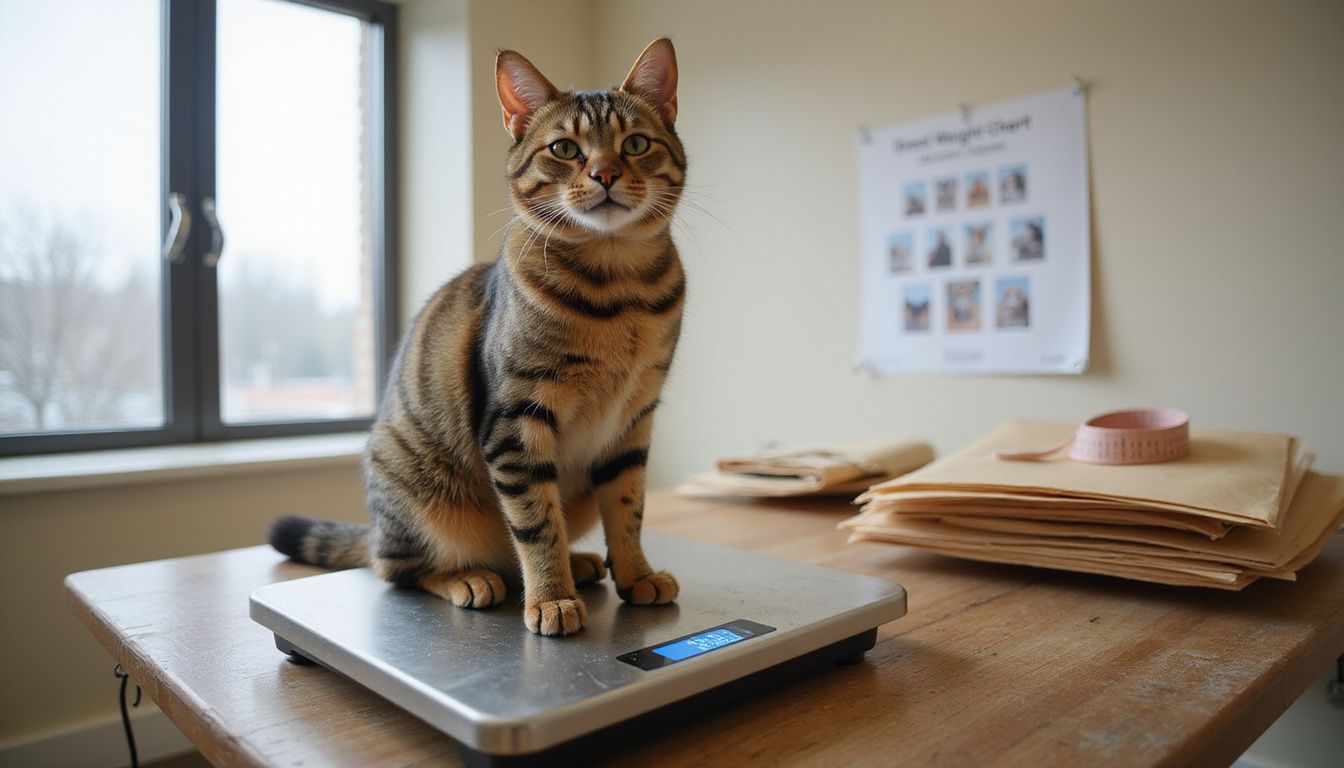
Once your vet confirms your cat needs to slim down, the next step is figuring out the target. Most domestic cats do well between 8 and 10 pounds, though that range shifts based on breed and body type.
A Maine Coon naturally weighs more than a Siamese. Your vet can help you set the right goal weight for your specific cat, and that number becomes your north star for the whole plan.
What your vet weighs in on when setting your cat’s target
- Breed and natural frame size (a big-boned cat needs a higher target than a petite one)
- Age and muscle condition
- Current body condition score compared to the healthy range
Here’s the key part: you calculate food portions based on the target weight, not the current one. If your cat weighs 16 pounds but should weigh 10, you feed for that 10-pound goal. This keeps her from eating too much while still working toward the finish line.
Most cats reach their ideal weight within 6 to 12 months on a solid plan. A safe pace aims for about 0.5% of current body weight lost each week, roughly 0.5 to 1 pound per month. A Cat Daily Feeding Calculator can help you estimate daily energy needs based on that target weight, making the math simple.
Creating a safe and effective weight loss plan
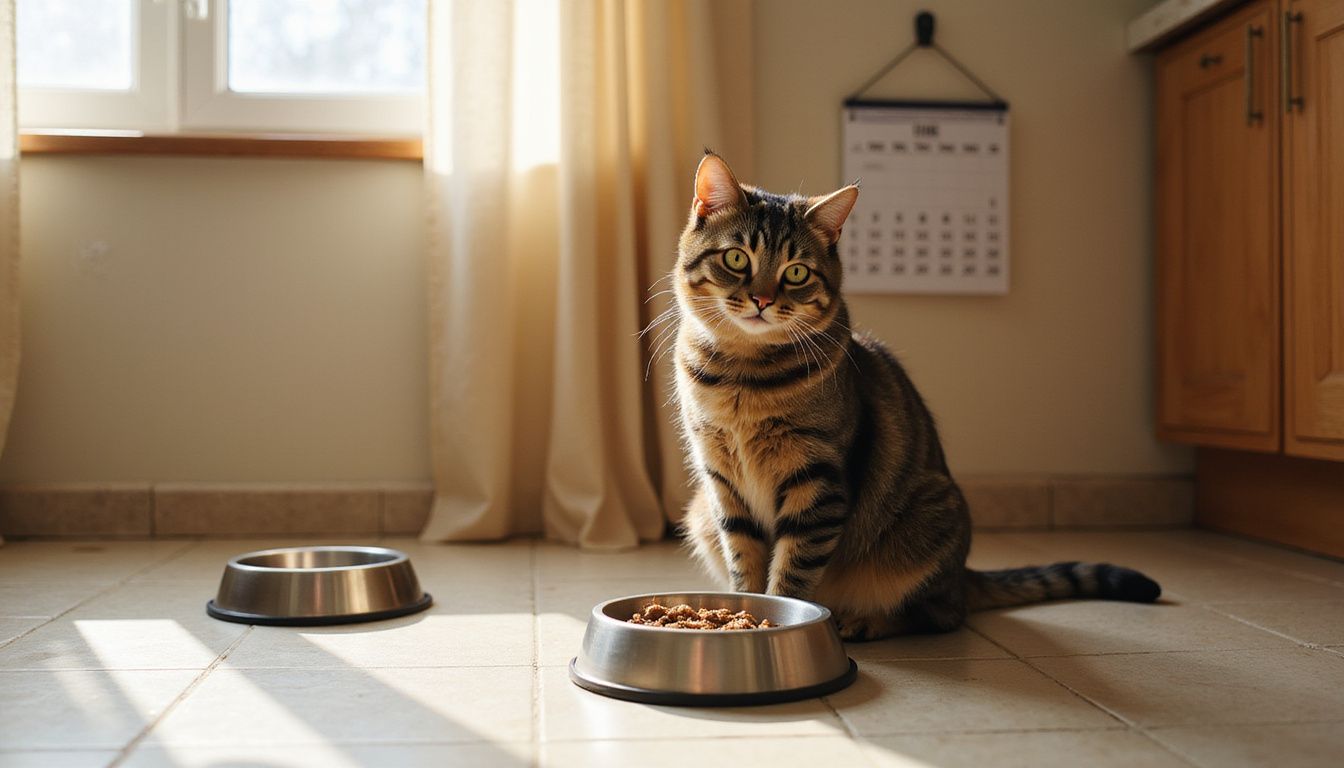
Your cat needs a plan that works slowly and safely, not a crash diet that backfires. You’ll cut calories bit by bit, then stick to a feeding schedule that keeps her satisfied without the extra pounds piling on.
How do I reduce my cat’s calories gradually?
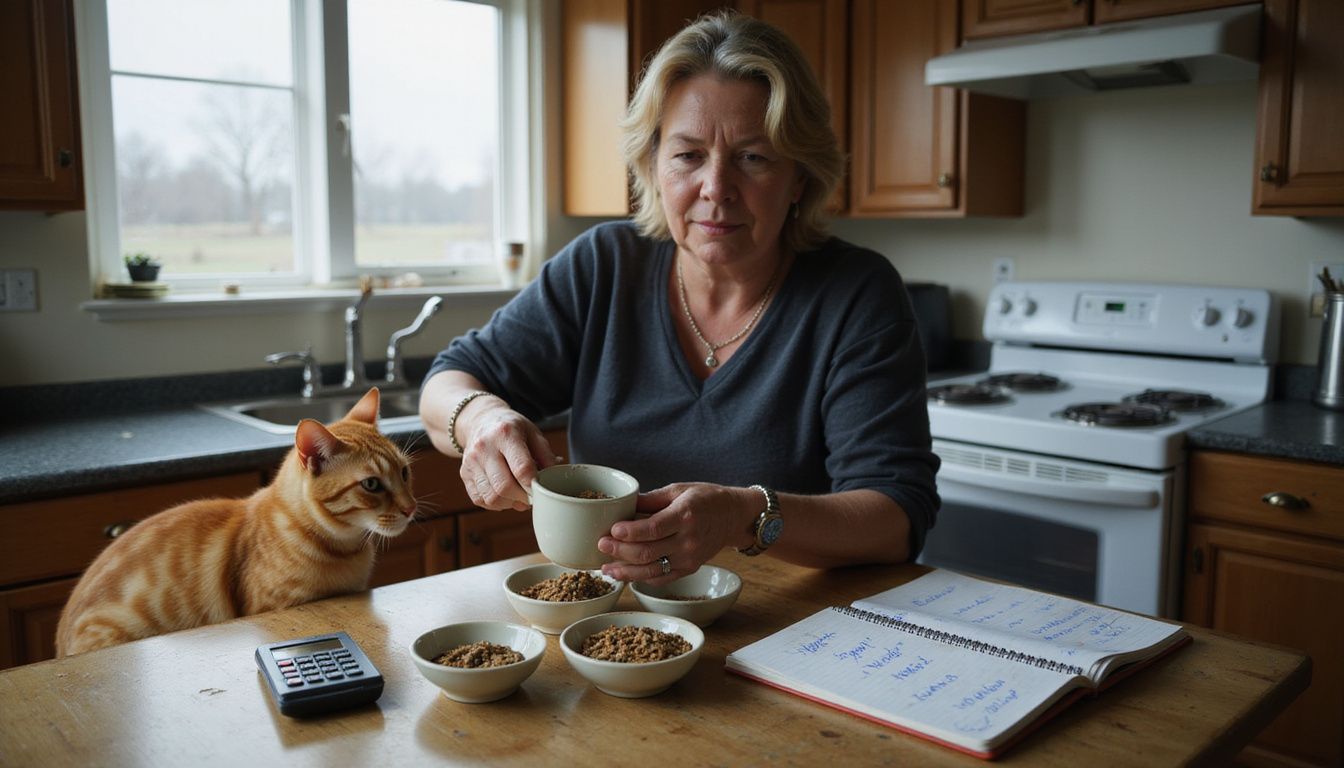
Gradual calorie reduction keeps your cat healthy and avoids dangerous metabolic problems. This works best when you cut calories slowly over time.
First, set your baseline
- Calculate your cat’s daily energy needs using a calorie calculator based on target weight, not current weight.
- Cut calorie intake to about 80 to 90 percent of maintenance needs. This gentle cut prevents stress and hunger for both of you.
- Aim for weight loss of 0.5 to 1 pound per month. Faster loss can trigger hepatic lipidosis, a serious liver condition.
- Switch to lower-calorie food slowly, over 7 to 10 days. Abrupt changes upset digestion and make your cat resist new meals.
Then, build the daily routine
- Split total daily food into three to six small meals. Multiple feedings boost fullness and cut down on begging.
- Keep feeding times consistent so your cat knows when meals arrive. Predictable timing helps portion control.
- Reassess calories, macros, or food type if weight loss stalls after 90 days. Metabolism sometimes adapts, so tweaks help.
- Watch hunger cues during the transition. A little extra meowing is normal, but real distress means you’re cutting too fast.
Budgeting for the diet switch helps you avoid sticker shock once you start. A typical starter setup runs about $85 total: a six-week supply of prescription wet food for around $45, a kitchen scale for $18, and two slow-feed puzzle bowls for $22. Setting aside that budget upfront made the transition smoother for a lot of cat owners starting weight plans, and it kept portions exact from day one.
What are the best ways to control portions and schedule feeding?
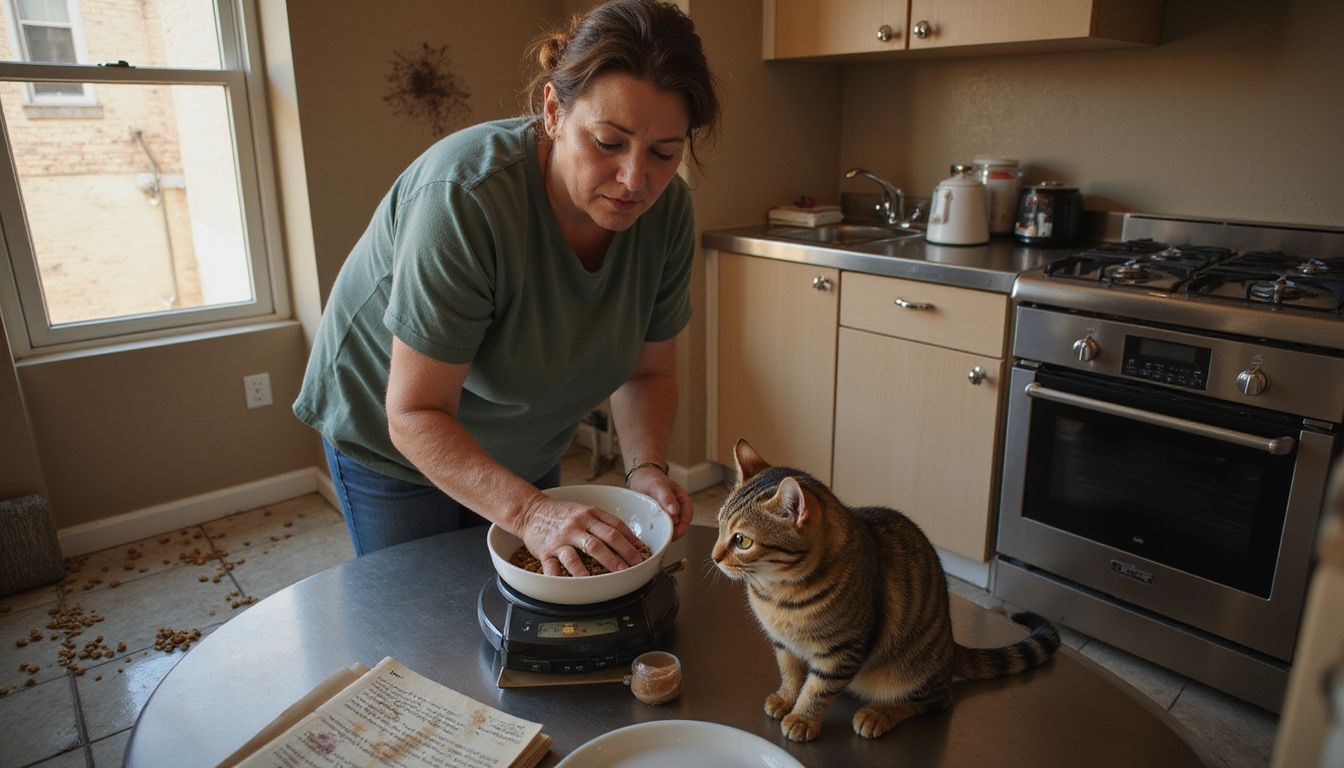
Portion control and meal scheduling are the backbone of your cat’s weight loss plan. These two habits work together to stop overeating and keep her satisfied all day.
Get the portions right
- Weigh food on a kitchen scale instead of eyeballing it. According to a 2026 survey by the Association for Pet Obesity Prevention, only 3% of cat owners actually weigh out dry food. Most rely on guesswork, which often adds 5 to 10 extra kibbles per meal, enough to wipe out an entire day’s calorie deficit.
- Replace free-feeding with three to four scheduled meals a day instead of leaving food out all the time.
- Skip gravity feeders and auto-dispensers. They make mindless munching too easy.
- Use food puzzles or slow feeders so mealtime lasts longer and burns a few extra calories along the way.
Stick to the schedule
- Track every treat and extra kibble your cat eats. Cap extras at 5 to 10 kibbles a day and count them in her total calories.
- Offer fresh water when she begs at an empty bowl. Thirst often disguises itself as hunger in cats.
- Keep feeding times the same every day. Predictability cuts down on anxiety and constant begging.
What diet is best for helping an overweight cat lose weight?
Your cat’s diet makes or breaks the whole plan. The right food works like fuel that powers her metabolism while keeping hunger at bay.
Why choose high-protein, low-carb foods for my cat?
Cats are obligate carnivores, meaning their bodies evolved to run on animal protein, not grains or carbs. Dry kibble often packs in high carbs and low protein, a combo that adds pounds fast.
High-protein, low-carb diets support lean muscle while promoting fat loss, which makes them a far better choice for weight management. Wet food adds hydration too, and usually has fewer carbs than dry options.
Prescription diets like Royal Canin Satiety are built with high protein and low carbs to help your cat feel full longer. That satiety factor matters because it cuts down on constant hunger signals and stops the five-minute-later begging routine.
| Diet Type | Protein Content | Effect on Muscle |
|---|---|---|
| Prescription high-protein diet | About 48% | Preserves lean muscle during weight loss |
| Standard metabolic weight-control diet | About 26% | More muscle loss during calorie cuts |
According to a 2026 veterinary review published in the journal Animals (MDPI), diets around 48% protein combined with essential fatty acids preserve lean muscle far better than standard metabolic weight-control diets sitting around 26% protein. That’s proof this isn’t just a trend. It’s a strategy that keeps your cat strong while the fat comes off.
How can high-fiber foods help my cat feel full?
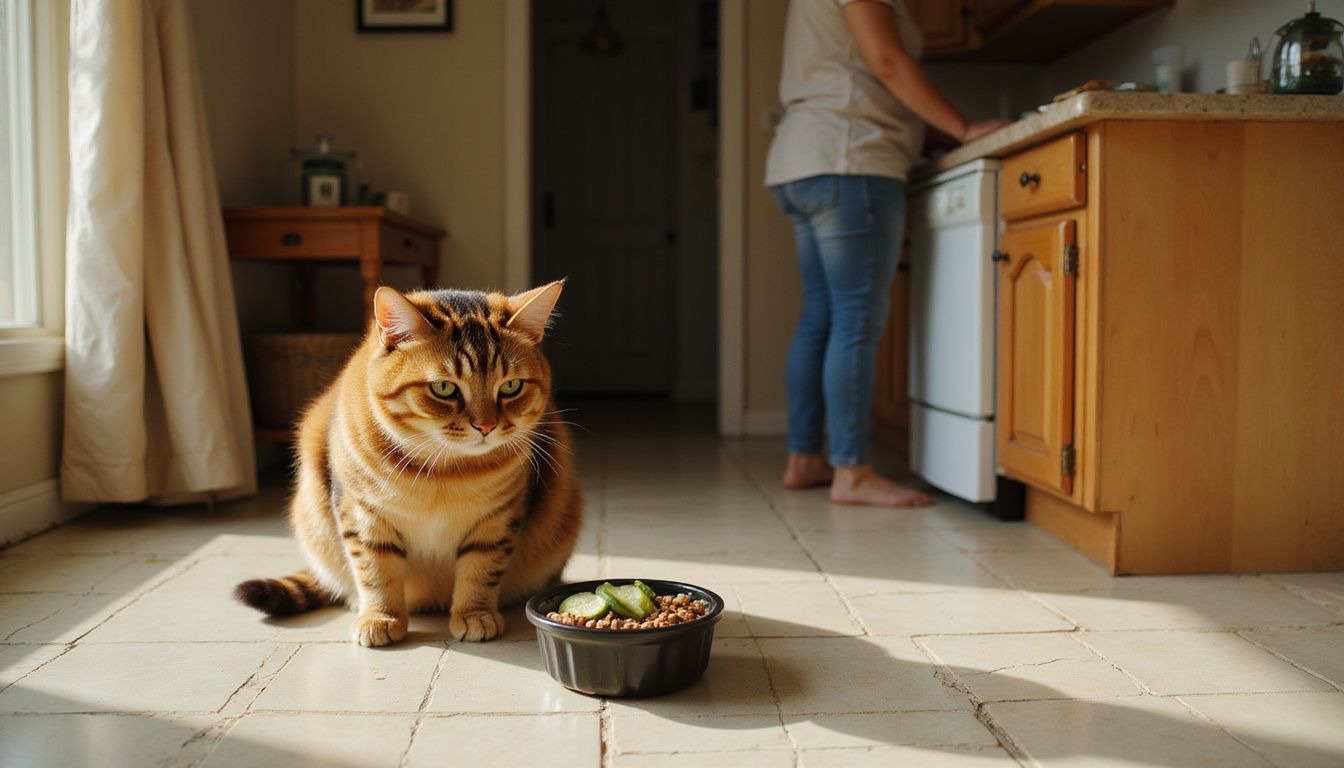
High-fiber foods work like a natural appetite suppressant. Fiber slows down how fast food moves through your cat’s gut, so she feels satisfied for longer.
That extended fullness cuts down on begging and constant meowing at the bowl. She still gets solid nutrition while eating fewer calories overall, which is exactly why prescription weight-loss diets often add extra fiber for this reason.
Tips for a smooth fiber transition
- Mix low-calorie veggies like cucumber into meals to add bulk without extra calories.
- Blend small amounts of the new food with the old one, then increase the ratio slowly over 7 to 10 days.
- Watch for softer stools or bigger stool volume during the shift, and slow down if it seems like too much too fast.
- Stick to smaller, more frequent meals with the higher-fiber food to keep hunger and stress low.
How can I encourage my cat to exercise regularly?

Your cat needs movement to shed those extra pounds, and playtime makes it fun instead of a chore. Getting her active turns exercise into something you both enjoy together.
What are some fun interactive play ideas for cats?

Getting your cat moving takes a little creativity and consistency. Interactive play keeps her engaged, stimulated, and burning calories while having fun.
Toy time favorites
- Grab a feather wand or fishing pole toy to mimic prey movement and get her chasing and pouncing.
- Toss balls around the house so she runs and bats them across floors and under furniture.
- Use a laser pointer to trigger her chase instinct, but always end with a physical toy she can actually catch.
- Try catnip toys with nepetalactone to spark playfulness, though not every cat responds to it.
- Rotate toys weekly to keep boredom away and motivation high.
Games that boost the burn
- Scatter kibble down stairs or hallways so she has to run and jump while hunting for meals.
- Offer motion toys and boxes that crinkle, pop, or move unpredictably to spark her hunting instinct.
- Place treat-dispensing toys around the house so she works for rewards.
- Set up safe climbing structures and shelves for vertical activity. Based on 2026 indoor activity data for feline weight control, ten minutes of active vertical climbing, like chasing a wand toy up a cat tree, burns roughly 12 to 15 kilocalories, compared to just 7 to 9 kilocalories for the same time spent pouncing on the floor.
- Keep sessions short, 5 to 10 minutes, and repeat a few times a day for the best results.
One household with two indoor cats tried weekly toy rotation paired with structured five- to ten-minute play sessions over eight weeks. Rotating three different toy types kept both cats engaged daily, and measured play frequency rose from one to three sessions per day. Owner-reported engagement went up in six of the eight weeks, and both cats got noticeably more willing to chase and pounce once the routine stuck.
How do toys and climbing structures promote activity?
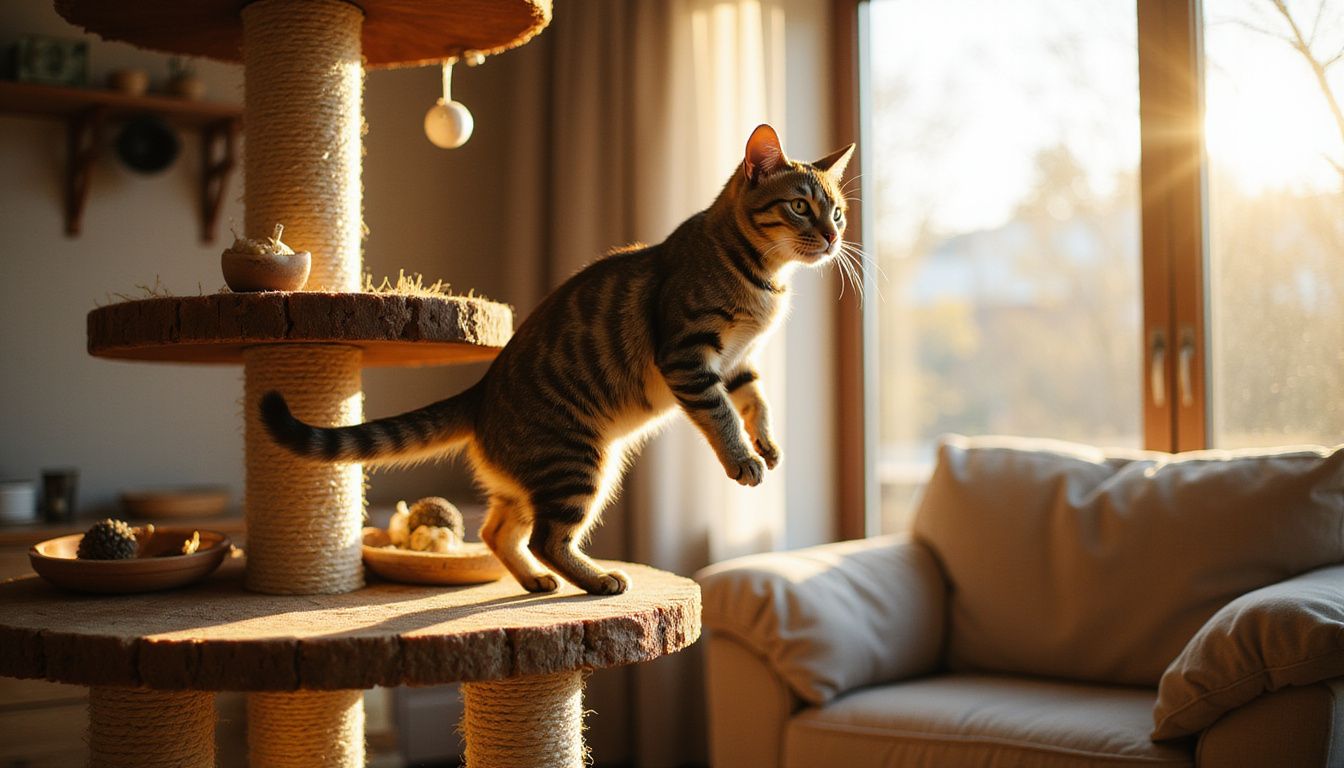
Toys and climbing structures work together to spark your cat’s natural instincts and keep her moving all day. Scratching posts and cat trees give her vertical space to jump, climb, and stretch.
How each tool taps into instinct
- Multiple perches: Let her survey her surroundings from above, tapping into a natural instinct.
- Puzzle and slow feeders: Turn mealtime into an active challenge instead of a passive one.
- Elevated feeding stations: Encourage climbing just to reach the food bowl.
- Rearranged furniture or new items: Spark curiosity and mental engagement alongside physical activity.
Jumping between heights builds strength and endurance, while feather wands and balls get her moving fast and burning calories. Combine these tools and you create a space where your cat stays active on her own, which makes weight loss feel more like playtime and less like a chore.
How should I monitor my cat’s weight loss progress?
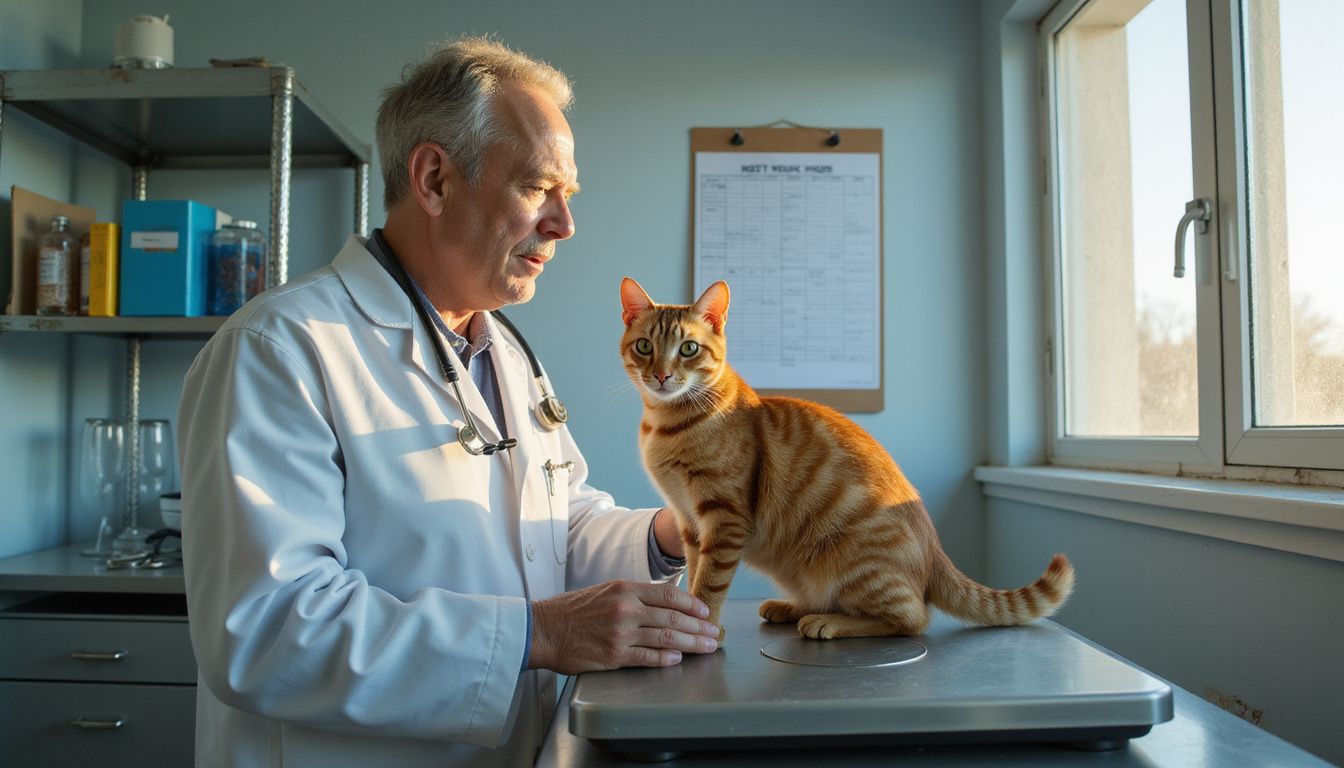
Tracking your cat’s weight loss keeps you on the right path and catches problems early. Regular weigh-ins and vet visits work together to keep her healthy while she drops those extra pounds.
How often should I track my cat’s weight?
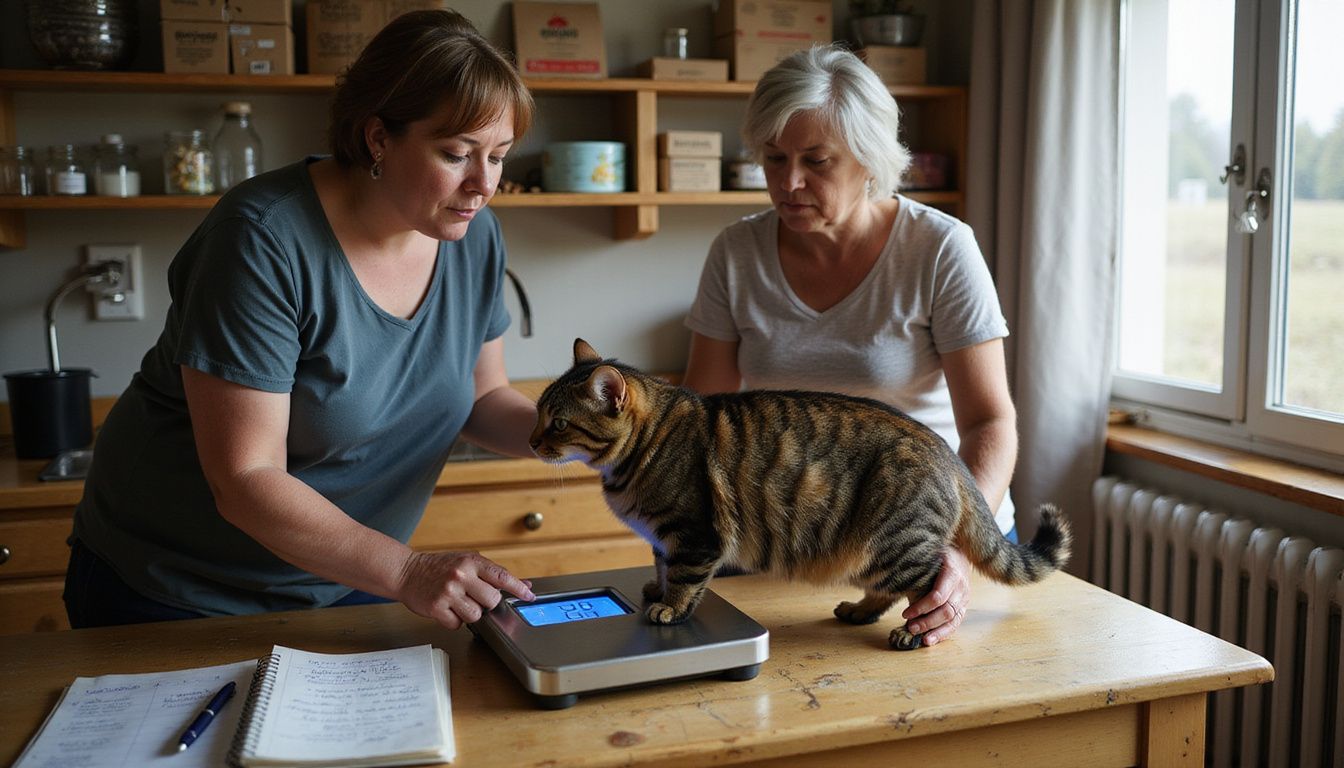
Your cat’s weight tells you a lot about how the plan is going. Getting the numbers right helps you catch problems early and stay on track.
The first few months
- Weigh in weekly at the start of the plan. This lets you spot fast changes or a stalled pace right away.
- Write down each weigh-in so you can see trends over time, not just single numbers.
- Use a Pet Weight Pace Check to confirm loss stays at 0.5 to 1 pound per month. Faster loss can hurt her health.
Once things settle in
- Switch to monthly check-ins once weight loss finds a steady pace. This keeps you informed without obsessing over daily changes.
- Check body condition and overall health every 4 to 12 weeks alongside the scale numbers.
- Adjust daily calories if loss speeds up too much or stalls out completely.
A simple routine mixes home tracking with vet oversight. Weigh your cat weekly for the first twelve weeks on the same scale, log each number in a simple chart, and flag any single-week loss over 1.5% of body weight. Schedule vet check-ins every four weeks for the first three months to catch problems early. For one adopter, those weekly weigh-ins and a basic chart caught a sudden drop early enough to call the vet before it became serious.
Your veterinarian can guide you on adjusting your cat’s diet as weight loss progresses.
Why are regular veterinarian check-ins important?
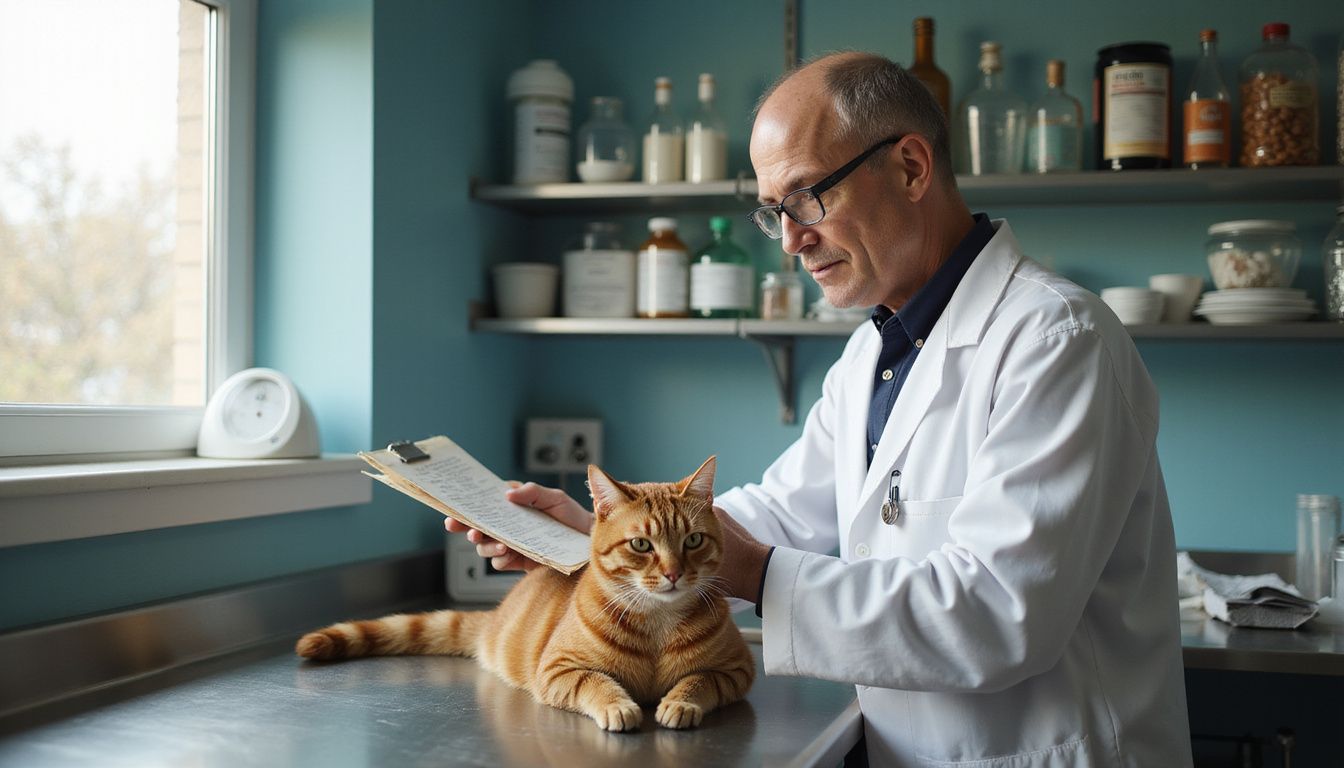
Regular vet visits form the backbone of your cat’s weight loss journey. Your vet tracks progress through body condition scoring, which measures fat distribution across her frame, and sets accurate targets based on her specific body type and age.
Vets catch problems early too. They rule out diseases that could affect appetite or metabolism, like thyroid issues or diabetes, and they reduce the risk of hepatic lipidosis, the liver condition that can develop when weight loss moves too fast. Think of these visits as your safety net, catching complications before they turn into a real health crisis.
If weight loss stalls after 90 days, your vet can adjust calorie plans, food types, or exercise routines based on what’s actually working.
As presented at the 2026 American College of Veterinary Internal Medicine (ACVIM) Forum in Seattle, new options like feline GLP-1 receptor agonists, such as the investigational drug AKS-562c, are showing promise for cats stuck at a stubborn plateau. It’s a good reminder that staying in touch with your vet keeps the door open to new tools if diet and exercise alone hit a wall.
These check-ins usually happen every four to six weeks, giving your vet enough time to measure real progress without overloading your schedule. Having a trained professional in your corner means expert guidance behind every decision you make for your cat’s health.
Conclusion
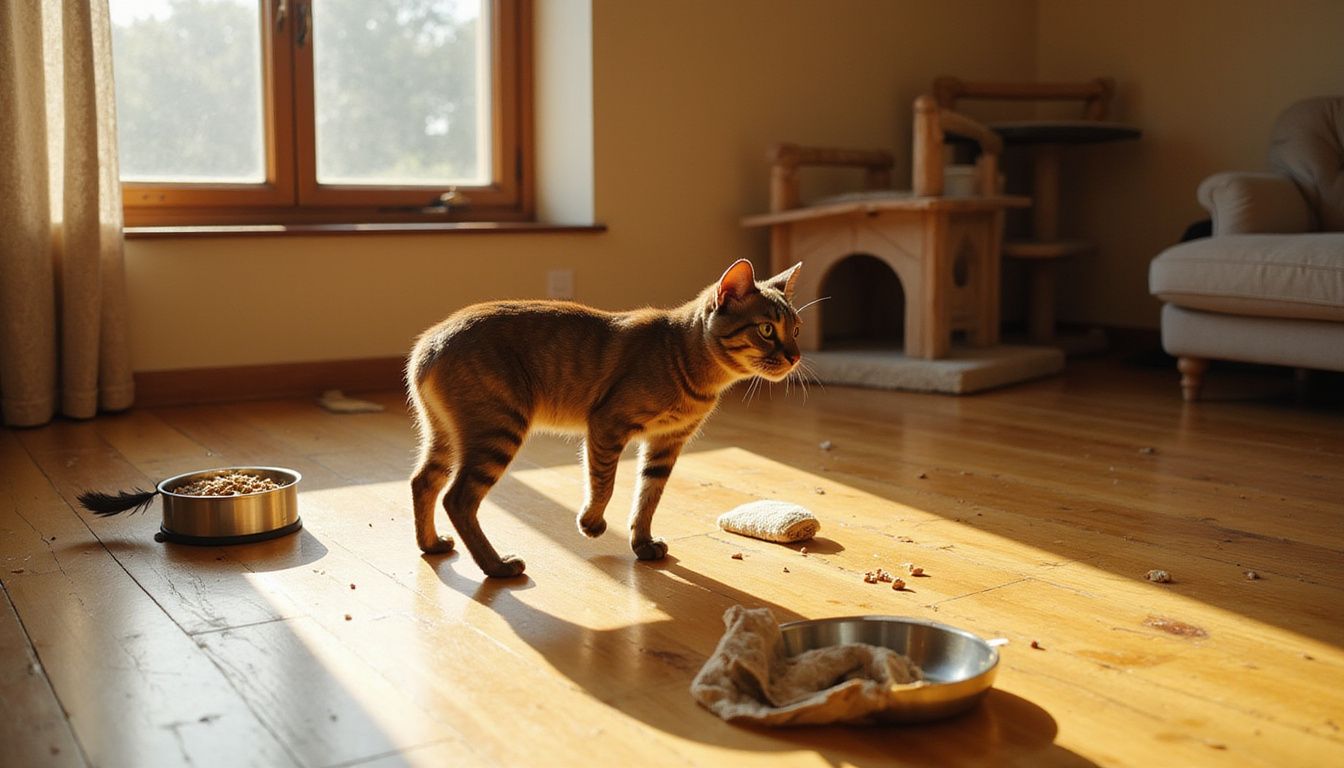
You now have a practical roadmap for how to help an overweight cat lose weight safely and healthily. Portion control, careful calorie adjustments, and a high-protein, low-carb diet form the foundation of the whole plan.
Adding 15 to 20 minutes of daily exercise with interactive toys and climbing structures keeps your cat active and engaged. Monthly weigh-ins and vet check-ins track progress and catch setbacks before they turn serious.
Your cat can reach her ideal weight within 6 to 12 months, and that means years of a healthier, happier life free from diabetes, arthritis, and other weight-related problems.
FAQs
1. How do I know if my cat is overweight?
You can check by gently feeling your cat’s ribs – if you can’t feel them easily under a thin layer of fat, your cat may be carrying extra weight. Vets use a Body Condition Score (a 1-9 scale), and cats at 6 or higher usually need to slim down. You should also look for a visible waist when viewing from above.
2. How much weight should my cat lose each week?
Slow and steady wins the race here – aim for about one to two percent of body weight per week, which is what the Association for Pet Obesity Prevention recommends. Rapid weight loss can actually harm your cat’s liver, so patience is really important.
3. What should I feed my overweight cat?
Switch to a high-protein, low-carb diet made for weight control – look for food with at least 40 percent protein. Measure out portions carefully instead of free-feeding all day, and talk to your vet about what works best for your cat.
4. Can I still give my cat treats while she’s on a diet?
Yes, but keep them small and infrequent – treats should make up no more than ten percent of your cat’s daily calories. Try freeze-dried chicken treats or small pieces of plain cooked chicken for a healthier option.