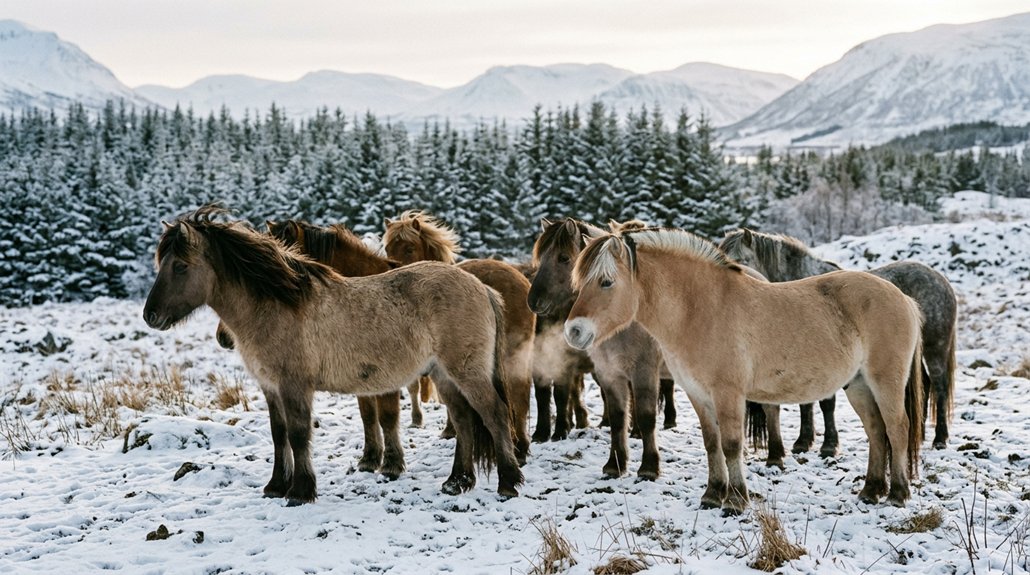
You’ll find that cold-hardy horse breeds like Icelandic Horses, Norwegian Fjords, and Canadian Horses thrive in sub-zero temperatures due to their dense coats and energy-efficient metabolisms. These breeds excel in endurance and stamina, with characteristics such as Icelandic Horses’ unique tölt gait and Mustangs’ agility over snowy terrains. Their low-maintenance dietary needs and natural insulation make them ideal for harsh climates. You’ll discover more about managing these resilient breeds in challenging winter conditions.
Key Takeaways
- Icelandic Horses feature efficient thermoregulation and a smooth tölt gait, ideal for icy terrains.
- Norwegian Fjord Horses have a dense coat and muscular build, making them reliable in sub-zero temperatures.
- Canadian Horses offer longevity and reduced winter feed needs, adaptable for various equestrian activities.
- Shetland Ponies and Exmoor Ponies possess robust constitutions and energy-efficient metabolisms, thriving in cold climates.
- Mustangs have thick coats and agile physiology, epitomizing cold-hardy resilience and endurance.
Why Choose Cold-Hardy Horse Breeds?
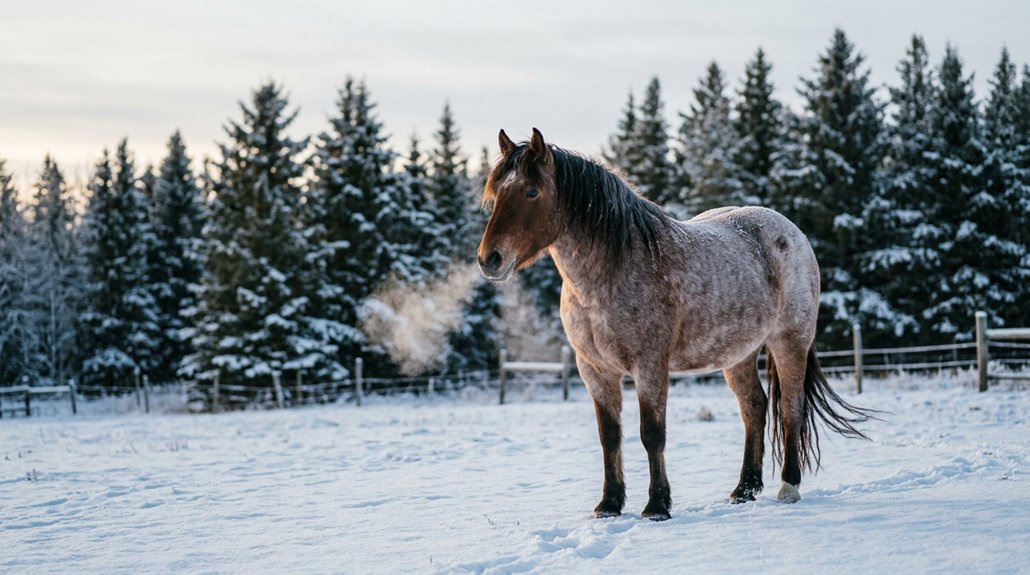
When considering horse breeds for colder environments, it’s essential to understand the advantages cold-hardy breeds provide. They’re specifically adapted to endure sub-zero temperatures, guaranteeing both survival and peak performance. These breeds exhibit significant cold weather benefits, including dense coats and muscular builds that offer excellent natural insulation. Their energy efficiency is remarkable, as they effectively convert calories into energy, leading to reduced winter feed costs. This efficiency guarantees that these horses maintain stamina, vital for long-term ownership in harsh climates. Breeds such as the Norwegian Fjord stand out for their endurance and longevity. Additionally, their gentle temperament makes them well-suited for low-stress activities, appealing to new horse owners. By choosing these breeds, you’re guaranteeing economical and practical horse management.
Icelandic Horses: The Friendly Cold-Weather Companion
As you consider the Icelandic Horse for a cold-climate companion, you’ll find its unique lineage and survival traits compelling. Bred in isolated, harsh environments, this pony-sized equine evolved efficient thermoregulation and displays the distinctive tölt gait, optimizing stability and rider comfort on icy terrains. Their low-maintenance dietary needs and friendly disposition further render them exceptional selections for cold weather companions.
Unique Breeding and Origins
Icelandic Horses represent a fascinating example of selective breeding resulting in a breed uniquely adapted to cold climates. This equine’s breeding practices involve isolation in Iceland for over 1,000 years, preserving their genetic purity and robust traits. Historically significant, their lineage can be traced back to Norse settlers, whose keen understanding of environmental adaptation guided selective breeding choices. Standing between 12 and 14 hands, these ponies possess both strength and a robust build essential for enduring harsh winters. Their efficient metabolism allows effective conversion of calories into energy, minimizing winter feed requirements. This genetic heritage makes them ideal companions for those interested in a hardy, intelligent breed that embodies historical adaptation and versatile cold-weather resilience.
Distinctive Gait: The Tölt
Building on their historical resilience and adaptability, these Icelandic horses offer more than just a strong build for cold climates; they boast a distinctive gait known as the tölt. This unique gait allows for smooth, rhythmic movements, providing a comfortable journey across snowy terrains. Unlike other gaits, the tölt doesn’t jar the rider, preserving energy and stamina. Mastering tölt techniques is essential for maintaining the comfortable four-beat gait at various speeds, making the Icelandic horse indispensable for lengthy rides in harsh, wintry environments.
- Smooth Shift: Minimal bounce translates into an easier ride.
- Energy Efficiency: Reduces rider fatigue, perfect for long distances.
- Versatile Performance: Suitable for both leisure and competition.
- Durable Consistency: Can sustain tölt over extensive periods.
Adaptation to Harsh Winters
With their thick, double-layered coat, Icelandic horses are exemplary in their adaptation to frigid environments, providing excellent insulation against bitter temperatures. Standing 12 to 14 hands high, they’re pony-sized yet robust, thriving in harsh landscapes. Icelandic horses, bred in isolation for over a millennium, exhibit a combination of intelligence and a strong work ethic, adapting effortlessly to cold terrains. Their specialized feeding strategies incorporate nutrients essential for maintaining stamina and energy in challenging winters. Implementing specific training techniques guarantees they retain remarkable agility on icy grounds. Their tölt gait further enhances navigation in snow, while their longevity and stamina prove indispensable.
| Feature | Details |
|---|---|
| Height | 12-14 hands |
| Unique Gait | Tölt |
| Adaptation Features | Double-layer coat, intelligence |
| Key Skills | Feeding strategies, training techniques |
The Norwegian Fjord: A Sturdy and Calm Family Horse
In the domain of equine endurance and versatility, the Norwegian Fjord horse stands out as an exemplary breed. These horses, originating from Norway, were the Vikings’ choice as draft animals, showcasing remarkable strength and reliability. Their family-friendly temperament makes them ideal for those seeking a gentle and dependable companion. With a visually striking two-tone mane and dun coloring, they’re easily spotted among other breeds.
Renowned for endurance and versatility, the Norwegian Fjord horse is the Vikings’ strong and reliable draft choice.
Standing at 13 to 14.2 hands high, the Fjord is built for cold climates, thanks to its stocky and robust constitution. Its level of adaptability is ideal for a range of equestrian activities. Here’s what makes the Norwegian Fjord distinctive:
- Calm demeanor
- Sturdy and hardy build
- Unique two-tone mane
- Versatile in activities
Shetland Ponies for Young Riders in Chilly Regions
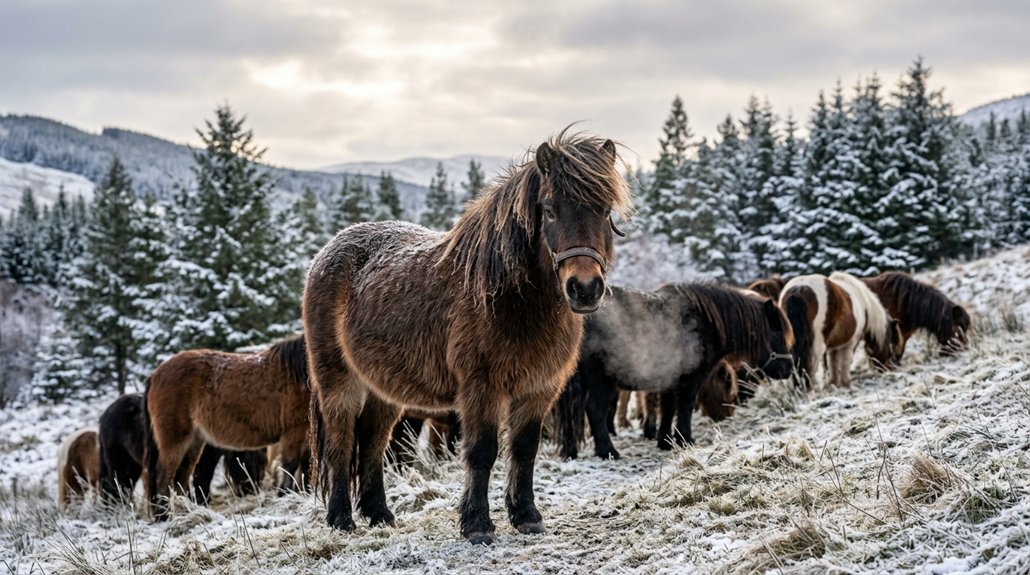
Although the Shetland Pony is diminutive in stature, standing typically about 46 inches tall, its characteristics are perfectly attuned to cold climates, making it an ideal choice for young riders in chilly regions. These ponies boast a robust build and a thick double coat, providing superior insulation against frigid temperatures, guaranteeing optimal thermal comfort and health. Their gentle temperament paired with high intelligence and willingness to work encourages riding confidence in novice equestrians. Shetland characteristics, such as adaptability to harsh climates and manageable size, offer a smooth and gentle riding experience essential in fostering skill development. Ideal as a first mount, Shetlands’ innate cold-weather hardiness and reliability guarantee a seamless introduction to equestrian pursuits in colder regions.
The Enduring Canadian Horse
You’ll find the Canadian Horse stands out for its remarkable longevity and versatility, with origins tracing back to French bloodlines introduced in North America during the 17th century. Its dense, insulating coat enhances its cold climate adaptability, making it a reliable choice for regions with harsh winters. This breed’s ability to maintain good health into its 30s, combined with its calm demeanor and stamina, makes it a suitable option for a variety of equestrian disciplines and farm work.
Longevity And Versatility
The Canadian Horse stands out as a remarkable equine breed due to its exceptional longevity and impressive versatility. Known for living into their 30s, these horses offer substantial health benefits, requiring fewer medical interventions, making them cost-effective. Its versatility is evident across various disciplines, like riding and driving. Being of French stock origin, breeding considerations focus on maintaining their calm temperament and intelligence. Here’s why you should consider the Canadian Horse:
- Extended Lifespan: Capable of thriving well into older age.
- Versatile Applications: Excels in diverse activities—ideal for both leisure and competition.
- Efficient Feed Utilization: Reduced winter feed needs due to effective calorie conversion.
- Calm and Intelligent: Their demeanor suits novice and seasoned riders alike.
This breed embodies both longevity and unmatched versatility.
Cold Climate Adaptability
Evolutionarily adapted to thrive in cold climates, the Canadian Horse showcases remarkable cold-weather resilience and adaptability. This breed’s muscular build and thick coat provide essential insulation against frigid temperatures, which is vital for surviving harsh winters. Effective cold weather grooming guarantees their coat remains clean and insulating, preventing moisture buildup that can lead to discomfort and cold stress.
Your winter feeding strategies benefit from the Canadian Horse’s efficient metabolism. They require less feed as they skillfully convert calories into energy to maintain body heat, assuring they remain hardy during colder months. Their calm demeanor and adaptability across different terrains make Canadian Horses ideal for diverse tasks, from riding to draft work, even in the most challenging winter environments.
Historical French Bloodlines
Although sometimes overshadowed by more prominent breeds, the Canadian Horse stands as a demonstration of historical resilience and adaptability, with roots firmly planted in French bloodlines delving back to the 17th century. Their descent from French ancestry endows them with a distinctive edge in cold climates, due to traits shaped by centuries of rigorous selection. The historical significance of this breed is not only its lineage but also its robustness, resilient metabolism, and longevity—often living into their 30s.
- Cold-hardy characteristics: Efficient metabolism designed for winter survival.
- Versatile utility: Excels in riding, driving, and draft work.
- Strong, calm nature: Ideal for families, adaptable to novice riders.
- Enduring companionship: Reliable for long-term commitment in difficult environments.
Understanding these qualities deepens appreciation for this remarkable breed.
Exmoor Ponies: Natural Coats for Natural Cold Resistance
Withstanding harsh winter climates isn’t just a challenge for humans; it’s a testimony to the adaptability of certain horse breeds, such as the Exmoor Ponies. These ponies are scientifically remarkable due to their dual-layered coat; a dense, waterproof exterior guards against moisture, while the softer undercoat provides essential insulation. Standing between 12 to 13.2 hands high, Exmoor Ponies possess a hardy constitution tailored for rugged terrains. Their winter nutrition needs remain modest due to their natural resilience and energy-efficient metabolism. A strong, friendly disposition is inherent in their temperament, making them ideal for families and novice riders in cold regions. Historically utilized in farming, they’re lauded for stamina and health, seamlessly adapting to harsh environments without compromising vigor.
Mustangs: Nature’s Cold-Hardy Survivors
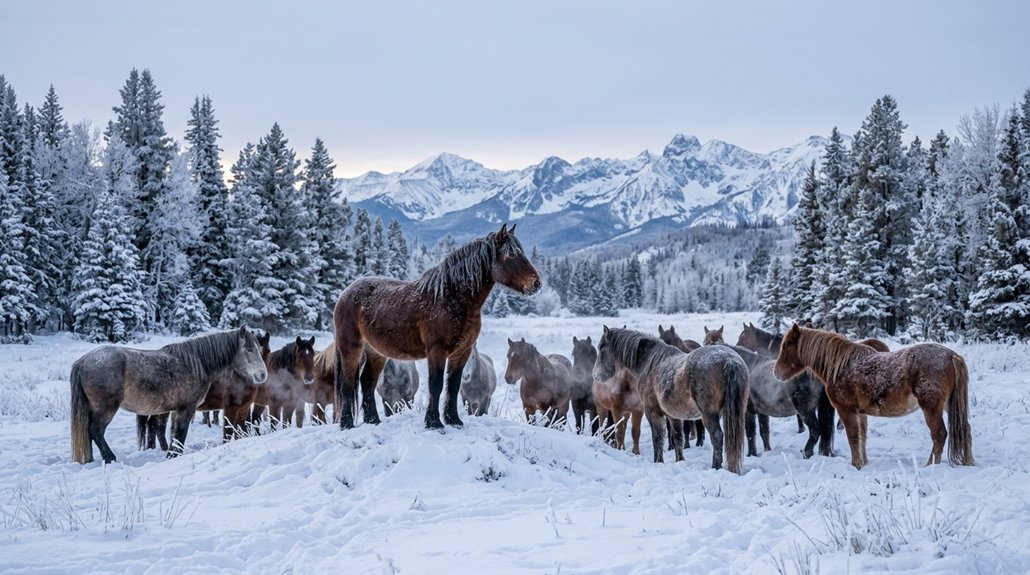
Mustangs, renowned as nature’s cold-hardy survivors, embody the adaptability required to thrive in frigid environments. Originating from Spanish horses, their remarkable endurance allows them to withstand the American West’s harsh conditions. You’ll find that mustang behavior reflects unique survival strategies such as:
- Energy conservation: They maintain health on low-maintenance diets and sparse vegetation.
- Agility: Their ability to navigate snowy landscapes showcases extraordinary intelligence.
- Physical adaptability: Thick winter coats and robust physiologies aid in their survival against cold.
- Symbolic resilience: Representing the American frontier spirit, Mustangs’ hardiness inspires admiration.
These mustangs, with their innate skills, show resilience in challenging terrains, making them exemplary in habitats where other breeds might struggle. They’ve become symbols of both the untamed spirit and survival.
Beyond the Basics: Discover Haflingers and Ardennais
Did you know that some horse breeds are better suited for harsh winter climates than others? Haflingers are a remarkable example, known for their distinctive chestnut appearance and dense coat, which aids in insulation and protection against cold. Despite their pony size, they exhibit notable versatility in riding disciplines, showcasing strength and agility beneficial in snowy terrains. Haflinger temperament is characterized by resilience, adapting well to cold stress with minimal discomfort. Ardennais horses, with their robust build, harness remarkable Ardennais strength, ideal for heavy labor in subzero conditions. They possess a calm demeanor, essential for efficiency in agriculture or forestry amidst challenging weather. Both breeds’ anatomical traits enhance survival in frigid environments, underscoring their adaptability to long winters without compromising robustness.
Managing Cold-Hardy Breeds Through Winter’s Toughest Conditions
Having explored the inherent adaptability of Haflingers and Ardennais to cold climates, it’s equally important to understand how to manage other cold-hardy breeds through winter’s harshest conditions. Equines like the Icelandic Horse and Norwegian Fjord possess robust builds and efficient energy conversion, minimizing the need for extensive shelter and reducing feed costs. Implementing strategic shelter strategies is vital, providing windbreaks and suitable bedding. Precision in nutrition management guarantees energy demands are met without excess. Consider these essentials:
- Shelter: Use windbreaks and natural barriers for ideal coverage.
- Diet: Tailor feed to maintain energy levels with minimal surplus.
- Monitoring: Regularly check weight and coat condition to prevent health issues.
- Bedding: Provide dry, insulating bedding to combat the cold.
These practices help maintain equine well-being and performance throughout winter.
Frequently Asked Questions
What Is the 20 Rule for Horses?
The 20 Rule suggests that when temperatures plus wind chill drop below 20°F, a horse’s cold adaptation might need intervention. Prioritize horse care by providing extra shelter, blankets, and nutrition to maintain their body heat and prevent health issues.
How Does a Horse Say “I Love You”?
Your horse says “I love you” through equine affection and communication. They nuzzle, softly vocalize, and engage in mutual grooming. Leaning against you or following closely are behaviors indicating trust and a strong emotional connection.
How Do You Say Hello in Horse Language?
You say hello in horse language through horse body language and equine vocalizations. Approach with ears forward and a relaxed posture. Listen for snorts or nickers, indicating excitement or recognition. This communication signals friendliness and acknowledgment.
What Smells Do Horses Love?
You’d notice horses display aromatic preferences and strong scent recognition, loving the smells of hay, fresh grass, apples, and carrots. They’re also comforted by human scents and may respond positively to certain essential oils like lavender.
Conclusion
When choosing a horse for cold climates, you’re not just picking a pet—you’re selecting a marvel of evolutionary triumph. From the ultra-adaptable Icelandic Horses to the rugged Mustangs that laugh in the face of snowstorms, these breeds are engineered for resilience. Mastering their care through winter’s harshest tests requires a meticulous strategy, but in these creatures, you gain not just horses, but partners in weathering the world’s iciest fury. They’re not just cold-hardy; they’re winter warriors!