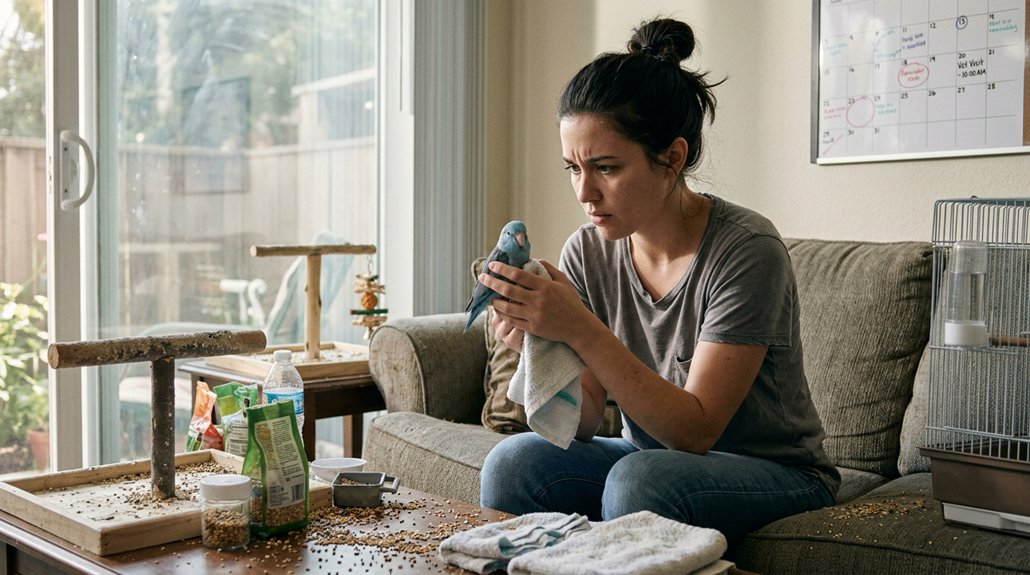
What new bird owners struggle with most is that parrots need daily time, not just food and a cage. You have to manage a long lifespan, build trust with steady training, watch body language to prevent bites, and provide a balanced diet with foraging and enrichment. You’ll also deal with noise, mess, and constant supervision. These needs are manageable, but they’re easy to underestimate at first, and the details matter more than you may expect.
Key Takeaways
- New bird owners often underestimate lifespan, so they struggle with long-term housing, finances, and future care planning.
- They frequently need more time than expected for daily supervision, handling, training, and socialization to prevent biting.
- Diet management is challenging, especially moving from seed-heavy feeding to balanced pellets, vegetables, and limited treats.
- Many struggle with housing needs like a large cage, proper perches, safe toys, and a clean, social room setup.
- Noise, mess, and constant enrichment needs often surprise owners, including frequent cleaning and rotating foraging toys.
Start With the Core Challenges of Parrot Care
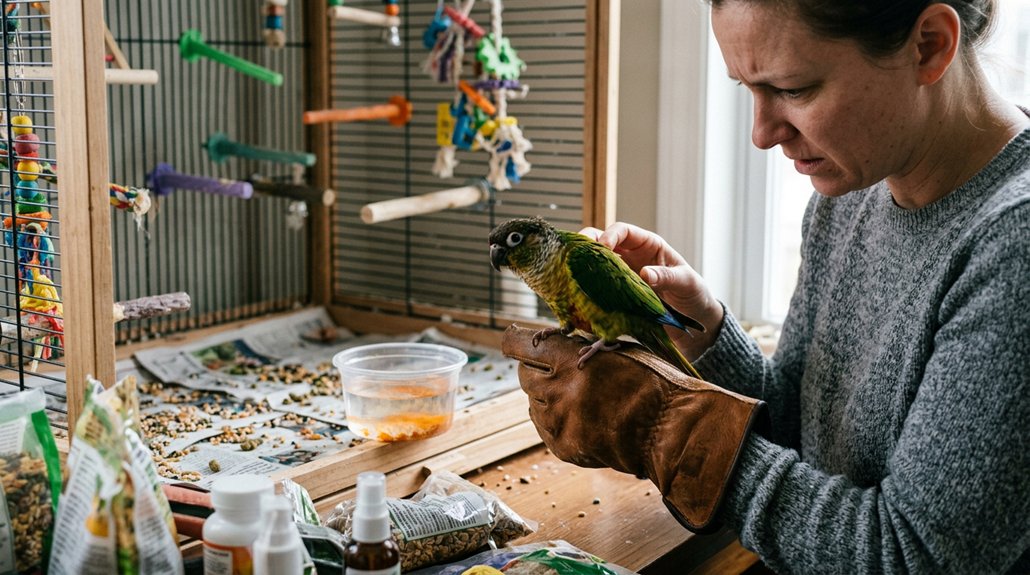
Before bringing a parrot home, you need to understand the core challenges of care: many species live 30–70+ years, so ownership is a long-term commitment that may require future rehoming planning. You’ll also need to prioritize early socialization, because trust, step-up training, and reading body language take months, not days. Consistent handling helps reduce biting and supports safe relationships with everyone in the home. Your setup matters too: parrots need spacious housing, daily supervised out-of-cage time, and routine exercise to prevent muscle loss and stress. Mental stimulation isn’t optional; varied toys, foraging, and rotation reduce boredom and destructive behavior. If you approach lifespan planning methodically, you’ll be better prepared for the bird’s physical, social, and behavioral needs over time.
Get Your Parrot’s Diet Right
Feeding your parrot well starts with moving away from a seed-only diet, since seeds are calorie-dense but lack many of the nutrients birds need and can contribute to fatty liver, obesity, and heart disease. Aim for a pellet proportion of about 60–80%, then add fresh foods.
- Offer daily vegetable variety: leafy greens, carrots, bell peppers, and sweet potato.
- Keep fruit small and occasional; it’s high in sugar.
- Use foraging bowls and food puzzles to slow eating.
- Match pellet size and seed or nut limits to your species.
- Put treats in bowls, not your hand, to reduce food-related bonding.
You should tailor portions to your bird’s species and size. If you’re unsure, ask an avian vet for a precise plan.
Set Up a Cage Your Parrot Will Use
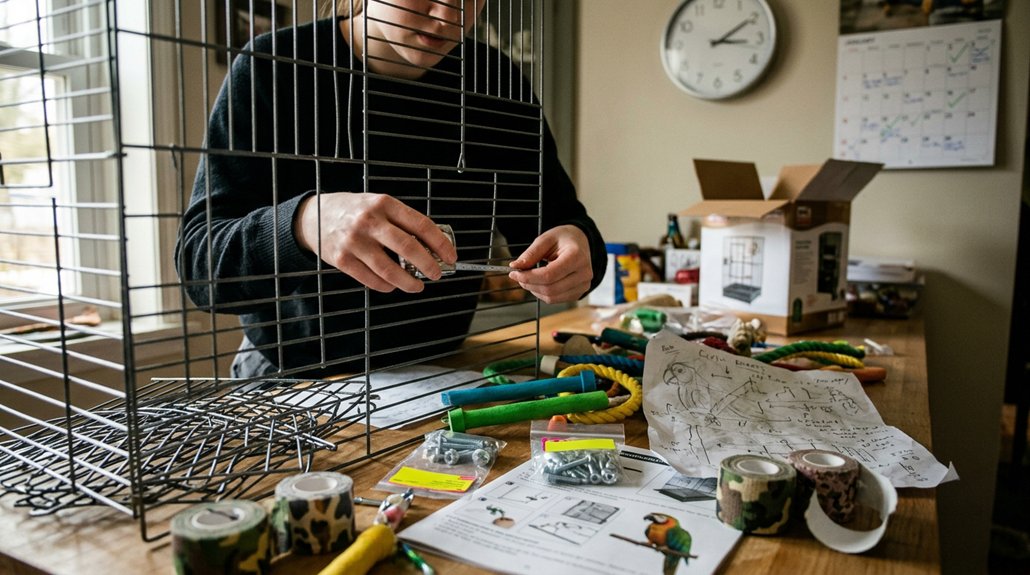
Once your parrot’s diet is in place, the next step is creating a cage setup that supports daily use, movement, and safety. Choose the largest cage you can fit, and favor width over height; your bird’ll use horizontal space most. Correct cage placement means a social room, away from drafts, kitchens, and midday sun.
| Feature | Target | Why it matters |
|---|---|---|
| Cage size | Wide, species-appropriate | Supports movement |
| Perches | 3+ diameters/textures | Reduces foot strain |
| Bowls | Away from perches | Limits contamination |
Provide perch variety with natural wood, rope, and a smooth perch, and place bowls where droppings won’t reach them. Mount food and water accessibly, yet cleanly. This setup helps you reduce bumblefoot risk and encourages consistent use.
Use Safe Toys and Foraging for Enrichment
You’ll help your bird stay engaged by offering safe toys made of hardwood, stainless steel, untreated leather, or food-grade silicone, then rotating them every 1–2 weeks to reduce boredom. Foraging toys can also keep interest high by making your bird work 10–30 minutes for food through paper-wrapped treats, puzzle feeders, or shallow bowls, which can lower feather-plucking and screaming. Check toys daily for damage, and replace anything frayed, splintered, loose, or corroded so you’re reducing the risk of injury or choking.
Safe Toy Rotation
Rotate your bird’s toys every 7–10 days to prevent habituation and keep foraging behavior active, since many parrots lose interest in a single toy within days. Use seasonal swaps and sensory variety to maintain interest without overstimulation.
- Choose untreated hardwood, leather strips, sisal/jute rope, or stainless steel.
- Avoid cotton rope, Teflon-coated parts, lead, zinc, and tiny loose pieces.
- Match toy size and complexity to your bird’s species and beak strength.
- Offer foraging items in partially filled bowls, boxes, or paper-wrapped treats.
- Check daily for fraying, breakage, or worn edges, and replace damaged toys immediately.
This routine lowers choking, impaction, and poisoning risk while keeping enrichment safe.
Foraging That Prevents Boredom
Foraging keeps your parrot’s mind and body engaged, and it should make up a substantial part of the day—ideally multiple small opportunities totaling about 25–50% of waking hours. You can reduce boredom by offering creative foraging with 6–8 safe devices, rotated weekly, such as boxes, paper-wrapped treats, shredded palm fronds, and wooden puzzle toys. Vary placement in partial bowls, hidden cups, hanging toys, and shreddable paper to support natural searching and foot use. Use chopped vegetables, legumes, and limited pellets as the main rewards; reserve seeds or nuts for rare, high-value reinforcement. This sensory enrichment helps prevent habituation. Inspect weekly for frayed rope, deteriorated plastic, toxic woods, or damaged coatings, and discard unsafe items immediately.
Read Parrot Body Language to Prevent Biting
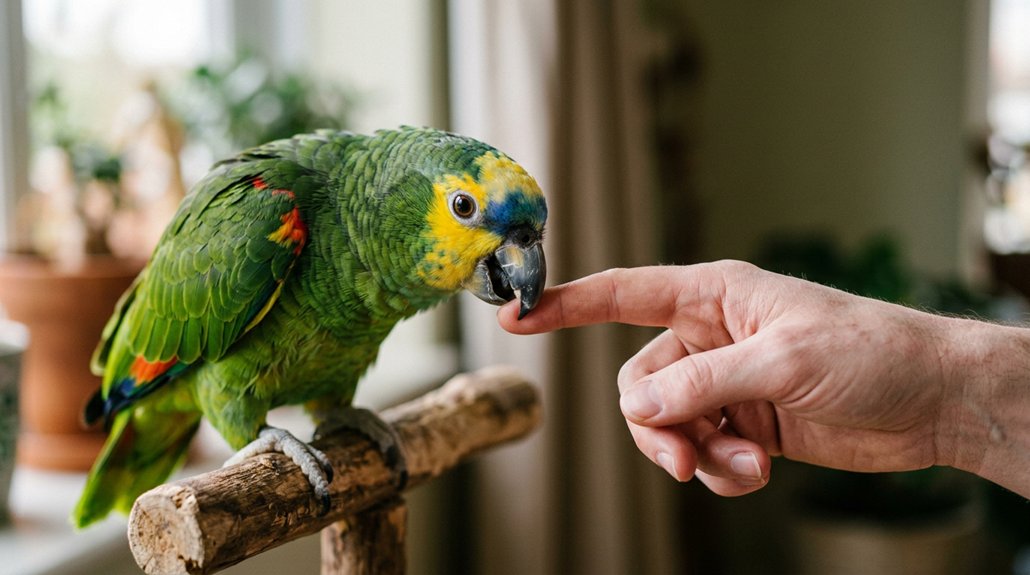
A parrot often gives clear warning signs before biting, and learning them can help you intervene early. Watch eye language and weight signaling closely; these cues often change before a strike. You’ll reduce risk by recognizing your bird’s individual pattern.
A parrot often warns before biting; learning its eye language and posture helps you intervene early.
- Rapid eye pinning
- Flared tail, stiff wings
- Forward lean, lowered head
- Sudden shrieks or grinding
- Beak rubbing or clicking
If you see these signs, stop contact and give space. Flattened crest or back feathers, tense facial muscles, and a tightly closed beak also suggest agitation. Over weeks, note your parrot’s baseline behavior so you can spot its usual triggers sooner. This isn’t about fear; it’s about precise observation. Calm withdrawal at the first warning can prevent injury and help your bird feel safer.
Build Daily Training Into Parrot Ownership
You should build in 15–30 minutes of focused training each day, split into short sessions so your bird can practice step-ups and recall without becoming overwhelmed. Use calm, positive trust sessions with high-value rewards and a marker cue, and end each session before your bird shows signs of stress. You can also turn routine moments, like feeding or opening the cage door, into brief practice for stepping up and targeting.
Daily Step-Up Practice
Build daily step-up practice into your bird’s routine with brief, low-pressure sessions of about 3–5 minutes, 2–3 times per day, so the behavior becomes automatic and bite incidents decrease. Keep perch placement steady, and if you use a flight harness, don’t add it during training.
- Start at cage level
- Use one verbal cue
- Reward only clean steps
- Ignore nips calmly
- Log each session
Ask for the step when your bird is calm, then offer your finger or target perch. Give a small high-value treat immediately after each success, then fade treats gradually over weeks. Rotate household members so your bird practices with more than one person, and use treats through the cage bars at first. Expect slow progress in fearful birds; steady repetition matters more than speed.
Short Trust Sessions
Daily step-up practice works best when it’s paired with short trust sessions that fit naturally into your bird’s day. Schedule 5–10 minute visits several times daily; parrots usually learn faster from predictable contact than from one long session.
| Session focus | Method |
|---|---|
| Calm presence | Sit nearby, avoid staring, and soften eye contact. |
| Positive access | Offer treats through the bars and let the bird choose engagement. |
| Cue training | Use one cue, such as “step up,” then reward immediately. |
| Response control | If your bird nips, withdraw calmly and end the session. |
This routine supports a clear trust hierarchy: you provide safety, choice, and consistency. Track time, perch, and treats, then rotate toys weekly to prevent habituation. Keep each interaction brief, and you’ll build trust without stress.
Prepare for Mess, Noise, and a Long Commitment
Before bringing a parrot home, plan for the realities that come with it: many species live for decades, with amazons, cockatoos, and macaws often reaching 40–60 years or more, so housing, finances, and any future rehoming plan need to be set with a long timeline in mind. This kind of long term planning helps you stay steady when daily care becomes demanding. You’ll also need soundproofing strategies and realistic expectations.
- Expect seed hulls, feathers, and dust
- Sweep and spot-clean several times daily
- Prepare for loud bursts above 100 dB
- Budget time for supervision, training, enrichment
- Learn body language to reduce biting and stress
Frequently Asked Questions
What Is the Most Rehomed Bird?
Cockatiels’re often the most rehomed bird you’ll see, with budgie abandonment also common. You’ll also find larger parrots surrendered often, mainly when owners can’t meet their long-term social, noise, and care needs.
What Is the Best Bird for a New Owner?
You’d do best with a budgie or cockatiel: they’re manageable, affordable, and trainable. Budgie care is simpler, and cockatiel socialization is usually rewarding. Pick a wider cage, pellets, vegetables, and daily out-of-cage time.
What Is the 3 3 3 Rule for Birds?
A modern anachronism: it’s a guideline for your bird’s adjustment. You’ll see 3 days of fear, 3 weeks of testing, and 3 months of trust-building through introducing routine and handling techniques.
What Is the Hardest Bird to Take Care Of?
The hardest bird to care for is usually a large parrot, especially a cockatoo or macaw; you’ll face behavioral challenges and dietary complexity, plus intense social needs, noise, and long-term commitment requiring daily enrichment.
Conclusion
Bringing a parrot home can feel like stepping into a live wire: bright, complex, and impossible to ignore. If you get the diet right, set up the cage properly, offer safe enrichment, and learn your bird’s signals, you give yourself a steadier path forward. Training, patience, and realistic expectations help you avoid preventable problems. The mess, noise, and long commitment are real, but with consistency, you can handle them calmly and confidently.