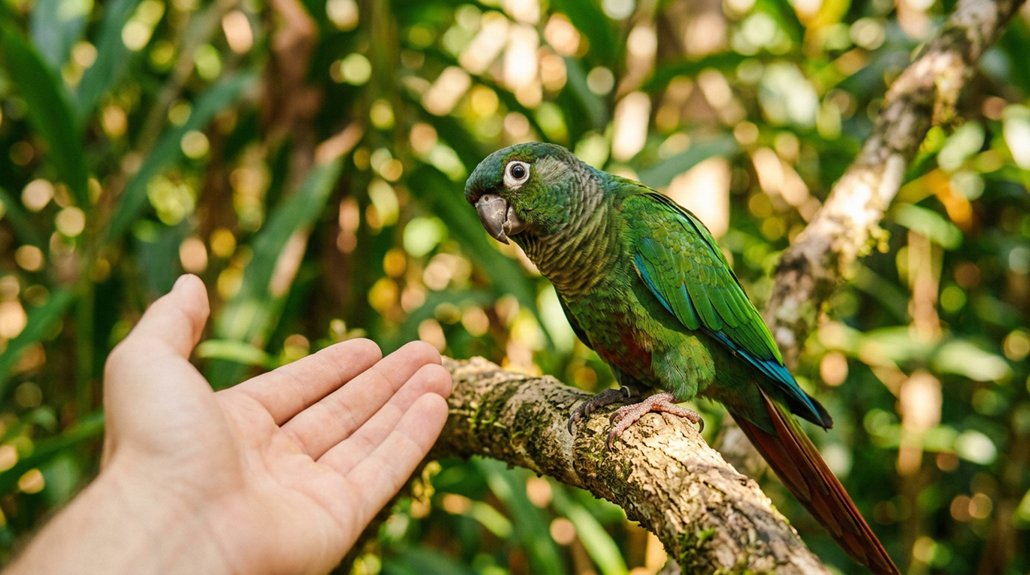
If you want a friendly bird that enjoys human interaction, you’ll usually do well with budgerigars, cockatiels, parrotlets, lovebirds, or green-cheeked conures. These species often bond strongly, accept hand-taming, and respond well to daily handling, whistles, and routine contact. Budgerigars and cockatiels are especially beginner-friendly, while parrotlets and lovebirds need consistent attention to stay tame. Larger parrots can be affectionate too, but they demand far more time and space, as you’ll see next.
Key Takeaways
- Budgerigars are beginner-friendly, highly social, and often enjoy hand-taming, whistles, tricks, and simple mimicry.
- Cockatiels bond well with people, respond to whistle training, and usually like daily focused interaction.
- Parrotlets, lovebirds, and green-cheeked conures can form strong bonds when handled consistently and socialized early.
- Cockatoos, African greys, and macaws are very interactive, but they need experienced owners and substantial daily attention.
- Canaries and finches are less hands-on; they are better for observation than close human interaction.
Best Beginner-Friendly Pet Birds
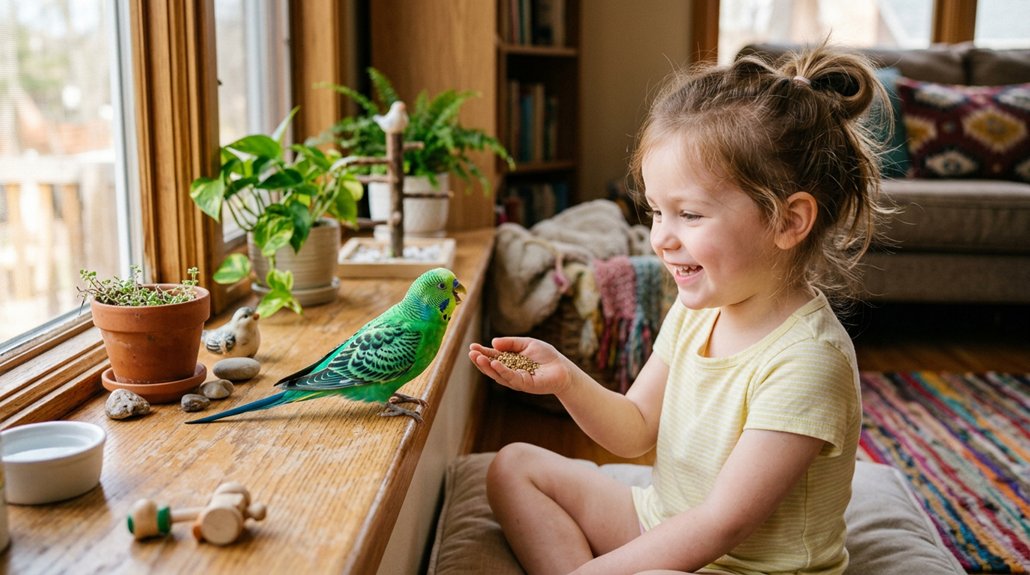
If you’re looking for a first pet bird, budgerigars and cockatiels are usually the most practical choices because they combine small size, manageable care needs, and strong social responsiveness. You’ll find budgies are only 6–8 inches long, yet they’re alert, interactive, and often learn chirps, whistles, tricks, and even vocal mimicry with regular gentle handling. Cockatiels, at 12–13 inches, are larger but still beginner-friendly; their crest gives clear mood cues, and they respond well to training techniques, especially whistle-based routines. Both species can live 15–20 years, so you should plan for long-term care. If you prefer a quieter observer bird, canaries and finches are less hands-on, but they’re less suited to direct training and handling.
Small Pet Birds That Bond Easily
Beyond the best starter species, several small birds are especially quick to bond with people when they’re handled consistently. Budgerigars, at 6–8 inches and about 1 ounce, often accept hand taming techniques readily and may learn speech or simple tricks. Cockatiels, larger at 12–13 inches, typically show strong affiliative behavior; you can read their mood from crest position, and they often respond to whistling and music. Parrotlets are tiny but bold, and daily handling helps prevent feral tendencies. Lovebirds bond intensely when tamed young, so you’ll need steady interaction and cage enrichment ideas to reduce jealousy. Green-cheeked conures are quieter, playful birds that form durable bonds with caretakers. With socialization, these species can remain responsive for many years.
Friendly Pet Birds for Daily Interaction
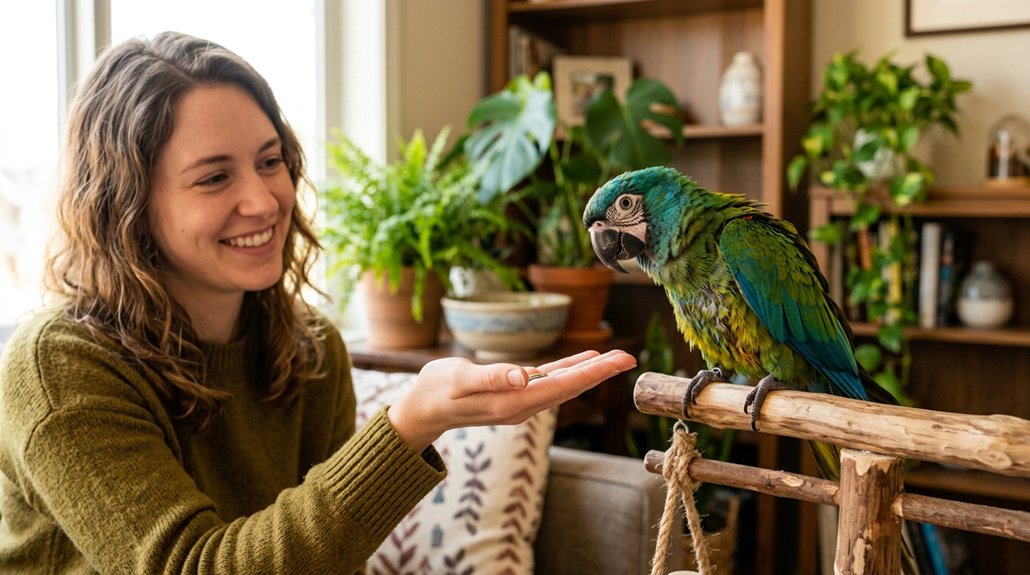
For everyday companionship, a few bird species are especially responsive when you interact with them consistently. You’ll see the clearest social gains with small parrots and doves, which adapt well to routine handling and close observation.
Small parrots and doves often respond best to consistent interaction, routine handling, and close daily observation.
- Budgerigars often learn words and tricks through short training games.
- Cockatiels usually respond to daily whistling lessons and calm handling.
- Green-cheeked conures need regular playtime and social contact to stay engaged.
Parrotlets stay tame only when you handle them daily, while hand-fed doves usually remain gentle and calm. If you provide predictable schedules, these birds often show measurable trust, reduced fear, and stronger orientation toward you. Brief outdoor excursions can add sensory enrichment, but only when conditions are safe and controlled.
Large Companion Birds With Big Personalities
Large companion birds can be remarkably interactive, but their social needs are substantial and their behavior is closely tied to daily human contact. If you choose cockatoos, you’ll see intense attachment, vocal responsiveness, and a long-lived profile that suits experienced handlers. Hyacinth macaws are social giants: calm, tactile, and inclined toward close contact, yet they need expansive housing and decades of commitment. African grey parrots show high cognition, precise mimicry, and emotional sensitivity; without adequate mental challenge, stress behaviors can emerge. Hahn’s macaws compress macaw-style playfulness into a smaller frame, and they can become depressed when neglected. Eclectus parrots are bonded companions with strong affiliative tendencies, benefiting from regular enrichment and predictable interaction.
How Much Time Does Each Bird Need?
How much time a bird needs from you depends strongly on its species, social drive, and tolerance for isolation. You’ll see wide variation in daily routines and training milestones across common companions.
- Budgerigars usually need 15–30 minutes of interaction daily, plus out-of-cage play several times weekly.
- Cockatiels generally do best with 30–60 minutes of focused social contact each day; pair housing can help when you’re absent.
- Parrotlets, lovebirds, cockatoos, and macaws need progressively more direct handling, with large species often requiring 3–6+ hours to stay behaviorally stable.
How to Choose the Right Pet Bird
When you choose a pet bird, start by matching the species to your experience, schedule, and living space: budgerigars and cockatiels are often the best fit for beginners because they’re small, manageable, and typically friendly, while cockatoos and macaws demand much more daily interaction and are better suited to experienced owners. Measure lifespan, too: budgies and parrotlets can live 20–30 years, African greys 40–60, and macaws or cockatoos 30–70, so your commitment isn’t short-term. Check enclosure size; hyacinth macaws need very large spaces, but finches and canaries do well in compact aviaries. Compare noise, behavior, and trainability, then set realistic training schedules. For adoption considerations, assess availability, housing, and long-term care before you commit.
Frequently Asked Questions
What Is the Most Affectionate Bird to Humans?
Cockatoos’re often the most affectionate birds to you, showing intense avian affection and deep bonds. In parrot psychology, their social dependence is striking, but they need daily interaction, enrichment, and experienced care to stay healthy.
What Is the Most Friendly Bird With Humans?
Budgies likely fit the bill: you’ll find budgerigar playfulness and strong social bonding make them particularly friendly. Cockatiel companionship is also excellent, but you’ll usually need gentler, regular handling to build trust and interaction.
What Is the 3 3 3 Rule for Birds?
You’ll usually see three stages: 3 days of stress, 3 weeks of adjustment, and 3 months to settle. You should use bird socialization and consistent handling routines, since individual factors can change timing.
What Birds Can Bond With Humans?
You can bond with budgies, cockatiels, parrotlets, lovebirds, green-cheeked conures, cockatoos, and African Greys. First comes trust, then attachment: your Cockatiel Companionship grows, and an African Grey may mirror your words, attention, and routines.
Conclusion
If you want a bird that enjoys your company, choose species whose social behavior matches your schedule and handling skill. You can expect the strongest interaction from birds selected for frequent contact, mental stimulation, and consistent routines. In practice, the best companion is the one whose needs you can meet reliably. Like a Victorian naturalist with a field notebook, you’ll see that trust grows through observation, patience, and daily, measured interaction.