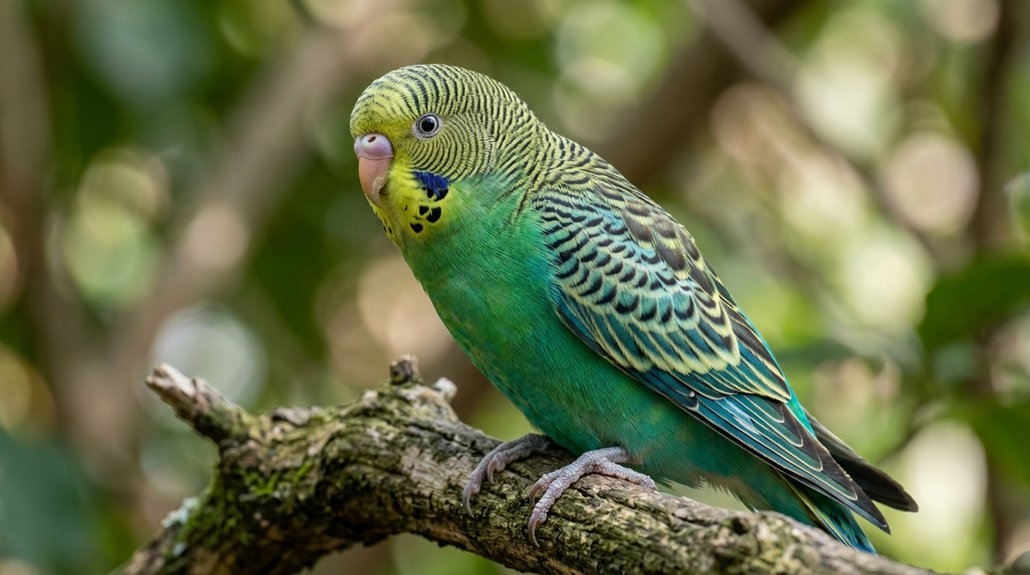
Choosing a pet bird starts with your space, schedule, noise tolerance, and long-term commitment. Budgerigars and cockatiels are often best for new owners because they adapt well to handling and routine care. Lovebirds are affectionate but can become territorial without steady socialization. Green-cheeked conures are playful and quieter, while canaries and finches need less handling. Larger species, like African greys, need far more daily stimulation and years of care, which gets clearer below.
Key Takeaways
- Budgerigars, cockatiels, and lovebirds are popular beginner birds because they are social, trainable, and manageable with consistent handling.
- Green-cheeked conures are playful and quieter than many conures, but they still need regular interaction and enrichment.
- Canaries and finches suit owners wanting low-handling birds, while doves need calm housing and more flight space.
- Larger species like Pionus and African greys need more time, mental stimulation, and long-term commitment, often 30+ years.
- Choose a bird by matching its noise level, social needs, cage space, and diet with your daily routine and experience.
How to Choose the Right Pet Bird
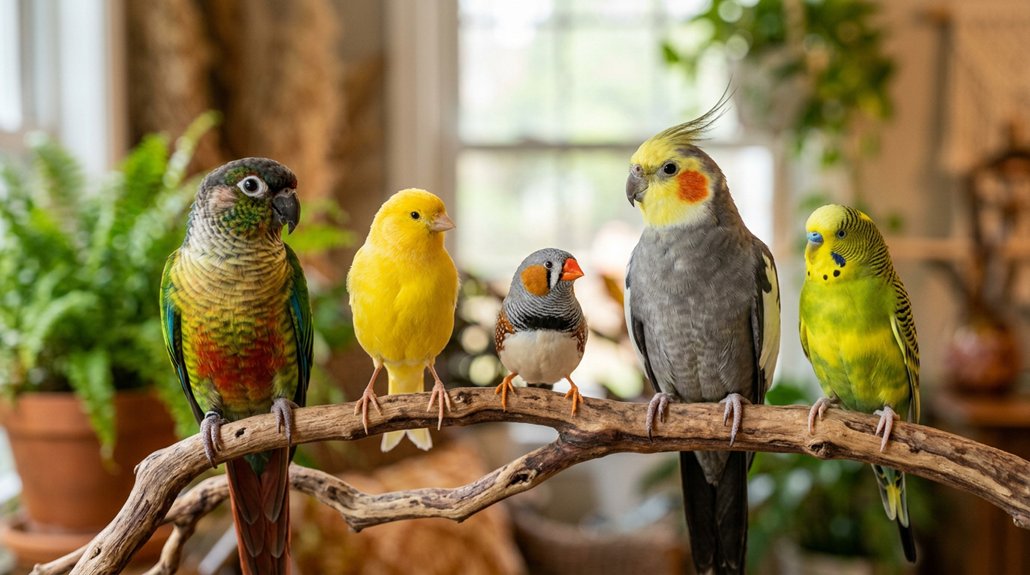
Choosing the right pet bird starts with matching the species to your space, schedule, and long-term commitment. You should compare adult size, lifespan, and care intensity before deciding. Budgies and small parakeets fit compact homes and usually live 7–15 years, while African greys and macaws need much larger enclosures and decades of care. If you can provide 3–5+ hours of daily interaction, cockatiels and greys may suit you; if not, finches, canaries, or doves demand less hands-on time. Evaluate noise, temperament, and exercise needs, since conures can be vocal and flight-capable species need supervised time. Your training schedules and nutritional planning should also reflect species-specific behavior, veterinary needs, and ongoing habitat costs.
Best Pet Birds for Beginners
For first-time owners, the best pet birds are those that match your handling comfort, time commitment, and long-term care capacity. You’ll usually do well with budgerigars, cockatiels, lovebirds, green-cheeked conures, or canaries and finches, depending on how much interaction you want. Budgerigars are small, affordable, and trainable early; cockatiels are affectionate but need daily social contact; lovebirds bond strongly and may nip; green-cheeked conures are playful and need regular interaction; canaries and finches suit you if you prefer minimal handling. Evaluate cage size, lifespan, noise, and behavioral enrichment before deciding. Budget considerations should include housing, diet, veterinary care, and toys, because long-lived species create ongoing costs. Choose the bird whose needs you can meet consistently, not just the one that seems easiest at first.
Parakeets, Cockatiels, and Lovebirds
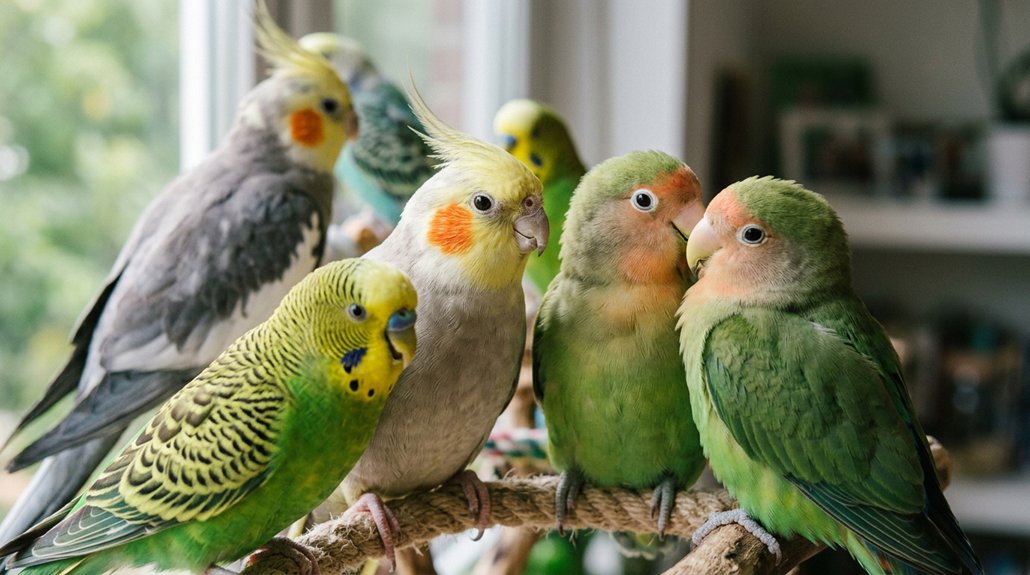
Parakeets, cockatiels, and lovebirds each offer a different balance of size, temperament, and care demands, so the best fit depends on how much daily interaction and training you can provide. You’ll usually find:
- Parakeets: small, social, and often responsive to vocal training when young; they can mimic words and whistles.
- Cockatiels: larger, crest-bearing birds that need spacious housing and several hours of daily contact to stay well-adjusted.
- Lovebirds: compact, long-lived parrots that may become territorial without consistent socialization and handling.
- All three: need behavioral enrichment, gradual diet changes, proper cage space, and routine avian veterinary care.
If you’re a novice, parakeets and cockatiels generally adapt more easily than lovebirds, provided you maintain consistent handling, clean housing, and predictable routines.
Green-Cheeked Conures, Pionus, and African Greys
Green-cheeked conures, Pionus parrots, and African greys each bring a distinct mix of intelligence, sociability, and care needs, so your choice should match the time and interaction you can provide.
| Species | Size | Key care point |
|---|---|---|
| Green-cheeked conure | 2–3 oz | Social, playful, quieter, minimal talking |
| Pionus | 8–9 oz | Independent, calm, needs 3+ hours out |
| African grey | 15–18 oz | Highly intelligent, needs 5 hours stimulation |
Their behavioral differences affect daily handling and training needs. Green-cheeked conures often bond closely and may act mischievous; Pionus are steadier and tolerate brief solitude; African greys demand structured enrichment to prevent boredom. All can live 30+ years with proper care, so you’re committing long term. Choose based on your ability to provide consistent interaction, noise tolerance, and mental engagement.
Doves, Canaries, and Larger Bird Needs
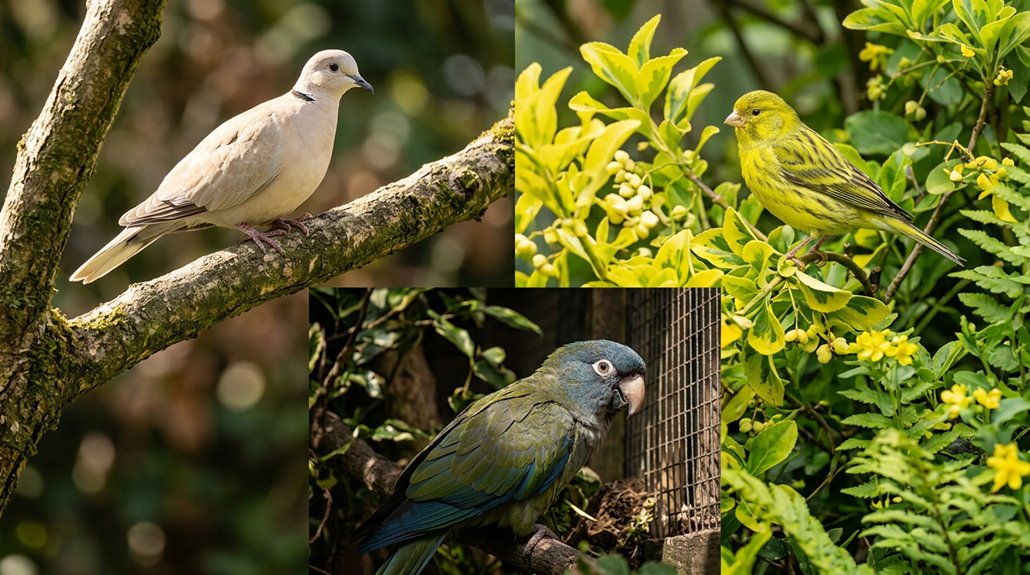
Doves are calm, social birds, but you’ll need a large flight cage because they can’t climb bars and need space to fly for exercise. Canaries are small and highly vocal, and you’ll get the best welfare by providing a large flight cage with minimal direct handling. If you’re considering larger birds, you’ll need substantially more space, specialized enclosures, and regular avian veterinary care to support long-term health.
Gentle Doves And Space
Gentle species still need serious space planning: doves are calm, social birds that typically measure 11–13 inches and weigh 5–8 ounces, but they can’t climb cage bars and must have a large flight cage with room for horizontal flying and several hours of supervised out-of-cage exercise each day. You’ll support gentle bonding and calming enrichment by meeting their movement needs.
- Place the cage at or above eye level, away from drafts.
- Use perches sized for safe footing, not bar-climbing.
- Provide open flight lanes so your dove can stretch and turn.
- Schedule avian veterinary checks to monitor wings, muscle tone, and overall health.
If you’re comparing species, remember that larger birds need even more space, but doves still require disciplined planning.
Canary Song And Flight
Canaries and doves may both look petite at first glance, but their housing and flight needs are very different from those of many other pet birds. You’ll support canary song timing by giving males a 24″ x 18″ x 18″ flight cage, 10–12 hours of daylight, and quiet. Handle them minimally; stress can reduce singing and disrupt feather molting. Doves need far more room, ideally an aviary.
| Species | Key need |
|---|---|
| Canary | Regular wing exercise |
| Dove | Sustained flight space |
| Both | Short flights between perches |
| Both | Supervised out-of-cage time |
| Both | Varied perch diameters |
Feed canaries seed, pellets, greens, and egg food in singing season. Give doves seed, pellets, grit, and bathing water to keep feathers flight-ready.
How to Set Up Your Bird’s Home
You should choose a cage that matches your bird’s species, with enough room for full wing extension and bar spacing sized to prevent escapes or injury. Set up the habitat with varied perches, properly placed food and water dishes, and a balanced feeding area that includes fresh water and appropriate calcium sources. Keep the cage at or above eye level in a safe, draft-free location, and maintain strict cleaning and quarantine practices to reduce disease and environmental hazards.
Cage Size
A bird’s cage should be large enough for full wing extension and at least some horizontal movement, since cramped housing can limit exercise and increase stress. For small parrots like parakeets, lovebirds, and cockatiels, target a minimum interior of about 24″ L × 18″ W × 24″ H; larger parrots need substantially more. Use careful perch placement and escape proofing so movement stays safe and efficient.
- Match cage size to species and wing span.
- Choose wider enclosures for flight, not just height.
- Add perches of varied diameters to support feet.
- Make sure doors, latches, and bars prevent escapes.
If you keep doves or canaries, prioritize open flight space. A larger cage also makes daily cleaning and dish access easier, reducing fouling and helping you maintain stable, low-stress housing.
Habitat Essentials
Once the cage size is set, focus on habitat layout that supports safe movement, sanitation, and enrichment. You should arrange perch placement so your bird can climb, rest, and launch without crowding; use natural wood, rope, and smooth dowels in varied diameters. Keep food and water dishes below and away from perches to reduce contamination, and change water daily. Situate the cage at or above eye level, away from drafts, kitchens, and direct sun; seasonal lighting should stay stable. Rotate species-appropriate toys weekly.
| Item | Setup |
|---|---|
| Perches | Mixed diameters, one flight perch |
| Dishes | Separate from droppings |
| Enrichment | Foraging toys, swings, visual interest |
Provide daily supervised out-of-cage exercise, adjusted to species needs, to preserve muscle tone and mental health.
Frequently Asked Questions
What’s the Best Bird for a First Time Bird Owner?
You’ll usually do best with a budgerigar: it’s small, social, inexpensive, and easier to train. Check noise expectations and use consistent training tips. If you want a larger bird, a cockatiel’s also beginner-friendly.
What Is the 3-3-3 Rule for Birds?
The 3-3-3 rule maps your bird’s adjustment: 3 days of stress, 3 weeks of testing boundaries, and 3 months of settling in. You’ll see behavioral milestones and bonding timeline shifts as trust grows.
What Is the 60/40 Rule for Birds?
It’s a feeding guideline: you’ll give your bird about 60% nutritionally complete pellets and 40% fresh vegetables, fruits, and limited treats, helping balanced diet proportions, though you’ll adjust for species, age, health, and flight training.
Should I Spray My Parrot With Water?
Yes, you can spray your parrot with water if it likes it; use lukewarm bathroom misting, not direct streams. Avoid plant safe sprays unless certified bird-safe, and stop if your bird shivers, hides, or seems distressed.
Conclusion
Choosing the right bird means matching its needs to your daily rhythm, space, and experience level. If you’re new to birdkeeping, start with a species whose care is more forgiving and whose voice fits your home. Then prepare a secure cage, proper lighting, balanced diet, and regular enrichment before your bird arrives. When you plan carefully, you’re setting the stage for a calmer, healthier companion and a more harmonious life together.