If you live in an apartment, you’ll usually do best with small, adaptable birds like budgies, cockatiels, finches, canaries, or quieter medium parrots such as Bourke’s, Senegal, and Pionus. You should expect some morning and evening calls, since no bird is truly silent. The best fit depends on your space, noise tolerance, and daily time for exercise, toys, and interaction, and the details can help you narrow it down further.
Key Takeaways
- Budgies are compact and adaptable, but they still need daily interaction, morning-evening chatter is normal, and 1–2 hours of supervised flight.
- Parrotlets stay small and are often quieter than larger parrots, though their bold personality requires regular play, toys, and attention.
- Finches and canaries are strong apartment choices because they make softer daytime songs and need less handling than parrots.
- Cockatiels, Bourke’s parakeets, Senegal parrots, and Pionus parrots can work well if you can provide ample exercise and routine.
- Choose species with your schedule, noise tolerance, and space in mind; all birds need enrichment, quiet placement, and proper cage sizing.
What Makes a Bird Apartment-Friendly
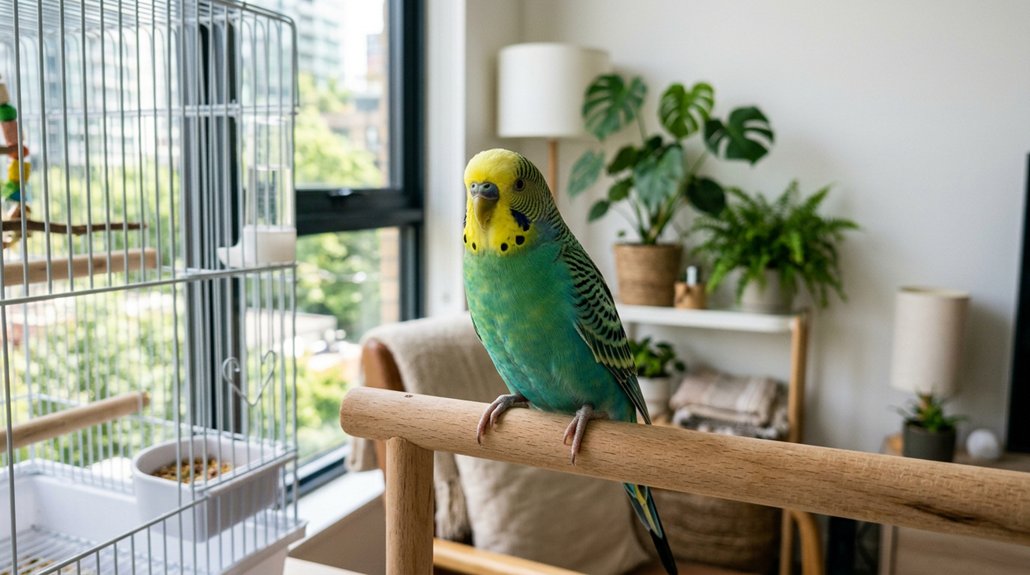
What makes a bird apartment-friendly is usually a mix of quiet vocalizations, manageable size, and a temperament that fits indoor routines. You’ll notice that birds with low volume calls, such as parakeets, canaries, finches, and parrotlets, are less likely to carry through thin walls. Space adaptability matters too: smaller birds like budgies and finches need a modest cage footprint, so you can house them without sacrificing much living area. You’ll also want a bird that stays calm around regular household sounds; cockatiels and budgies often adjust well to predictable human activity. Because they don’t require extensive out-of-cage flight, you can provide exercise in short, controlled sessions. In a small home, rotating toys, foraging options, and varied perches helps prevent boredom, which can otherwise lead to noise or stress.
Best Birds for Apartment Living
For apartment living, the best birds tend to be small, relatively quiet, and adaptable to a predictable indoor routine. If you want companionship, cockatiels, parrotlets, Bourke’s parakeets, and even Senegal or Pionus parrots can work when your schedule supports training, enrichment, and daily flight time. If you prefer lower-maintenance observation, finches and canaries fit well because they’re softly vocal, comfortable in pairs, and don’t need handling. Budgies also suit compact homes when you can provide a long cage and regular play outside it. In each case, avian compatibility depends on your tolerance for sound, interaction, and space. You’ll also need to take into account indoor lighting, since steady light cycles help regulate behavior and keep apartment birds more settled.
Budgies for Small Apartment Homes
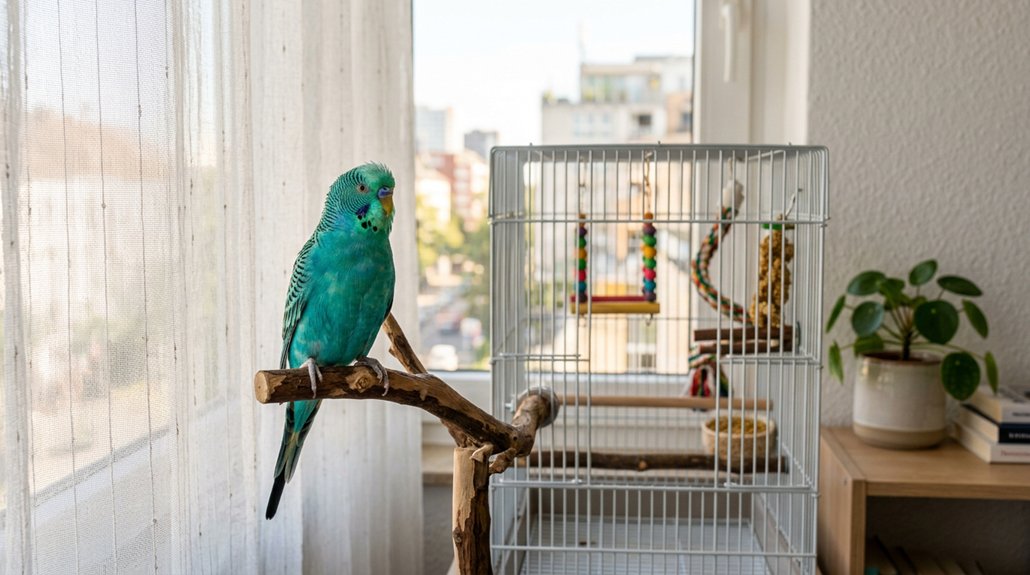
Budgies are a strong fit for small apartment homes because they’re compact birds, usually about 6–8 inches long and around 1 ounce, so they don’t demand much physical space. You’ll still need a cage that’s longer than tall, since they use short flights and hopping more than climbing. Their daily chatter is modest for a parrot, but it’s most noticeable in the morning and evening, so your building’s noise tolerance matters. To keep them healthy and settled, you should plan supervised out-of-cage time, rotated toys, foraging options, and varied perches. They’re social, so regular interaction, hand taming techniques, or a compatible companion can reduce stress. Their colorful mutations also make them appealing in a compact home.
Cockatiels With Quiet, Friendly Personalities
Cockatiels can be a strong apartment choice because their softer calls usually stay well below the level that disturbs neighboring units, and their 12–13-inch frame still fits comfortably in a modest indoor setup. You’ll usually get an affectionate, social bird that whistles or mimics tunes instead of shouting like a larger parrot. That said, you should still plan for soundproofing tips such as placing the cage away from shared walls and using furnishings that absorb echo. Because they need daily out-of-cage time, varied perches, and steady interaction, their behavior often reflects how well you meet those needs. A cage longer than it’s tall works best. Before you adopt, assess adoption temperament in person, since individual noise levels and apartment fit can vary.
Finches and Canaries for Small Apartments
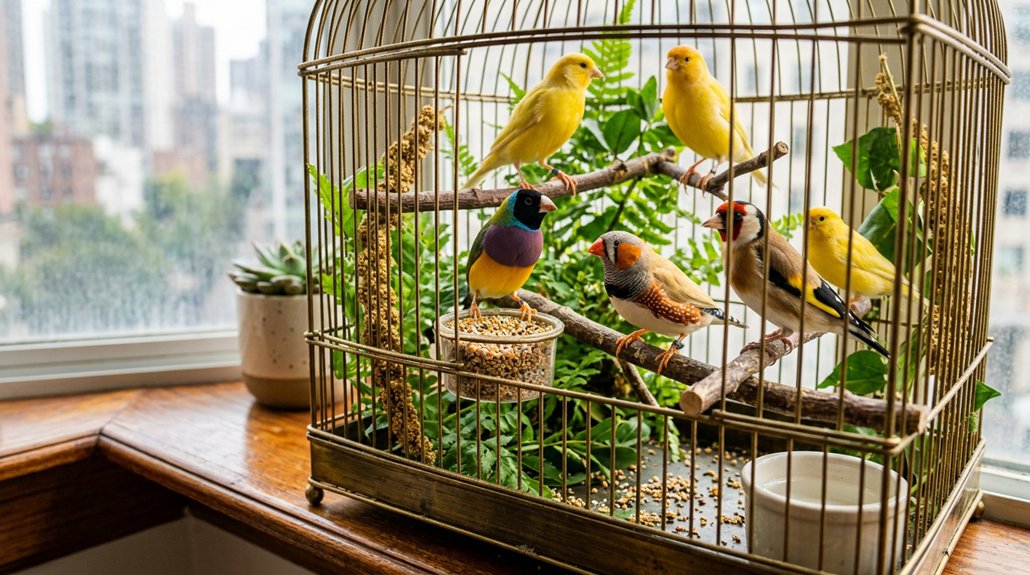
If you live in a small apartment, finches and canaries fit well because their daytime songs are soft and usually don’t travel far. You’ll also find that they need compact but horizontal cages with room for perches and foraging, since their cage often does most of the work for exercise. Finches do best in small groups, while canaries are more content with limited handling, so both can suit an owner who wants low-interaction birds with manageable space needs.
Gentle Daytime Songs
For apartment dwellers who want a soft, pleasant soundtrack, canaries and finches fit the brief well: canaries, at about 5–8 inches and 0.5–1 ounce, produce melodic daytime songs at low volume, while tiny finches such as zebra finches, at roughly 4 inches and about 0.5 ounce, sing frequently with gentle voices. You’ll notice canaries tend to offer clearer phrases, while finches create a steadier background hum. Their song timing matters: both often peak in the morning and evening, so you can plan around quiet hours and practice good neighbor etiquette. Because they’re mostly hands-off birds, you won’t trigger stress calls by handling them often. If you provide ample observation-focused enrichment, their singing usually stays relaxed, regular, and apartment-friendly.
Compact Cage Needs
Their gentle daytime voices are only part of the appeal; finches and canaries also suit apartment life because their small bodies need relatively compact housing. You can choose a cage that’s longer than tall, since horizontal flight matters more than height. For a pair of finches, aim for about 30″ long by 18″ high by 18″ deep; for a single canary, roughly 24″ by 18″ by 18″ works. Inside, use space saving perches of different diameters, plus swings and foraging toys, so you don’t waste room. Vertical foraging can help you use the cage’s height without crowding the flight path. Keep the cage in one room if needed, but plan for seed scatter with trays, skirts, and daily cleaning.
Pair-Friendly Social Life
Finches and canaries are especially apartment-friendly when you keep them with a companion or a small group, because their social needs are a major part of their well-being. You’ll usually see better activity, steadier behavior, and more natural vocalizing when they’re not kept alone. Finches, in particular, do best with conspecifics, since their cage often functions as their main exercise space and social enrichment source. Canaries are also generally content in pairs, though you should choose compatible companions carefully. Because both species are small and relatively soft-voiced, their daytime sounds rarely travel far, but canaries sing more and finches chatter often. If you value low-maintenance birds that don’t seek much handling, they can fit well, provided your neighbors can tolerate the noise.
Parrotlets for Tiny Living Spaces
Parrotlets are tiny birds, usually just 4–5 inches long and about an ounce, so you can house them comfortably in an apartment without needing much floor space. You’ll still hear soft daily chirps, but they’re generally quieter than larger parrots and often fit well where neighbor noise is a concern. Despite their size, they’ve got a bold, active personality, so you’ll need to provide regular interaction, toys, and supervised play to keep them engaged.
Parrotlet Size And Space
Small but surprisingly lively, parrotlets are one of the best parrot choices for tiny apartment spaces, measuring only about 4–5 inches long and roughly an ounce in weight. You can house one in a longer-than-tall cage, around 18x18x24 inches, but that’s only a micro habitat, not a full home. They still need daily supervised out-of-cage exercise, plus perches, rotating toys, and foraging spots to stay engaged. Their size eases crowding, yet their needs remain real.
| Need | Why it matters |
|---|---|
| Space | Supports movement |
| Enrichment | Prevents boredom |
| Interaction | Builds trust |
| Routine | Reduces stress |
If you use consistent bonding techniques, you’ll see a bird that’s compact, alert, and closely attached—small size, not small responsibility.
Quiet Chirps, Big Personality
Soft chirps, not sharp squawks, are what make parrotlets easier to live with in close quarters, and their sound usually won’t travel far through apartment walls. At 4–5 inches and about 1 ounce, you can house them in a compact cage without sacrificing comfort, but you still need room for short flights. Their appeal isn’t just size: you get compact companionship and a bird that stays engaged through stealthy play, swings, foraging toys, and varied perches. Because they’re active, you should plan daily out-of-cage time and rotate enrichment to curb boredom. If you handle and socialize them consistently, they often become affectionate; without that, they can turn territorial or nippy. Proper training makes their small body and bold personality work well indoors.
Quiet Medium Parrots for Apartments
If you need a quieter medium-sized bird for apartment life, pionus parrots and Senegal parrots are often strong candidates because they’re generally calmer and less vocal than many larger parrots, though they still need plenty of interaction, enrichment, and out-of-cage time. You’ll usually see pionus birds, around 11 inches, doing well in a large cage with daily exercise, while Senegal parrots, about 10 inches, often prefer low key bonding with one person. Both benefit from foraging, varied perches, and toy rotation, and you can use noise mitigation strategies such as thoughtful cage placement and routine. Even so, they aren’t silent; expect contact calls and occasional chirps. If you want an even softer-voiced option, Bourke’s parakeets can work, provided you can offer flight time in a bird-safe room.
How Much Noise Do Apartment Birds Make?
No apartment-friendly bird is truly silent, but many are quiet enough to live comfortably in close quarters. You’ll usually notice daily calls at dawn and dusk, yet their sound often stays near ambient levels.
| Species | Noise profile |
|---|---|
| Finches, canaries | Soft, high-frequency songs |
| Budgies, parrotlets | Frequent chatter, occasional louder calls |
| Senegals, Bourke’s, Pionus | Generally quiet for their size |
Smaller birds rarely disturb neighbors, while budgies and parrotlets can get more vocal if excited. Even quiet parrots may issue sudden loud calls, so your building matters: thin walls, shared schedules, and roommate tolerance all shape what people hear. Closed doors, stable routines, and neighbor agreements help keep noise predictable.
Bird Cage Size and Enrichment Needs
When you size a bird cage for apartment living, prioritize horizontal room over height for small species—budgies do best in cages at least 30 inches long, and cockatiels need even more length for hopping and short flights. You’ll also want varied perches and a rotation of foraging, shredding, and swinging toys, with food and water placed at different levels to support movement and natural behavior. Daily exercise matters too: small parrots need about 10–30 minutes of supervised out-of-cage time, and larger or pair-kept birds need much more space and flight opportunities.
Cage Size Basics
Cage size matters because a bird’s ability to move, perch, and explore directly affects its physical and mental health. You should match the enclosure to the species, not the room.
- Small birds like budgies, parrotlets, canaries, and finches do best in cages at least 18–24 inches wide, longer than tall.
- Cockatiels and bourke’s parakeets need about 24–30 inches of width, with 1/2 to 5/8 inch bar spacing.
- Medium parrots such as pionus and senegals need 30–36 inches wide, 24+ inches deep, and 36+ inches high, plus daily out-of-cage exercise.
- Add multiple perches of varied diameters and textures, including vertical perches, and keep the cage in climate control: 65–75°F and 40–50% humidity.
Toys And Foraging
Toys and foraging matter just as much as cage dimensions because a bird that can’t explore, chew, and search will usually become restless or stressed. You’ll do better with 3–5 rotating toys: chewable wood, foraging puzzles, swings, and foraging ropes. Swap them weekly so the cage stays novel in a small apartment. Offer at least one foraging toy per bird, and hide 20–30% of the daily ration in shredded paper or DIY foraging setups; that closely matches natural search behavior. Choose silent tethered toys when noise matters. Mix perch types too—rope, natural wood, and smooth dowels—spaced for easy hopping, with diameters about 1–1.5 times your bird’s foot width. This setup supports activity without crowding.
Daily Exercise Time
Daily exercise time matters as much as cage size, because even a well-fitted apartment setup won’t keep a bird healthy if it can’t fly, climb, and move every day. You should match species size to space and activity.
- Budgies, finches, and parrotlets need 18–24-inch cages and 1–2 hours of supervised flight.
- Cockatiels and Bourke’s parakeets do better in 30–36-inch cages with 2–4 hours of out-of-cage time.
- Senegal and Pionus parrots need 36–48-inch cages plus 3–4 hours of exercise to limit boredom and feather-plucking.
- In tight apartments, use rotating perches, foraging toys, window free playtime, and visual stimulation routines for 30–60 minutes daily.
Even quiet birds still need short supervised flights and social interaction.
How to Choose the Right Apartment Bird
Choosing the right apartment bird starts with matching the species to your building and your routine, because even the quieter options—budgies, cockatiels, parrotlets, canaries, finches, Bourke’s parakeets, Senegals, and Pionus parrots—still vocalize every day, especially around dawn and dusk. Check owner lifestyle, landlord rules, and how much one-on-one time you can provide. If space is tight, pick birds that fit longer-than-tall cages and can safely leave the cage daily. Finches and canaries may suit pairs or small groups, while parrots need regular interaction to avoid stress noise. Thick walls, tolerant neighbors, and a closed bird-room door help. Also confirm no smoke, fumes, lead paint, or off-gassing, and keep conditions near 65°F with 40–50% humidity, plus rotating toys and varied perches.
Frequently Asked Questions
What Is the 3 3 3 Rule for Birds?
The 3-3-3 rule says your bird may need 3 days to decompress, 3 weeks to trust, and 3 months to bond. You’ll see gradual training timelines and bonding rituals, though individual birds vary.
What’s the Most Low Maintenance Bird?
You’d likely find a quiet finch the most low-maintenance: it needs simple feeding, cleaning, and little handling. If you want more interaction, budgie care isn’t hard, but it does need daily play and training.
Can Birds Hear Human Voices?
Yes, birds can hear your voice clearly and often show vocal recognition. You’ll notice volume sensitivity too: soft, steady speech calms them, while shouting may trigger stress or alarm calls, especially in social species.
Are Birds Good Apartment Pets?
Yes, birds can be good apartment pets—if you’re ready for the surprise: they’re quieter than dogs, but not silent. With bonding routines, space enrichment, and careful noise management, you can make apartment life work.
Conclusion
If you’re choosing a bird for apartment life, you’ll want one that fits your space, your schedule, and your neighbors’ tolerance for a little morning chatter. Budgies, cockatiels, finches, and canaries each bring their own advantages, from modest volume to manageable housing needs. When you weigh temperament, noise, and enrichment carefully, you’re more likely to find a feathered companion that settles in gracefully, rather than one that turns your home into a small-scale aviary.