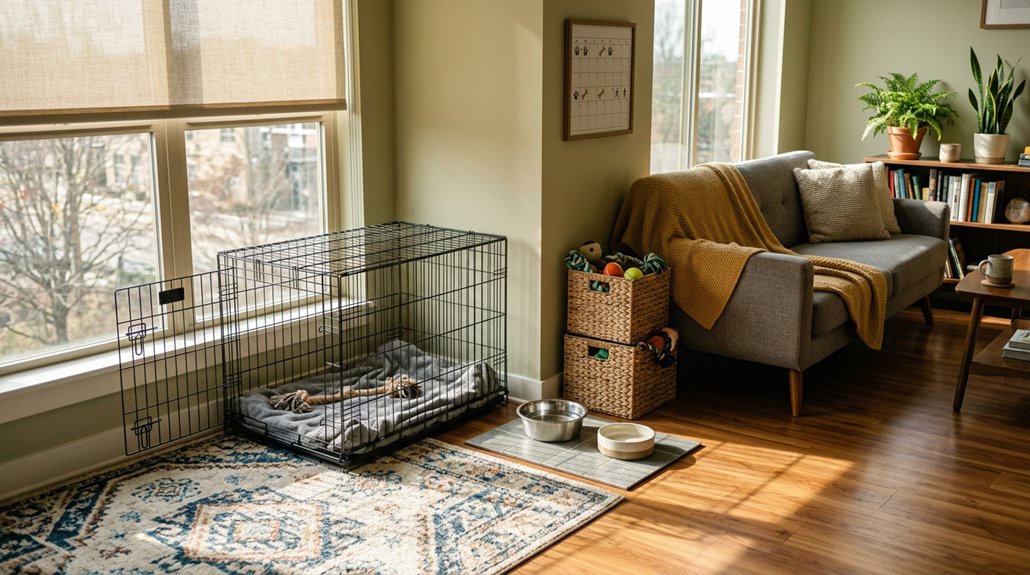
Before getting a dog in an apartment, consider its size, temperament, and energy needs, as the setup can impact well-being. Evaluate nearby pet-friendly amenities and sound insulation to manage noise. Budget for initial and recurring costs like food, vet care, and potential pet rent. Familiarize yourself with apartment pet policies and secure dangerous materials. Setting up dog-friendly spaces with natural light and good ventilation is essential. Discover how these factors contribute to a happy, healthy pet environment.
Key Takeaways
- Evaluate apartment size and layout to ensure it suits the dog’s breed, size, and temperament.
- Check for nearby pet-friendly amenities, like parks, for dog’s exercise and socialization needs.
- Understand pet-related financial obligations, including adoption fees, ongoing expenses, and potential apartment charges.
- Review lease agreements for breed, size, and number restrictions to ensure compliance with apartment policies.
- Organize the living space for the dog’s comfort, incorporating feeding, resting, and safe play areas.
How to Assess Your Apartment for Pet Compatibility
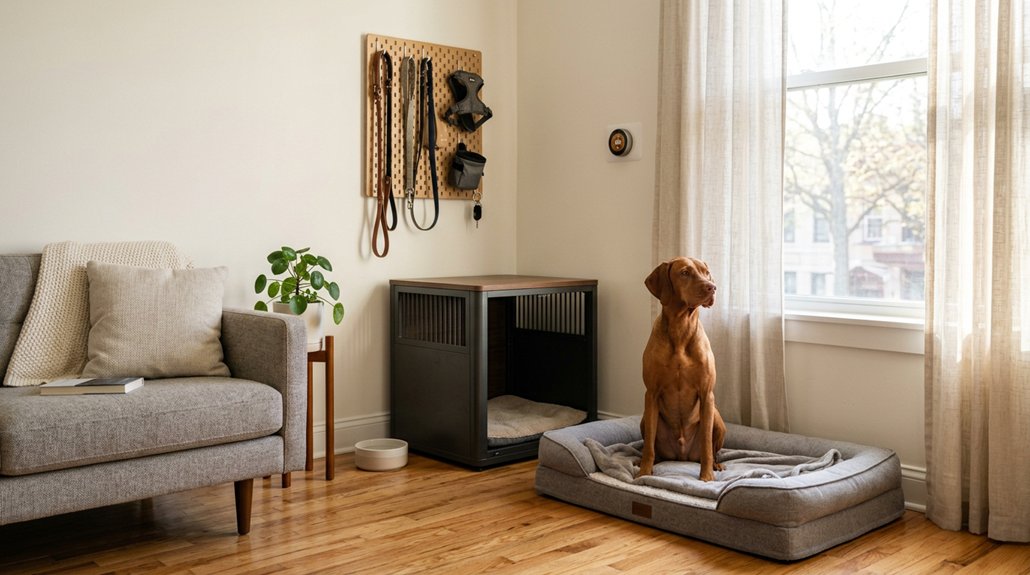
Before welcoming a dog into your apartment, it’s important to evaluate how well your living space can support your future pet’s needs. First, assess your apartment’s size and layout; make sure you have suitable room for your dog’s breed and temperament, whether active or calm. Evaluating space for your dog includes checking for pet-friendly amenities nearby like parks or trails, vital for exercise and socialization. You should also examine your apartment’s sound insulation. Living close to neighbors means managing your dog’s noise level, especially for breeds known to be vocal. Inspect hazards in the layout, securing dangerous materials and exit points. In addition, multiple windows providing natural light are beneficial, offering visual stimulation and comfort for your pet.
Selecting the Ideal Dog Breed for Apartment Living
When considering which dog breed is ideally suited for apartment living, it’s important to look beyond size alone. While smaller dogs might seem like a natural fit, their dog temperament can be wildly energetic and disruptive. For example, Chihuahuas, despite their size, may create chaos due to their lively nature. Larger breeds like Mastiffs offer calm dispositions, provided their breed characteristics are met with regular exercise and mental enrichment. Retired racing Greyhounds are an excellent choice for apartments due to their low exercise demands and gentle demeanor. Another option is adopting senior dogs, which usually have diminished energy levels and are more adaptable to confined spaces. Always consult shelter staff or trainers to confirm your chosen dog complements your lifestyle.
Determining Your Pet Budget in Apartment Living
Establishing a realistic pet budget is essential when you’re planning to welcome a dog into your apartment. Take into account initial costs, like adoption fees ranging from $50 to $300, and the first month’s supplies such as food, toys, and bedding, potentially totaling $150 to $500. Monthly expenses are important, too. High-quality dog food might cost $40 to $75, while routine vet care and pet insurance can add another $30 to $50. You also need to assess possible apartment charges, like pet deposits ($250 to $500) and pet rent ($25 to $75). Don’t overlook unexpected expenses, like emergency vet visits—often $800 to $1,500. Factor in regular grooming, training, and supplies, which can contribute an additional $30 to $150 monthly.
Navigating Pet Policies and Apartment Regulations
A thoughtful pet budget is just part of the equation; understanding the intricacies of pet policies and apartment regulations is equally important. Maneuvering through the pet application processes can feel intimidating, but guaranteeing your new companion is compliant is essential. Start by reviewing your lease for breed, size, and number restrictions. Many communities require:
- Pet fees, deposits, or monthly rent: Factor these into your financial plans.
- Proof of vaccinations and registration: Check for any homeowner association (HOA) mandates.
- Designated pet relief areas: Confirm any common area restrictions.
- Pet interviews: Landlords may assess your dog’s suitability for apartment living, so prepare documentation.
Understanding these norms and making use of available community amenities will facilitate a smoother adjustment for you and your new pet.
Preparing Your Lifestyle for a New Dog
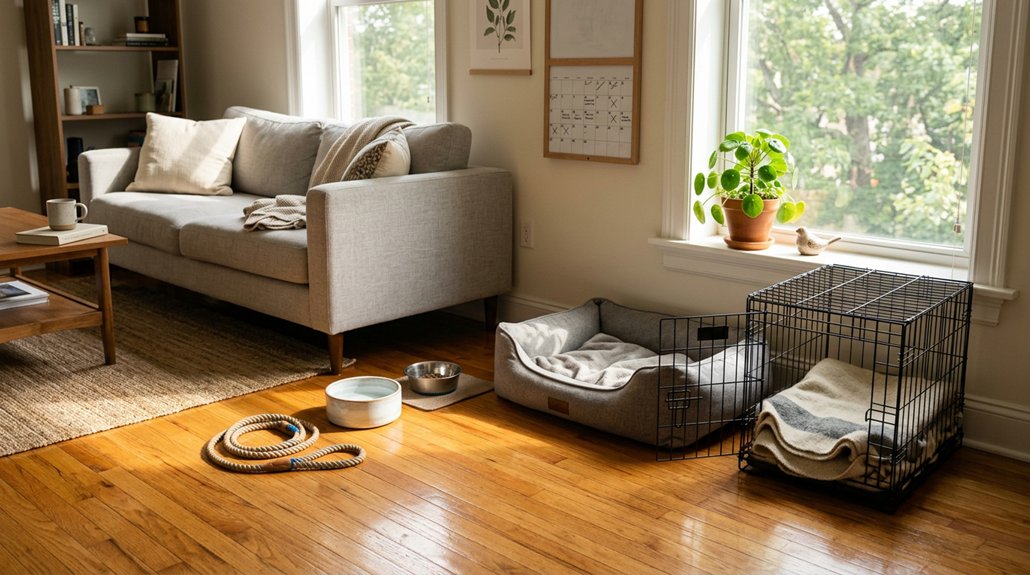
Before welcoming a new dog into your apartment life, it’s important to thoughtfully integrate their needs into your lifestyle. Start by evaluating your daily routine to guarantee you can regularly cater to your pet’s exercise needs through walks and playtime. Their physical activity must be aligned with their energy levels, essential for their health and happiness. Establish a consistent schedule for feeding and bathroom breaks to support their adjustment and behavioral training.
Examine your living space for safety, curbing access to hazardous materials, and assuring ample room for movement. Identifying nearby parks or open spaces for outdoor activities can further enhance their exercise regimen. Financial planning is also significant, considering expenses like food, grooming, and veterinary care that are part of responsible pet ownership.
Setting Up Dog-Friendly Spaces in Your Apartment
When setting up dog-friendly spaces in your apartment, it’s essential to maximize space efficiency without sacrificing comfort. Choose durable materials like non-slip mats for feeding areas and sturdy shelving to create vertical spaces; these enhance your dog’s experience while maintaining cleanliness. Consider organizing essential supplies in a dedicated bin to prevent clutter and guarantee your furry friend feels secure in a well-balanced environment.
Maximizing Space Efficiency
Creating a dog-friendly space in your apartment doesn’t have to be an intimidating task if you leverage the unique layout of your living area. Implementing efficient space saving solutions begins with strategic furniture arrangements. Designate specific areas for feeding and resting, keeping them away from high-traffic zones for your pet’s security. Use vertical space creatively with wall-mounted shelves or hooks to store essential items and free up floor space.
- Designate a safe feeding and resting area
- Utilize vertical space with shelves or hooks
- Invest in furniture with built-in storage
- Create a cozy corner near a window
Invest in furniture like ottomans that incorporate storage, minimizing clutter. Position a dog bed near natural light to keep your furry friend engaged with household activities without sacrificing valuable space.
Choosing Durable Materials
Selecting the right materials for your apartment can greatly enhance both your comfort and that of your dog. When considering furniture selection, opt for stain-resistant fabrics like microfiber or synthetic fibers to handle spills and accidents gracefully. Additionally, slipcovers made from sturdy materials provide a practical solution for sofas and chairs, enabling effortless cleaning and maintenance. Regarding flooring options, hardwood or laminate are preferable to carpet; they’re easier to clean and less likely to retain odors and stains. Complement your flooring with area rugs composed of low-pile, durable nylon or polyester, ensuring longevity and easy upkeep under your pet’s playful antics. Finally, washable pet beds crafted from durable, tear-resistant materials assure comfort for your dog while simplifying maintenance for you.
Handling Dog-Related Neighbor Concerns
Many potential issues with neighbors can be mitigated through open, respectful communication about your dog’s habits and needs. Building strong neighbor communication involves promptly addressing any concerns they may have, particularly related to noise management, such as barking. Consistently managing your dog’s schedule for walking and exercise minimizes unwanted disturbances.
Consider these actions to foster a peaceful coexistence:
- Promptly address complaints: Show empathy and offer apologies for any noise or mess.
- Routine exercise: Keep a consistent schedule to prevent excess barking and indoor accidents.
- Cleanliness: Always pick up after your dog in common areas to show consideration.
- Community involvement: Engage in local activities to present your dog positively and strengthen community bonds.
Preparing Your Apartment Before Adopting a Dog
While fostering good relationships with neighbors lays the foundation for a harmonious apartment living, making certain your space is ready for your new furry friend is equally important. Proper space organization is essential. Create airy areas with ample room for your dog to move freely and designate clear spots for food and water bowls. Multiple windows offer natural light and ventilation, important for your pet’s comfort. Carefully check lease and HOA regulations—size and breed restrictions might be critical factors. Implement effective dog proofing tips: secure hazardous materials, pet-proof cords, and make certain windows and doors are escape-proof. Opt for pet-friendly furnishings that are durable and easy to clean for wear-resistant comfort.
| Action | Purpose |
|---|---|
| Space Organization | Guarantees free movement |
| Natural Light/Ventilation | Pet comfort and health |
| Compliance Check | Adheres to regulations |
| Dog Proofing | Prevents accidents and escapes |
Frequently Asked Questions
What Is the 3-3-3 Rule With Dogs?
The 3-3-3 rule guides you through a dog’s shift, emphasizing socialization strategies. In apartments, opt for apartment-friendly breeds. Decompression, routine-setting, and adjustment phases help guarantee your new companion feels secure and bonds with you fully.
How to Prepare for a Dog in an Apartment?
Before starting your canine journey, consider your apartment’s space requirements and evaluate noise concerns. Channel the wisdom of yore: craft exercise routines and training needs that meet scientific standards, ensuring both you and your dog thrive.
What Is the 10 10 10 Rule for Dogs?
The 10-10-10 rule involves 10 minutes of exercise, training, and socialization. Consider breed suitability and space requirements, ensuring your dog’s needs match your apartment’s constraints to maintain their well-being and prevent behavioral issues.
What Is the 7 Second Rule for Dogs?
The 7 Second Rule suggests that you’ve got around seven seconds to recognize and respond to your dog’s behavior in new situations. This promotes positive behavior, essential for apartment living, by preventing stress and encouraging calm reactions.
Conclusion
Bringing a dog into an apartment is like planting a garden in a limited space—you’ve got to prepare wisely to let it flourish. Remember the story of Samantha, who transformed her small balcony into a haven, ensuring her dog thrived. This means evaluating your environment, budgeting carefully, and understanding regulations. When you nurture each aspect thoughtfully, your new companion will bloom, bringing joy and companionship into your life in the coziest of apartment settings.