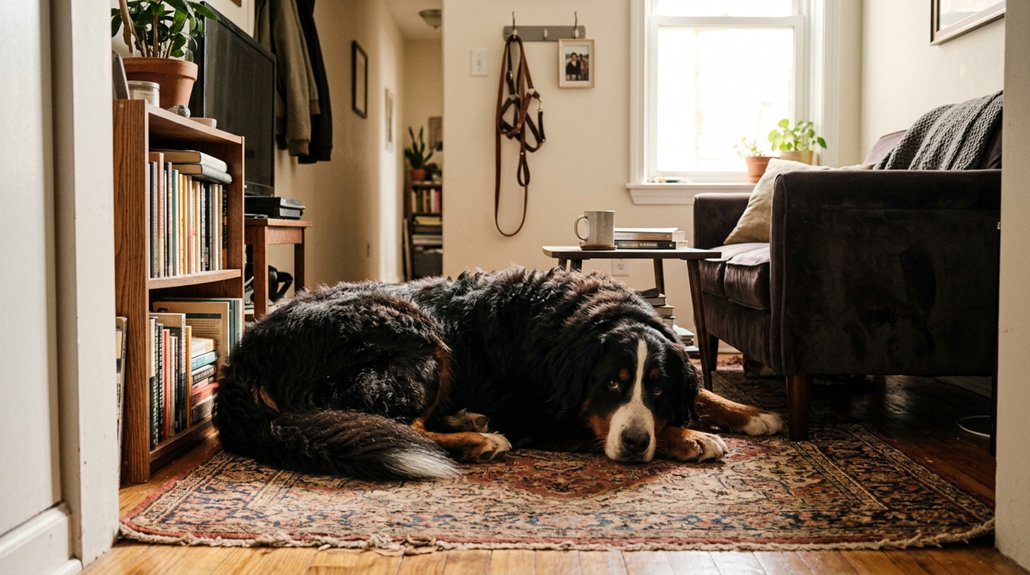
You can have a large dog in a small apartment by focusing on their specific needs and selecting the right breed. Look for apartment-friendly breeds with calmer temperaments and lower energy levels, like Mastiffs or Greyhounds. Create a cozy space, establish routines, and guarantee mental and physical stimulation through interactive play and regular exercise. Training for noise management is vital. Leveraging community resources is also helpful. Discover more effective strategies to make apartment living comfortable for your large dog.
Key Takeaways
- Large dogs can thrive in small apartments with designated spaces and consistent routines.
- Choose low-energy, quiet breeds like Mastiffs and Greyhounds for apartment living.
- Regular exercise and mental stimulation are vital for large dogs in confined environments.
- Implement housebreaking techniques and noise management strategies to prevent disturbances.
- Utilize community resources and interactive toys for socialization and cognitive engagement.
Understanding Needs of Large Dogs in Apartments
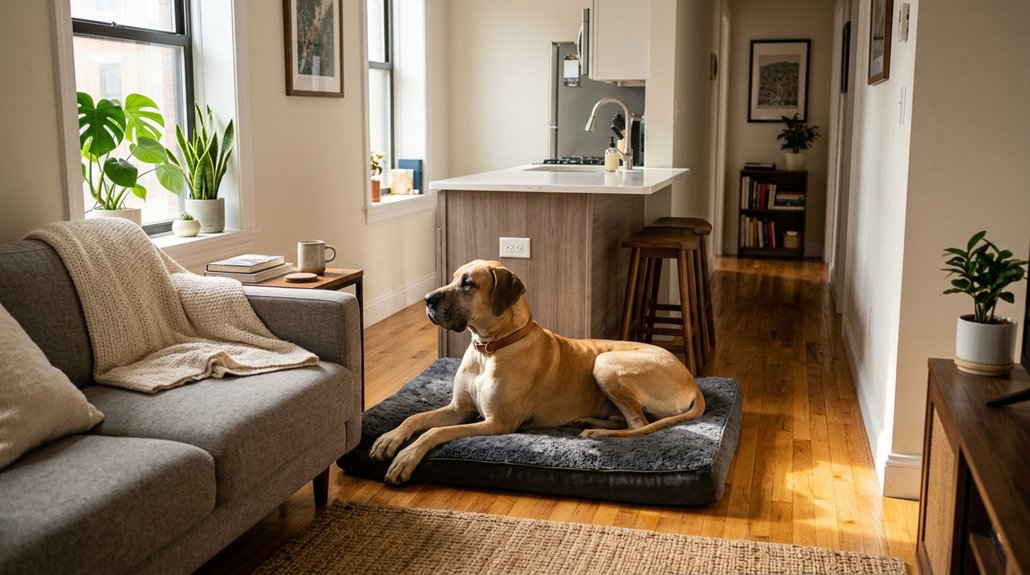
When you’re considering the unique challenges and rewards of having a large dog in an apartment, remember that understanding their specific needs can make the change smoother for both you and your pet. Your apartment layout plays an essential role in accommodating a large breed, such as a Greyhound or Mastiff. Designating a personalized area stocked with comforting items like a bed and toys helps the dog feel secure despite the limited space. Consistent routines for feeding and outdoor breaks reduce anxiety and accidents, ensuring tranquility. Don’t overlook noise management; large breeds might bark more, so effective training is fundamental to maintain peace with your neighbors. Finally, daily exercise and mental stimulation are non-negotiable to keep your dog agile and content in confined environments.
Choosing Apartment-Friendly Dog Breeds
When you’re deciding on a large dog breed for your apartment, focus on temperament, size, and energy levels. Breeds like Mastiffs may be large but their calm demeanor and lower energy make them adaptable to smaller spaces, while others might need more active engagement. Also, consider their barking tendencies, as some breeds are naturally quieter, which is beneficial in close-quarters living.
Breed Temperament and Size
Although it might seem counterintuitive, certain large dog breeds can thrive in apartment settings due to their adaptable temperaments and lower exercise needs. Your focus shouldn’t only be on size; understanding breed characteristics and temperament assessment is essential. Some large dogs like Mastiffs and Greyhounds are surprisingly calm and require less space and exercise. Be mindful of their bursts of energy followed by longer relaxation periods, which suit small apartments. Effective watchdogs like Standard Poodles and Great Danes balance calm demeanor with protective instincts. Basset Hounds and Bulldogs, being low-maintenance, further simplify urban living, helping avoid accidental injuries, especially in cluttered spaces.
Here’s a useful comparison table:
| Breed | Temperament | Size |
|---|---|---|
| Mastiff | Gentle, protective | Very Large |
| Greyhound | Calm, relaxed | Large |
| Standard Poodle | Intelligent, alert | Large |
| Great Dane | Gentle giant | Very Large |
| Bulldog | Laid-back, gentle | Medium-Large |
Energy Levels Consideration
Understanding a large dog’s temperament and size is just one piece of the puzzle when you’re considering apartment living. Equally important is conducting an adaptability evaluation regarding their energy levels. Breeds such as Mastiffs and Greyhounds typically exhibit lower energy needs, making them suitable for small spaces. Identify dogs that enjoy mental stimulation and moderate exercise rather than extensive physical activity—these traits are essential for effective energy management in confined areas. For example, Bulldogs and Basset Hounds thrive on short energy bursts followed by relaxation, fitting well into indoor environments. Conversely, high-energy breeds like Giant Schnauzers may struggle in apartments due to their need for more activity. Properly evaluating a dog’s energy levels guarantees their compatibility with urban living, enhancing their well-being and yours.
Noise and Barking Tendencies
Considering large dogs for apartment living requires careful evaluation of their noise and barking tendencies, as these elements greatly affect shared spaces. Understanding breed-specific vocalization traits is essential. Breeds like Standard Poodles and Great Danes usually exhibit lower barking tendencies, supporting effective noise management. Meanwhile, others, such as Giant Schnauzers, might require more active barking control strategies due to innate vocal alertness. Consistent training plays a pivotal role in reducing excessive barking, guaranteeing a quieter environment that respects neighbors’ peace. Many apartment-suited breeds, like Greyhounds, are naturally quiet, often favoring rest over vocal expression. Research your chosen breed’s history and temperament thoroughly to confirm they’re well-suited for apartment life, minimizing sound and fostering good community relationships.
Crafting an Effective Exercise Routine
Crafting an effective exercise routine for your large dog in a small apartment requires careful attention to their breed-specific needs, ensuring that Greyhounds get their required bursts of activity while Huskies enjoy longer sessions. Explore your local environment for dog-friendly areas and consider hiring help like a dog walker or utilizing services such as doggy daycare to supplement your dog’s outdoor activity. Indoors, turn to interactive games like hide-and-seek and puzzle toys to keep your dog mentally sharp, particularly on days when outdoor play is restricted.
Tailoring to Dog Needs
To effectively meet your large dog’s exercise needs in a small apartment, it’s vital to understand that not all breeds require the same level of physical activity, despite their size. Tailoring your dog’s routine is critical. Recognize their nutrition needs and incorporate training tips that engage their natural instincts.
A structured approach can guarantee balance:
| Activity Type | Recommended Duration |
|---|---|
| Vigorous Exercise | 30 to 60 minutes |
| Mental Stimulation | 15 to 30 minutes |
| Indoor Play | 10 to 20 minutes |
Regular walks and visits to the local park enhance their routine. Maintain consistency in daily schedules for stability. When outdoor activities are limited, supplement with puzzle toys indoors. If you’re away long hours, consider hiring a dog walker to maintain their activity levels.
Exploring Outdoor Options
While large dogs living in small apartments might face limitations indoors, the great outdoors offers a wealth of opportunities to keep them active and engaged. Regular outdoor adventures, like park exploration, provide both physical exercise and mental stimulation necessary for your dog’s well-being. Many large breeds require at least an hour of vigorous activity daily. A consistent routine, including multiple walks and trips to spacious parks, guarantees your dog gets the exercise they need. In addition to physical health, these activities help curb behavioral issues by allowing your dog to burn off excess energy. If you’re busy, consider professional dog walkers or doggy daycare services to maintain this routine. Choose locations with ample space for running and designated potty areas.
Incorporating Indoor Activities
Though space may be limited in your apartment, engaging indoor activities for large dogs are essential for maintaining their physical and mental well-being. Mental stimulation can be achieved through puzzle toys and scent work, offering your dog challenges that keep their cognitive faculties sharp. Incorporate at least 30 minutes to an hour of interactive play daily, including games like tug-of-war or fetch in a hallway. Utilize interactive toys that encourage problem-solving, especially during inclement weather, to reduce boredom and anxiety. Consistent indoor activities function like outdoor walks, establishing a routine that promotes good behavior. Maximize available spaces by crafting an obstacle course or designated play area, allowing your dog to engage in necessary physical activity safely indoors.
Engage Your Dog Indoors
When outdoor access is limited by weather or space constraints, keeping a large dog mentally and physically engaged indoors becomes essential. Mental stimulation through interactive play can tackle boredom and prevent destructive behavior. Consider introducing games like hide-and-seek and scent work to challenge their keen senses. Interactive puzzle toys also provide valuable cognitive engagement, tapping into their innate problem-solving abilities. Durable toys such as rawhide chews and rubber toys are ideal for long play sessions, ensuring your dog isn’t consuming or destroying them easily. Regular indoor play sessions help manage your dog’s energy and adapt them to apartment living. These activities, coupled with a consistent exercise routine, support your large dog’s overall well-being, reinforcing their physical and mental health despite limited space.
Designing a Cozy Space for Your Dog
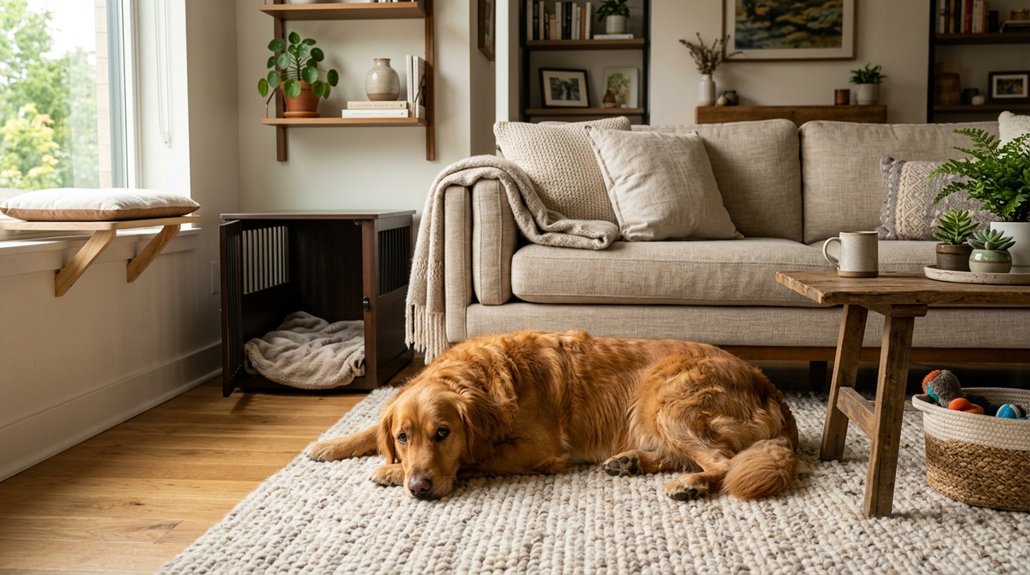
Keeping a large dog mentally and physically engaged indoors requires a thoughtful approach to their living environment. Start by designating a specific area in your apartment for your dog, complete with a cozy dog bed, toys, and a blanket to guarantee relaxation. Placing this space near a window with ample natural light not only offers warmth but also provides visual stimulation—enhancing your dog’s comfort and curiosity. Integrating durable, interactive toys encourages positive behavior, reducing the chances of boredom in a confined space. Protect shared furniture spaces with covers while granting your dog access to comfort. Establish a routine that includes rest, play, and relaxation in their designated area to foster a sense of security and contentment.
Housebreaking Hacks for Apartment Living
Housebreaking your large dog in an apartment necessitates a structured approach to secure success. Consistency in potty training is key. Establish regular schedules for breaks to signal when it’s time to go. Utilize crates or pee pads to guide and reinforce proper bathroom habits. Recognize and respond promptly to your dog’s signals, preventing mishaps and enhancing understanding.
Here’s a quick guide for structured housebreaking:
| Action | Purpose |
|---|---|
| Regular Potty Breaks | Build routine, minimize accidents |
| Indoor Relief Areas | Alternative space for limited outdoor access |
| Timely Signal Response | Reinforce desired behavior, prevent errors |
| Use of Fresh Patch | Natural indoor option for limited access |
| Designate Clean Space | Reduce clutter, guarantee easy cleanup |
Maintain focus on training rewards, which will encourage your pet to follow the established routine.
Managing Noise for Neighbor Harmony
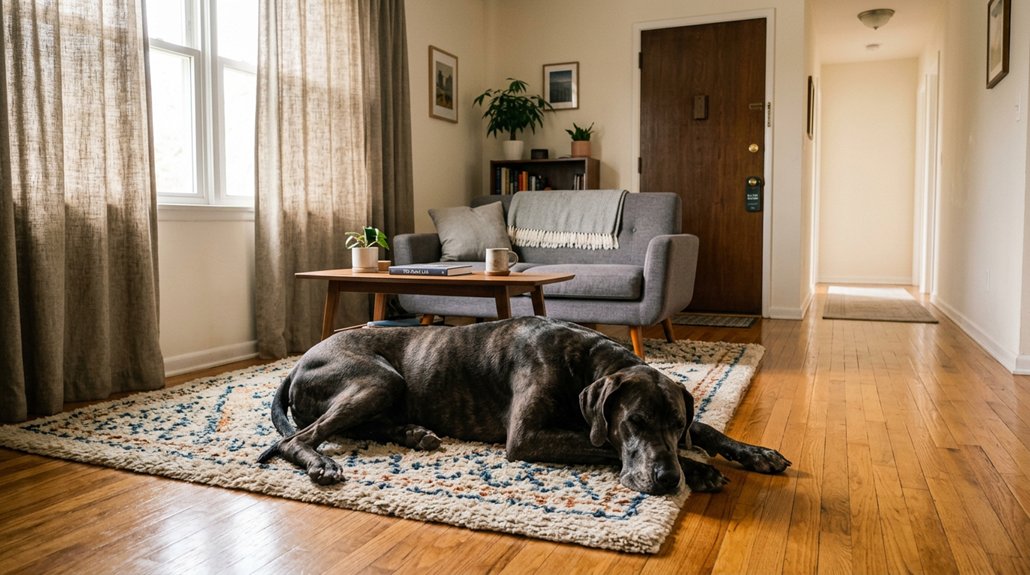
While managing a large dog in an apartment, ensuring harmony with neighbors through noise control should be a priority. Vocal dogs can easily disturb the peace, so considering breeds with quieter temperaments can reduce potential complaints. Implementing bark control through training commands like “quiet,” complemented by positive reinforcement, is essential for minimizing disturbances. Establishing regular routines and consistent exercises alleviates stress-induced vocalizations. Exploring soundproofing techniques, like adding rugs or acoustical panels, can further mitigate noise. Building policies on pet noise levels should be consulted to confirm compliance. Engage with your neighbors proactively to foster understanding and tolerance. Remember, it’s all about balancing your dog’s welfare with communal harmony, creating a peaceful cohabitation environment that respects everyone’s living experience.
Leveraging Community Resources for Support
When living with a large dog in a small apartment, tapping into community resources can greatly enhance your experience and your pet’s well-being. Community training programs and support networks, often found in urban areas, play a vital role. Pet-friendly parks and local dog clubs offer essential outlets for exercise and socialization. Through these avenues, your dog can build positive behaviors while you benefit from a collaborative environment. Many local pet stores host events focusing on breed-specific care, providing a treasure trove of information and companionship. Online forums unite large dog owners in small spaces, encouraging the exchange of valuable tips. Meanwhile, neighborhood initiatives foster responsible pet ownership, safeguarding your pet’s needs and ensuring harmony within shared living spaces.
Frequently Asked Questions
Can You Keep a Big Dog in a Small Apartment?
Yes, you can keep a big dog in a small apartment. Dog breed compatibility is essential. Some adapt well to small apartment living with enough exercise, mental stimulation, and a cozy zone, ensuring their well-being and happiness.
What Is the 10 10 10 Rule for Dogs?
Imagine a symphony where each note enriches the harmony. The 10 10 10 rule is your dog’s balanced melody, combining exercise, play, and mental challenges. It’s essential for apartment living, fostering animal welfare through behavioral balance.
What Size Dog Do Most Apartments Allow?
Most apartments allow small dog breeds weighing under 25-50 pounds. However, you’ll need to review apartment policies carefully, as breed and behavior can affect acceptance. Verify the dog’s temperament fits well within these guidelines for apartment living.
What Annoys Dogs the Most?
Dogs can be more stressed than a herding cat in a thunderstorm by noisy environments, inconsistent routines, and lack of personal space. Effective training techniques and moderated playful interactions can alleviate canine stress and encourage positive behavior.
Conclusion
Embracing a large dog in a small apartment is like orchestrating a symphony of love and care. With the right breed, habit-tricks, and a space that’s both sanctuary and playground, you’ll create harmony. Dance through days with exercise routines and indoor adventures, keeping paws moving and minds sharp. Balance the scales of noise and neighborly peace, and lean on community for support. With expertise in heart and home, your four-legged friend will thrive amidst your cozy, urban melody.