Choosing the right dog for your lifestyle requires evaluating your daily activity levels, living environment, and family dynamics. Consider high-energy breeds like Labradors if you’re active or calmer ones like Bulldogs if you enjoy a more sedentary life. Assess your home for space and noise tolerance, and decide between a puppy or adult dog based on time commitments. Factor in training and grooming needs, and budget for pet care. There’s more to explore in matching a breed with your life.
Key Takeaways
- Match dog energy levels to your activity routine for optimal compatibility and exercise needs.
- Assess living space and local exercise options for breed size and activity requirements.
- Consider family dynamics and current pets to ensure harmonious integration.
- Evaluate time and financial commitments for training, grooming, and care needs.
- Factor in breed characteristics to align with lifestyle and environmental conditions.
Assess Your Activity Level for Dog Match

How often do you consider your daily activity when deciding on the right dog breed? It’s essential to assess your activity preferences for energy compatibility with a potential pet. High-energy breeds, like Labrador Retrievers, demand substantial exercise and ongoing outdoor adventures to thrive. If your lifestyle is more sedentary, breeds such as Bulldogs or Basset Hounds might suit your pace, comfortably matching your routine with their calmer demeanor. Even with a busy schedule, an adult dog with a laid-back personality could seamlessly integrate into your life—requiring less constant supervision than a lively puppy. Remember, dogs like Beagles and Border Collies excel with consistent exercise and mental challenges, while breeds like American Pit Bull Terriers bring gentle, enthusiastic energy—perfect for dynamic family settings.
Evaluate Home and Environment With Doggy Details
Determining the most suitable dog breed involves a careful analysis of your home environment and living conditions. Begin by evaluating whether you have garden space or nearby parks; these are fundamental for dogs with high energy needs. Consider the physical size of your living environment—larger breeds generally require more room for proper exercise. Noise tolerance is significant if you reside in apartments or close quarters; certain breeds adapt better to quieter settings. Examine breed compatibility by reflecting on household dynamics, including children and other pets; ensuring harmonious temperament and behavior traits is essential.
- Garden Space: Fundamental for exercise and play.
- Noise Tolerance: Impacts breed selection in close living spaces.
- Breed Compatibility: Aligns with household dynamics.
- Living Environment: Size matters for accommodating breed activity needs.
Time Matters: Integrate Dog Care Into Your Routine

Evaluating your daily routine is essential to guarantee you can meet the demands of dog care, including feeding, exercise, and training. Prioritizing time for walks and play is important, as regular exercise contributes greatly to your dog’s physical and mental health. Additionally, scheduling routine vet visits is critical for preventive care, helping your dog lead a healthy and active life.
Daily Routine Assessment
When planning to integrate a dog into your life, it’s imperative to critically examine your daily routine to confirm you can meet the canine’s physical and emotional needs. Reviewing your schedule guarantees your new furry friend receives ideal dog care amid your daily activities. Consider these aspects:
- Evaluate Your Schedule: Determine how much time you can dedicate to walks, feeding, training, and playtime.
- Work Hours vs. Companionship: Determine whether you’ll be available or need to hire a dog walker or sitter.
- Incorporate Care: Integrate dog care into existing routines, like morning walks and training during breaks.
- Weekend Plans: Consider social activities that may impact your availability for consistent care.
Prioritizing Exercise Time
While owning a dog can bring immense joy, it’s important to prioritize exercise time to maintain their physical and mental well-being. Start by evaluating your daily schedule to realistically determine how much exercise time you’ll dedicate. Effective exercise scheduling allows for a minimum of 30 minutes to 2 hours of daily physical activity, tailored to your dog’s breed and energy level. Incorporate activities such as walking, running, or playing fetch to guarantee quality exercise and socialization. Your living environment plays a significant role; outdoor spaces are essential for high-energy breeds that thrive on physical activity. Should you work long hours, choose low-maintenance breeds or consider dog walkers or daycare options to make certain your dog’s exercise needs are consistently met.
Scheduling Vet Visits
Paying attention to your dog’s exercise routine is only part of thorough pet care. Scheduling vet visits into your busy life is vital for maintaining the health of your furry friend. Begin with initial vaccinations within the first few months, followed by annual check-ups for ideal vet appointment frequency. Here’s how to effectively integrate these into your routine:
- Plan appointments weeks ahead: Guarantee availability and minimize waiting.
- Choose low-traffic times: Opt for mid-morning or mid-afternoon slots for less stress.
- Block calendar time: Reserve slots for routine care, avoiding last-minute chaos.
- Maintain records: Keep vaccination reminders and health details handy for smoother visits.
Being proactive with vet visits instills responsible pet ownership, supporting your canine’s well-being long-term.
Puppy or Adult Dog? Make Your Pick
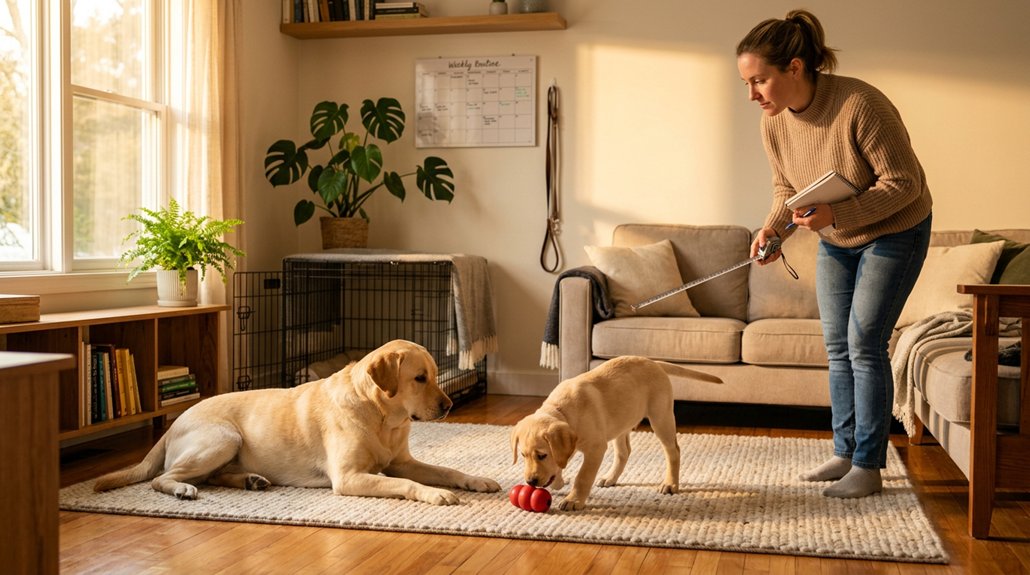
How do you decide between a lively puppy or a more settled adult dog for your lifestyle? First, weigh the training tips and energy levels. Puppies demand a considerable time commitment for house-training and socialization and possess boundless energy. They need routine attention, making them suitable if your schedule’s flexible and you have adequate play space. Conversely, adult dogs can present the advantage of established behaviors. If your lifestyle doesn’t permit constant supervision, an adult dog with basic training could seamlessly blend into your home. Look at your living context—let the current dynamics dictate your choice. Consider your long-term plans: puppies’ needs evolve, whereas adult dogs offer immediate companionship with fewer training hurdles. Make your canine choice aligned with life’s rhythm.
Find the Right Breed Characteristics for Your Life
To find the ideal dog breed for your lifestyle, you’ll need to assess your activity level and living situation. Evaluate breed traits like energy needs, grooming requirements, and vocalization tendencies to guarantee they’re a good fit for your everyday routines. Additionally, consider any specific allergies, as some breeds are better suited for individuals with sensitivities.
Assess Lifestyle Needs
When selecting a canine companion, it’s important to match the breed’s characteristics to your lifestyle to guarantee both pet and owner thrive. Breed personality and lifestyle compatibility play crucial roles in this decision-making process. For example, active individuals may harmonize with energetic breeds like Labs or Retrievers. Seniors or less active families might prefer calmer breeds. Evaluate key factors to make sure your choice aligns with your environment and daily routine:
- Activity Level: Match your energy habits with a breed’s needs, from high-energy sports breeds to laid-back companions.
- Space Requirements: Larger dogs need more room; apartment dwellers might opt for smaller breeds.
- Time for Training: Puppies require intensive training and socialization efforts.
- Grooming Needs: Determine daily grooming demands based on breed characteristics.
Evaluate Breed Traits
Once you’ve assessed your lifestyle needs, turning attention to specific breed traits becomes the logical next step in choosing the perfect canine companion. Key traits like energy levels and grooming needs greatly affect your daily routine. High-energy breeds require time and dedication for exercise, while breeds with moderate energy levels form better fits for less active lifestyles. Consider vocalization preferences—some dogs are naturally more vocal, which could influence noise levels in your home environment. Understanding grooming needs is essential, as regular grooming demands could be time-consuming or financially consuming. Investigate typical behaviors, such as friendliness or alertness, especially if kids or other pets are part of your household. Accurately evaluating breed adaptability can profoundly shape your dog’s comfort and overall well-being.
Consider Compatibility Factors
Selecting a dog breed that aligns with your lifestyle’s compatibility factors is essential for fostering a healthy, enduring relationship with your pet. Achieving this balance involves considering a blend of practical and behavioral traits. Here’s how to navigate these factors:
- Activity Level: Match your energy level to an active breed if you’re energetic, or a laid-back breed if you’re not. It guarantees natural compatibility and effective socialization.
- Living Space: Choose a breed adaptable to your environment. Large breeds often need more room, while others adjust well to apartment life, factoring in training techniques for confined spaces.
- Grooming Needs: Assess the time commitment required for grooming—crucial for maintaining peak health.
- Vocalization and Temperament: If you’re seeking peace, quieter breeds offer tranquility, especially in homes with children or other pets.
Harmonize Dog Choice With Family and Pets
Choosing a dog that’s compatible with your family’s unique dynamics is vital for maintaining a harmonious home environment. Family dynamics and pet integration play significant roles here. Assess your family, especially if you have young children or pets. Breeds like Labrador Retrievers and Beagles often adapt well to family settings. Engage everyone in the decision to guarantee comfort with the new addition. Consider your living space; large breeds need room to interact safely.
Proper integration with existing pets is important. Gradually introduce your new dog, observing personality traits to foster harmony. Use the following table to help evaluate dog characteristics with your home needs.
| Family Situation | Suggested Breed | Integration Tips |
|---|---|---|
| Young Children | Labrador Retriever | Supervise initial interactions |
| Other Pets | Beagle | Controlled, slow introductions |
| Limited Space | Small Breeds | Guarantee safe, designated areas |
Plan for Lifelong Pet Care and Costs
Planning for lifelong pet care and associated costs is essential when adding a canine companion to your life. Performing a thorough lifestyle assessment and financial planning guarantees you’re ready for this long-term commitment. Consider the following:
- Budget Considerations: Annually, pet care can range from $1,000 to $3,000. This includes routine veterinary care, food, grooming, and supplies.
- Emergency Funds: Allocate savings for unexpected expenses like emergency veterinary visits or specialized treatments, which tend to escalate quickly.
- Breed Specific Costs: Larger breeds often require more food and incur higher medical expenses compared to smaller dogs.
- Pet Insurance Options: Evaluate pet insurance options to offset medical costs over your dog’s potential 15+ year lifespan.
Being prepared helps guarantee your furry friend receives the thorough care they deserve.
Frequently Asked Questions
What Is the 3-3-3 Rule With Dogs?
The 3-3-3 Rule guides the adoption process by highlighting phases of a dog’s changeover: initial anxiety/stress, adjustment/testing of boundaries, and eventual comfort. Understanding breed characteristics helps tailor support for successful integration into your home.
What Is the 10 10 10 Rule for Dogs?
The 10 10 10 rule’s your golden ticket to dog ownership! From electrifying breed energy levels in 10 minutes to adjusting to dog personality types over 10 months and preparing for lifestyle changes over 10 years.
How to Choose a Dog for Your Lifestyle?
Consider dog breed characteristics and activity level carefully. Match your daily routine with the dog’s energy needs. Research breed temperament, size, grooming, and consult experts to guarantee compatibility. Puppies need training; adults have established habits.
What Annoys Dogs the Most?
Imagine a dog, constantly startled by loud noises and left alone without attention. It faces rough handling, inconsistent routines, and overcrowded spaces. This causes significant distress, potentially leading to aggressive behavior and anxiety, harming your dog’s well-being.
Conclusion
Choosing the right dog mirrors crafting a symphony in your life—each note must harmonize with your tempo. Assess your energy, as a high-spirited pup requires a partner ready to dance, while a serene soul seeks calm waters. Weigh your environment and embrace the balance between demands and devotion. Whether a frolicsome puppy sets your heart racing or a mellow adult soothes your soul, guarantee your choice echoes lifelong commitment, blending seamlessly with family and financial foresight.