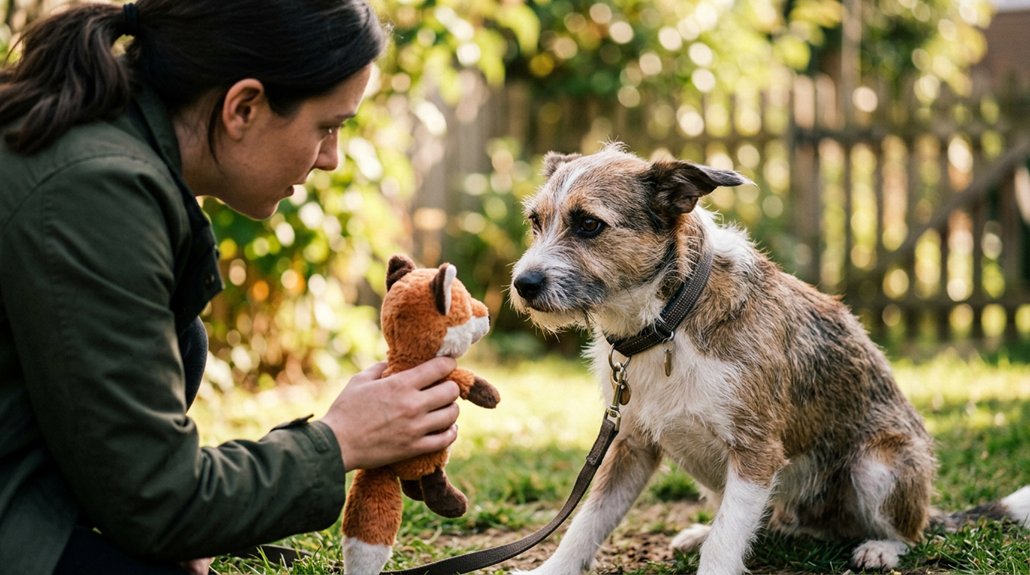
To help your nervous dog gain confidence, establish a structured routine with clear leadership using methods like ‘Learn to Earn.’ Recognize anxiety signs—such as trembling or avoidance—and gradually expose your dog to new experiences, pairing them with positive reinforcement like treats and praise. Create a safe haven for stress relief and consider tools like CBD or relaxation protocols. Track progress diligently to identify effective strategies. There’s much more to uncover in enhancing your dog’s confidence.
Key Takeaways
- Establish a predictable routine, incorporating ‘Learn to Earn’ methods to build structure and confidence.
- Gradually expose your dog to new experiences using positive reinforcement to encourage self-assurance.
- Observe body language for stress signals to prevent overwhelm and adjust exposure accordingly.
- Designate a safe space for stress relief, supporting the dog’s need for retreat and security.
- Track daily activities and celebrate small victories to maintain motivation and gauge progress.
Create a Safe and Structured Environment
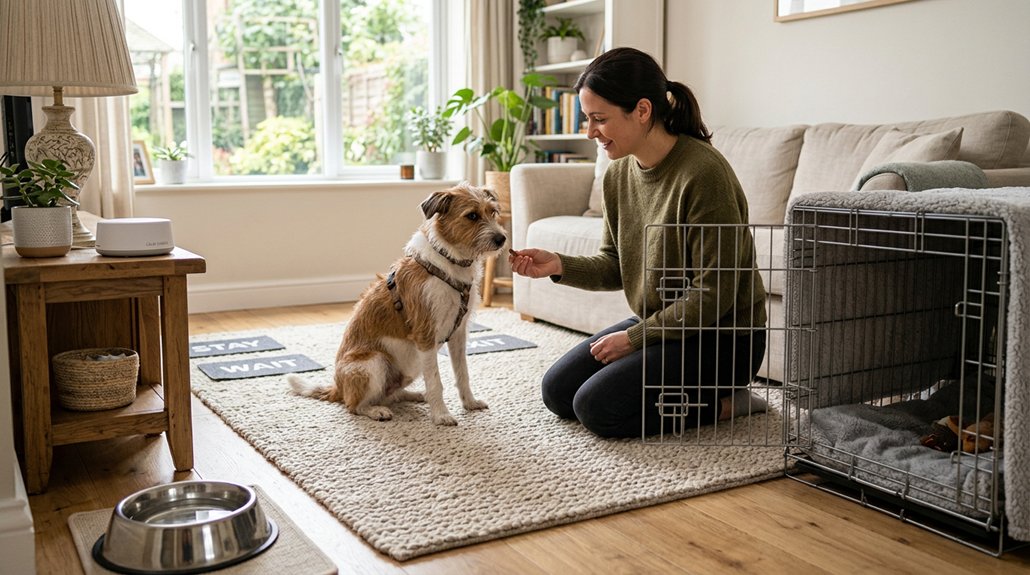
Establishing a safe and structured environment is essential for a nervous dog’s well-being. Create a predictable, structured routine to help your dog anticipate daily activities and develop security. Incorporate leadership training methods like ‘Learn to Earn’ to instill a sense of responsibility and confidence. It’s vital to designate a safe space—such as a crate equipped with cozy bedding—where your dog can retreat when feeling stressed. This place becomes a haven that encourages emotional stability. Conduct regular training sessions in a serene setting to promote desirable behaviors through positive reinforcement. Choose safe, low-distraction locations for outings, allowing gradual acclimation to new surroundings. These strategies collectively enhance your dog’s trust and comfort, promoting a confident demeanor over time.
Spotting Anxiety Signs in Your Dog
Recognizing anxiety signs in your dog is pivotal for addressing their emotional needs and ensuring their well-being. Pay close attention to your dog’s body language, which often serves as the first indicator of anxiety triggers. Cowering, trembling, pacing, and a lack of interest in their surroundings can all be signs of distress. Sometimes, vocalizations like whining, growling, or barking are the way they communicate fear or discomfort in stressful situations. You might notice that your dog avoids eye contact, a clear sign they’re feeling insecure or threatened. In some cases, defensive actions such as lunging at other pets or humans can manifest when they perceive threats. Identifying these behaviors helps you respond effectively and protect your dog’s emotional health.
Understand Why Your Dog Is Anxious
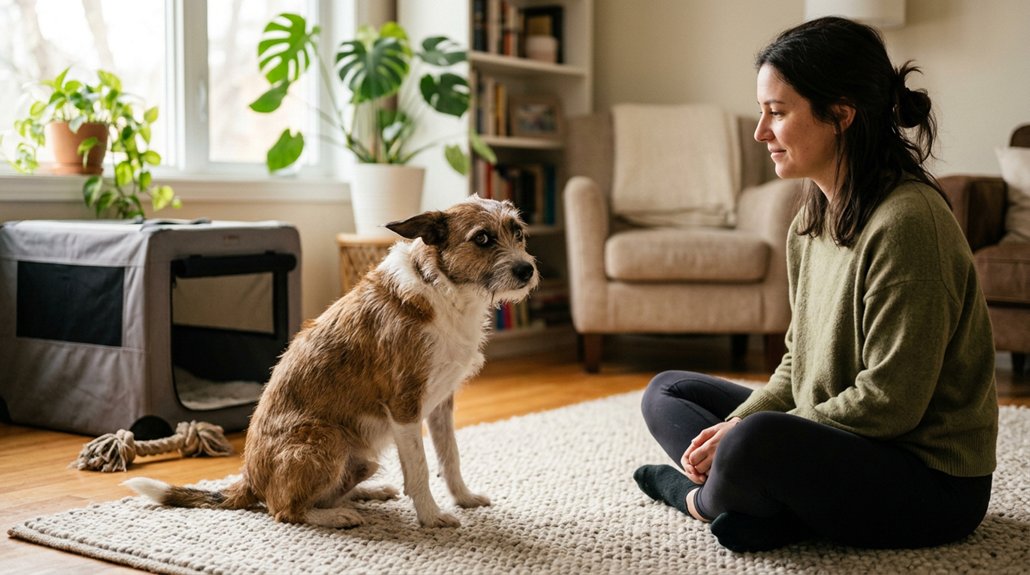
Understanding why your dog is anxious is essential for addressing their fears effectively. Begin with a thorough triggers analysis. Assess what stimulates anxiety, whether it’s unfamiliar people, loud noises, or new objects. Recognize that not all fears are learned; some are innate, built into their genetic makeup. Distinguishing between learned and innate fears allows you to adapt your response strategy accordingly. Acknowledge that a dog’s anxiety can originate from past abuse, trauma, or lack of exposure to fear-inducing situations. Here’s what to focus on:
- Evaluate Past Experiences: Consider any trauma or abuse history.
- Genetic Factors: Reflect on their breed’s predispositions.
- Environmental Stimuli: Identify fear triggers like noise or strangers.
- Monitor Behavioral Signs: Look for trembling, cowering, or growling patterns.
Consistent training can foster gradual improvement.
Build Trust With Your Nervous Dog
Once you’ve pinpointed the sources of your dog’s anxiety, the next step is building trust to help them feel secure. Start with trust exercises that involve gradual exposure to new experiences. Combine this with positive reinforcement to create positive associations. Remember, consistency is key in reinforcing your dog’s sense of safety and security. Avoid forcing interactions or direct contact with unfamiliar individuals or animals; instead, let your dog approach on their own terms. Use calm body language by crouching to their level and avoiding direct eye contact to reduce intimidation. Establish a safe space, like a comfortable crate, where your dog can retreat and feel secure. This routine helps solidify their trust, ensuring they have a place to feel at ease.
Use Positive Techniques Like Treats and Praise
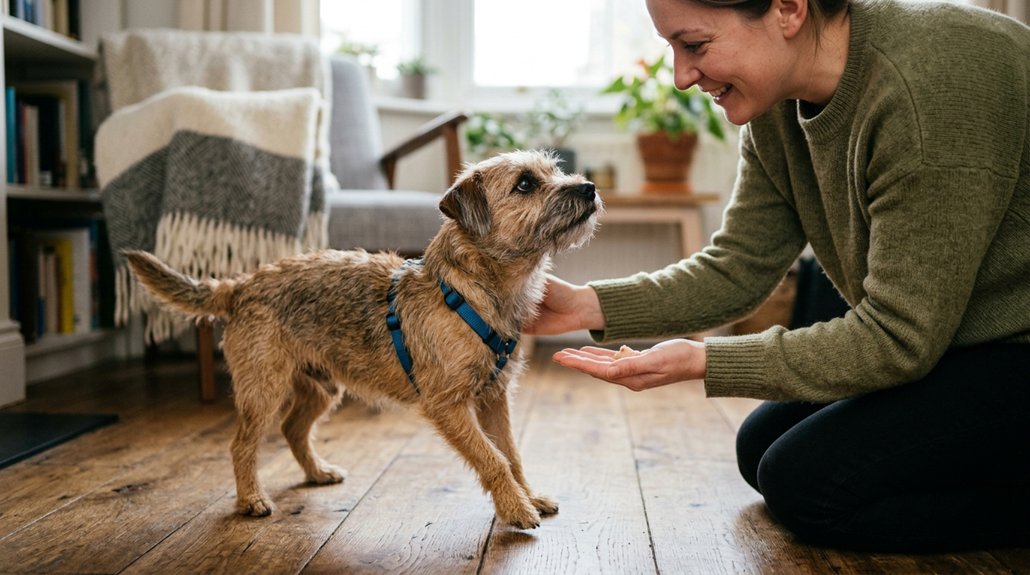
To effectively ease your dog’s anxiety, incorporate positive techniques like treats and praise. Focus on creating high-value associations for your dog in anxiety-inducing situations. Here’s how:
- Treat Timing: Offer treats immediately after your dog displays desired behavior. Timely rewards strengthen positive experiences over fearful ones.
- Praise Frequency: Consistently provide verbal affirmations. Regular praise encourages confidence and reinforces appropriate behavior.
- Hand Feeding: Use hand feeding during walks to link positive interactions with intimidating settings. This technique gradually reduces anxiety by building trust in challenging environments.
- Incorporate Activities: Engage your dog in fun activities like obedience training or agility. Combined with rewards, these can foster an atmosphere that enhances their self-assurance.
Encourage New Experiences Gradually
When introducing your dog to new experiences, gradual exposure is essential to prevent overwhelming them. Begin with low-intensity situations using controlled exposure techniques. Ascertain each encounter is coupled with high-value treats to foster positive associations and encourage confidence building. Gradual desensitization involves exposing your dog to fear-inducing stimuli from a safe distance, slowly decreasing that distance as their comfort grows. Closely monitor your dog’s body language throughout, ready to adjust the exposure levels on noticing any signs of anxiety. This approach guarantees they remain safe and secure. Acknowledge and celebrate small triumphs during these experiences to reinforce their growing confidence. This deliberate, patient method stands as a cornerstone in transforming a nervous dog into one ready for exploration.
Routine as a Confidence Booster
To boost your nervous dog’s confidence, establish a structured routine with consistent daily activities. Regular training sessions should be incorporated, which reinforce positive behaviors and reduce anxiety by providing predictability. This structured approach aids in nurturing a sense of security and fosters engagement with their environment.
Structured Daily Activities
Consistency plays an essential role in alleviating anxiety in nervous dogs, with structured daily activities providing predictability that fosters comfort. Implementing structured playtime and routine games can markedly bolster your dog’s confidence by promoting consistency and reducing apprehensiveness. Consider these steps:
- Initiate Routine Games: Select games that reinforce positive behaviors while maintaining a predictable schedule.
- Schedule Structured Playtime: Allocate specific times for play to establish reliability, enhancing comfort and reducing anxiety.
- Introduce Low-Stress Exposure: Gradually include new experiences within a predictable routine to gently desensitize your dog to anxiety-inducing stimuli.
- Use Learn to Earn: Incorporate tasks where your dog earns rewards, fostering achievement and security.
Consistent Training Sessions
Although it’s crucial to establish a structured environment for your dog, incorporating consistent training sessions can greatly boost its confidence by reducing anxiety. Regularity in training schedules offers a predictable routine, which helps your nervous dog understand expectations. Employ motivational techniques such as positive reinforcement to reward calm behavior, fostering a sense of achievement. This approach allows your dog to gradually build confidence and security through success. Incorporating commands and skills practice enhances their focus and environmental security. Leadership training methods, like ‘Nothing in Life is Free,’ introduce an order that further solidifies confidence. Scheduled sessions also provide controlled opportunities for gradual stressor exposure, allowing acclimatization at a manageable pace. This structured routine becomes a reliable foundation for anxiety reduction and confidence growth.
Socialize Your Nervous Dog Safely and Gradually
When you have a nervous dog, introducing them to social situations requires a delicate approach. Start with socialization games and dog playdates in low-pressure environments. Use positive reinforcement to foster confidence:
- Reward success: Pair new experiences with treats and praise to build positive associations.
- Monitor body language: Watch for stress signals—such as cowering—to prevent overwhelming your dog. If signs appear, take a step back.
- Controlled exposure: Enroll in training classes where your dog can interact with calm, well-behaved dogs in a structured setting.
- Gradual introductions: Begin with familiar faces before expanding to new people and animals, ensuring steady progress in comfort level.
Each strategy aims to decrease anxiety and enhance your dog’s confidence in social settings.
Explore Tools Like CBD and Relaxation Protocols for Anxiety Management
For a thorough approach to managing your dog’s anxiety, consider incorporating tools like CBD and structured relaxation protocols. CBD effects can vary, so it’s essential to consult with a veterinarian for safe usage. You might find natural supplements, such as calming herbs, helpful too.
Relaxation techniques, like Dr. Karen Overall’s protocol, assist in gradually exposing your dog to stressors in a controlled environment, helping them build resilience. Consistency in using these methods supports confidence growth.
| Tool | Benefits | Considerations |
|---|---|---|
| CBD | Can alleviate anxiety | Consult a veterinarian for dosage |
| Relaxation Techniques | Reduces anxiety over time | Requires consistency and patience |
| Calming Herbs | Natural support | Vet advice needed for administration |
Integrating these strategies effectively can enhance your dog’s well-being.
Monitor Progress and Celebrate Wins
Monitoring your dog’s progress is essential in managing anxiety, as it allows you to identify patterns and evaluate the effectiveness of your strategies. Consistent progress tracking can greatly improve your ability to tailor approaches. Here’s how you can systematically track and celebrate your dog’s journey:
Effective progress tracking lets you identify patterns and refine strategies for managing your dog’s anxiety.
- Record Keeping: Document daily activities, interactions, and how your dog responds. This helps identify behavior patterns and pinpoint successful techniques.
- Victory Recognition: Celebrate small victories, like calm behavior in stressful situations, reinforcing positive associations and motivation.
- Regular Monitoring: During training sessions, gauge anxiety levels to adjust techniques, enhancing comfort and promoting steady progress.
- Community Sharing: Update a supportive network with progress, exchanging insights and discovering effective strategies collectively.
Frequently Asked Questions
How to Make a Nervous Dog Confident?
Start by implementing positive reinforcement to reward desirable behaviors, avoiding reactions to fear triggers. Gradually desensitize your dog to these triggers in low-pressure environments while consulting a behaviorist for a tailored, strategic confidence-building plan.
What Is the 3-3-3 Rule for Dog Anxiety?
Think of Odysseus’s epic journey. The 3-3-3 rule is a phased approach for dog anxiety. Involve exposure therapy and positive reinforcement: shock adjustment, gradual acclimatization, and true personality reveal over three days, weeks, and months.
How Do You Say “I Love You” in Dog Language?
To say “I love you” in dog language, use positive reinforcement by rewarding behaviors like wagging tails and soft eye contact. Engage through gentle touches and play, observing body language cues to guarantee your affection is well-received.
How to Help a Scared Nervous Dog?
Start by implementing desensitization exercises with gradual exposure to triggers, utilizing positive reinforcement to reward calm behavior. Confirm your interactions are consistent and patient, allowing your dog to progress at their own pace for effective confidence-building.
Conclusion
Helping a nervous dog gain confidence is a rewarding journey. Did you know that approximately 70% of pet dogs show signs of anxiety? By creating a safe environment and using positive techniques, you can transform your pet’s demeanor. Establish a routine, and don’t hesitate to explore tools like CBD for anxiety management. Remember, gradual socialization and monitoring progress are key. Celebrate every small win, reinforcing that your efforts are leading to a happier, more confident dog.