When your dog won’t settle down, consider potential behavioral or environmental triggers. Make certain they get at least 30 minutes of exercise daily and provide engaging toys to ease boredom. Create a calm environment with soothing music, and use positive reinforcement to reward tranquility. If restlessness persists, consult a veterinarian to check for underlying health issues. Consistency in these approaches fosters a peaceful atmosphere, and further exploration may offer additional insights into managing your dog’s restlessness.
Key Takeaways
- Engage your dog in 30 minutes of daily physical activity to reduce restlessness.
- Provide engaging toys and mental stimulation to alleviate boredom and promote calmness.
- Use calming music and establish a quiet zone to minimize anxiety triggers.
- Reward and reinforce calm behavior consistently with treats and praise.
- Consult a veterinarian or professional for persistent restlessness or underlying health concerns.
Diagnosing Causes of Dog Restlessness
Understanding the causes of dog restlessness is critical for effectively addressing this behavior. Behavioral triggers, such as insufficient exercise and boredom, often result in hyperactivity and pacing. Your dog needs at least 30 minutes of daily physical activity to stave off restlessness. Providing engaging toys and activities can mitigate boredom-driven behaviors. Besides, environmental factors, including routine changes or loud noises, might trigger anxiety or stress, leading to restless habits like pacing as a form of attention-seeking. It’s essential to recognize these individual triggers and consult a veterinarian to identify any potential medical conditions, such as pain or cognitive dysfunction, that could be contributing to your dog’s unsettled behavior. A compassionate approach guarantees your dog’s health and happiness.
Immediate Calming Techniques for Dogs
Implementing immediate calming techniques for your restless dog can be essential in promoting tranquility and preventing distress-related behaviors. Start by introducing calming music into your dog’s environment. Research shows that soft, classical music can lessen anxiety and encourage relaxation. Utilize breathing techniques both for yourself and your dog. By modeling slow, deep breaths, you can help reduce stress levels; some dogs respond to the same rhythm, mirroring your calm demeanor. Creating a quiet, stress-free zone is vital, as unexpected noises can trigger anxiety. Use positive reinforcement to encourage settled behavior, praising your dog when they exhibit calmness. Consistently implementing these strategies can help manage your dog’s restlessness, contributing to a more peaceful and harmonious home environment.
Incorporate Physical and Mental Exercise for Calmness
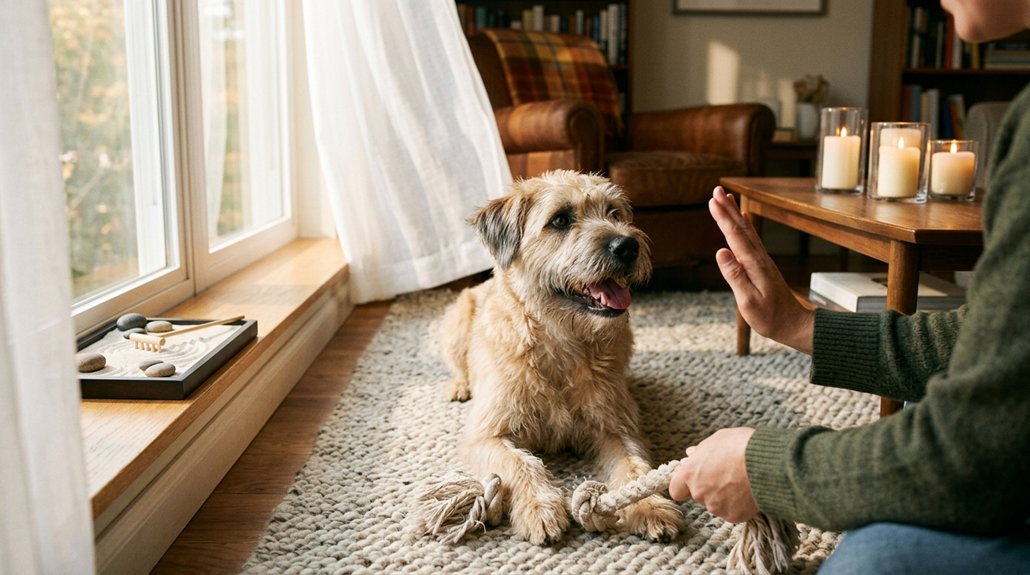
Although physical and mental exercise may seem merely recreational, they are scientifically proven to be essential in helping dogs achieve a calm, balanced state. Regular physical activities like fetch or tug-of-war serve as structured play, which helps burn off pent-up energy. Aim for at least 30 minutes daily to prevent restlessness and hyperactivity. Mental stimulation, such as puzzle toys or scent work, provides balance exercises to occupy their brains, reducing boredom-induced behaviors.
Beyond physical exertion, mental challenges like obedience training considerably promote relaxation. These activities not only tire dogs physically but also allow them to engage cognitively, leaving them more serene post-exercise. Establishing a routine that incorporates both exercise types fosters better emotional balance and supports calmer behavior during quiet times.
Reward Calm Behavior to Encourage Relaxation
In addition to a structured routine of physical and mental exercises, recognizing and rewarding calm behavior plays a significant role in helping your dog achieve relaxation. By using positive reinforcement, you can effectively encourage a tranquil state. Offer tiny, bite-sized treats when your dog exhibits settled behaviors like lying down or resting their head. This method serves as a gentle relaxation technique, ensuring your pet doesn’t become overwhelmed. It’s essential to gradually increase the duration your dog remains calm before they receive a reward, supporting their capacity to sustain tranquility over time. Implementing a routine for rewarding these behaviors fosters consistency. However, it’s important to avoid rewarding restless actions such as pacing or barking, as this may inadvertently reinforce them.
Know When to Call the Experts
When your dog’s restless behavior doesn’t improve with consistent training and adaptations in their environment, it might be time to seek professional advice. Persistent issues like excessive pacing or whining could suggest anxiety or health problems requiring expert intervention. A behavioral assessment can pinpoint underlying causes and guide treatment. Consider contacting experts if your dog faces issues such as separation anxiety or stress from environmental changes. You can reach a professional guidance team by calling 0303 003 6666 during weekday and weekend hours. If unrest continues or signs of pain appear, a veterinary evaluation is essential to guarantee your dog’s well-being. Prompt expert intervention prioritizes your dog’s health, delivering tailored solutions for their specific behavioral needs.
Frequently Asked Questions
What Is the 3-3-3 Rule With Dogs?
The 3-3-3 rule is about dog adjustment in three phases: three days of shock, three weeks of settling, and three months of comfort. Understanding this helps manage canine behavior compassionately, ensuring a smoother adjustment into your home.
How to Calm a Dog Who Won’t Settle?
Consider positively reinforcing tranquility with treats and soothing affirmations. Utilize calming techniques like gentle massages or soft music. Remember, your dog’s serenity may occasionally need professional insight if they’re persistently restless, ensuring their comfort and peace remains paramount.
What Is a Red Flag Dog’s Behavior?
A red flag in a dog’s behavior includes excessive panting, pacing, and whining, indicating stress. Identifying such stress signal warning signs compassionately can help address underlying medical or anxiety issues effectively. Seek veterinary advice for proper evaluation.
What Does It Mean if a Dog Won’t Settle?
When your dog won’t settle, it’s like a boiling kettle of dog anxiety and behavioral signs. It signals unmet energy needs, possible anxiety, or insufficient exercise, emphasizing the need for routine adjustments and attentive interventions.
Conclusion
If your restless dog is still causing concern, don’t hesitate to consult a veterinarian or professional trainer. You might wonder if it’s worth the effort, but investing in expert guidance can make a world of difference. Like humans, each dog is unique, and understanding the root of their restlessness guarantees they lead a happier, healthier life. Remember, you’re not alone in this journey; the right approach can transform your bond with your furry friend.