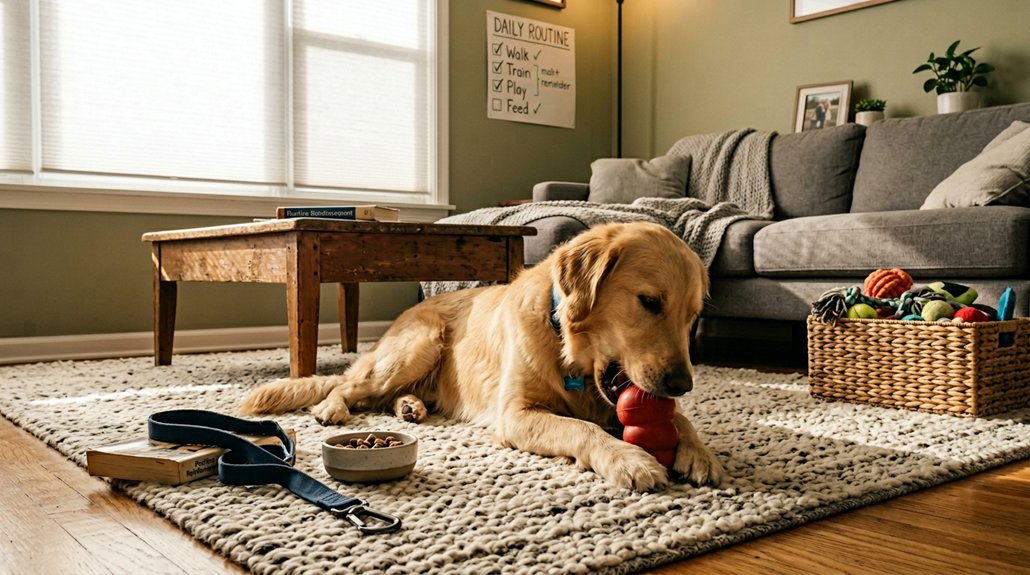
To stop your dog from chewing everything, understand their natural instincts and provide robust chew toys. Monitor for stress or boredom signals like excessive chewing, barking, or pacing. Use redirection techniques and train with commands like “Leave it.” Make certain they get enough exercise and structured play. Dog-proof your home by securing common targets and provide early intervention if behavior persists. Engaging professional help might be beneficial. There’s much more to discover about helping your dog.
Key Takeaways
- Provide robust chew toys made from rubber or interactive materials to redirect chewing behavior.
- Use positive reinforcement techniques to reward dogs when they chew designated items.
- Apply homemade deterrents like vinegar or citrus sprays to discourage chewing on valuables.
- Engage in regular exercise and play activities to prevent boredom-related chewing.
- Seek professional help for severe cases involving underlying anxiety or stress issues.
Quick Fixes for Dog Chewing Problems
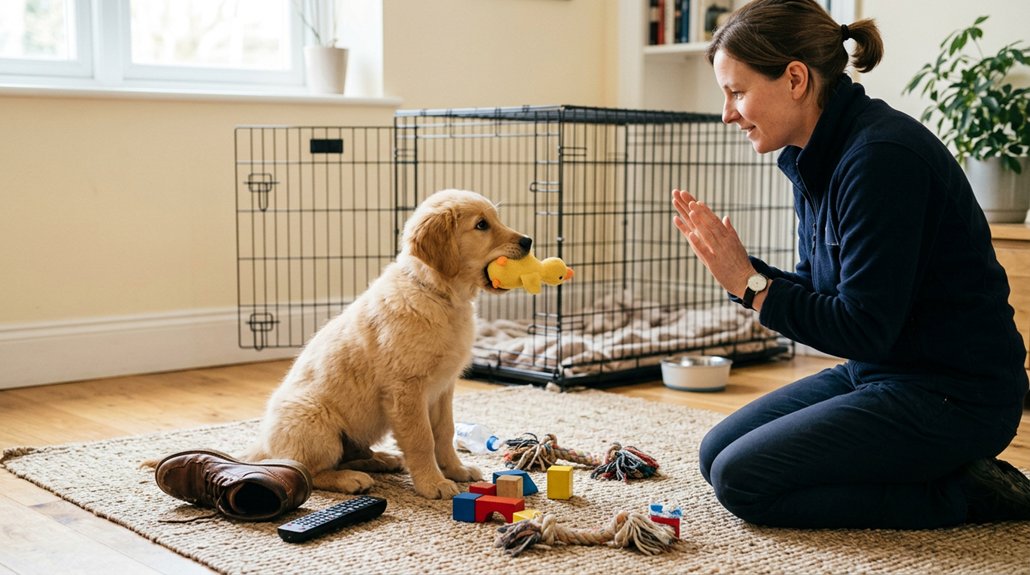
When dealing with a dog’s chewing issues, quick fixes can be highly effective if implemented thoughtfully. Start by exploring chew toy options, such as robust rubber toys or interactive stuffed animals, to channel your dog’s chewing instinct toward acceptable targets. Engaging chew toys provide essential stimulation, helping deter destructive behaviors. Additionally, consider homemade deterrents, like vinegar or citrus sprays, to make household items less enticing. These can be safely applied to furniture, shoes, or other valuables. Consistent praise when your dog opts for the designated chew objects reinforces positive actions. Regular exercise—up to two hours for high-energy breeds—alongside puzzle toys, maintains mental and physical well-being. Implement these techniques judiciously for lasting behavioral improvements in your canine companion.
Why Do Dogs Chew?
Understanding why dogs chew is essential for addressing this behavior effectively. Chewing is a natural exploration instinct that helps them interact with their surroundings, and for puppies, it’s often a method to relieve teething discomfort. Additionally, adult dogs may chew due to boredom or as a coping mechanism for stress, which can be mitigated by providing appropriate chew toys and mental stimulation.
Natural Exploration Instinct
Given their natural exploration instinct, dogs chew to fulfill their curiosity, learning about the world through textures and tastes. This instinctual behavior allows your dog to engage with their environment effectively. The exploration benefits they receive include understanding new materials and enhancing sensory experiences. Chewing acts as an essential information-gathering process, akin to a toddler touching everything around them. It’s important to appreciate how this behavior ties into their overall development. Through chewing, dogs can strengthen their jaws and promote dental health organically. It’s a typical behavior that doesn’t necessarily indicate a problem unless it becomes excessive. Recognizing the innate instinct to explore is vital. Make sure your dog has appropriate chew toys that facilitate safe exploration, combining curiosity fulfillment with practical convenience.
Teething and Pain Relief
In addition to their exploration instincts, dogs’ chewing behaviors can be attributed to teething and pain relief, especially noticeable in puppies. Puppy teething typically starts between three to six months, coinciding with the loss of baby teeth and emergence of adult teeth, creating significant gum discomfort. Chewing alleviates this dental discomfort, functioning as a natural analgesic.
Teething Aids | Purpose
— | —
Frozen toys | Soothe gum soreness
Ice cubes | Relieve discomfort
Chew toys | Safe chewing alternative
Providing items like frozen toys or chew toys can mitigate pain while preventing inappropriate chewing. Adult dogs also chew to address dental issues or preserve gum health. Regular dental check-ups are vital to manage ongoing pain, which maintains ideal oral well-being.
Coping With Boredom
Why do dogs resort to chewing your favorite shoes or furniture? Often, the root cause is boredom, stemming from a lack of sufficient physical and mental stimulation. Establishing consistent playtime routines is essential to mitigate this behavior. High-energy breeds need both regular walks and interactive games to satisfy their exercise and stimulation needs. Incorporating interactive toys like puzzle toys into their daily activities challenges their minds and reduces the allure of inappropriate objects. Additionally, rotating chew toys regularly to maintain novelty can help sustain their interest. Remember, mental stimulation is as important as physical activity. For breeds requiring extensive exercise, more than two hours a day may be needed to prevent boredom-induced chewing and guarantee a content, non-destructive canine companion.
Spot Stress and Anxiety Signs in Your Dog
Although dogs can’t articulate their emotions like humans, they often convey stress and anxiety through distinctive behaviors that require careful observation. Monitoring your dog’s body language can reveal vital insights into their emotional states. Signs such as panting, pacing, or shaking indicate stress, while excessive barking or whining might suggest separation anxiety. Additionally, if your dog consistently chews on household items when left alone, this could be a symptom of anxiety or boredom. Stress-related chewing may also occur during interactions with other pets or environmental changes, emphasizing the importance of understanding these cues. Recognizing these behaviors is essential, as chewing acts as a self-soothing mechanism. By identifying these stress signals early, you can take immediate action to address potential underlying issues.
Strategies to Prevent Boredom-Related Chewing
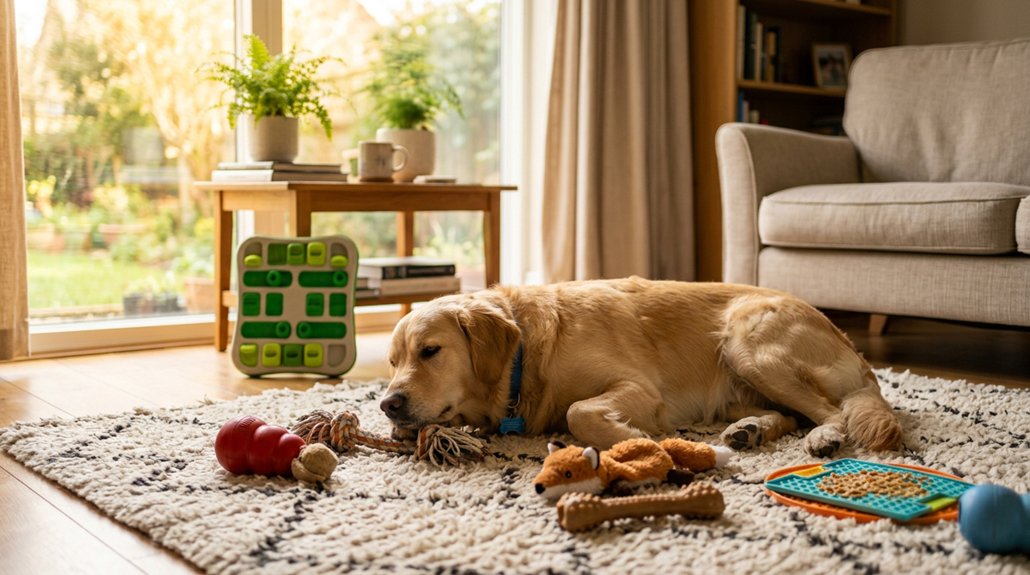
Ensuring your dog has an outlet for both physical and mental energy is essential in preventing boredom-related chewing behaviors. Develop exercise schedules tailored to their energy levels. High-energy breeds often require at least two hours of activity daily. Incorporate engaging methods like interactive puzzle toys filled with treats. These toys provide mental stimulation, reducing destructive tendencies when you’re not around. Equally important is the practice of toy rotation. By frequently changing toys, you keep them novel and exciting, encouraging preferred engagement. Daily playtime activities such as hide and seek or tug-of-war further promote mental and physical engagement. Consistency in your dog’s routine with exercise, play, and training intervals helps alleviate boredom, thereby minimizing destructive chewing habits.
Redirect Chewing With Training Techniques
Redirecting chewing behaviors in dogs is vital to protecting your belongings and promoting healthy habits. To achieve this, effective redirection involves offering a safe chew toy immediately when your dog bites inappropriate items. Chew toy safety is significant; make sure toys are non-toxic and suitably sized. Commands like “Leave it” help structure acceptable chewing choices, guiding your dog’s environmental exploration. Consistent positive reinforcement, such as praise or treats, strengthens desired behaviors and deepens your bond. Maintain a selection of engaging toys to satisfy chewing urges and mitigate boredom-induced destruction. Always supervise and intervene promptly, redirecting your dog to appropriate items. With consistent reinforcement, redirection becomes habitual, reducing unwanted chewing and encouraging healthy engagement with safe toys.
Secure Your Home: Dog-Proofing Tips
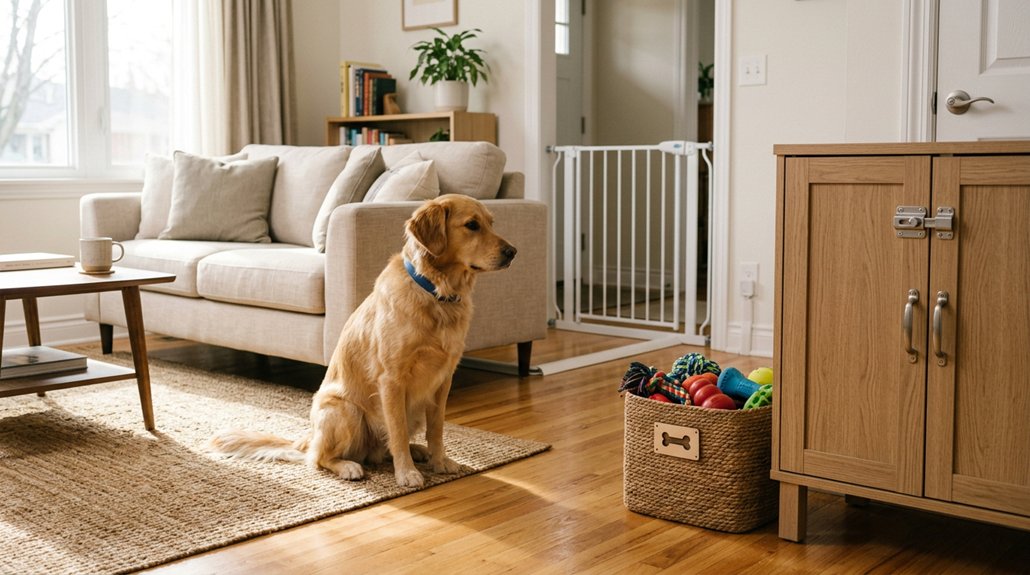
Once you’ve mastered redirecting your dog’s chewing behavior, it’s crucial to secure your home to prevent future mishaps. Begin dog-proofing by removing or securing items like shoes, newspapers, and electrical cords, which are common chew targets. Use baby gates or an exercise pen to restrict your canine’s access to areas where destructive behavior might occur. Consider investing in pet safe decor, such as chew-proof furniture covers and rugs, especially in high-traffic areas. These protective measures minimize damage and promote a safer environment. Store harmful substances like cleaning products in locked cabinets or on high shelves. Regularly rotate and provide stimulating chew toy options to keep your dog engaged and discourage them from targeting your belongings.
Consult Professionals for Persistent Chewing
Although you’ve tried various preventive measures, some dogs may still persist in harmful chewing habits, necessitating professional guidance. A veterinary consultation can uncover any underlying medical issues affecting your dog’s behavior. It’s essential for identifying if harmful objects were ingested, ensuring your pet’s safety. When standard interventions fall short, a professional dog trainer can offer tailored behavior modification strategies catering to your dog’s unique needs. In severe cases, a veterinary behaviorist can implement advanced techniques beyond basic training.
| Professional | Role | Solution Offered |
|---|---|---|
| Veterinarian | Health Check | Diagnose medical issues |
| Dog Trainer | Trainer | Tailored training plans |
| Veterinary Behaviorist | Behavior Expert | Advanced modification strategies |
Early intervention with these experts helps prevent further damage, safeguarding your home and your dog’s well-being.
Frequently Asked Questions
How Do I Train My Dog to Not Chew Everything?
Begin preventive training by redirecting your dog to chew toys when inappropriate chewing happens. Implement commands like “Leave it” consistently. Increase exercise and stimulate mental activities. Always use positive reinforcement to reinforce desired behaviors and discourage unwanted ones.
What Is the 90/10 Rule Dog?
The 90/10 rule juxtaposes structure and freedom in puppy behavior management. Dedicate 90% to structured activities for mental and physical stimulation, ensuring effective chewing prevention, while reserving 10% for supervised free play, promoting ideal cognitive development.
How Do I Get My Dog to Stop Destroying Everything?
To curb destruction, guarantee your dog gets ample exercise and mental stimulation. Provide chew alternatives like puzzle toys. Use positive reinforcement to promote good behaviors. If issues continue, consult a veterinarian for underlying behavioral concerns.
What Smell Do Dogs Hate to Stop Chewing?
Dogs dislike citrus scents, peppermint oil, bitter sprays, and vinegar solutions. Implement these deterrents to discourage chewing on items. Guarantee proper dilution, especially with oils, to maintain safety while effectively curbing destructive behavior through olfactory aversion.
Conclusion
Preventing your dog from chewing everything requires a multifaceted approach. Like a well-oiled machine, consistency is key—reinforce training techniques, provide mental stimulation, and dog-proof your environment. Recognize signs of stress and address them proactively. For persistent issues, don’t hesitate to consult professionals. Your commitment and patience will foster a harmonious space where your furry friend can thrive. Remember, it’s not just about stopping the behavior but nurturing a happy, balanced canine companion.