As a new dog owner, you may encounter challenges like the emotional upheaval of the “puppy blues” and establishing a comforting routine. Guiding potty training with consistent schedules and positive reinforcement can also be demanding. Socialization is vital and requires early effort to guarantee a well-adjusted pet. Prioritizing essential supplies over luxury items helps maintain focus on your puppy’s needs. Discover practical strategies for these common challenges to enhance your journey as a pet owner.
Key Takeaways
- New dog owners often face “puppy blues” due to unmet behavior expectations and anxiety.
- Establishing a consistent routine is challenging yet crucial for reducing anxiety in both dogs and owners.
- Potty training requires close supervision and a structured reward system for effective learning.
- Ensuring early socialization through puppy playdates and training classes is essential for well-adjusted adult dogs.
- Identifying essential supplies like crates and leashes over non-essential items is important for practical pet care.
Riding the Puppy Emotional Rollercoaster
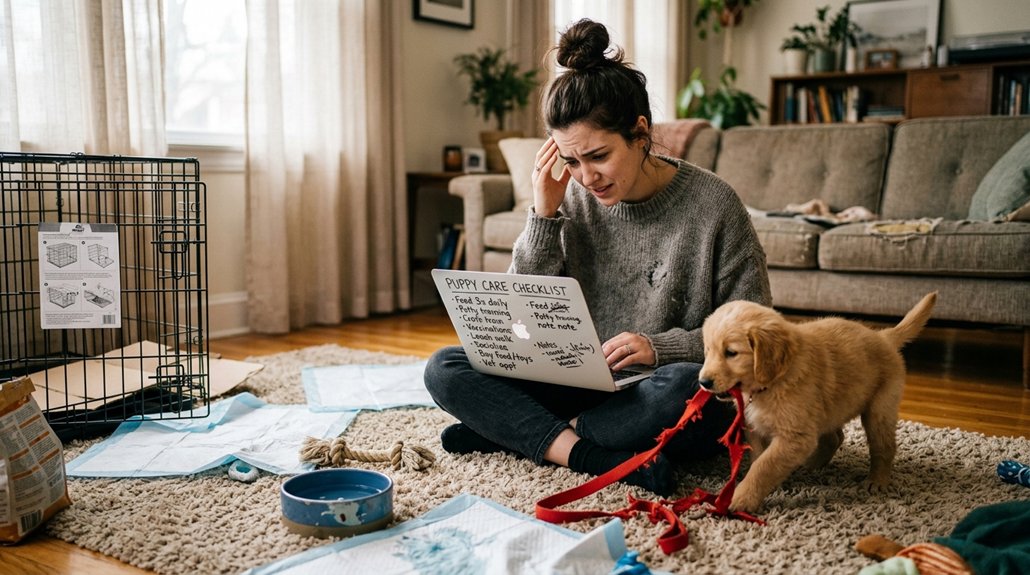
Though the initial excitement of bringing a new puppy home can fill any owner with joy, it isn’t uncommon for that joy to be quickly tempered by a wave of unexpected challenges. You’re faced with a reality check as puppy excitement evolves into anxiety, particularly when behavior expectations aren’t met. Emotional support becomes vital as you navigate training challenges that are more intimidating than anticipated. During these first few weeks, many first-time dog owners experience the ‘puppy blues,’ doubting their decision amidst managing behavior issues. It’s important to remember that the emotional journey includes bonding moments that strengthen your relationship over time. Patience is key, helping you face these challenges and guiding both you and your pup through this rollercoaster of emotions.
Create a Routine for Harmony
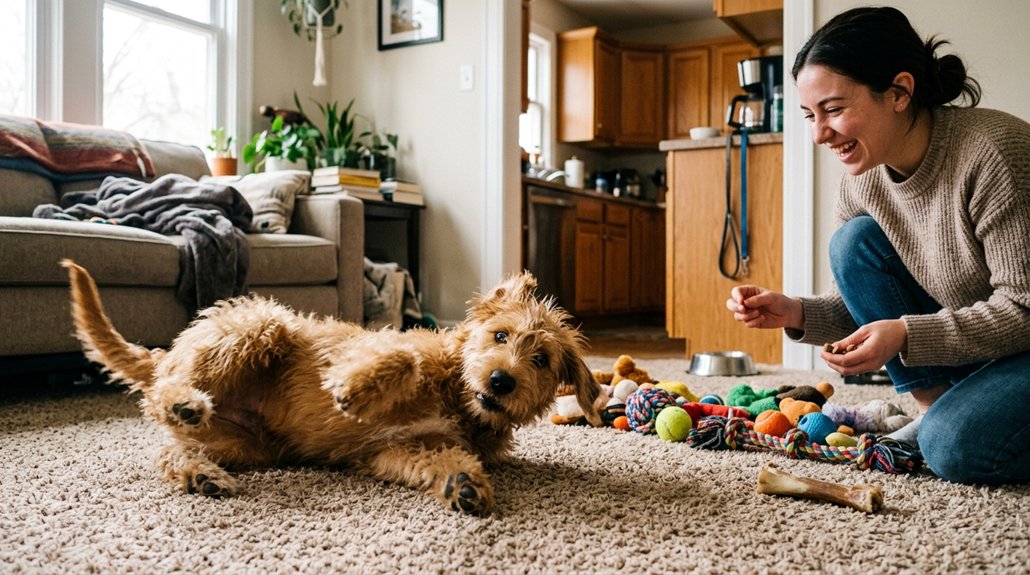
As you navigate the emotional turbulence of new puppy ownership, finding stability can make a world of difference. Establishing a consistent routine, including structured feeding and daily activity, is key. Serve meals and schedule bathroom breaks at set times to create predictability, reducing anxiety for both you and your pup. Start the day with a wake-up call, follow it with a potty break, and move on to breakfast. Incorporate play or training sessions to provide natural learning opportunities, fostering a stronger bond.
For adult dogs, a routine involving walks, meals, and quality time is equally beneficial. This consistency helps them feel secure and ingrains stable habits. With a predictable routine, you’ll create a harmonious environment, helping your dog adjust smoothly to their new home.
Simple Steps for Stress-Free Potty Training
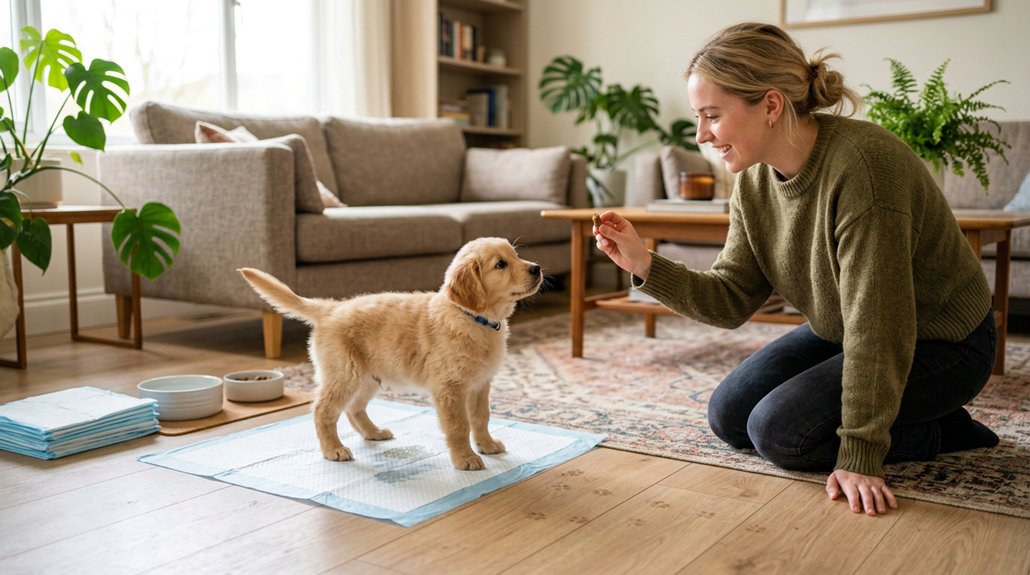
Potty training your new dog can seem challenging, yet with a little patience and consistent effort, it can become a straightforward process. Start by setting a potty schedule, taking your dog to the designated outdoor spot immediately after waking, eating, or playing. This routine helps them learn when and where to go. Indoors, maintain close supervision to prevent mishaps; using a crate or baby gates is effective for this. Implement a reward system, offering treats and praise when your dog successfully potties outside, reinforcing positive behavior. If accidents happen, use an enzymatic cleaner for thorough accident cleanup, removing odors and reducing the temptation for repeated mistakes. Consistency and positive reinforcement are key to stress-free potty training.
Socialize Your Puppy Successfully
To guarantee your puppy develops into a well-adjusted adult, it’s imperative to focus on early socialization. Start by integrating various socialization techniques within the first few months, as the critical period closes between 14 and 16 weeks. Prioritize puppy playdates to expose them to other dogs and environments, enhancing their adaptability. Enrolling in socialization and training classes as early as eight weeks will provide valuable interactions with people and pets, laying a strong foundation for future learning.
Don’t fall for the misconception of delaying training until your puppy is older. Begin immediately upon bringing them home. Reward desired behaviors and initiate potty training to support their development. Engaging early during this window enhances their ability to handle real-world situations confidently and calmly.
What You Really Need and What You Don’t
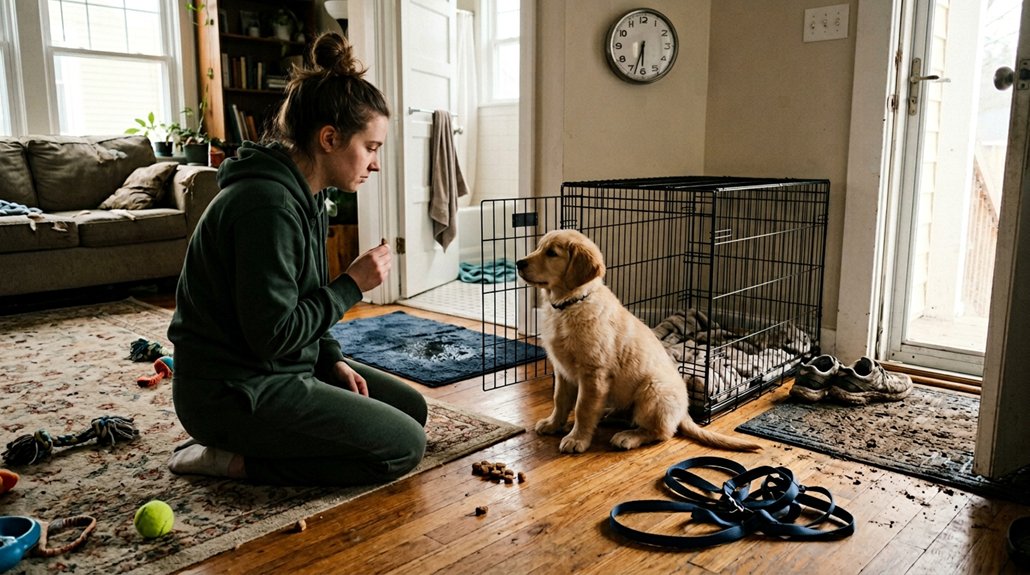
Maneuvering through the wealth of pet supplies available can be overwhelming, but focusing on the essentials will set you up for success as a new dog owner. A sturdy crate, a well-fitted collar with an ID tag, and vet-recommended food are foundational, while items like elevated bowls or orthopedic beds might seem appealing but aren’t necessary. By prioritizing these essential pet care supplies over luxury items, you’ll guarantee your dog’s health and comfort without overspending.
Essential Pet Care Supplies
For new dog owners, maneuvering the world of pet care supplies can be both exciting and overwhelming. It’s important to focus on essential gear, ensuring your dog’s well-being from the start. Begin with a properly sized crate and a flat collar with an ID tag. A six-foot leash makes walks manageable, and vet-recommended food addresses nutritional needs. For managing natural chewing behavior, durable chew toys are indispensable. Enzymatic cleaners will help when accidents occur. A treat pouch isn’t just a convenience; it’s crucial for effective training supplies, utilizing positive reinforcement to shape good behavior. While tempting, avoid unnecessary items like elevated bowls or GPS trackers, as they don’t considerably enhance your dog’s welfare or safety.
Non-Essential Luxury Items
Starting on the journey of new dog ownership doesn’t have to break the bank with luxuries. Focus on practical necessities like a crate, collar with ID tag, and chew toys rather than costly distractions such as elevated feeders or subscription boxes.
| Non-Essential Luxury Items | Practical Necessities |
|---|---|
| Elevated Feeders | Properly Sized Crate |
| Subscription Boxes | Flat Collar with ID Tag |
| Matching Sets | Leash |
| GPS Trackers | Food and Water Bowls |
| Fancy Decor | Durable Chew Toys |
These luxurious gadgets often offer limited benefits and can detract from a dog’s comfort and safety. Your dog’s first year will be expensive with vaccinations, spay/neuter procedures, and training classes. Save money by prioritizing essential gear and investing in a treat pouch for effective training reinforcement.
Prioritizing Pet Needs
When starting on the journey of dog ownership, it’s crucial to distinguish between essential pet needs and those you can do without. Prioritizing needs is key to managing your budget effectively. Begin with must-have items like a properly sized crate, ensuring your new friend has a safe space. Invest in a flat collar with an ID tag and a six-foot leash for safety during walks. Don’t overlook vet-recommended food as a budgeting essential for your dog’s health. While gadgets like GPS trackers and automatic feeders seem appealing, focus on necessities first.
- Essential gear: crate, collar, ID tag, leash.
- Training basics: treat pouch and clicker for effective learning.
- Priority expenses: vaccinations, spay/neuter, wellness exams.
Connect With Fellow Puppy Parents
Have you ever felt overwhelmed as a new puppy owner? Connecting with fellow puppy parents can be incredibly beneficial, and online platforms like Facebook groups offer excellent support networks where you can share experiences. These communities provide a space to discuss early puppy behaviors, offering practical tips and resources for fostering healthy interactions with your furry friend. Engaging in these shared experiences helps alleviate common anxieties, providing you with confidence as you tackle the learning curve of training and socialization. Joining these forums allows you to participate in interactive discussions, easing feelings of isolation and frustration often faced during this adjustment period. The mutual support from fellow puppy owners will surely help you feel more at ease with the challenges of new dog ownership.
Frequently Asked Questions
What Is the 3-3-3 Rule With Dogs?
The 3-3-3 rule outlines a dog’s adjustment stages: three days of initial anxiety, three weeks of settling, and three months to integrate into their home environment. It guides you in supporting their socialization process with patience.
What Are the 4 Signs Your Dog Thinks of You as a Parent?
Oh, so you’ve become your dog’s parent now? Expect leaning, intense eye contact, toy offerings, and protective behaviors. They’re all signs of dog bonding and parenting instincts kicking in. Cherish it; you’re their world, you know?
Where Should a New Dog Sleep the First Night?
Your new dog should sleep in a designated area or crate with comfort items like a familiar blanket and an item with your scent. This guarantees secure sleeping arrangements and helps ease their adjustment into your home.
How Do You Say “I Love You” in Dog Speak?
You say “I love you” in dog speak by recognizing dog body language. Respond to tail wagging, encourage puppy bonding through play, and use canine vocalizations. Your attention and care effectively convey love and strengthen your bond.
Conclusion
Starting on the journey of puppy parenthood is like setting sail on uncharted waters—exciting yet overwhelming. Embrace each wave of challenges as opportunities to learn and grow together. By establishing routines, mastering potty training, and fostering social skills, you’ll build a strong foundation. Remember, you don’t need every gadget, but you do need a community. Lean on fellow puppy parents for shared wisdom and support. With patience and love, you’ll turn your new house into a home.