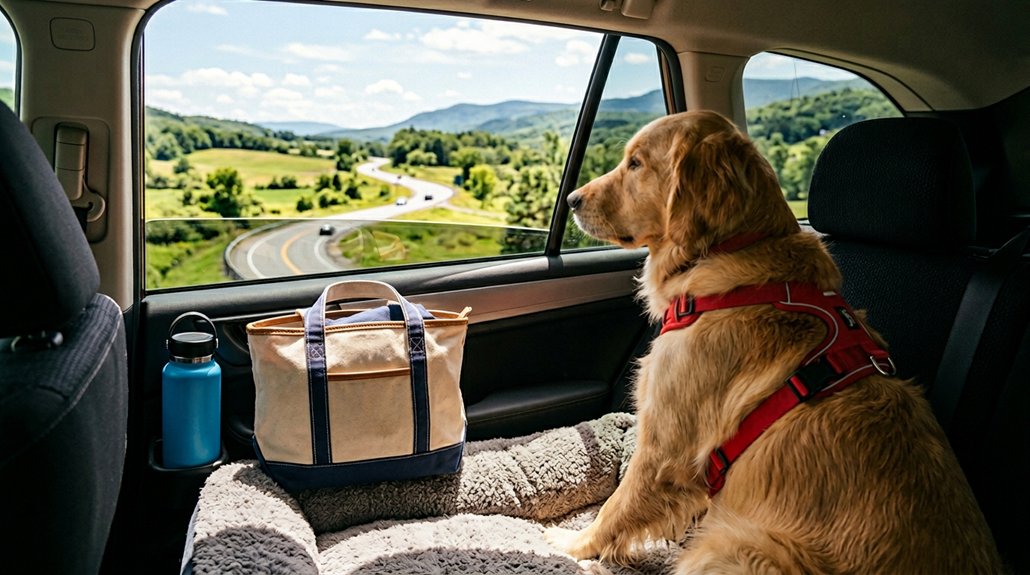
Traveling with your dog by car requires thoughtful preparation to guarantee their safety and comfort. Start by acclimating them to car rides and restrict food intake 4-6 hours before travel to reduce motion sickness. Use crash-tested crates or harnesses and pack essentials like a first-aid kit, water, and comfort items. Plan rest breaks every 2-3 hours and monitor for any distress. With careful planning, you’ll find valuable tips to enhance your journey with your canine companion.
Key Takeaways
- Gradually acclimate your dog to car travel through short rides to build comfort and reduce anxiety.
- Use crash-tested harnesses or secured crates to ensure your dog’s safety in the vehicle.
- Pack a travel kit with food, water, medications, and comfort items for your dog’s needs.
- Implement regular rest breaks every 2-3 hours to allow your dog to stretch and relieve themselves.
- Monitor your dog for motion sickness signs and consult a veterinarian for effective solutions if necessary.
Preparing Your Dog for Car Travel
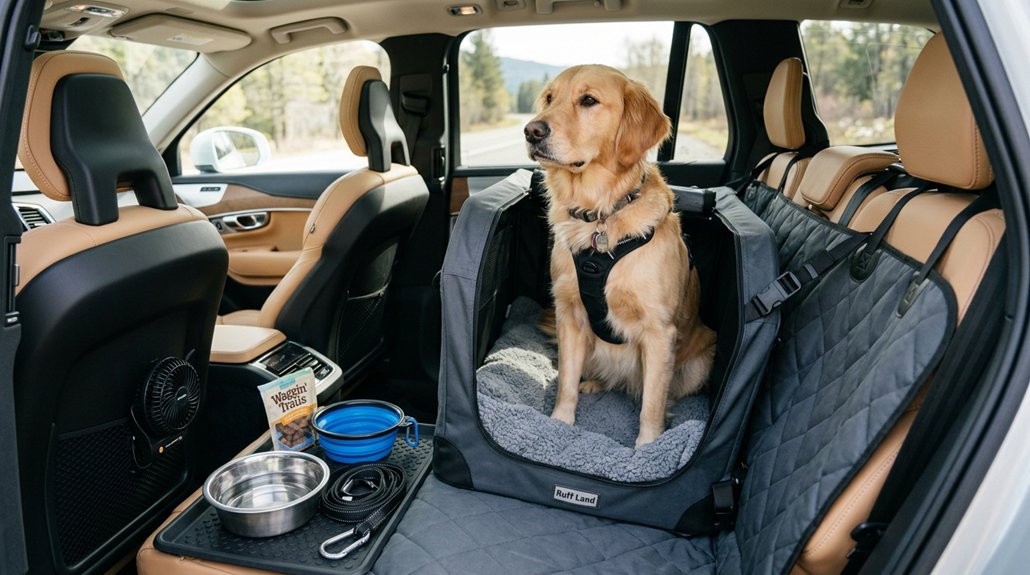
Starting on a road trip with your dog requires careful preparation to guarantee a safe and comfortable journey. Prioritize car ride etiquette by acclimating your pet to the vehicle through brief 5-10 minute excursions, promoting a gradual adjustment to car travel. To minimize motion sickness, especially in puppies, make certain your dog refrains from eating for 4-6 hours before departure. As you plan your route, pinpoint dog friendly destinations that welcome furry companions. A thorough travel kit is essential, including food, water, a portable bowl, medications, and familiar comfort items such as toys or a blanket. Pre-trip vehicle familiarization—in a stress-free environment—alleviates anxiety, setting the stage for smoother travels. Master these elements for a hospitable and health-centric road experience.
Selecting the Right Crate or Restraint System
Choosing the appropriate crate or restraint system for your dog is paramount for safe car travel. Prioritize crates that allow free movement—standing, turning, and lying comfortably. Essential crate materials include sturdy constructions with leak-proof bottoms and absorbent interiors. Ventilation is critical; guarantee airflow passage by selecting designs with opposite-side ventilation. For restraint systems, invest in crash-tested harnesses or seat belts, validated by safety certifications.
Here’s a breakdown:
| Feature | Crate Materials | Safety Certifications |
|---|---|---|
| Size | Spacious fit | Certified harness fit |
| Durability | Leak-proof base | Crash-tested confirmation |
| Ventilation | Dual-side vents | Regulatory compliance |
Place the crate securely behind the front seat, avoiding the front seat’s airbag zone. Equip your dog with a sturdy leash and collar, supplemented by identification tags and microchipping for best travel security.
Packing Essentials for Your Dog’s Comfort and Well-Being
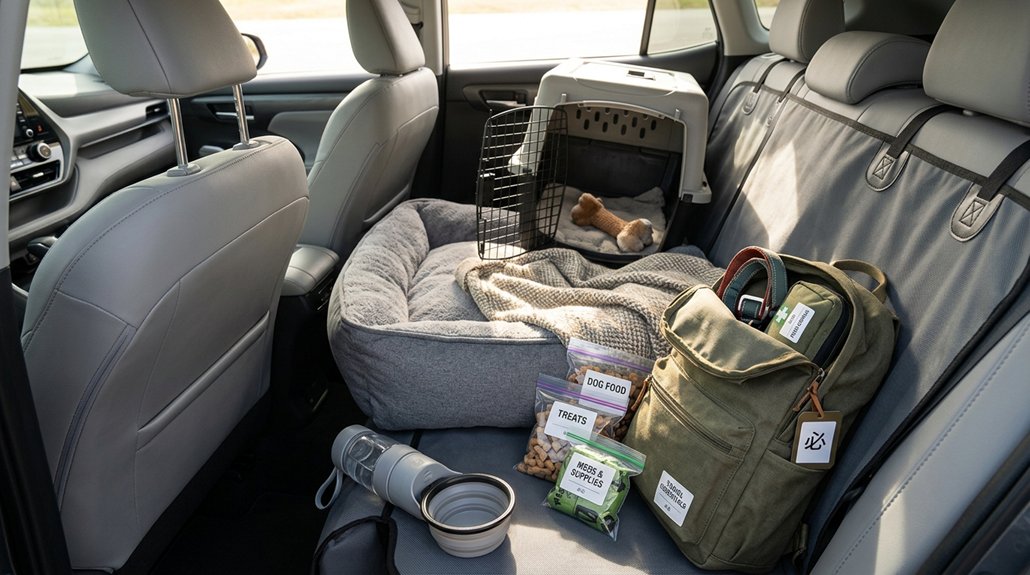
Ensuring your dog’s comfort and well-being during car travel requires a strategic approach to packing essentials that consider both their physical and emotional needs. Prioritize their health by including enough of their usual food, a portable water bowl with bottled water, and a dedicated canine first aid kit. Additionally, consider safety and familiarity by packing their identification tags, vaccination records, and comfort items like a favored blanket or toy to reduce travel-induced stress.
Essential Dog Travel Supplies
When starting on a road trip with your furry companion, a well-thought-out packing list is crucial for guaranteeing your dog’s comfort and well-being. Dog travel accessories such as a portable water bowl play a key role in maintaining hydration. Pack ample dog food, considering extras for unexpected delays. For medical confirmation, carry essential medications and your pet’s medical records, including updated vaccination proof. Such pet travel gear is critical for compliance with health regulations. Additionally, a leash equipped with ID tags detailing your dog’s name and your contact information guarantees secure handling. Don’t overlook waste disposal bags—sluicing sanitary practices on your journey. Thoughtful preparation guarantees your dog’s travel is joyous, secure, and health-conscious.
Comfort Items for Travel
A few carefully chosen comfort items can greatly enhance your dog’s travel experience by reducing anxiety and guaranteeing well-being. Travel blankets are essential; familiar bedding provides your pet with security, mitigating stress during transit. Comfort toys and chew items not only entertain but also soothe, promoting mental relaxation. Incorporate a portable water bowl to maintain hydration, especially during rest stops. Consult your veterinarian about calming supplements or treats for easing stress.
Packing Guide | Purpose | Benefits
————–|———|———
Travel Blankets | Security | Anxiety Reduction
Comfort Toys | Entertainment | Mental Relaxation
Water Bowl | Hydration | Health Maintenance
Adequately preparing with these comfort essentials guarantees a smooth travel adventure for your dog. Their well-being hinges on such provisions, paving the way for a relaxed and enjoyable journey.
Safety and Health Essentials
To guarantee your dog’s safety and health during a car trip, meticulous planning is essential. Prioritize robust dog travel gear; secure your dog with a safety harness, seatbelt, or an approved crash-tested crate. Packing familiar items, like a comforting blanket or toy, can alleviate travel anxiety. Consult your veterinarian for a pre-trip health check-up and discuss anti-nausea medication if your dog is prone to motion sickness. Always pack sufficient dog food, plus extra for potential delays, and a portable water bowl to maintain constant hydration. Have a copy of your dog’s health records and vaccination history on hand, and maintain a list of emergency veterinary contacts for quick access. Your preparation is key to a safe journey.
Keeping Your Dog Safe and Secure on the Road
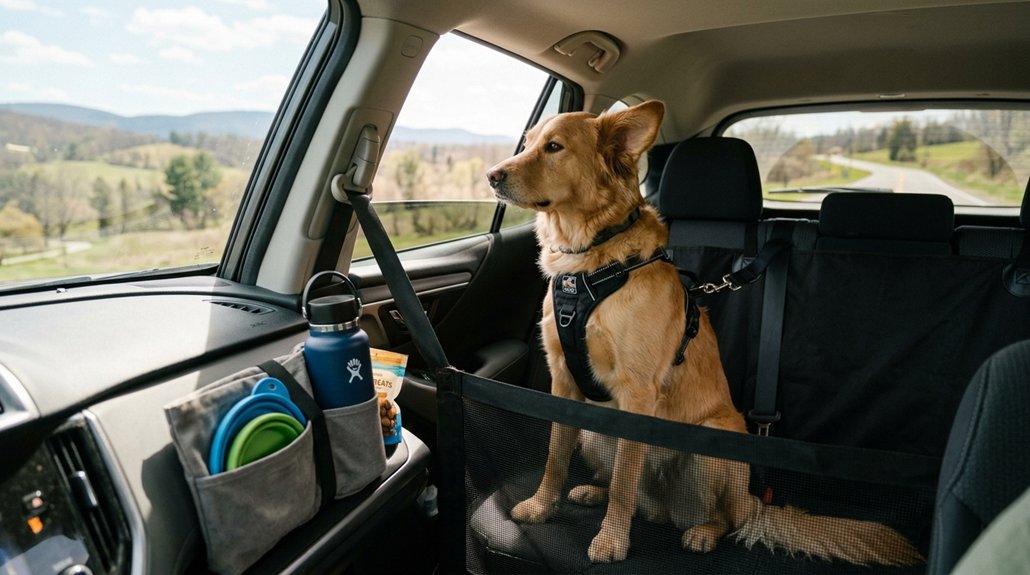
Guaranteeing your dog’s safety and security on the road requires diligent attention to detail and adherence to travel best practices. Employ crash-tested restraints like harnesses or dog seatbelts to prevent dangerous distractions and decrease injury risk during sudden stops. Prioritize dog travel etiquette by positioning your dog in the back seat, avoiding open truck beds, and using a well-ventilated, sturdy crate that’s secured to prevent movement. Regular stops every couple of hours for stretching and hydration are essential to managing stress and discomfort during lengthy journeys. Prevent your dog from sticking its head out the window to avoid potential eye injuries. Finally, plan your route with pet-friendly accommodations to guarantee a seamless travel experience for you and your pet.
Managing Travel Anxiety and Motion Sickness in Dogs
To effectively manage travel anxiety in dogs, initiate a gradual acclimation process by exposing your pet to brief, positive car rides, progressively increasing their length. If motion sickness is a concern, fasting your dog for 4-6 hours pre-travel can greatly reduce gastrointestinal distress. For recurrent issues, consult with a veterinarian about pharmacological interventions that can alleviate symptoms, and always be observant of signs like drooling or vomiting, which may warrant immediate attention.
Gradual Acclimation Process
The gradual acclimation process is essential for managing travel anxiety and motion sickness in dogs, particularly if you’re planning frequent car trips with your furry companion. Begin by instilling positive reinforcement and gradual exposure; this means starting with brief, 5-10 minute rides in a secure environment. Reward with treats and praise to forge positive associations. Before prioritizing longer journeys, introduce the crate or harness methodically, allowing your dog to familiarize itself and achieve comfort. To minimize nausea risks, refrain from feeding four to six hours before travel. Keep an eye out for distress indications, such as drooling or vomiting. Some dogs may need weeks or months to acclimate fully, so persist with patience and consistent practice to effectively alleviate travel anxiety.
Addressing Motion Sickness
Once your dog is gradually acclimated to short car rides through positive reinforcement, addressing any signs of motion sickness is key to ensuring a smooth travel experience. One of the most effective motion sickness solutions is to refrain from feeding your dog 4-6 hours before travel. An empty stomach can greatly reduce nausea, mitigating symptoms like drooling and vomiting. Additionally, consulting your veterinarian regarding anti-nausea medications can offer temporary relief if your dog is particularly prone to motion sickness. To further support your pet’s comfort, create a secure travel environment equipped with familiar items such as blankets or toys. These travel anxiety tips aim to calm your dog, fostering a sense of security on longer trips.
Ensuring Proper Nutrition and Hydration During the Trip
Guaranteeing your dog receives proper nutrition and hydration during a car trip is vital to maintaining their health and comfort. Start by planning a travel diet incorporating their usual meals, with extra provisions for unexpected delays. Consistent mealtime routines help minimize stress. It’s important to guarantee water accessibility by offering fresh, bottled water at regular intervals during travel.
| Essential Item | Purpose | Recommendation |
|---|---|---|
| Dog Food | Consistency and nutrition | Pack enough plus extra for delays |
| Bottled Water | Hydration | Provide frequently, especially in warm weather |
| Portable Water Bowl | Ease of water access | Use during stops for convenient hydration |
Feed your dog 3-4 hours pre-departure to avoid motion sickness. Monitor them for dehydration signs like excessive panting or lethargy. Address issues immediately to guarantee well-being.
Integrating Rest and Activity Breaks Into Your Schedule
When planning a road trip with your dog, integrating rest and activity breaks into your schedule is crucial for maintaining their physical health and mental well-being. Utilize effective rest break strategies by stopping every 2-3 hours. This allows your dog to stretch, relieve themselves, and hydrate adequately, mitigating travel-induced stress. Choose dog-friendly areas—parks or designated rest stops—to guarantee a secure environment where activity boosting through exploration and sniffing enriches their mental engagement.
Closely monitor your dog for signs of discomfort, especially during warm weather, to prevent heat-related problems. Incorporating familiar items, such as their favorite blanket or toy, during these breaks provides comfort and security. These thoughtful practices not only enhance their travel experience but also promote overall health and satisfaction.
Protecting Your Dog From Extreme Weather Conditions
Though it might seem like a minor detail, safeguarding your dog from extreme weather conditions during road trips is a critical aspect of guaranteeing their health and comfort. Implementing weather precautions is crucial; never leave your dog unattended in a parked vehicle, as rapid temperature fluctuations can lead to heatstroke or hypothermia. For hot climates, employ sunshades and maintain adequate ventilation to prevent overheating. Conversely, in cold weather, provide blankets or insulated pet coats to combat chilling temperatures. Temperature monitoring is essential; watch for signs like excessive panting or shivering indicating thermal distress. Traveling involves frequent stops to enable your pet to acclimatize to changes in temperature, alleviating stress. Prioritizing these measures guarantees your dog’s well-being throughout your journey.
Handling Emergencies and Unplanned Situations
When traveling by car with your dog, it’s essential to be well-prepared for veterinary emergencies and unforeseen behavioral issues. Keep a pet first aid kit readily available and have a pre-planned list of vetted local veterinarians along your route. To mitigate anxiety and motion sickness, consult your veterinarian for suitable calming techniques or medications, ensuring your pet’s health is safeguarded throughout the journey.
Preparing for Veterinary Emergencies
While starting on a road trip with your dog, meticulous preparation for veterinary emergencies is vital to safeguard their health. Emergency preparedness begins with researching veterinary clinics along your route. Keep their contact details readily accessible. A well-stocked canine first aid kit, including essential medications and bandages, is important for treating minor injuries. Familiarize yourself with signs of heat exhaustion and other health issues in dogs to swiftly address problems. Always carry a recent health certificate and vaccination records, as they may be required in emergencies. If your dog has specific health conditions, consult your veterinarian pre-travel to manage potential medical needs effectively. These strategic preparations guarantee you’re ready for any health challenges your canine companion may encounter.
Managing Pet Behavioral Issues
Beyond medical preparedness, addressing behavioral issues your dog might exhibit in the car is equally important to guarantee a calm and safe journey. Recognize signs of anxiety such as excessive drooling or restlessness. Implement behavioral training techniques well before travel, incorporating positive reinforcement to desensitize your canine to car rides. Establish consistent travel routines—frequent stops for bathroom breaks and exercise are essential to manage stress and prevent accidents.
Prepare for unexpected scenarios like roadside emergencies by having a first aid kit and a leash readily available. If motion sickness is a concern, consult your veterinarian regarding anti-nausea medication and practice fasting protocols before departure. Maintain a fully charged phone and local veterinary contacts to manage emergencies efficiently.
Ensuring a Smooth Arrival With Your Canine Companion
Approaching your destination, prioritize creating a calm, structured environment for your dog to guarantee its stress-free change. Establishing predictable arrival routines helps maintain a familiar setting. Utilize familiar items, like blankets or toys, to provide comfort. Upon arrival, allow your dog to engage in environment exploration under controlled conditions. This supervised activity aids in acclimatization while evaluating potential hazards.
Maintaining routine is paramount; adjust schedule specifics only when necessary:
| Activity | Ideal Timing | Suggested Modification |
|---|---|---|
| Feeding | Regular meal time | Slightly earlier/later |
| Walks | Usual intervals | Shorten/enlarge duration |
| Exploration | Arrival immediate | Supervised/limited scope |
Finally, always have identification and health records on hand to secure your dog’s safety in emergencies.
Frequently Asked Questions
How Long Is Too Long for a Dog to Ride in a Car?
A dog’s car ride shouldn’t exceed 6-8 hours to prevent discomfort and car sickness. Make sure travel preparation includes breaks every 2-3 hours for hydration and stretching. Puppies need more frequent stops due to their sensitivity.
What Is the 3-3-3 Rule With Dogs?
The 3-3-3 rule helps manage dog anxiety during travel shifts. It outlines three phases: initial adjustment (3 days), routine establishment (3 weeks), and full adaptation (3 months). Efficient travel preparation mitigates stress, supporting a healthy change.
What Is the Best Way to Travel With Your Dog in the Car?
Traveling with your dog safely is essential. 84% of pet parents are unaware of car safety. Use crate training, plan dog-friendly routes with rest stops, guarantee hydration, and follow travel tips to secure your dog’s comfort.
What Is the 7 7 7 Rule With Dogs?
The 7 7 7 rule suggests taking a 7-minute break every 7 hours during travel, improving dog behavior and health. It aids travel preparation by allowing for exercise, relieving anxiety, and preventing discomfort or motion sickness.
Conclusion
Now that you’re equipped with expert insights and practical strategies, are you ready to make your next car journey a pleasant experience for both you and your dog? By focusing on health, safety, and comfort through proper preparation, ideal packing, and mindful scheduling, you can navigate potential challenges with ease. Remember, it’s not just about reaching your destination; it’s about ensuring your canine companion enjoys the ride. Embrace these tips for a stress-free, happy road trip together.