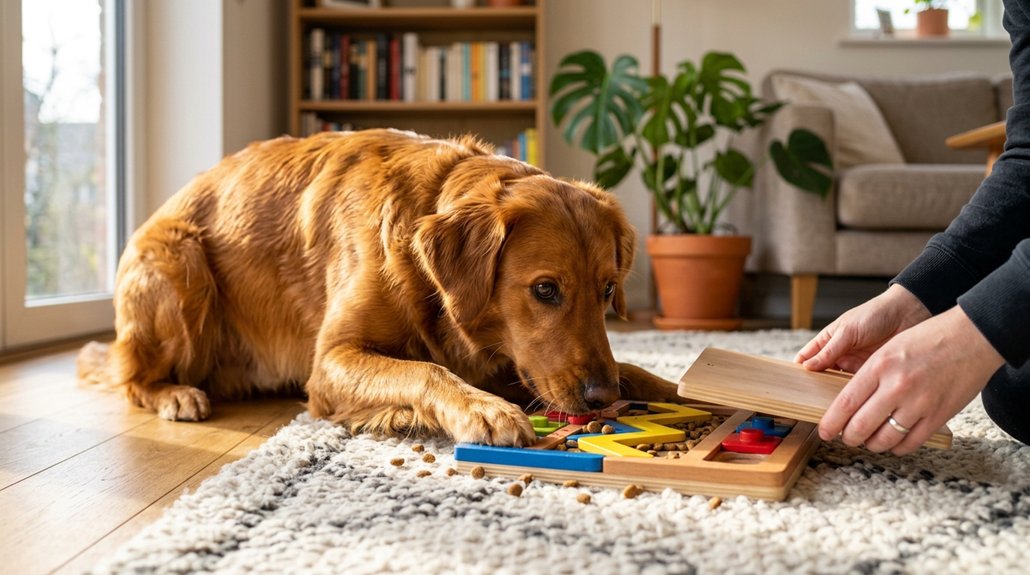
To keep your dog mentally stimulated at home, integrate diverse activities like interactive games, training sessions, and puzzle toys. Encourage sniffing with scent-based activities and use treat-dispensing toys to challenge their problem-solving skills. Rotate toys regularly to maintain interest and include agility tasks for dynamic learning. Prioritize mental enrichment during walks by varying routes and incorporating sniffing time. These methods not only enhance cognitive health but also strengthen your bond. Discover more strategies for thorough canine mental well-being.
Key Takeaways
- Use puzzle toys and interactive games to challenge your dog’s cognitive abilities effectively at home.
- Conduct short daily training sessions, teaching both basic and advanced commands to enhance mental engagement.
- Create indoor obstacle courses or agility exercises using household items to promote dynamic learning experiences.
- Implement scent-based activities, like DIY scent trails, to stimulate your dog’s natural instincts within your home environment.
- Schedule quiet time with calming activities, such as soothing music or puzzle toys, to ensure varied mental stimulation.
Discover the Importance of Mental Stimulation in Dogs
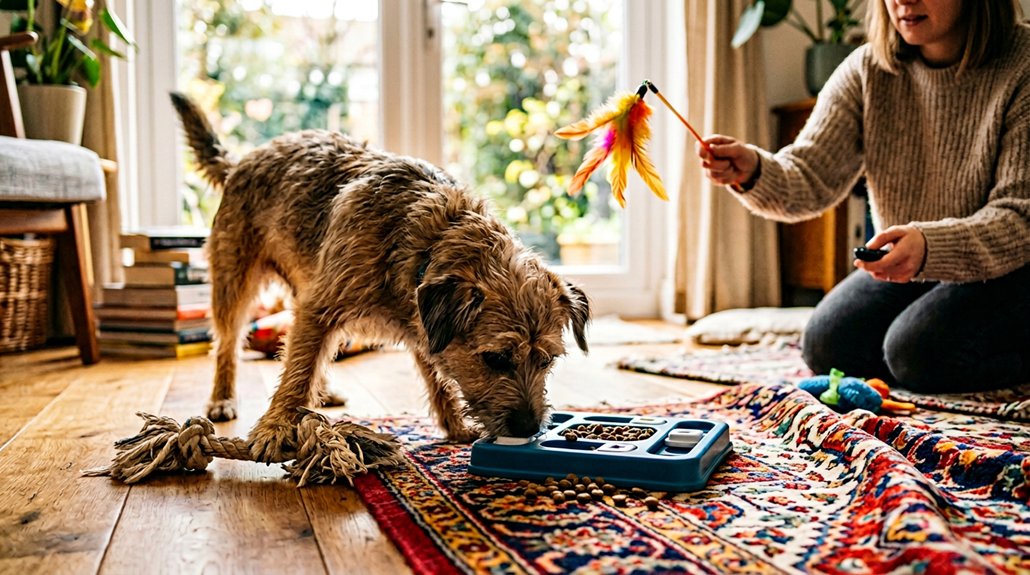
While often overlooked, mental stimulation is a cornerstone of canine well-being that rivals the necessity of physical exercise. Engaging your dog in cognitive exercises, such as puzzle activities, is not just beneficial but essential, particularly for high-energy breeds like German Shepherds and Border Collies. These activities challenge their mental faculties, reducing the likelihood of destructive behaviors and boosting their overall mental health.
Scientific research suggests that mentally stimulating activities can tire your dog more effectively than physical exercise alone. This mental fatigue helps maintain cognitive function and enhances their confidence. By incorporating training sessions and interactive toys into your dog’s routine, you not only provide necessary mental exercise but also strengthen your bond. Such enrichment prevents monotony and guarantees a satisfied and engaged canine companion.
Spotting Boredom and Engagement Gaps in Dogs
Inadequate mental stimulation in dogs often manifests through destructive actions like chewing or excessive attention-seeking behaviors, such as persistent barking or restlessness. It’s essential to recognize these signs, as they might indicate your dog is experiencing boredom or separation anxiety and lacks mental engagement. Enhancing a dog’s routine with targeted mental exercises can mitigate these behaviors, promoting a more balanced and content state.
Identifying Destructive Behaviors
Although it’s natural for dogs to exhibit high energy levels, understanding these behaviors, especially when they become destructive, is essential for maintaining a healthy home environment. Observing behavior patterns such as chewing furniture, excessive barking, or restlessness can reveal boredom signs and indicate a lack of mental stimulation. When dogs don’t receive adequate engagement, they might pace or show excessive excitement when you return home. Persistent begging or pulling on the leash during walks are additional indicators that your dog isn’t challenged mentally. It’s important to distinguish between boredom and anxiety-related behaviors; consulting your veterinarian is imperative when destructive actions persist. Introducing varied enriching activities helps combat boredom, ensuring your dog remains happy and thriving within your home environment.
Recognizing Attention-Seeking Signs
Identifying destructive behaviors in your dog isn’t just about addressing damage to your home; it’s a window into their mental engagement needs. Boredom often manifests in attention signals like excessive barking or restlessness, as well as behavioral cues such as persistent begging. These actions indicate a critical absence of mental challenges. Chewing or digging can similarly reflect an unmet need for stimulation.
Pay attention to changes in body language, including tail position and pacing, as they can reveal your dog’s mental state and possible anxiety. When your dog becomes overly excited upon your return or resorts to annoying behavior for attention, it signals a craving for mental exercise. Heightened clinginess or anxiety further underscores their need for engagement and enrichment.
Boost Engagement With Interactive Games
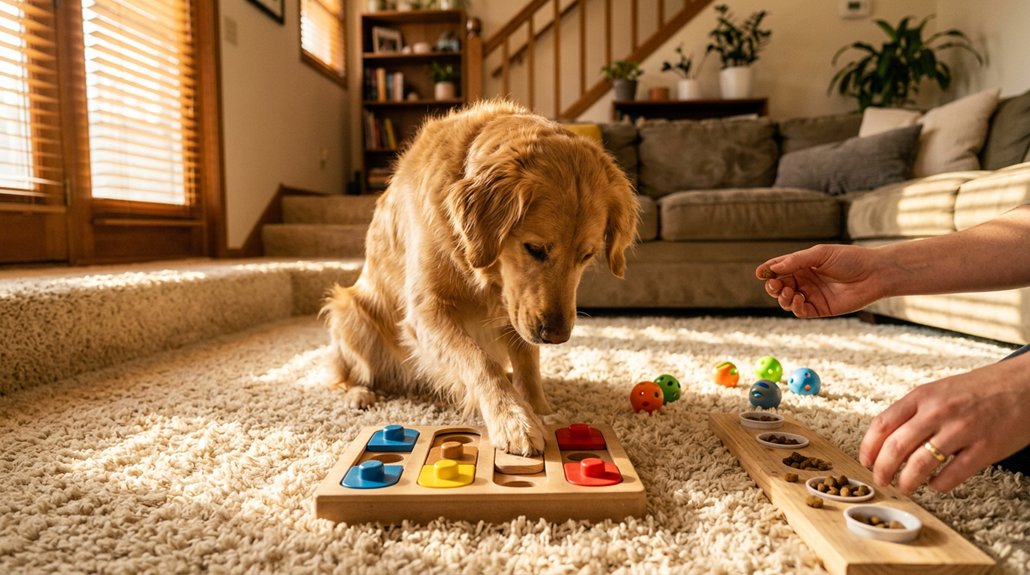
Step up your dog’s engagement and mental agility by incorporating interactive games into their routine. Utilize hide and seek games to enhance critical thinking; they require your pup to track scents and locate hidden treasures. Immerse yourself in puzzle challenges where dogs solve complex problems, integrating both mental stimulation and rewarding outcomes. A muffin tin puzzle encourages scent work, stimulating your dog’s sniffing instincts in a fun way. Engaging in games like tug-of-war can strengthen your bond while promoting interactive play. Consistent rotation of activities prevents your dog from losing interest and guarantees continuous mental stimulation. Consider the table below for engaging game ideas:
| Game Type | Benefits | Duration |
|---|---|---|
| Hide and Seek | Critical Thinking, Bonding | 10-30 mins |
| Puzzle Challenges | Problem-Solving, Reward-Based | 15-40 mins |
| Muffin Tin Puzzle | Enhances Sniffing, Enriching | 10-20 mins |
Challenge Your Dog With Treat-Dispensing Toys
To effectively challenge your dog’s mind while keeping them entertained, consider integrating treat-dispensing toys into their playtime arsenal. These engaging tools are excellent for enhancing problem-solving skills as your dog navigates toy difficulty to release treats, boosting cognitive functions. By selecting toys that match your dog’s current skill set and gradually increasing the challenge, you can elevate their engagement levels and prevent boredom, reducing destructive behaviors.
Using treat-dispensing toys can also promote mindful eating and healthier digestion, especially for fast eaters. Plus, regular interaction using these toys nurtures a stronger bond through shared play and positive reinforcement.
- Foster critical thinking with problem-solving challenges
- Slow down fast eating habits
- Choose varying difficulty to suit your dog’s skills
- Prevent boredom-induced destructive behavior
- Strengthen the owner-dog bond through play
Have Fun With Scent-Based Activities
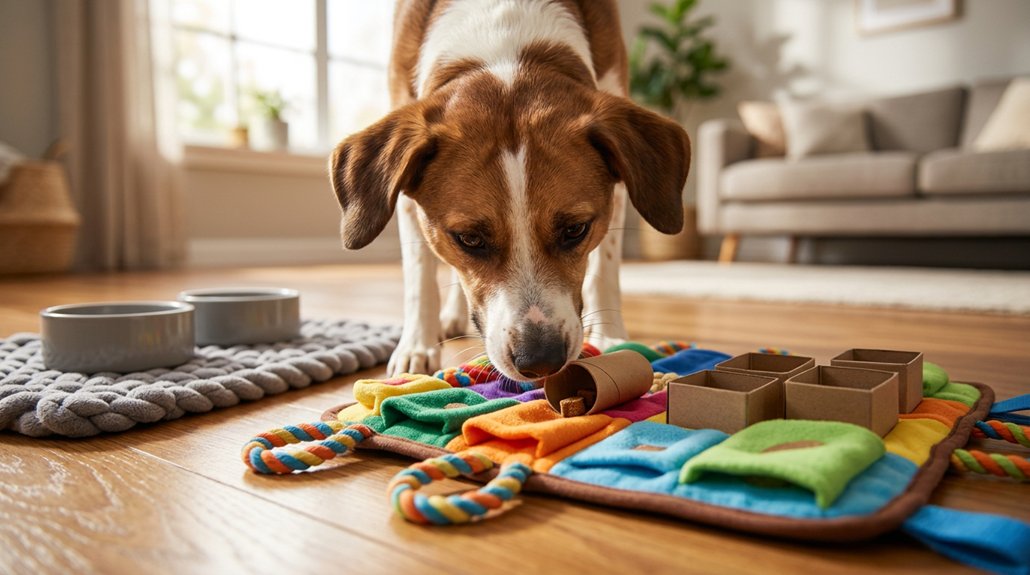
When it comes to keeping your dog mentally stimulated, incorporating scent-based activities is essential for tapping into its natural sniffing instincts. You can enrich your dog’s cognitive abilities with games like the “Find It” challenge or scent puzzles, which offer engaging ways for them to hunt for hidden treats and enhance problem-solving skills. Additionally, scent walks provide an opportunity for exploration, allowing your dog to experience new environments and greatly reduce stress, even when outdoor play may not be possible.
Encourage Natural Sniffing Instincts
Something marvelous happens when you tap into your dog’s natural sniffing instincts—an entire world of mental stimulation unfolds. By engaging in scent exploration with your pooch, you enhance their cognitive function while satisfying primal instincts. Here are ways to integrate olfactory games into your dog’s routine:
- “Find It” Game: Hide treats around your home and let them hunt, enhancing problem-solving skills.
- Sniff-Friendly Walks: Allow leisurely sniffing time to gather environmental information, reducing stress.
- DIY Scent Trails: Use treats or toys to create mystery trails, encouraging exploration and engagement.
- Scent-Enrichment Toys: Offer toys with hidden compartments to challenge their scent detection capabilities.
- Herbal Exploration: Introduce dog-safe herbs and plants to stimulate their olfactory senses, enriching their environment.
These practices foster a content, mentally active dog.
Use Scent-Based Enrichment Games
Scent-based enrichment games, leveraging a dog’s olfactory prowess, provide profound mental stimulation while tapping into their innate instincts. These activities, like the “Find It” game, harness scent detection skills to engage your dog’s mind effectively. By hiding treats or toys around the house, you encourage nose work that challenges and entertains. Start with easy hiding spots and progressively increase difficulty to maintain engagement.
Sniffing naturally activates a dog’s brain, reducing boredom and anxiety. Incorporating these games into your routine offers critical thinking and problem-solving benefits. Simple activities, such as hiding a treat under one of several cups, stimulate your dog’s mind. This not only enhances well-being but also helps minimize destructive behaviors linked to boredom, keeping your furry friend content and occupied.
Enhance Exploration Through Walks
Building on the rich stimulation that scent-based games provide, taking your dog out for walks can become an equally enriching sensory journey. By using exploration techniques and walk variations, you enhance your dog’s mental engagement. Allow ample sniffing time during walks—encouraging your dog to gather essential environmental information. Opt for varied routes to expose them to new scents, reducing boredom and stimulating their mind. Designating specific sniffing areas like parks with grass and bushes can promote relaxation. Additionally, using scent-based games, like hiding treats along your route, strengthens their natural tracking instincts. Focus on quality over distance as sniffing exploration remarkably boosts mental well-being.
Here are some tips:
- Allow ample sniffing time
- Use varied routes
- Designate sniffing areas
- Implement scent-based games
- Prioritize quality over distance
Regularly Rotate New Toys for Continued Interest
Introducing novelty into your dog’s playtime routine is paramount to maintaining their mental stimulation. Regular toy rotation is essential for novelty engagement, as it prevents boredom and captivates their attention. By introducing a variety of toys—ranging from plush toys to intricate puzzle feeders—you cater to diverse play styles and mental capacities. Weekly access to different toys not only sustains interest but also hones problem-solving abilities, as dogs adapt to fresh challenges. The thrill of rediscovering stashed toys can spark excitement, akin to the joy of uncovering new treasures, thereby enhancing your dog’s mood. Always prioritize safety by regularly evaluating the condition of toys, removing any that might pose hazards, to guarantee your pet’s playful exploration remains safe and stimulating.
Keep Their Minds Sharp With Training Sessions
While physical exercise is essential for your dog’s health, focusing on mental stimulation through regular training sessions is equally important. Conducting 5–15 minute training sessions can greatly enhance their cognitive abilities and command retention, much like human learning. Through trick consistency and positive reinforcement, you strengthen your bond while boosting their confidence, reducing anxiety, and promoting calm behavior.
Incorporate a variety of activities to keep your dog’s mind engaged:
- Teach basic obedience commands.
- Introduce advanced tricks to challenge them.
- Engage in agility skills for dynamic learning.
- Use positive reinforcement to motivate and reward.
- Maintain consistency for improved focus and impulse control.
Enrich Walks Mentally
Beyond just training sessions, a walk can be a powerful opportunity to stimulate your dog’s mind. Consider integrating scavenger hunts and scent trails to engage their natural hunting instincts. Games like “Find It” prompt them to use their nose, providing both mental exercise and stress reduction. Opt for varied routes, offering new environments and smells to explore, essential for mental enrichment. Incorporate training exercises, such as practicing commands or introducing agility challenges, to enhance their focus and problem-solving abilities. During breaks, use enrichment toys or hide treats to present additional mental challenges. Tailor these activities to your dog’s breed and personality, ensuring each outing aligns with their inherent instincts and energy levels, promoting a fulfilling and stimulating walk.
Frequently Asked Questions
How Do I Mentally Stimulate My Dog at Home?
Incorporate interactive toys and puzzle games to engage your dog’s cognitive faculties. Engage in scent training to tap into natural instincts. Setting up obedience challenges provides mental stimulation, promoting learning and strengthening your bond with them.
What Is the 3-3-3 Rule With Dogs?
The 3-3-3 rule helps reduce dog anxiety by understanding behavior phases. In the first month, focus on enrichment activities like sensory exploration and puzzle toys. Use training techniques and interactive play for bonding time afterward.
What Is the 7 Second Rule for Dogs?
Ironically, you’d think your dog’s intellect doesn’t need immediate attention, but the 7 Second Rule focuses on dog training, ensuring cognitive enrichment. Engage them instantly after a behavior to enhance their mental well-being and reinforce positive habits.
What Is 15 Minutes of Mental Stimulation for Dogs?
Fifteen minutes of mental stimulation using puzzle toys, scent games, training tricks, and interactive play can equate to an hour’s physical exercise. Incorporate food challenges, hide and seek, and obedience exercises for enhanced cognitive benefits and improved behavior.
Conclusion
Keeping your dog mentally engaged at home isn’t just a convenience; it’s essential for their well-being. Did you know that dogs who regularly partake in mental exercises are 50% less likely to develop behavioral issues? By integrating games, scent activities, and training sessions, you’re not only boosting their intelligence but also deepening your bond. Remember, variety is key. Rotate toys and activities to continually challenge your dog, ensuring they remain curious, happy, and mentally sharp.