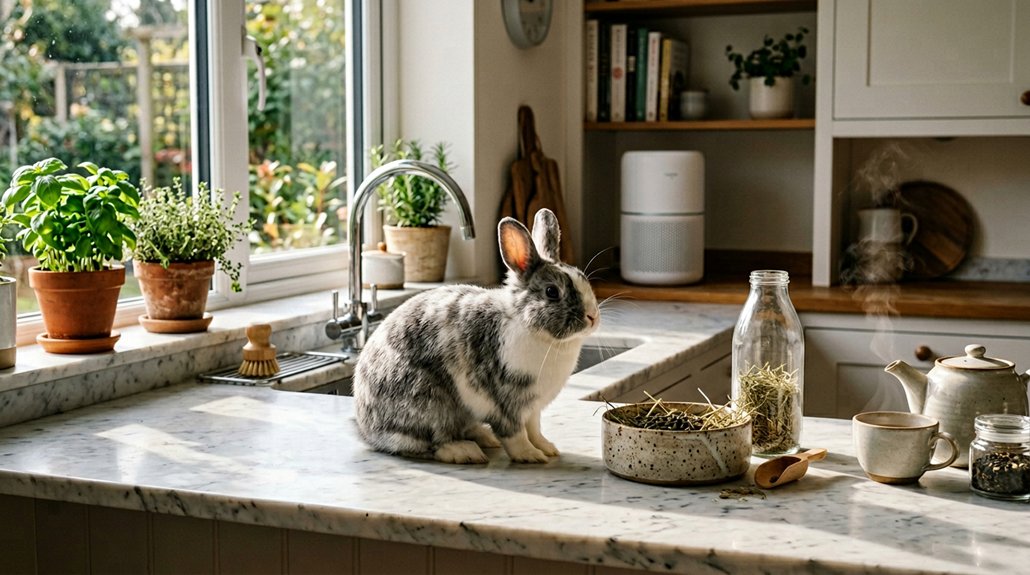
To control odor when you have a pet rabbit, choose odor-absorbing litter like paper-based options and position the litter box where your rabbit naturally uses the bathroom. Clean the area daily, replacing soiled litter and hay, and deep clean weekly with pet-safe disinfectants. Use natural bedding materials and maintain an 80% hay diet for your rabbit. Implement ventilation strategies and consider using baking soda or activated charcoal. Explore further for extensive strategies and insights.
Key Takeaways
- Use odor-absorbing litter like paper-based or pine pellets to manage rabbit habitat odors effectively.
- Conduct daily spot cleaning and weekly deep cleans with pet-safe disinfectants for optimal odor control.
- Incorporate high-quality grass hay and fresh greens into the rabbit’s diet to reduce urine odor.
- Utilize natural odor-neutralizing materials such as lavender-infused hay and activated charcoal in the rabbit’s environment.
- Ensure proper ventilation with fans or air purifiers to maintain fresh air and minimize odors.
Set Up a Fresh-Smelling Rabbit Habitat
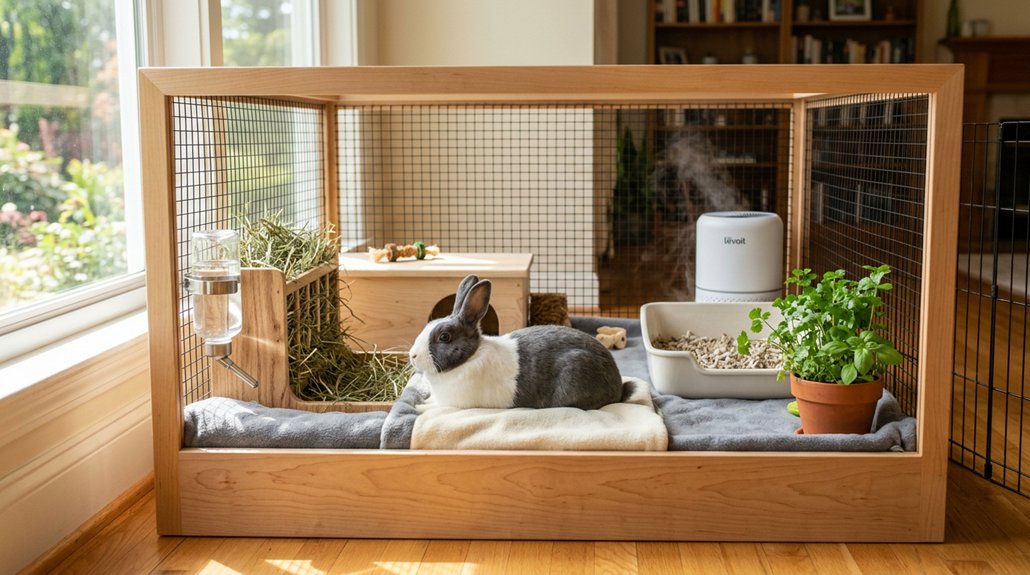
When aiming to set up a fresh-smelling rabbit habitat, it’s vital to prioritize both odor control and your rabbit’s comfort. Start by choosing an odor-absorbing litter, like paper-based or pine pellets, to guarantee effective scent management. Correct litter box placement is significant—position it in spaces where your rabbit instinctively goes. This promotes usage and keeps the area clean. Adding a hay layer inside the box encourages them to spend more time there, reinforcing proper habits. You should also introduce ventilation solutions, such as small fans or air purifiers, to disperse odors efficiently. Implement daily spot cleaning and commit to regular, thorough cleaning routines. Use pet-safe disinfectants weekly to sanitize, making sure of a pleasant living space for both you and your rabbit.
Master Litter Box Training for Odor Control
To effectively manage odor in your rabbit’s living environment, litter box training plays a pivotal role. Start by observing your rabbit’s natural habits for ideal litter box placement. Position the box where they’ve already shown bathroom behaviors. Utilize safe litter options like paper-based or aspen, layering with hay to encourage positive associations. Reinforce correct behavior by promptly cleaning soiled litter daily and placing any stray feces back in the box to guide proper usage. Weekly, conduct a deep clean using a pet-safe disinfectant, opting for a white vinegar and water solution to eliminate persistent odors. Also, consider spaying or neutering, as these procedures can greatly reduce strong-smelling urine and unwanted marking, enhancing your litter box training efforts.
Select Bedding That Minimizes Smells
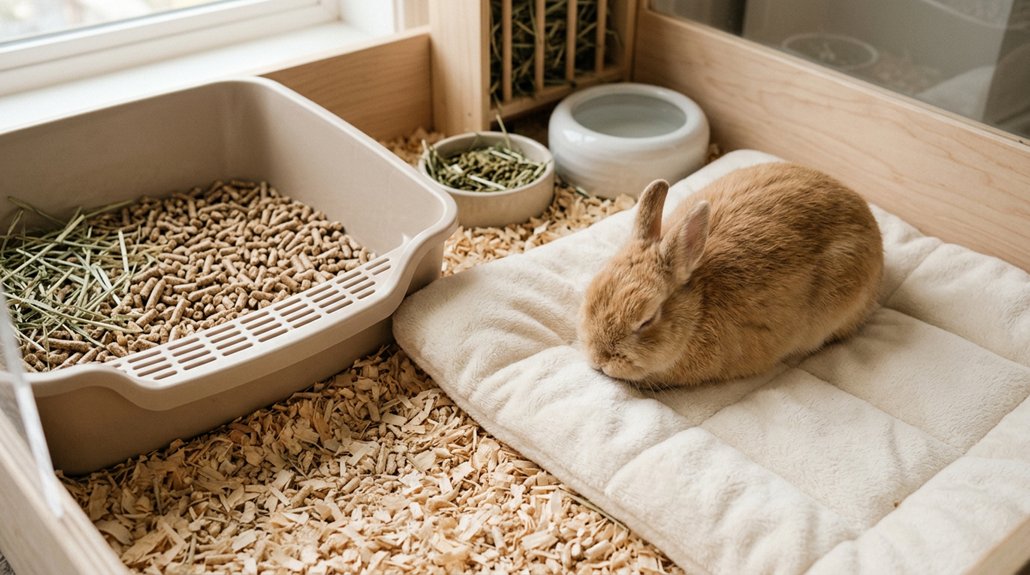
Among essential strategies for maintaining a fresh environment in your rabbit’s space, selecting the right bedding plays a crucial role. Opt for high-quality bedding materials such as Ultra Premium Food Grade Natural Bedding, ensuring safety and superior odor absorption. Bedding made from natural materials like paper pellets and lavender-infused hay provides a calming atmosphere while effectively neutralizing odors. Regularly change bedding to minimize smells—replace daily and conduct weekly deep cleans. Choose dust-free options to enhance air quality and prevent contaminant-related odors. Consider bedding with built-in odor-neutralizing properties or infused with natural fragrances for added benefits. Here’s a quick comparison to guide your selection:
| Bedding Type | Odor Absorption |
|---|---|
| Ultra Premium Bedding | High |
| Lavender-infused Hay | Moderate, with calming effect |
| All-natural Paper Pellets | High |
Choose Foods That Reduce Rabbit Odor
Beyond selecting ideal bedding, managing your rabbit’s diet plays a pivotal role in odor control. Prioritize dietary adjustments to provide excellent nutrients that mitigate unpleasant smells. Begin with a diet of at least 80% high-quality grass hay, essential for digestion and odor reduction. Add fresh greens in moderation while steering clear of sugary treats and processed foods to prevent digestive issues that enhance odors.
Monitor your rabbit’s water intake closely; maintaining hydration dilutes urine, combating potent ammonia concentrations. Introducing small amounts of apple cider vinegar into their water can help balance urine pH, potentially lowering odor production. Regularly review and tweak your rabbit’s diet to identify and eliminate any foods contributing to unusual smells, ensuring both nutritional benefits and effective odor management.
Keep Things Clean and Fur-Free
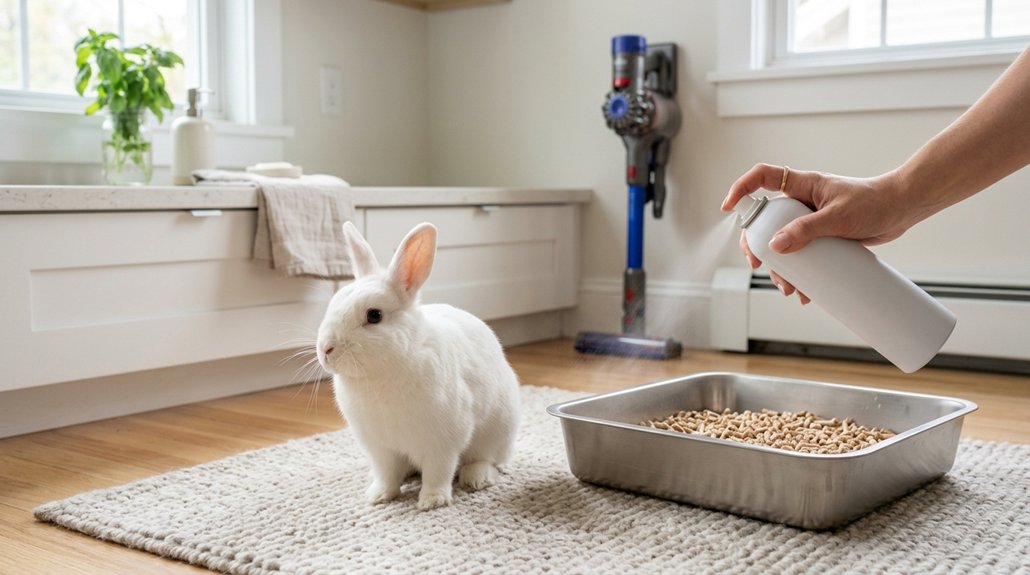
Achieving a clean and fur-free environment is critical in controlling pet rabbit odors. Utilize effective grooming techniques to address dirt buildup, particularly around your rabbit’s tail and hind legs. Employ cleaning tools for daily spot cleaning of the litter box, ensuring odors are minimized through the swift removal of soiled litter. Use a solution of white vinegar and water to neutralize urine and prevent lasting smells.
Consistently clean the hutch, replacing contaminated bedding and hay each morning. Regular vacuuming or sweeping will eliminate fur and dander that contribute to odors.
| Task | Frequency |
|---|---|
| Spot clean litter box | Daily |
| Groom your rabbit | Regularly |
| Replace bedding | Each morning |
| Vacuum/Sweep | Frequently |
| Neutralize odor | As needed |
These practices provide an odor-controlled environment for your rabbit and home.
Naturally Freshen Your Home With Safe Scents
To effectively neutralize odors without compromising your rabbit’s safety, incorporate natural air fresheners like baking soda or cinnamon-infused simmer pots. Opt for pet-specific products free from harmful essential oils and enhance air circulation with an air purifier or a small fan to disperse odors. Regularly replacing bedding and ensuring good ventilation are also key to maintaining a fresh and healthy atmosphere for your furry friend.
Safe Natural Fresheners
When aiming to create a fresh environment for your pet rabbit, employing safe, natural fresheners is vital. Utilize herbal sachets and scent pouches filled with rabbit-safe ingredients like dried lavender. These not only impart a pleasant aroma but also offer calming benefits. For effective odor absorption, place bowls of baking soda around the rabbit’s habitat; it’s a chemical-free solution. Simmering water with cinnamon provides an inviting scent; just guarantee it’s used moderately. Avoid essential oil diffusers, as certain oils can be toxic to rabbits. Opt for pet-specific products instead. To maintain cleanliness, use a solution of vinegar and water to neutralize odors, guaranteeing your home remains both fresh and safe for your rabbit, enhancing its living conditions responsibly.
Effective Air Circulation
If you’re aiming to create a pleasant environment for your pet rabbit, guaranteeing effective air circulation is essential. Start by implementing strategic ventilation techniques, such as placing a small fan to encourage air movement. Ensure the fan doesn’t blow directly on the rabbit. Opening windows when weather permits is another method to maintain fresh air flow, which prevents odor accumulation. For a more technical solution, consider air purifier recommendations that focus on eliminating odor-causing particles. Choose devices with HEPA filters or activated carbon, designed to rid spaces of unpleasant smells while improving air quality. Supplement these methods with natural air-fresheners, utilizing bowls of baking soda or gently simmering water with cinnamon, safeguarding your home without using harsh chemicals.
Pet-Friendly Aromatics
Although maintaining a pleasant aroma in your home is important, ensuring the scents are safe for your pet rabbit is paramount. Consider using natural air fresheners like bowls of baking soda or simmering cinnamon water; these herb based fragrances freshen without posing risk. Opt for pet-specific products designed for scent-safe toys or environments. Essential oils can be toxic, so it’s wise to prioritize rabbit-safe options. Incorporate aromatic herbs, such as lavender or rosemary, into your rabbit’s habitat to create a naturally pleasant scent. Maintaining clean, well-ventilated spaces with regular bedding changes further enhances freshness.
| Aromatic Option | Description | Safety for Rabbits |
|---|---|---|
| Baking soda | Natural air freshener | Safe |
| Lavender/Rosemary | Herb based fragrances | Safe |
| Pet-specific aromas | Alternatives to essential oils | Safe |
Frequently Asked Questions
How to Keep Your Room Smelling Good With a Bunny?
Guarantee proper ventilation and strategically place air fresheners. Regularly clean the litter box and organize space efficiently. Use odor neutralizers and pet-safe cleaning supplies to maintain a fresh environment for your bunny without compromising air quality.
What Is the 3-3-3 Rule for Bunnies?
Imagine your bunny slowly revealing its true nature. The 3-3-3 Rule captures this journey: three days of stress, three weeks of behavioral emergence, and three months for litter training and bonding. Understanding bunny behavior guarantees seamless adjustment.
Do Indoor Rabbits Make Your House Smell?
Yes, indoor rabbits can make your house smell if you don’t prioritize rabbit hygiene and effective odor management. Regular cleaning, choosing the right litter, and maintaining a balanced diet are essential to keeping odors under control.
How Does a Bunny Say “Sorry”?
A bunny says “sorry” through gentle nibbles or licks, using bunny behaviors as a form of rabbit communication. It may also display submissive behavior, approach cautiously, or groom itself or others to show contrition.
Conclusion
By implementing these strategies, you’ll maintain a pleasant and odor-free environment for both you and your rabbit. For instance, if Jess, a devoted rabbit owner, follows these steps, she’ll notice an improvement in her home’s freshness. With a focus on selecting the right bedding, mastering litter training, and incorporating foods that minimize odors, Jess guarantees a happy, healthy rabbit. Regular cleaning and safe scenting solutions complete the equation, offering a harmonious cohabitation experience.