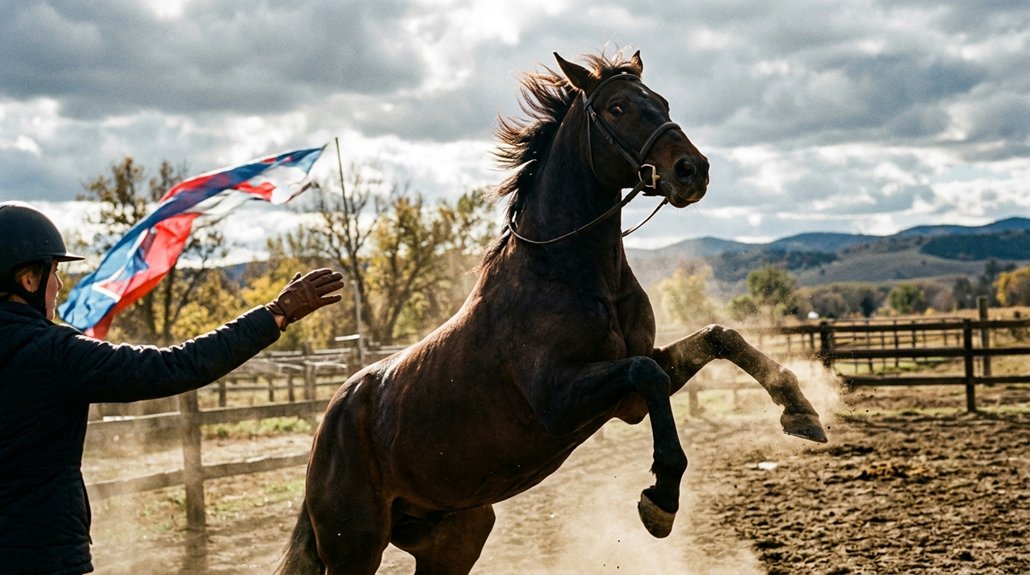
Horses spook because their acute senses are wired for survival, making them react to unfamiliar stimuli. Your anxiety can amplify their nervousness, so staying calm is essential. Building trust through groundwork and desensitizing them to triggers can transform fear into curiosity. Make sure their health is ideal and tack fits well to reduce discomfort-induced spooks. Understanding these factors increases confidence and helps manage unexpected encounters. Explore effective strategies to further enhance your horse’s behavior.
Key Takeaways
- Horses spook due to their natural survival instincts and acute sensory perception of potential threats.
- Rider anxiety and body language can significantly increase a horse’s tendency to spook.
- Groundwork and trust-building exercises enhance communication, reducing spooking reactions.
- Desensitization and gradual exposure to stimuli help manage and minimize spooking behavior.
- Proper saddle fit and regular health checks are crucial to prevent discomfort-induced spooking.
Why Do Horses Spook?
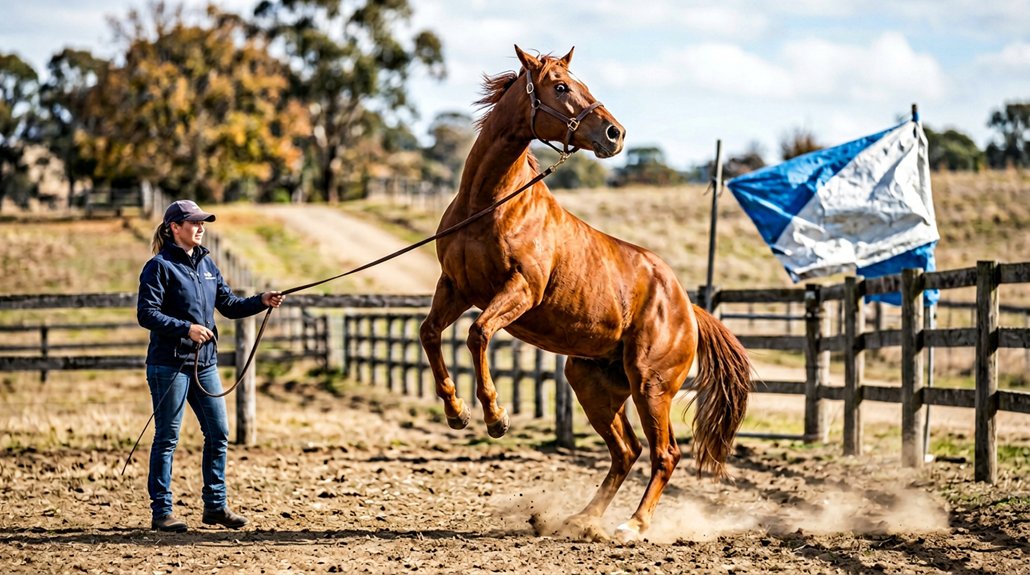
When it comes to understanding why horses spook, it’s essential to recognize that spooking is a natural survival mechanism. As prey animals with acute vision and hearing, horses are finely attuned to their surroundings, allowing them to detect potential threats. Spooking triggers like unfamiliar objects, sudden noises, or quick movements can provoke swift, instinctual flight responses. Breed differences also play a role; Arabians and Thoroughbreds, for example, are often more prone to spooking due to their sensitive temperaments. These predispositions can be exacerbated by past negative experiences. Additionally, changes in environment, social isolation, or disruptions in routine can further heighten anxiety and increase spookiness. Understanding these factors helps you manage and mitigate spooking in horses effectively.
Impact of Rider Behavior on Horse Spookiness
As you interact with horses, your behavior can dramatically influence their propensity for spooking. Rider anxiety plays a significant role; your emotional states can mirror onto your horse, making them more prone to nervous reactions. When you’re tense or frustrated, it reflects in your body language, signaling unease to your horse. This often initiates a negative feedback loop, heightening the horse’s spookiness and disrupting focus. By employing techniques like deep breathing and maintaining a consistent, calm demeanor, you create a stable environment. Such predictability in your actions reinforces the horse’s confidence. Slowing communication and offering clear cues can further provide the leadership your horse needs. This approach not only alleviates anxiety but effectively manages spooking incidents.
Creating Trust With Groundwork
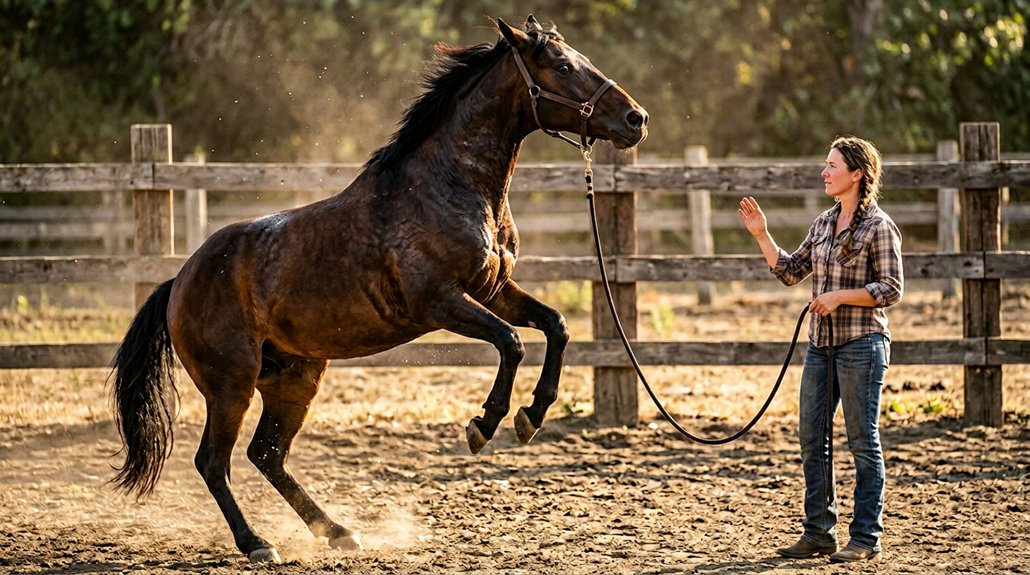
Building a calmer, more confident riding experience often begins with creating trust through groundwork. Trust exercises, involving consistent groundwork, help establish effective communication between you and your horse. These exercises are essential for reducing anxiety, as they promote understanding and respect. Groundwork benefits extend to desensitizing horses, gradually exposing them to various stimuli, thereby minimizing their instinct to spook. When your horse understands boundaries through structured activities, it feels more secure and less likely to panic at perceived threats. As you engage in these groundwork sessions, you build a solid foundation that enhances trust, greatly improving behavior under saddle. The strengthened bond between you and your horse aids in managing spooking effectively, especially during unexpected encounters.
Techniques to Reduce Spooking
Reducing spooking in horses requires implementing a set of targeted techniques that address both the horse’s emotional state and environmental triggers. Desensitization techniques involve a gradual exposure to potential triggers in a systematic and controlled manner. By rewarding calm behavior at each step, you promote positive associations, helping your horse remain composed. Additionally, deploy counter-conditioning strategies to transform fearful reactions into curiosity and positive engagement. Encouraging exploration of once-terrifying objects can greatly reduce anxiety. Groundwork exercises are essential, fostering both focus and obedience, building the horse’s confidence in you when confronting new stimuli. Regular training reinforces leg aids, helping your horse react appropriately to commands and minimizing unexpected spooks. Prioritize creating a calm environment through emotional management.
Maintaining Physical Health and Rider Relaxation for Comfort
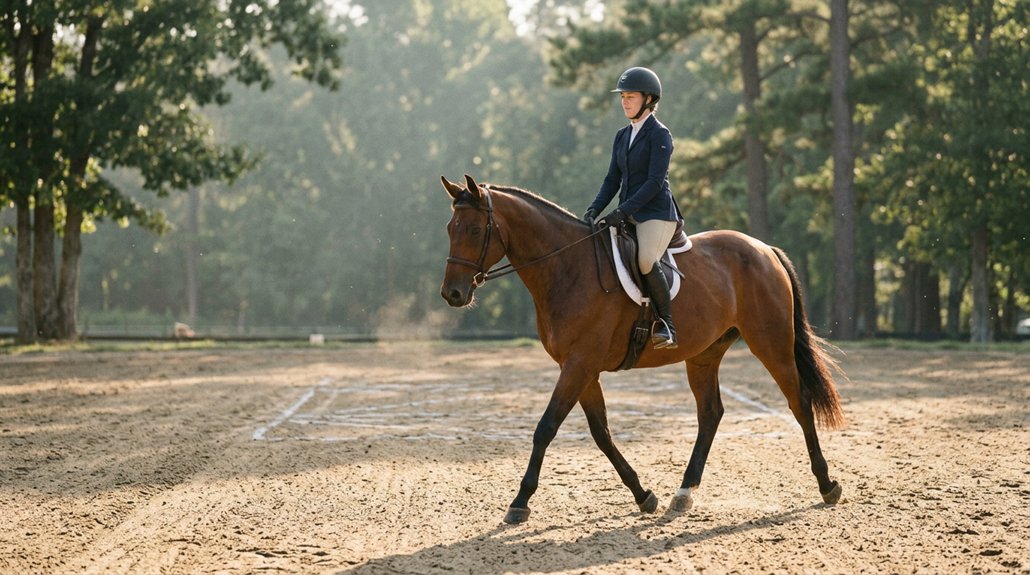
Securing your horse’s physical health and your own relaxation as a rider plays a vital role in maintaining a comfortable and harmonious ride. Proper saddle fit is essential; discomfort from ill-fitting tack can increase spooking behavior. Regular veterinary check-ups help identify and address any underlying health issues that may cause anxiety.
Ensuring both your horse’s health and your own calmness is key to a harmonious riding experience.
- Evaluate and adjust the saddle fit frequently to make sure it’s suitable.
- Schedule consistent veterinary check-ups to catch problems early.
- Focus on calming your emotional state; your equanimity influences your horse.
- Engage in consistent training routines to enhance the horse’s physical and mental well-being.
- Practice deep breathing techniques to stabilize your emotions, fostering trust and security.
Frequently Asked Questions
How to Stop a Horse From Being Spooky?
Start by using desensitization techniques, exposing your horse to stimuli gradually. Create safe spaces where it feels secure. Combine groundwork and consistent routines to reduce anxiety. Encourage exploration and reward calmness, helping your horse build confidence and trust.
What Is the 1/2/3 Rule in Horses?
The 1/2/3 Rule in horses tackles spook triggers by acknowledging the fear, gently redirecting the horse’s behavior to a task, and reinforcing calmness. It fosters trust and confidence, effectively managing spooking incidents in a structured manner.
Why Do Horses Get Spooked so Easily?
Horses get spooked so easily because their equine instincts prioritize survival. They’re hardwired to react to potential threats with fearful behavior, ensuring rapid responses to unfamiliar stimuli, thereby safeguarding them against predation risks in their natural environment.
What Calms a Horse Down Immediately?
Juxtaposing immediate calm against panic, slow your breathing and assess the environment. This synchronizes your energy with the horse’s, ensuring mutual relaxation. Practically speaking, deep, controlled breaths and scanning surroundings help manage fear and nurture tranquility.
Conclusion
Understanding why horses spook and how to manage it transforms your riding experience. Like a steady anchor in turbulent waters, your calm demeanor can guide your horse through frightful moments, strengthening the bond between you. Prioritizing groundwork builds a foundation of trust, while health maintenance keeps your horse comfortable. Employing these techniques will lead to more confident riding. Remember, your relaxation mirrors safety for your horse, creating a harmonious partnership that navigates challenges with ease.